
Reign's Patch 4.3 Gamble Comes Due at The Game Awards
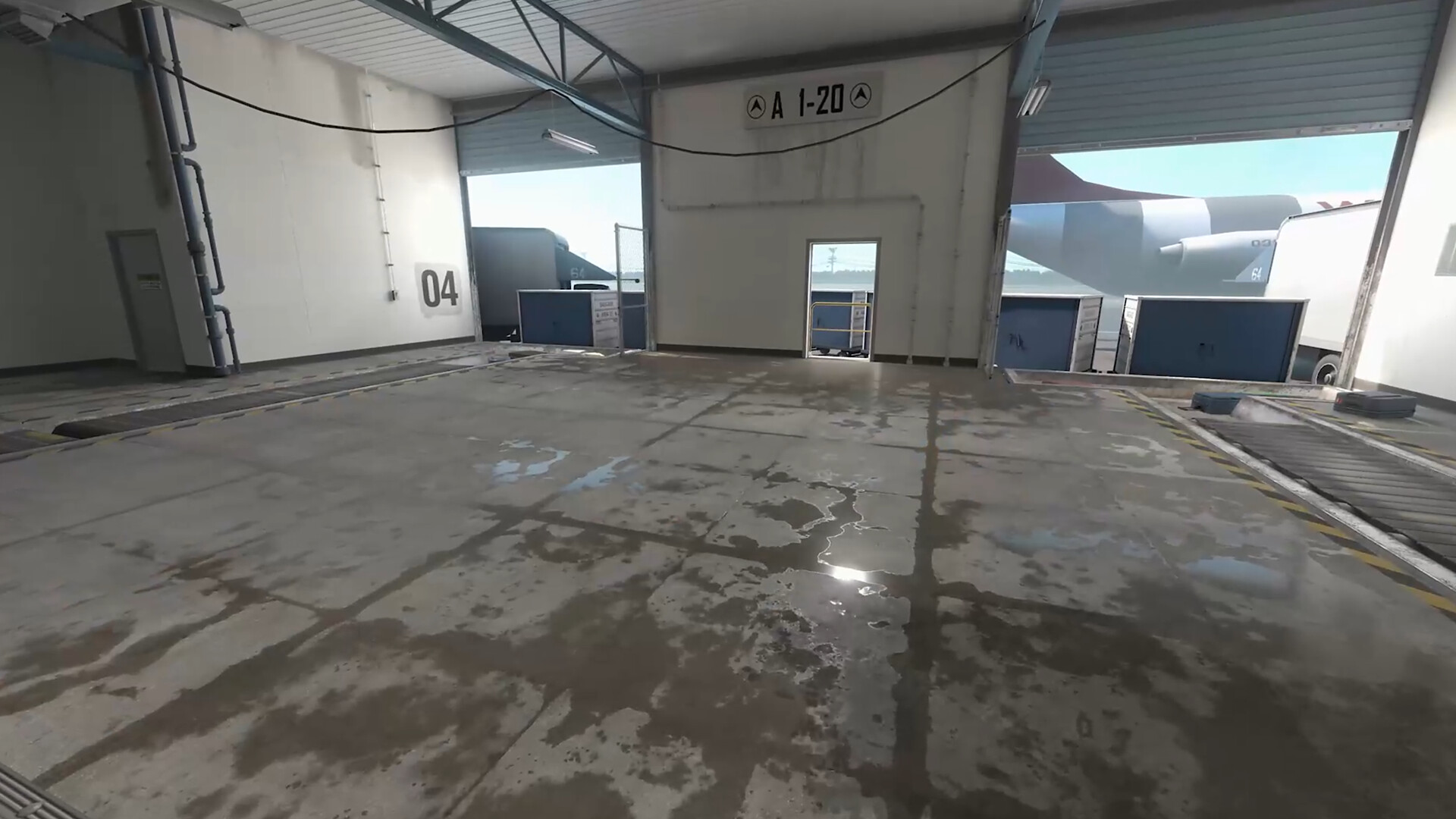
Picture Reign's AWPer Dmitri 'Frostline' Vasiliev crouching behind the B-site boxes on Mirage, crosshair drifting left, waiting on information that stopped coming after patch 4.3 rewrote how sound propagation works near half-wall surfaces. He peeks anyway, dies to a contact nade from a player who had no business being that far into B-apartments. That clip went viral for about 36 hours. It also tells you everything about where Reign currently sits heading into The Game Awards Invitational.
Valve's Counter-Strike 2 patch 4.3, dropped six weeks ago, touched three things that competitive rosters care about: the aforementioned sound occlusion changes, a subtle rework to movement inaccuracy on rifles (primarily the AK-47 and the M4A4), and a hitbox correction that slightly tightened the neck region. Small changes, technically. But professional Counter-Strike has always been a game where small changes create seismic shuffles in who the meta rewards. Reign built their 2024 system around aggressive AWP repositioning and economy pressure. Patch 4.3 quietly taxed both.
What Patch 4.3 Actually Changed
The movement inaccuracy tweak sounds minor until you watch a player like Reign's rifler Kenji 'Kraze' Oshima run a mid-fight peek. Under the old parameters, Kraze had developed a precise micro-step rhythm that let him land shots most players couldn't reliably replicate while still maintaining lateral speed. Patch 4.3 didn't eliminate that, but it pushed the inaccuracy window just far enough that his technique now requires an extra crouch-plant to recover. That adds maybe 80 milliseconds to his peek timing. At pro level, 80 milliseconds is a career.
The sound occlusion rework is harder to quantify but arguably more disruptive. Valve's patch notes described it as 'improving audio clarity in multi-surface bounce environments' — which is technically accurate and practically useless as a description. What it means is that footsteps through stairwells now read differently, and certain wallbang angles on Inferno and Nuke that were part of Reign's coordinated fake-rotations no longer telegraph the way their IGLs expected. Teams like Natus Vincere and Vitality, whose systems are built around information control rather than aggression, adapted inside a week. Reign has had six weeks and still looks like they're playing in a slightly wrong room.
Reign's System and Why It Was Always Brittle
Coach Andrei 'Raven' Morescu built Reign around a philosophy that prioritizes tempo over stability. The idea is to generate so many simultaneous pressure points that opponents can't execute clean rotations. It worked beautifully through the first half of 2024 — ESL Pro League playoffs, a top-four at IEM Cologne, and a map win against FaZe that people still mention. The system demands that every player in the lineup reads the patch the same way, because it's a connected organism. When one part reads wrong, the whole thing gets ragged.
That fragility was visible even before 4.3. At BLAST Premier Fall, Reign's second map against G2 showed the cracks: the aggressive AWP timing that should have applied pressure instead telegraphed Frostline's position, and G2's lurker Niko capitalized on it in back-to-back rounds. Morescu called a timeout, recalibrated, and Reign recovered. But the patch has made those corrections harder to execute mid-series, because the information Morescu relies on — primarily audio cues his players report over comms — is now inconsistent in ways that take time to mentally recalibrate.
The Invitational Field Has No Sympathy
The Game Awards Invitational bracket was announced with a seeding structure that puts Reign in the same upper-bracket quarter as Team Vitality. Vitality under Mathieu 'ZywOo' Herbaut is quietly one of the most patch-proof rosters in the scene. Their system is methodical — structured executes, disciplined economy, ZywOo as the singular carry who doesn't need his teammates to run a clock on the meta to function. They are more or less the worst possible first test for a team that's still recalibrating its audio reads.
The lower bracket isn't soft either. Cloud9 has been one of the quieter beneficiaries of 4.3 — their rifling-heavy setup actually favors the new movement parameters, and their IGL Vladislav 'nafany' Gorshkov has historically been good at identifying what the patch rewards and building rounds around it fast. If Reign drops to the lower bracket early, they face the prospect of running into a Cloud9 side that's been practicing specifically for how this patch plays, which is not an opponent you want in an elimination scenario.
What a Reign Win Would Actually Require
Map pool is Reign's most legitimate lever. They've historically been the stronger team on Overpass and Ancient, and neither of those maps appears in Vitality's preferred veto pattern. If Morescu can force a three-map series, the variance opens up. Reign's players are individually talented enough that on a good day, in a favorable map environment, the tempo system works even when the audio reads are slightly off — partly because the opponents also have to deal with the same propagation quirks.
The movement inaccuracy issue is harder to solve inside a tournament week. Kraze can adjust his timing, but that adjustment needs to become muscle memory, not a conscious in-the-moment correction. You can't think your way through a rifle duel. Frostline's repositioning reads are more promising — he's a smart player and the AWP's one-shot kill margin means the sound changes matter less than they do for rifle exchanges. If he can carry early maps, Reign has a structure to work with.
What This Moment Reveals About Pro CS More Broadly
Reign's situation isn't unique to Reign. It's a useful case study in how professional Counter-Strike punishes roster philosophy mismatches with patches. Teams that invest in system complexity — where the value comes from execution precision rather than individual firepower — carry more patch risk than fragging-focused rosters. That's been true since the CS:GO era, and CS2's more aggressive update cadence has amplified it. Valve has been clearer about communicating the direction of their changes, but 'clearer' and 'sufficient' are different things when you're trying to retrain four other people's muscle memory at the same time.
Teams like NAVI have structural redundancy built into their system — individual players capable of making reads independently of the team schema. Reign doesn't have that right now, and Morescu has never really tried to build it, because the tempo system is more powerful when it works. The Invitational will tell us whether six weeks was enough time to patch the team that got patched.
The Game Awards Invitational starts Thursday. Reign versus Vitality is slotted for day one, map veto beginning at 14:00 CET. If Morescu gets his map pool, this could be closer than the seeding implies. If he doesn't, we'll know pretty quickly that patch 4.3 collected its due in full.
Reader Q&A
How are tournament results verified?
We pull directly from the publisher's official broadcast feeds and tournament databases (HLTV, Liquipedia for community-tracked data).
Will brackets and seedings be updated as the event progresses?
Yes — major events get live coverage; bracket updates land within hours of each match.
How do you handle roster changes mid-season?
Roster updates are confirmed via team announcements before being reflected here. We avoid unconfirmed rumors.
Reader comments