
Learn CS2's angles before the enemy learns yours
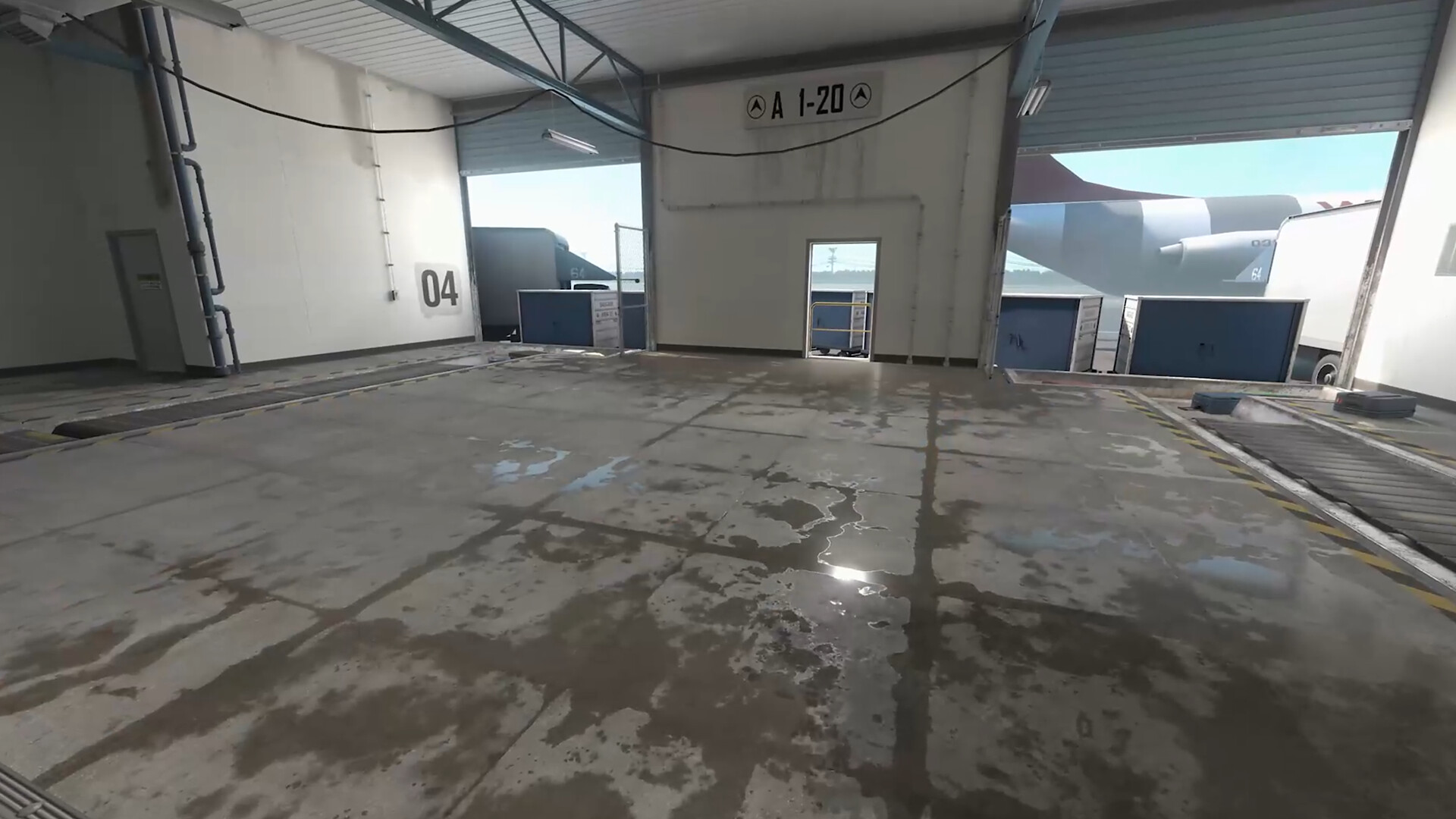
Counter-Strike 2 does not ease you in. The moment you step off spawn on Mirage or Dust2, you are already behind — behind players who have spent years memorising exact pixel-wide gaps, pre-aim habits, and the specific sounds of footsteps on wooden stairs versus concrete. Angle knowledge is not a secondary skill you develop after getting comfortable with the guns. It is the foundation. Everything else — movement, economy, utility — sits on top of it.
This guide is for players who are tired of dying to the same corner three rounds in a row. It covers how angles actually work in CS2, which habits kill new and intermediate players fastest, and how to build positional awareness through deliberate practice rather than passive repetition. There is no fluff here about 'map awareness' without specifics. We are going to talk about what you should actually be doing.
Why angles are a pre-fire conversation
Every duel in CS2 is preceded by an implied negotiation about information. When you hold a wide angle — say, standing one full body-width from a corner — you give your crosshair a larger area to cover but you also expose yourself to players who have already pre-aimed that position. When you hold a tight angle, pressing close to the wall so only a sliver of your body can be seen, you reduce the opponent's reaction window. This is called 'peeking tight' or 'playing the pixel,' and on a map like Inferno, where B-site is a maze of overlapping sightlines, it separates mid-ranked players from those pushing toward the top of the competitive ladder.
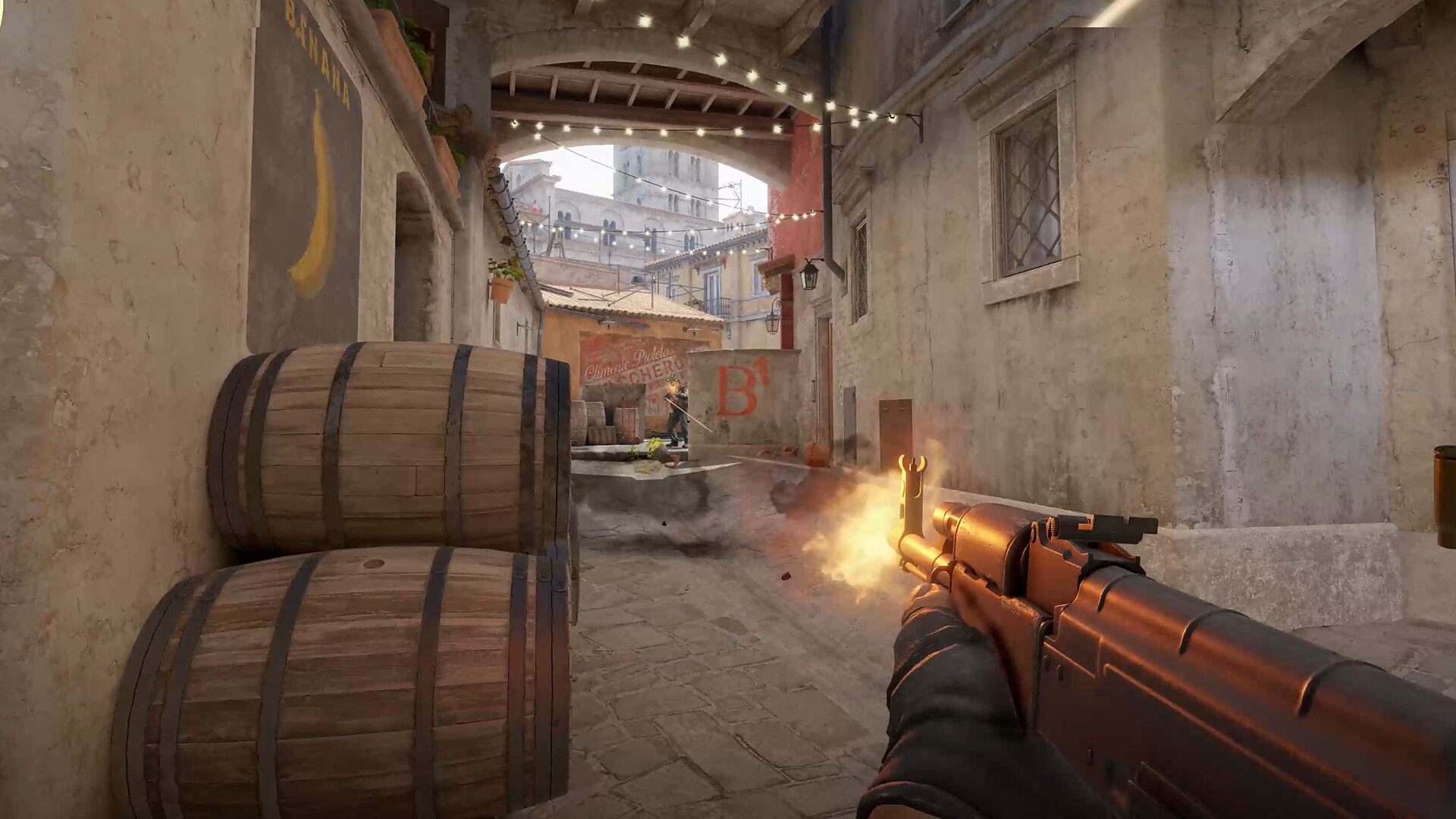 Atmospheric detail in Counter-Strike 2.
The critical concept underneath all of this is pre-aiming: placing your crosshair at head height on the exact spot where an enemy is likely to appear before they appear. CS2's subtick system, which replaced the tickrate model from CS:GO, makes registration more consistent than ever, which means there is less mechanical forgiveness for players who react late. If your crosshair is at knee level when someone peeks A-main on Mirage, you are already at a deficit that raw aim speed cannot reliably rescue.
The wide-versus-tight distinction on real maps
Take Dust2's mid-doors. A CT holding short from the top of mid has a choice: stand back near the double doors and hold a wide angle covering a large portion of short stairs, or push into the doorframe and hold tight, forcing the T who peeks to see only a small silhouette with almost no reaction time. Neither is universally correct — it depends on whether your team has smoked mid and whether you expect a rush — but understanding the tradeoff is what lets you make an active decision rather than defaulting to whatever feels comfortable.
Mirage's B-apartments illustrates the other side. When a T player tries to clear van from apartments, standing too far back from the ramp means they expose themselves to a player holding van before they have finished swinging. The correct play is to clear van from the side of the apartment wall, using the corner itself as cover, checking the angle before committing to the ramp entirely. This is not an advanced technique — it is basic corner clearance — but it is the kind of thing that new players almost never do instinctively because their attention is on finding the enemy rather than controlling their own exposure.
Crosshair placement is an angle skill, not an aim skill
This point gets obscured by the community's fixation on raw aim metrics — headshot percentage, ADR, kill stats. But crosshair placement is closer to a positional discipline than a mechanical one. When you walk through T-spawn on Nuke and your crosshair dips to the ground every few steps, you are spending micro-seconds of reaction time on upward correction that could be spent on the shot. Keep the crosshair at head height, period. On Nuke's outside path especially, where players can appear from hut, a ramp, or the elevated vents, having a consistent vertical discipline prevents you from getting caught mid-correction.
Horizontal placement matters just as much. Holding crosshair at the exact edge of a corner — not several metres past it, which forces a large swing to make contact — means the opponent steps into your aim rather than you chasing theirs. Professional players like s1mple or ZywOo do not have superhuman reaction times; they have crosshair placement disciplined enough that the distance between where they are already aiming and where the enemy appears is minimal. Practising this on aim training maps like aim_botz or in CS2's own deathmatch mode, specifically hunting for corner duels rather than open-space spray practice, builds this habit faster than most players realise.
Movement and the angle relationship
You cannot decouple movement from angle discipline. Counter-strafing — tapping the opposite directional key to kill momentum before shooting — is a CS staple that CS2 preserves essentially intact, but what fewer players understand is how movement affects your angle exposure timing. When you peek a corner while still carrying velocity, you remain visible for longer than if you stop sharply at the edge. This gives a patient opponent, one holding the angle before you arrive, additional time to react. On long corridors like CT-spawn to B on Inferno, a messy, drifting peek is almost always punished; a stop-and-step peek, where you fully halt at the corner edge before committing, is far harder to read.
The 'jiggle peek' — rapidly tapping in and out of a corner — is useful for baiting information or making a lurking opponent reveal themselves, but it is frequently misused by intermediate players as a substitute for committing. If your jiggle peek did not get a shot and did not pull information, you have just given away that you are there. Against experienced players who pre-aim aggressively, that information costs you the round. Use it deliberately, not as a nervous tic.
Building a map-by-map angle vocabulary
Trying to learn every sightline on every active-duty map simultaneously is a reliable way to learn none of them. A more productive approach is to pick one map and one side — CT or T — and spend several sessions in an offline bot match or practice server identifying every angle you died from in recent ranked games. The workshop map Recoil Master is often cited for spray patterns; a less discussed but equally structured tool is the community 'aim training' versions of Mirage and Inferno that strip out objectives and let you walk angles repeatedly. Valve's own practice mode, with bots disabled and unlimited time, works fine too.
What you are building is a mental model of sight-line ownership: who has the advantage at each position depending on which side is pushing. On Overpass, for example, the bathrooms area gives the CT side an inherent angle advantage if they hold tight to the interior wall because they see the T before the T resolves their silhouette. Recognising these structural advantages per map — rather than learning individual 'spots' as isolated tips — means your knowledge transfers when opponents play unconventional positions.
Reading opponents through angle behaviour
Once you have a consistent angle vocabulary on a given map, you start reading what opponents are doing, not just reacting to them. A T player who peeks mid on Mirage with wide, high-velocity movement is often either inexperienced or expecting a smoke to be in place. A CT who plays extremely tight on A-site cat is either an experienced player minimising their exposure window or someone who recently died from a wide position and is overcorrecting. Neither interpretation is guaranteed, but building these probabilistic reads is what eventually separates a player with solid mechanics from one who also has positional intelligence.
Communicating angle information to teammates is where this knowledge compounds. Saying 'he's playing tight B-van' or 'CT was wide on long' gives your team actionable data to work with rather than generic callouts. Most ranked teammates will not coordinate perfectly, but even partial information — 'there's a lurker holding short' — restructures how the next duel plays out. The game's mechanical ceiling is high, but the cognitive ceiling is higher, and angle discipline is where a lot of that ceiling lives.
None of this requires a coaching subscription or hundreds of hours in specialist aim trainers. It requires slowing down enough, particularly in deathmatch, to ask why you died from a specific corner rather than just respawning and repeating. CS2 punishes passive pattern-formation; the players who improve fastest are the ones treating each death as a sightline they have now been taught, at cost, to respect.
Reader Q&A
Is this guide spoiler-free?
We avoid story spoilers. Mechanics and systems are explained directly, but plot beats are not covered.
How current is this guide?
Updated for the most recent patch as of June 2026. Major balance changes are noted inline.
Do I need DLC for these strategies to work?
No. Everything covered here applies to the base game. Where DLC content is referenced, we mark it clearly.
Will following this guide work on hardest difficulty?
Mostly — yes. A few strategies become tight on hardest difficulty; we flag those where relevant.
Reader comments