
Arthur Morgan will make you feel every mile of it
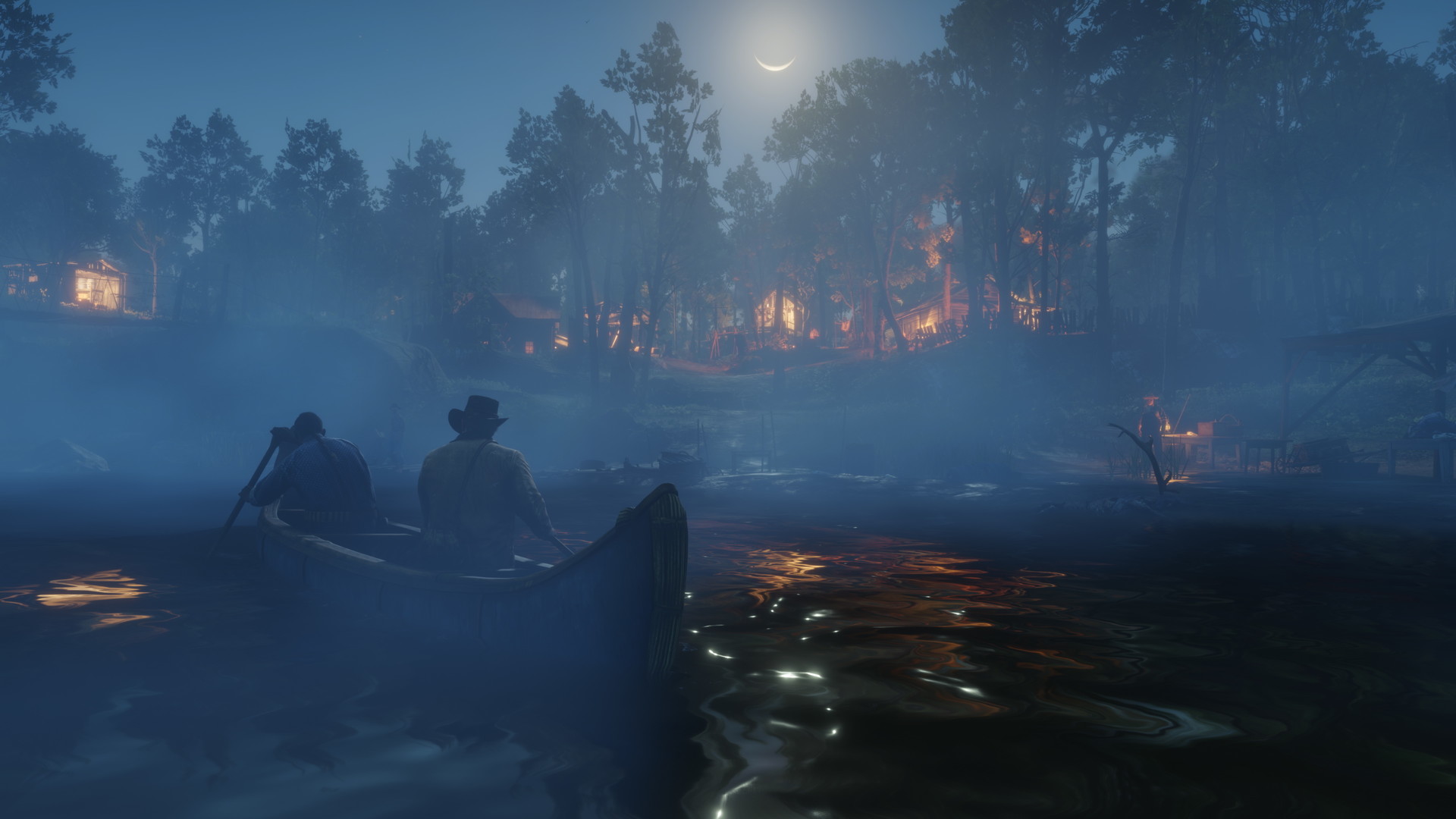
Red Dead Redemption 2 is not a game that wants to be played fast. Rockstar built something in 2018 that punishes the habit most open-world games train into you — the habit of sprinting toward the next marker, skipping dialogue, treating the map like a checklist. Arthur Morgan moves at the pace Arthur Morgan moves, and if that irritates you in the first two hours, it is worth pushing through, because that friction is load-bearing. The game is asking you to slow down before it shows you what slowing down is for.
This guide is for people who just started, or who started once, bounced off the prologue's snowbound tutorial section, and want a clearer sense of what they are actually walking into. There is a lot of system here — Honor, Dead Eye, camp economy, weapon degradation, horse bonding — and most of it the game explains poorly or buries. So here is what you need to know, without the padding.
Get comfortable in Chapter 2 before doing anything ambitious
The prologue and Chapter 1 are essentially one long tutorial wearing a story hat. You do not have real freedom of movement until Chapter 2, when the gang makes camp at Horseshoe Overlook and the map cracks open. This is where new players tend to make a mistake: they see the open world and immediately ride toward New Austin or try to reach Saint Denis. Resist that. The southern and western regions have content tuned for later in the game, and more importantly, you need Chapter 2 to get your bearings on how Arthur actually functions.
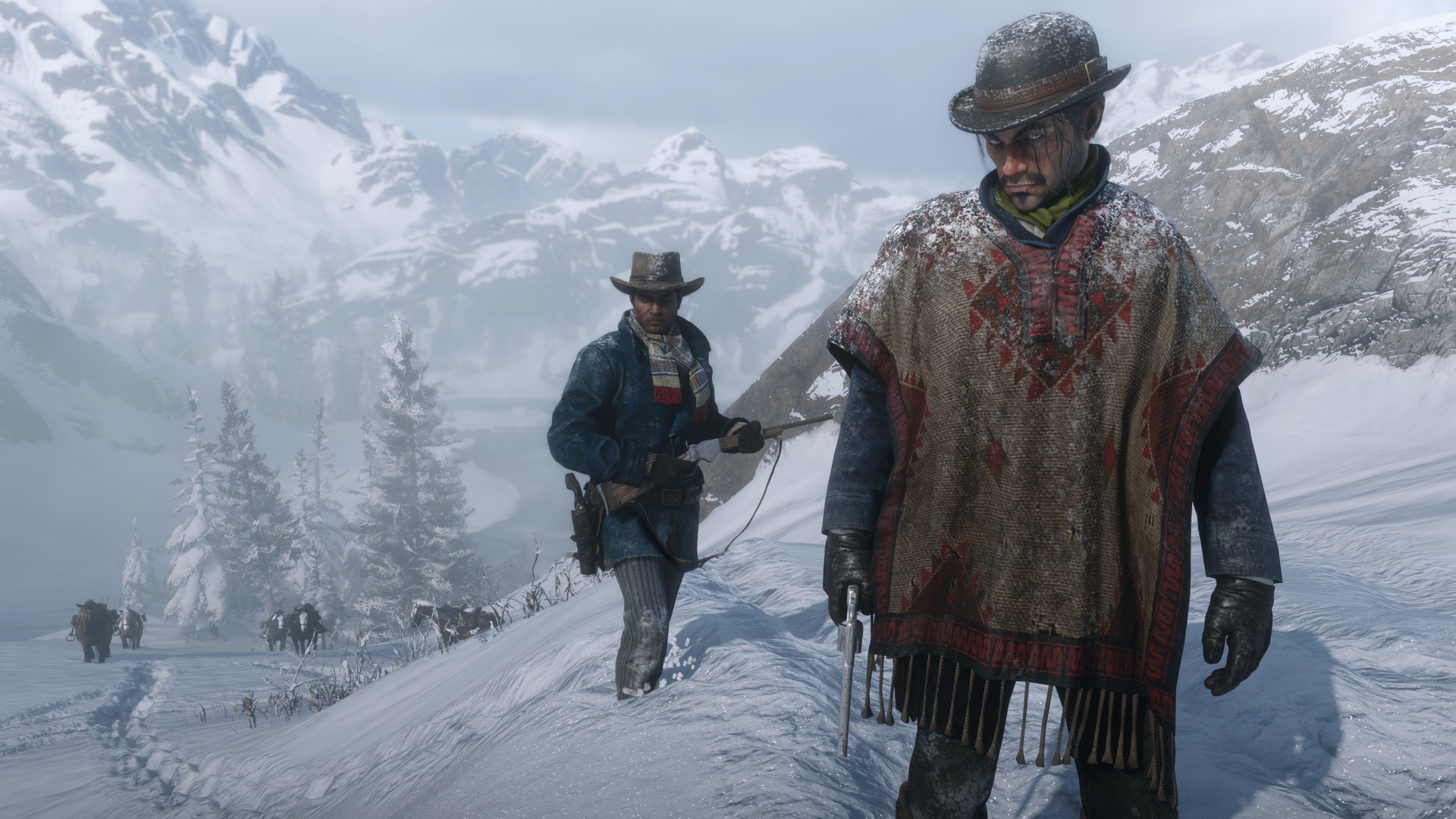 Scene from Red Dead Redemption 2.
Spend your first few hours in the Heartlands and the area around Valentine. Do a few stranger missions — the blue question marks on the map — and get comfortable with looting, with the Eagle Eye mechanic (hold both thumbsticks or the equivalent on PC), and with talking to NPCs without immediately drawing your weapon. The Honor system responds to nearly everything you do, and it affects how certain story beats resolve. You do not need to obsess over it, but you should know it exists and that antagonizing random strangers in town will quietly drag it down.
Dead Eye is your most important tool and most players underuse it
Dead Eye is the slow-motion aiming system, and it evolves across the game's chapters. Early on it auto-paints targets; later you mark shots manually. Most newcomers use it exclusively during story missions when they feel overwhelmed, then forget about it during open-world play. That is backwards. Dead Eye has its own Core that depletes and refills, it is tied to items like chewing tobacco and tonics, and using it regularly is what keeps you from getting killed by groups of enemies who have better positioning than you.
Once you unlock the ability to manually mark shots — which happens through story progression, not a hidden menu — you can tag three or four enemies in sequence before a firefight even starts properly. In a game where flanking AI and cover mechanics are less forgiving than something like The Last of Us Part II, Dead Eye is the equalizer. Keep your Dead Eye Core fed. Craft Potent Herbivore Bait or just buy chewing tobacco in bulk from general stores. It costs very little and the difference in combat survivability is significant.
Your horse is not a vehicle, it is a relationship with a health bar
Red Dead 2 tracks your bond with your horse across four levels, and each level unlocks tangible benefits — better handling on difficult terrain, the ability to call your horse from greater distances, reduced chance of the horse throwing you during a skirmish. The bond builds through riding together, brushing, feeding, and calming your horse when it panics. This is not decoration. A level-one bond horse on a narrow mountain trail is an actual liability. A level-four bond horse in a chase sequence handles like a vehicle you have actually driven before.
New players often grab whatever horse the game gives them at the start and ride it until it dies, then shrug and take another. That approach works, technically, but you forfeit most of the game's horse mechanics in the process. If you find a horse you like early — the Kentucky Saddler you can steal in the opening chapters is fine, the Missouri Fox Trotter available from certain stables in mid-game is significantly better — invest in it. Buy the upgraded saddle and stirrups from the stable menu, because stirrups in particular affect how fast your horse's stamina regenerates. It is one of the least-explained systems in the game and one of the most useful.
The camp economy is easy to neglect and annoying when you do
Horseshoe Overlook has a donation box. Dutch van der Linde, your charismatic and increasingly unreliable boss, will periodically remind you to contribute. A lot of players ignore this until the camp morale visibly deteriorates and Pearson starts cooking noticeably worse meals, which means Arthur gets weaker passive Health Core regeneration. Contributing regularly — even a small amount per in-game day — keeps the camp supplies stocked, which keeps your Cores recovering properly when you sleep or eat there.
Beyond donations, the camp upgrade ledger (look for Pearson and the ledger near the supply wagon) unlocks things like fast travel from camp, which is not available by default. That upgrade costs around two hundred and twenty-five dollars in-game, which sounds steep early on, but it eliminates a lot of tedious riding once you have opened up the story. Prioritize that one. The rest of the camp upgrades are nice-to-have; the fast travel post is the one that changes how you actually play.
Hunting is worth learning and not as complicated as it looks
The game has a three-star rating system for animal carcasses and pelts, and it uses a weapon suitability system that most players do not read carefully. Shooting a rabbit with a repeater rifle will get you a damaged pelt. The game will tell you this if you use Eagle Eye to examine an animal before shooting — it displays the ideal weapon type. Small animals need the Varmint Rifle. Medium animals take a bow with the right arrow type or specific pistols. Large animals like elk or bears can handle repeaters and rifles.
The reason to bother is Pearson's camp crafting and, more importantly, the Trapper. The Trapper appears as a vendor icon at several locations on the map and will craft clothing and equipment from perfect pelts that you cannot buy anywhere else. Some of those items have actual gameplay effects — the Legendary Bear Head Hat is cosmetic, but certain Trapper outfits provide passive bonuses to Core stamina. Hunting also generates reliable income early in the game, when story mission payouts are modest. You do not need to become a dedicated hunter, but knowing how the system works means you stop wasting time bringing back damaged goods.
The story will take the wheel eventually — let it
Red Dead Redemption 2 runs across six chapters and two epilogues, and the story shifts register significantly around Chapter 4. What starts as a fairly conventional outlaw-gang survival narrative — rob, run, argue with Dutch — starts accumulating weight in ways that a quick plot summary would not prepare you for. Arthur Morgan is a more carefully constructed character than most open-world protagonists, including earlier Rockstar leads. His journal, which he writes in automatically as you play, is worth reading. Not for lore completionism, but because the writing there is genuinely good and shows you things about him that the main cutscenes do not spell out.
The game's total runtime for story-only completion sits around forty to fifty hours for most players. With significant side content it stretches past eighty. That number can feel daunting, but the pacing — despite what early reviews debated — holds more consistently than something like GTA V's final act, which runs out of ideas before it runs out of missions. Red Dead 2 does not run out of ideas. It runs out of road deliberately. If you stick with Arthur Morgan past the midpoint, the back half of this game will cost you sleep in a way that has nothing to do with the hour you checked the clock.
Play it with subtitles on. Turn the world volume down slightly and the dialogue up. Ride without fast travel sometimes, especially in the first two chapters, because the ambient encounters — the stranger who flags you down on the road, the ambush that turns into something stranger, the aurora borealis over the Ambarino peaks at three in the morning — are not random noise. They are the game's actual argument for why this pace matters. RDR2 is one of the few open worlds that earns its own geography.
Reader Q&A
Is this guide spoiler-free?
We avoid story spoilers. Mechanics and systems are explained directly, but plot beats are not covered.
How current is this guide?
Updated for the most recent patch as of June 2026. Major balance changes are noted inline.
Do I need DLC for these strategies to work?
No. Everything covered here applies to the base game. Where DLC content is referenced, we mark it clearly.
Will following this guide work on hardest difficulty?
Mostly — yes. A few strategies become tight on hardest difficulty; we flag those where relevant.
Reader comments