
Stop punching trees: what Valheim actually wants from you
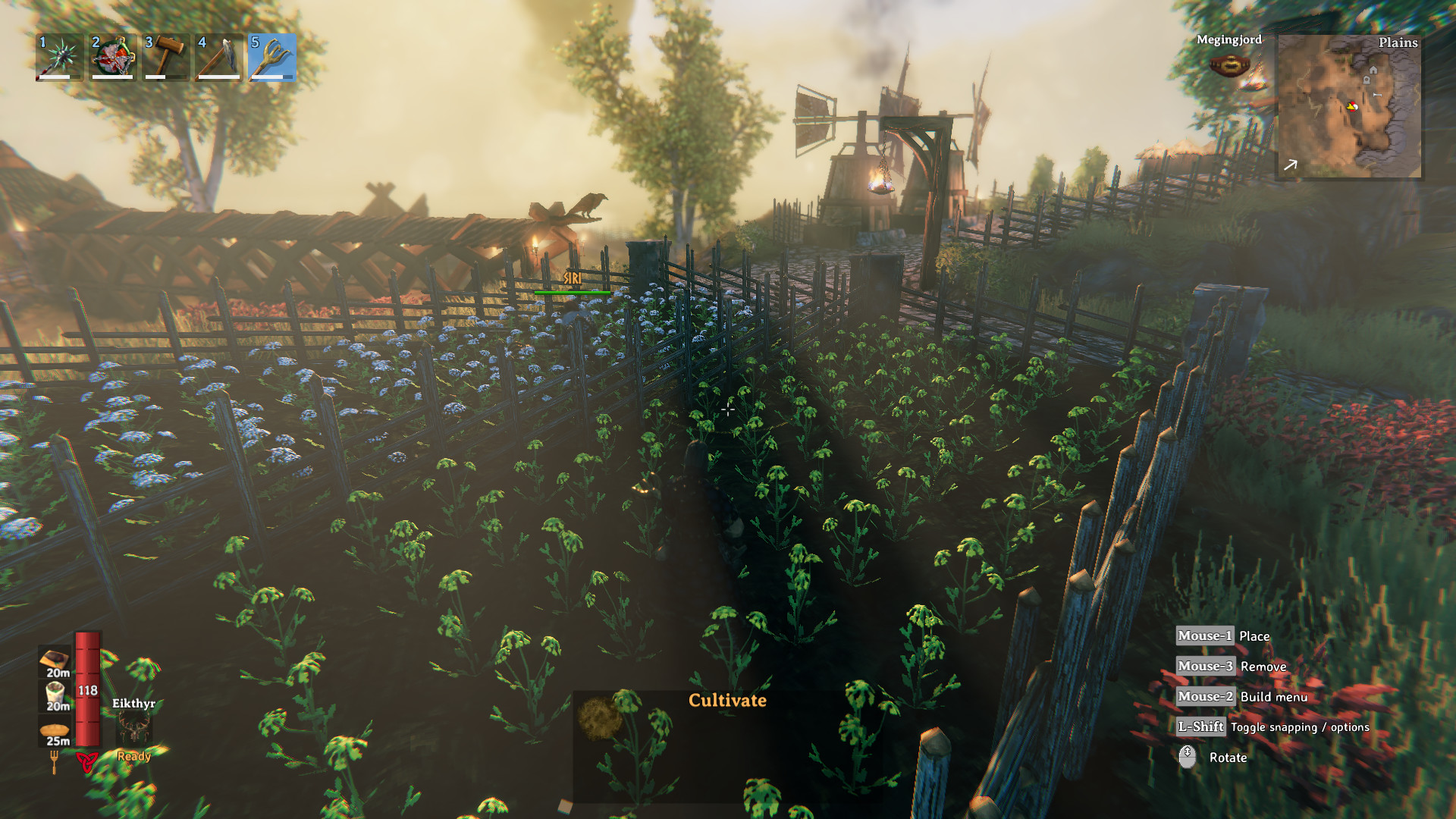
Picture this: you have just washed up on a procedurally generated Norse coastline, inventory empty, stamina bar already threatening to kill you, and your first instinct is to punch a tree. That instinct is wrong. Or rather, it is right for about thirty seconds and then becomes a habit that will quietly undermine the next ten hours of your playthrough. Valheim, developed by Iron Gate Studio and still in early access since February 2021, has sold over twelve million copies on the back of genuinely good design — but it communicates that design badly. The in-game guidance is almost aggressively sparse. This article fills that gap.
This is not a walkthrough. You can find those anywhere. This is a piece about how Valheim actually works — the logic underneath the crafting menus and biome gates — so that when you do consult a wiki, you already understand why the answer is what it is. Newcomers will spend less time confused. Players who have bounced off the game once will recognize where they got stuck. Intermediate players who cleared the first two bosses on muscle memory will hopefully find something that reframes the mid-game stretch, which is where most runs quietly die.
The stamina system is not your enemy; ignoring it is
Valheim uses stamina for everything: running, swinging a pickaxe, swimming, dodging, jumping. New players treat it like a health bar — something to manage when it gets dangerously low. That framing is backwards. Stamina is your primary resource, more immediately limiting than food or equipment. Running it to zero during a fight does not just slow you down; it locks your dodge roll, which is the main defensive tool in a game with no block-while-attacking mechanic. The trolls in the Black Forest do not need to one-shot you. They just need to swing while you are standing still holding an empty stamina bar.
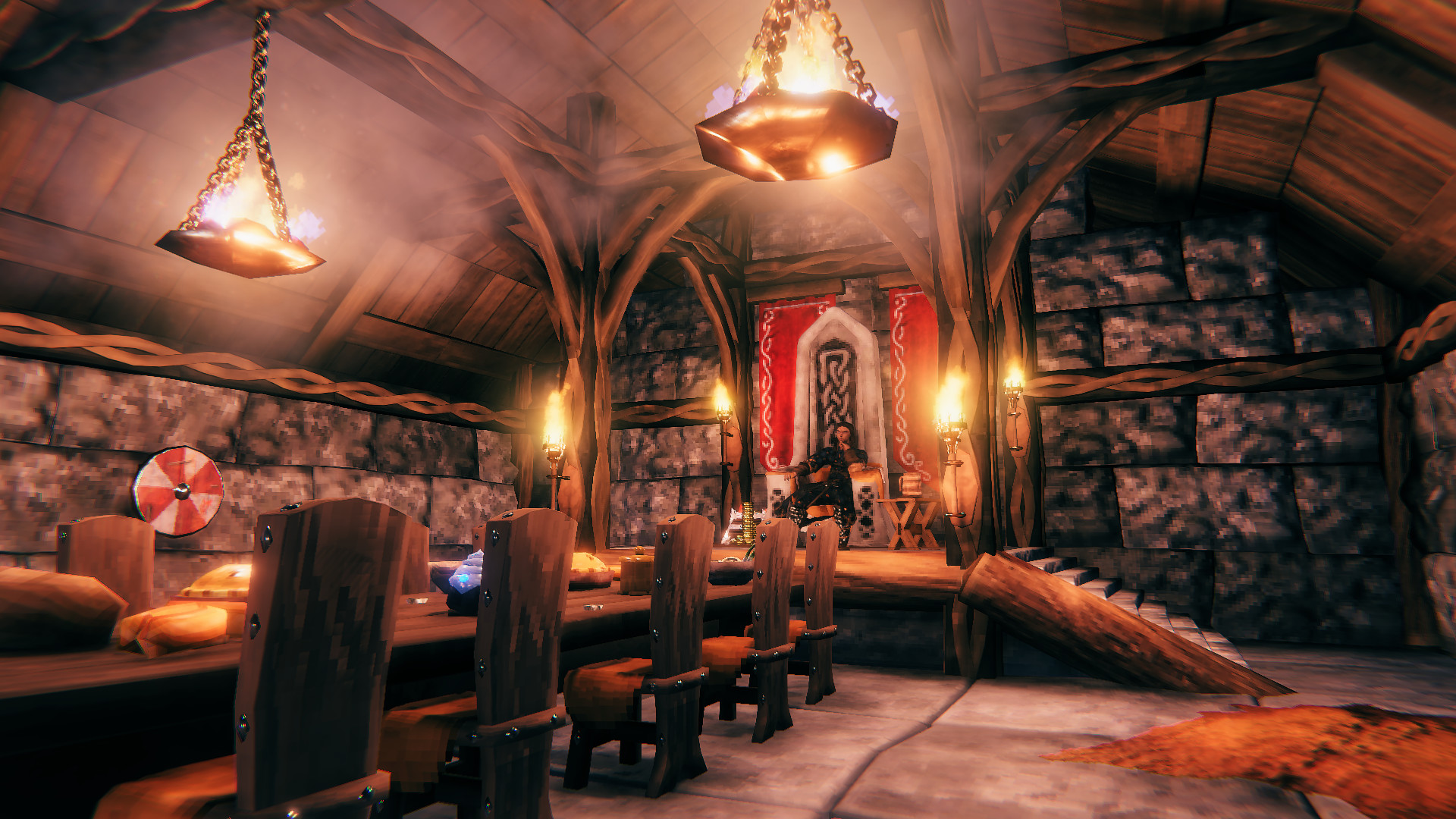 Atmospheric detail in Valheim.
The fix is food composition, not food quantity. Valheim gives you three food slots, and each food item contributes independently to your health and stamina pools. Neck tail, cooked meat, and grilled neck tail all raise health. Honey, raspberries, and mushrooms skew toward stamina. In the early game, running a mixed plate of something like cooked meat plus mushrooms plus raspberries keeps both bars functional without requiring you to farm anything difficult. The moment your stamina budget stops feeling punishing, the combat clicks. You can kite, you can reposition, and you stop losing fights to fatigue rather than tactics.
What the biome progression is actually telling you
Iron Gate locked Valheim's biomes behind boss kills, and the explicit reason is gear gating: you need Eikthyr's antler to craft a pickaxe, which unlocks stone and ore, which unlocks bronze, which lets you fight The Elder, and so on. That chain is real. But the subtler point is that each biome is a material classroom, not just a difficulty ramp. The Meadows teaches you construction fundamentals. The Black Forest teaches you ore logistics — specifically, that you cannot teleport metals through portals, which forces you to think about boat routes early. The Swamp teaches poison resistance and wet debuff management. Each zone has a mechanic it wants you to internalize before you push further.
Players who rush bossess often hit a wall at Bonemass, the third boss, not because they lack the right weapon (a mace works fine) but because they have never built a base near water, never run ore by longship, and never cooked Serpent Stew, which is one of the best mid-game food items and requires ocean sailing to source. The biome you are in is always trying to teach you the skill the next biome demands. If something in the current zone feels tedious or opaque, that is usually a sign you are meant to slow down and work out what it is rewarding.
Base placement is a decision, not an aesthetic choice
A lot of Valheim players plant their first base wherever they first logged in and then spend the rest of the run regretting it. Starting area location matters less than proximity to resources you will need continuously. Surtling cores come from the Black Forest's burial chambers and are required for smelters and kilns — the backbone of any metal operation. Building your second base inside or adjacent to a Black Forest biome, near a coastline with a natural harbor, means your ore-to-bar pipeline does not involve moving heavy cargo across hostile terrain every single session.
The game's comfort mechanic, which provides a rested bonus extending your health and stamina regeneration for up to 24 in-game minutes, scales with the number of comfort items in your base. A chair is worth one point. A banner is one point. A round table is three. Stacking comfort up to the current cap (18 is achievable in the mid-game with some carpentry effort) effectively gives you a persistent stat boost while you are in the field. Players who build purely functionally and never invest in comfort decorations are leaving a meaningful performance advantage behind. The rested buff is not flavor. It is infrastructure.
Skills go up by doing the thing — so do the thing deliberately
Valheim uses a per-skill XP system where each skill improves through use. Axes level up by chopping. Bows level up by firing. Jumping — genuinely — levels up by jumping, which sounds absurd until you realize level 50 jump skill meaningfully reduces stamina consumption per jump, which matters on uneven mountain terrain. The trap new players fall into is gravitating toward one weapon type early and then finding, twenty hours in, that their alternatives are all at level zero. Swapping to a new weapon class mid-game feels like starting over because, for that skill, you are.
The practical answer is deliberate cross-training in safe conditions. Clear Meadows draugr camps with a spear sometimes. Practice bow shots on boar rather than saving arrows for enemies that matter. Dying costs you five percent of your skill levels across the board, so banking progress in multiple weapons means a bad death does not gut your entire combat capability. Iron Gate is clearly aware of this tension — death is punishing but never permanent, and the skill floor for any weapon type recovers fast if you actively use it. The system rewards players who treat the world as a training ground rather than a series of objectives.
The ocean is not optional
A surprisingly large proportion of players reach the Swamp biome without having built a Karve or a longship, ferrying copper and tin by raft or avoiding the ore-transport problem entirely by building adjacent to every deposit they find. This works, barely, until it doesn't. The Plains biome, which contains Fuling villages and the materials for tier-five iron-equivalent gear, almost always requires ocean travel to reach in useful quantity. The Mistlands, added in December 2022, doubles down on this: many Mistlands zones are coastal or island-adjacent, and navigating there without sailing competency means arriving underprepared.
The Karve costs ten ancient bark, thirty fine wood, twenty resin, and ten deer hide. None of those materials are rare by mid-game. Build it before you feel like you need it, find the ocean wind patterns, learn to tack against headwinds (which requires dropping sail and using oars — the game does not tell you this clearly), and scout the map from the water. The world generation puts biomes in rings radiating outward from the spawn point, so ocean travel is also the fastest exploration tool available. Players who befriend the ocean early spend far less time in the late game wishing they had.
What to do when a run stalls
Valheim runs stall for three reasons: you are under-geared for the next boss, you have run out of a critical resource and do not know where to find more, or you are simply bored of your current base and reluctant to push forward. The first two have wiki solutions. The third is a design feature disguised as a problem. Iron Gate built the game around the idea that establishing a new forward base near each biome transition is intrinsically satisfying — the process of scouting, clearing a small perimeter, setting up a portal back to your main base, and then advancing is meant to be the game, not the interlude between bosses.
If a run stalls, audit your forward presence. Do you have a Swamp-adjacent base with a smelter? A Mountain camp with a fire (which prevents the freezing debuff that will otherwise kill you slowly in the Drakes)? A Plains outpost that lets you respawn near Fuling territory without the twenty-minute walk back? Valheim is a logistics game wearing a survival game's clothes. When forward momentum feels gone, the question is almost never about combat difficulty. It is about infrastructure. Build the outpost. Light the forge. Stop punching trees in the Meadows when the Swamp is waiting.
Quick facts
Is this guide spoiler-free?
We avoid story spoilers. Mechanics and systems are explained directly, but plot beats are not covered.
How current is this guide?
Updated for the most recent patch as of June 2026. Major balance changes are noted inline.
Do I need DLC for these strategies to work?
No. Everything covered here applies to the base game. Where DLC content is referenced, we mark it clearly.
Will following this guide work on hardest difficulty?
Mostly — yes. A few strategies become tight on hardest difficulty; we flag those where relevant.
Reader comments