
The evolution of heist set-pieces in video games — a 25-year timeline
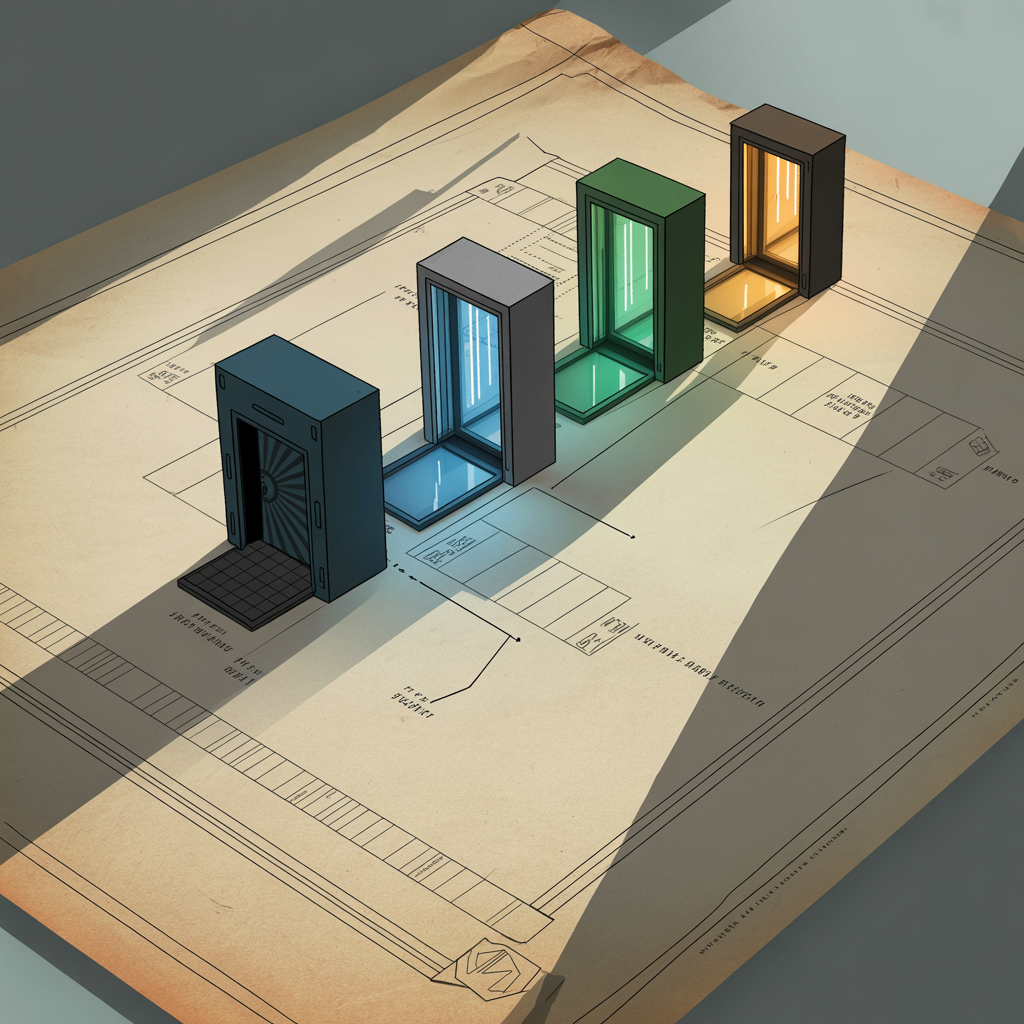
A single establishing shot: a security guard checks his watch, a camera sweeps a corridor, and somewhere below street level your crew is forty seconds from the alarm going off. That image — tension, architecture, countdown — is the DNA of the heist set-piece, and video games have been refining it for twenty-five years.
The genre did not arrive fully formed. It borrowed from Heat (1995), from Ocean's Eleven, from the procedural efficiency of crime fiction, and it slowly learned to translate cinematic tension into systems a player could actually break. What follows is a rough archaeology of how that happened.
1999–2004: Crime as backdrop, not system
Driver (1999) and Mafia (2002) planted the flag early. Neither was strictly a heist game — Driver gave you a wheelman's-eye view of organized crime, while the original Mafia used mob-owned venues and protection rackets as story scaffolding rather than interactive puzzles. The narrative stakes were high; the agency was limited. You drove, you shot, you watched cutscenes.
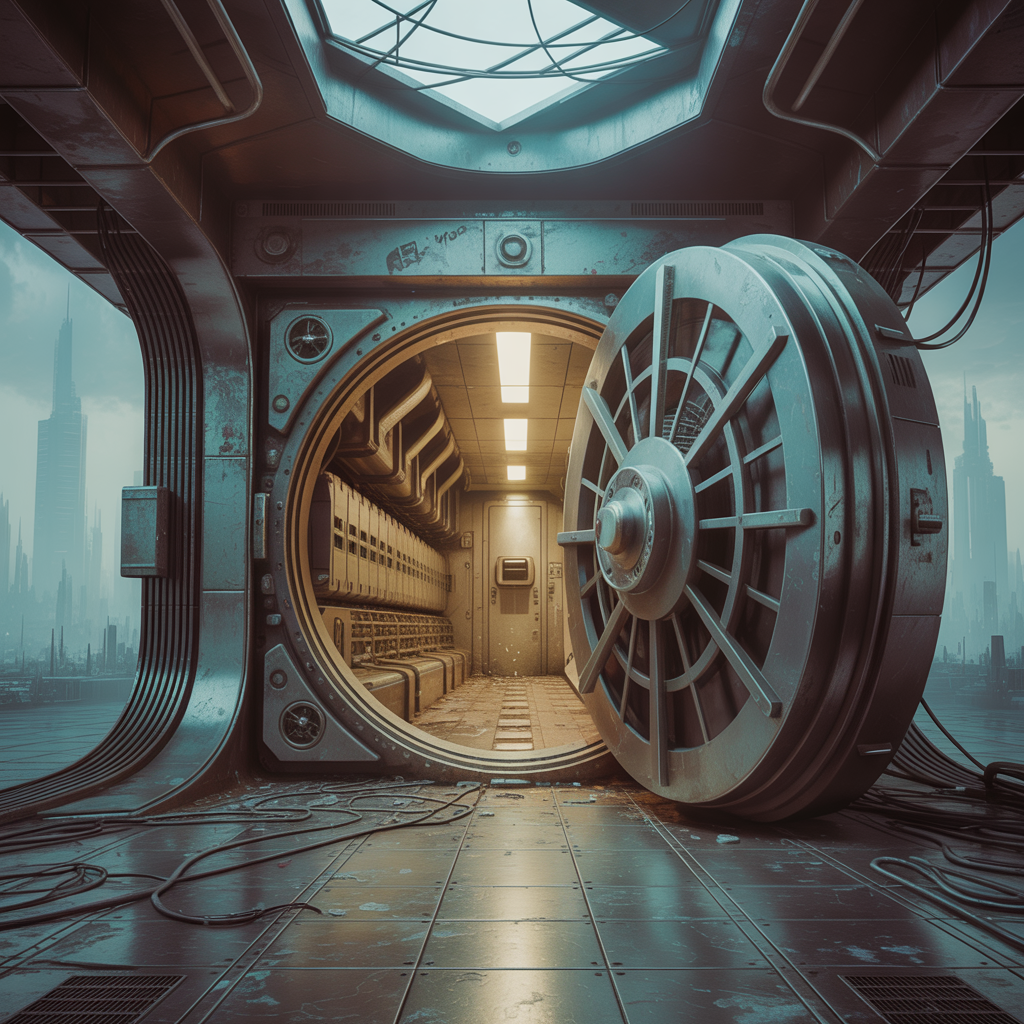 Editorial illustration of the scene.
What these games got right was atmosphere. The Mafia trilogy's approach to mob-owned spaces — smoky back rooms, figures who run numbers through legitimate front businesses — established a visual grammar that later games would steal shamelessly. The player was a participant in the world, not an architect of the job. That distinction matters.
2004–2010: Narrative stakes find mechanical weight
Grand Theft Auto: San Andreas (2004) introduced multi-stage heist missions with named roles — the wheelman, the lookout, the guy who goes in. It was still fairly linear, but it gestured toward planning as a distinct phase. You gathered crew, you cased locations, you chose approach routes. The fantasy of competence was baked in for the first time.
Fallout: New Vegas (2010) took a different path. The New Vegas Strip operates as a hub-zone with branching faction quests, and its venues — The Tops, The Ultra-Luxe, Gomorrah — function less as playgrounds and more as political terrain. Infiltrating The Tops to reach Benny is a miniature heist sequence built from social mechanics: disguises, dialogue checks, the slow mapping of a hostile space. The slot machines decorating those floors are set dressing for a power struggle, not an end in themselves.
2011–2015: Co-op and the emergence of the job loop
Payday 2 (2013) crystallized something that had been implicit for years: the heist loop is inherently replayable if you give players enough variables. Stealth or aggression. Civilian management. The slow drill and the sudden alarm. Overkill Software built a game that understood failure as part of the structure — a botched approach wasn't a game over, it was a different kind of run.
Meanwhile, Sleeping Dogs (2012) was quietly doing interesting work. United Front's Hong Kong crime story buried several tense infiltration sequences inside a game nominally about open-world brawling. The mission where Wei Shen penetrates a Triad gathering at the floating restaurant is paced like a film scene — patience, proximity, a moment of terrible recognition. Small-scale by Payday standards, but precisely authored.
2013–2019: The set-piece as blockbuster centrepiece
GTA V's approach to heist design in 2013 was genuinely structural. Missions like The Jewel Store Job and the later Diamond Casino Heist mission in Grand Theft Auto V gave players three distinct approach vectors — loud, smart, and aggressive — each with different prep missions and crew requirements. The design philosophy is essentially branching theatrical direction: same destination, radically different experience depending on who you hired and what you chose.
Hitman: Blood Money (2006) had already shown that a single building could be a puzzle box, but Hitman (2016) and its successors refined that idea into something approaching elegance. The Mendoza level — a vineyard with exactly the right kind of class-war subtext — tasks 47 with eliminating targets during a private tasting event. It's a heist in structure: survey the space, identify the marks, choose your moment. IO Interactive gave players a clockwork diorama to dismantle.
2020–present: Side-content depth and the ambient heist
Watch Dogs 2 (2016) and Payday 3 (2023) represent two ends of a spectrum that has widened considerably. Watch Dogs 2 framed its crew as hacktivists with a specific, almost-satirical Silicon Valley target list, which gave its heist sequences genuine thematic texture beneath the gadget systems. Payday 3's casino vault scenario takes inspiration from cinematic heist films but asks players to manage noise levels and NPC patrol routes with a precision that borders on obsessive.
Yakuza's arcade and cabaret club subgames demonstrate Sega's commitment to side-content depth, and Like a Dragon: Infinite Wealth (2024) continues that tradition — the card game subgames and venue management sequences scattered across Honolulu are not filler; they're texture. They make the world feel like somewhere people actually live and run operations, which is the same thing the best heist environments do at a macro level. Red Dead Redemption 2's poker scenes operate on similar logic: slowing the player down inside a charged social space, building pressure without a shot being fired.
What twenty-five years actually built
The heist set-piece evolved from cutscene motivation to genuine systemic expression. The games that lasted — Payday 2, GTA V's multi-stage jobs, Hitman's sandbox murders — understood that the planning phase is as important as the execution, and that meaningful choice requires consequences the player can actually trace back to a decision they made.
The subgenre has a tendency to mistake spectacle for depth, and the next twenty-five years will probably sort out which studios know the difference. The ones to watch are building spaces that reward careful observation — not bigger explosions, but more believable clockwork. That's a harder problem, and it turns out it's been the interesting one all along.
Quick facts
What's the standout set-piece in this game like?
Mission-driven and well-paced. Multiple approach angles — stealth or loud — and consequences depend on enemy AI and scripted triggers. Most players settle into a rhythm by the second attempt.
How long is the major mission arc in this game?
Around 4-8 hours depending on how thoroughly you scout. The full campaign is significantly longer; this arc is one set-piece among many.
Do I need prior series knowledge before playing this game?
Most entries in this lineage stand alone. Helpful context if you've played the predecessors, but not required. Each title resets the player's frame of reference.
What makes a heist-style sequence land?
Sightline clarity, NPC density, audio cues, set-piece pacing. When all four align, the sequence is memorable. When even one's off — say, flat NPC behaviour — it falls flat.
Is this game accessible to newcomers to the genre?
Generally yes. Systems are introduced gradually and difficulty is forgiving on default. Veterans will get more from the deeper systems, but the surface layer welcomes new players.
Which films influenced this design lineage?
Soderbergh's Ocean's Eleven, Mann's Heat, and Scorsese-era crime films are the obvious roots. Designers from this subgenre have cited those films in interviews going back twenty years.
Reader comments