
Saints Row IV's Comedy DNA Doesn't Survive a Battle Pass
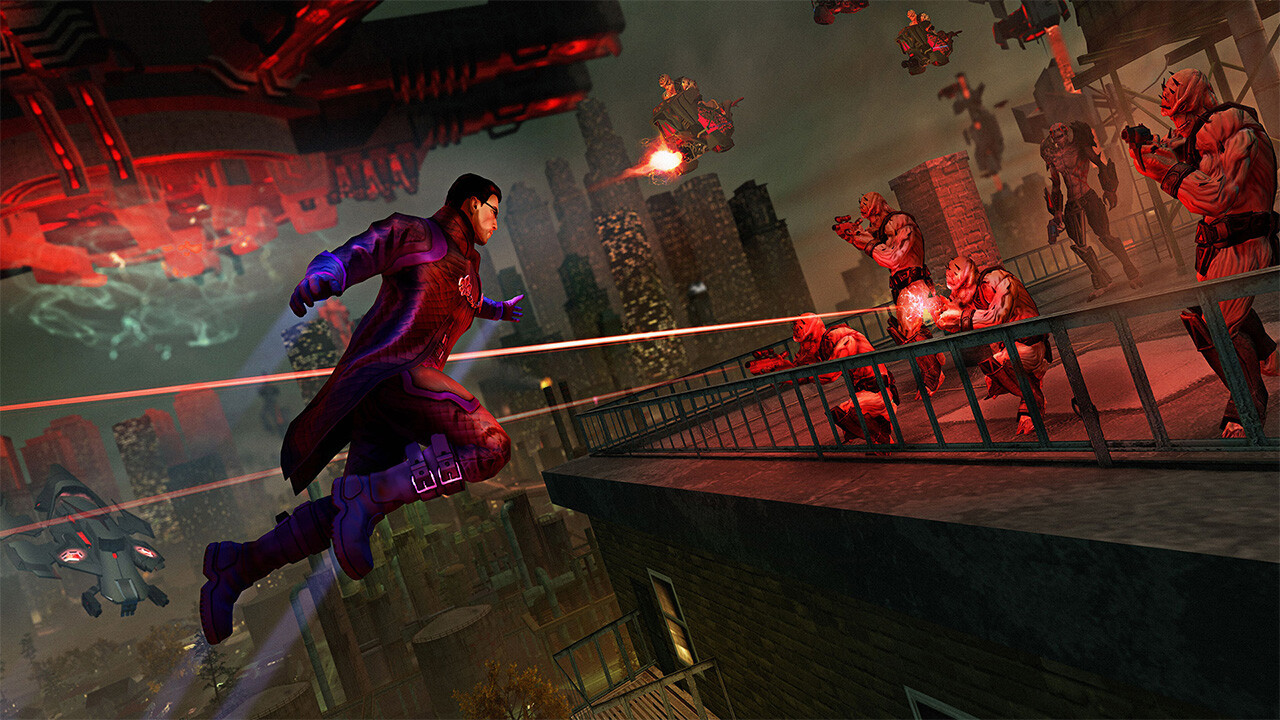
Picture this: you're the President of the United States, you've just been sucked into an alien simulation, and you're sprinting across a virtual Steelport at superhuman speed while a dubstep remix of 'What Is Love' plays on the radio. Saints Row IV launched in 2013 and committed fully to that absurdity. Every system in the game — the superpowers, the weapon upgrades, the mission structure — existed to amplify the joke rather than distract from it.
Deep Silver has been trying to bottle that energy ever since, with diminishing returns each time. The question that keeps resurfacing is whether a live-service layer can coexist with comedy game design. The short answer, based on what happened to the Saints Row IP across its post-IV life, is no. And it's worth examining why that failure is structural rather than cosmetic.
Comedy Requires a Contract With the Player
Saints Row IV worked because Volition made a specific promise and kept it: nothing is sacred, every power fantasy is on the table, and the game will never ask you to take it seriously. The dubstep gun turned enemies into involuntary dancers. The Inflato-Ray caused car tires to inflate grotesquely. These weren't easter eggs — they were the core design language.
That implicit contract between developer and player is fragile. The moment monetization enters the frame, the contract bends. A battle pass tells players that certain items — cosmetics, weapons, effects — are withheld pending payment. Withholding is a tonal statement. It signals that some content is premium, which signals that some jokes are premium, which quietly undermines the idea that everyone in the room is in on the same gag.
What the 2022 Reboot Actually Revealed
The 2022 Saints Row reboot — developed by Volition in a last attempt to reset the franchise — shipped with a season pass structure and cosmetic monetization built in from launch. Critics noted the tonal flatness almost immediately. The new cast lacked the anarchic chemistry of SR IV's version of the Boss, and the missions felt cautious in a way that the original games never did.
Whether the monetization caused the tonal shift or simply coincided with it is hard to disentangle. But the design logic is clear enough: when your revenue model depends on players returning over months to purchase cosmetic tiers, you design the world to keep them comfortable and vaguely aspirational rather than gleefully chaotic. Chaos, by definition, is bad for retention metrics.
The Comparison That Stings
Supergiant's Hades is the obvious counterexample for how to handle ongoing content in a game built around tone and character. Every piece of added dialogue, every new weapon aspect, every piece of cosmetic unlockable in that game reinforced the same voice. Nothing felt gated in a way that contradicted the fantasy. Supergiant charged once and committed entirely.
That's a roguelite, so the comparison has limits — Saints Row is an open-world sandbox with different retention pressures. But even within the open-world genre, Rockstar's approach to Red Dead Redemption 2's single-player expansion (which never came) versus the slow monetization drip of Red Dead Online shows how quickly a game's personality can be subordinated to a revenue calendar. Saints Row had far less goodwill to spend.
The Specific Damage a Battle Pass Does to a Joke
Saints Row IV's humor operated on density. Volition packed absurdity into every corner — weapon descriptions, radio station ads, ambient NPC dialogue. The joke was everywhere because it cost nothing to put it there. A battle pass economy inverts that logic. Content that would have been ambient flavor in 2013 becomes a tier-18 unlock in 2023.
When a dubstep gun skin sits behind a seasonal paywall, it stops being a piece of the world's comedic texture and becomes a product. Products aren't funny. Products are evaluated on whether they're worth the asking cost, which is exactly the kind of transactional thinking that kills comedic momentum dead.
What Would Actually Work
Volition closed in 2023, so the question is largely academic for Saints Row specifically. But the lesson applies to any comedy-forward franchise considering a live-service wrapper. The games that have managed the transition best — Deep Rock Galactic is the clearest case — do so by ensuring that paid cosmetics are genuinely optional and that the game's comedic identity is fully available to every player from the first session.
Deep Rock Galactic's dwarves are funny whether you've spent anything beyond the base purchase or not. The beard customization options are ridiculous regardless of your account tier. That's the standard. Saints Row IV at its peak operated on the same principle: the absurdity was the product, not the advertisement for a premium tier of absurdity. The franchise never figured out how to preserve that once someone decided it needed a recurring revenue model, and the games got noticeably less funny in almost direct proportion to how hard they tried to monetize the concept of fun.
Reader Q&A
Where did this information come from?
Combination of official statements, public filings, and corroborated reporting. We don't republish single-source rumors without verification.
When will the next update on this story drop?
Whenever there's something substantive to add. We don't publish empty 'still waiting' filler.
How do I get notified when there's an update?
Subscribe to the weekly newsletter — link in the footer. We email substantive updates only, no spam.
Reader comments