
Elden Ring's patch 2.7 lands as free-to-play pressure reshapes everything around it
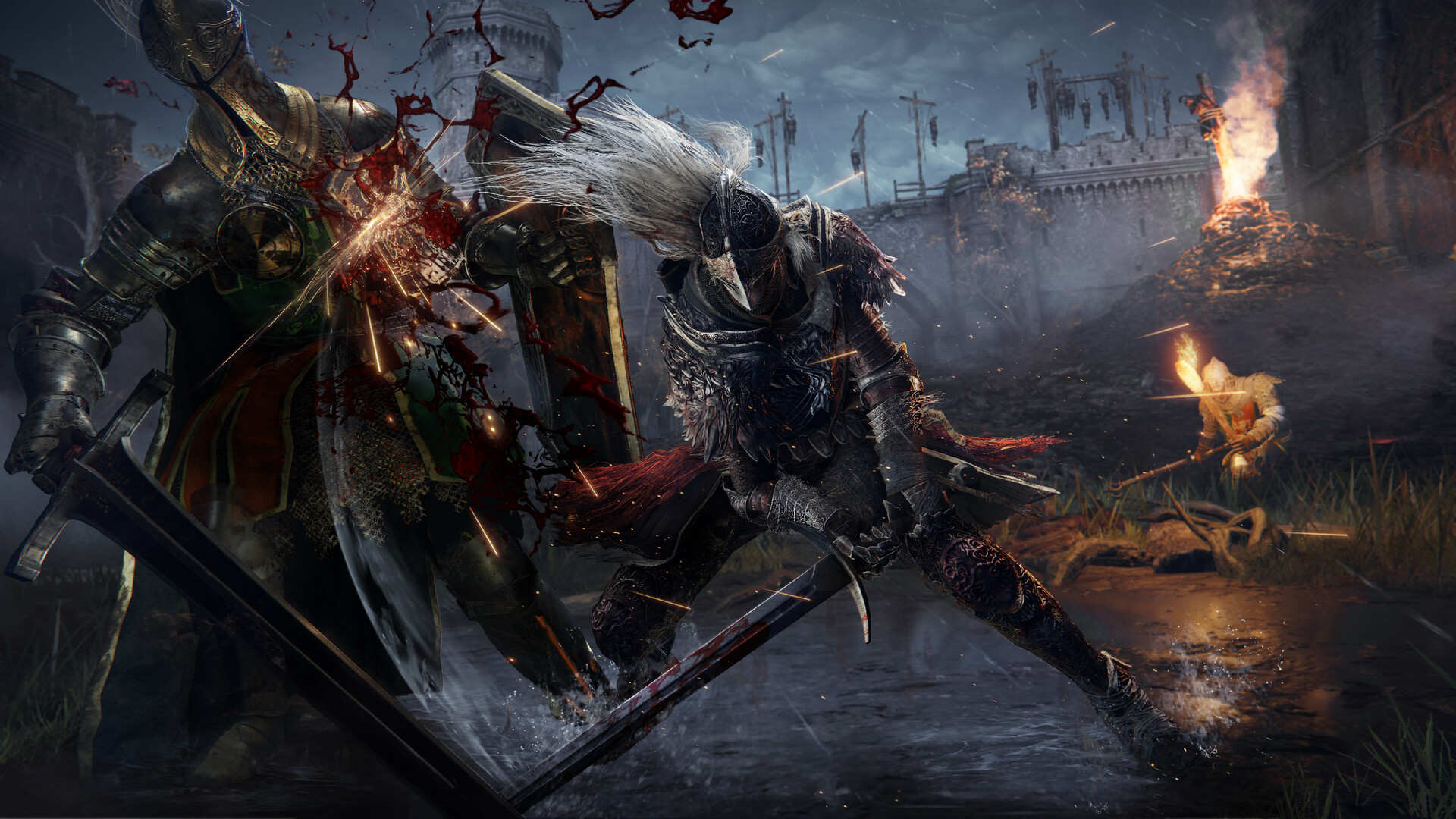
FromSoftware dropped patch 2.7 for Elden Ring last week, and the changelog is substantial enough to demand attention: Seamless Co-op compatibility adjustments, rebalanced poise thresholds on several late-game enemies, fixes to the notorious Radahn hitbox inconsistencies that had plagued PvP since the Nightreign announcement cycle began, and a quiet but significant tweak to stance-break recovery frames across heavy armour sets. None of this is a content drop. It is, instead, the kind of meticulous maintenance work that signals FromSoftware intends to keep the game's ecosystem tightly managed rather than let it drift into a legacy title the community outpaces and then abandons.
That the patch lands now, roughly three years post-launch, matters less for what it fixes than for the context surrounding it. The premium single-purchase model that Elden Ring represents is under sustained pressure from every direction, and watching FromSoftware continue to iterate without bolting on a battle pass or a cosmetics storefront feels increasingly like an act of deliberate defiance — or at least a commercial calculation that their audience will walk if that line gets crossed.
What 2.7 actually changes
The poise adjustments are where most players will feel the difference most immediately. Previously, mid-weight builds running the Crucible Knight armour set sat in an awkward middle band: tanky enough to absorb light weapon arts but reliably staggered by anything in the colossal weapon category, which made some high-end invasion encounters feel like a binary coinflip rather than a readable contest of spacing and timing. The new thresholds shift that boundary upward by a small but legible margin, giving those builds a clearer identity without pushing them into the kind of uninterruptible dominance that heavy plate absorbed before the poise nerfs of patch 1.09.
The Radahn hitbox corrections are narrower in scope but more symbolically loaded. That particular boss has been a focal point for community resentment across multiple patches, partly because his moveset demands such precise positional reading that any hitbox ambiguity registers as a betrayal of the game's own logic. Fixing it quietly, via patch notes rather than a developer video, is very FromSoftware: let the work speak, skip the community management theatre.
Free-to-play's gravitational pull
The broader context here is that the action-RPG space Elden Ring occupies is getting squeezed from below by titles that either launched free-to-play or have migrated toward live-service models after initial premium releases. Path of Exile 2 continues to expand its early access player base without a box price; The First Descendant demonstrated that a looter-shooter built entirely around ongoing monetisation can hit significant concurrent player numbers on Steam; and Genshin Impact has long since proven that the genre's core mechanical pleasures — character progression, equipment systems, world exploration — can be packaged in ways that do not require an upfront purchase.
This doesn't mean Elden Ring is in commercial danger. Shadow of the Erdtree shifted over five million units in its launch week and FromSoftware's retention numbers, while not publicly disclosed, are evident enough in the game's consistently healthy Steam concurrency. But it does mean that the model Elden Ring represents — pay once, receive a finished product, receive occasional patches, receive expansion DLC at a flat price — is no longer a default assumption. It is a deliberate positioning choice, one that has to keep earning its justification.
What the maintenance model signals
There is a version of this story where patch 2.7 is unremarkable routine upkeep, and maybe it is. But sustained post-launch maintenance on a game this old, without any new revenue mechanism attached, suggests something about how FromSoftware reads its own audience. The Elden Ring player base has demonstrated unusually strong tolerance for difficulty and unusually low tolerance for feeling managed or monetised. Bolting a seasonal cosmetics layer onto that community would be a fast way to erode the trust that makes those Steam concurrency numbers possible in the first place.
Larian offers a useful parallel: Baldur's Gate 3 received substantial post-launch patches, including the full Honour Mode addition, as free updates, and Swen Vincke was publicly explicit that there would be no paid DLC. The commercial logic was that goodwill is itself a durable asset, one that compounds across future releases. FromSoftware has never articulated this in quite those terms, but the behaviour pattern is consistent.
The Nightreign variable
The complication in all of this is Elden Ring Nightreign, the standalone co-op extraction-adjacent spinoff announced for a 2025 release. Nightreign's structure — discrete run-based sessions, a rotating roster of character classes, condensed three-player play — opens the door to post-launch monetisation in ways that the base game's design never really did. Additional character archetypes, cosmetic armour sets, challenge modifiers: the architecture is right there, even if nothing has been confirmed.
How FromSoftware handles Nightreign's post-launch economy will tell us more about their actual commercial philosophy than three years of Elden Ring patches combined. If Nightreign launches clean and stays clean, the goodwill argument holds. If it becomes the vehicle for the monetisation model the base game avoided, that retrospectively reframes some of the restraint we've been crediting to principle rather than product-fit.
Where this leaves the patch
Patch 2.7 is, on its own terms, good work. The hitbox corrections make a precise game more readable; the poise changes give mid-weight builds a more coherent identity; the co-op compatibility fixes address a long-standing friction point that modders had been compensating for since launch. None of it is glamorous. All of it is the kind of thing a studio does when it respects the time players have put into learning its systems.
The real story isn't the patch itself — it's what the patch represents at this particular moment, when the commercial logic of the industry keeps drifting toward extraction and FromSoftware keeps, quietly, not drifting with it. Whether that holds when Nightreign enters its own post-launch phase is the question worth watching; for now, the maintenance continues, and the model survives another month intact.
Reader Q&A
Where did this information come from?
Combination of official statements, public filings, and corroborated reporting. We don't republish single-source rumors without verification.
When will the next update on this story drop?
Whenever there's something substantive to add. We don't publish empty 'still waiting' filler.
How do I get notified when there's an update?
Subscribe to the weekly newsletter — link in the footer. We email substantive updates only, no spam.
Reader comments