
Why every great heist game eventually heads to the vault

There is a particular structural pull that the heist genre exerts on game designers — one that has less to do with criminal fantasy and more to do with architecture. A good heist story needs a physical center of gravity: a place that concentrates wealth, access restriction, and human drama into a single floorplan. The vault, the strongroom, the secured floor. Designers keep returning to these spaces not because players demand it, but because the space itself generates almost every mechanical tension a game might want.
You can trace the fascination back to cinema — Ocean's Eleven gave designers a template for the modular heist, where each crew member represents a distinct ability set; Heat (1995) offered the counter-argument that planning can still collapse at the seam of human error. Video games absorbed both lessons, and then added a third variable that film can never touch: the player might fail, and they have to try again. That repetition changes the structural logic entirely. A film vault scene is a single revelation. A game vault scene is a system you gradually understand.
Why secure spaces make good level design
Locked rooms are, at a fundamental level, solved design problems. They define scope. They give the player a boundary, a target, and a set of obstacles between the two. FromSoftware understands this with boss arenas — a fog gate closes, the space shrinks, attention focuses. Heist designers work the same principle across a larger canvas: the vault is the fog gate, and the whole surrounding building is the approach corridor. Everything outside it exists to teach you what waits inside.
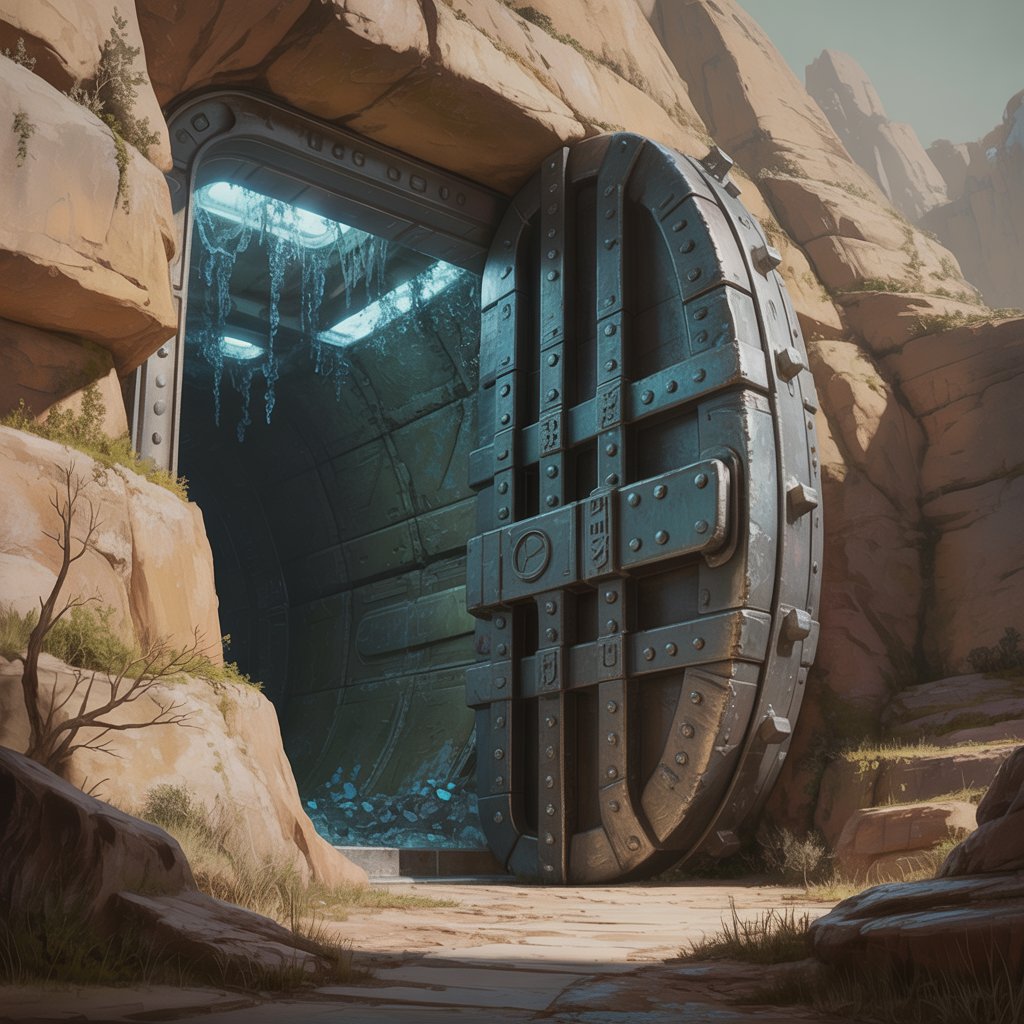 Editorial illustration of the scene.
The Diamond Casino Heist mission in Grand Theft Auto V demonstrates this with unusual clarity. Rockstar gives players three distinct entry routes — aggressive, silent, and a third that leans on impersonation — and each one reframes the same interior differently. The building's layout does not change. What changes is which doors are open, which guards are hostile, and where the player is permitted to be. That spatial consistency, reread through different permission states, is genuinely elegant design craft.
Planning phases as dramatic compression
Payday 3's vault scenario takes inspiration from cinematic heist films, but the planning phase that precedes it is doing structural work the films can't replicate. When players spend twenty minutes running reconnaissance, tagging cameras, arguing over which keycard to prioritize — they are building what screenwriters call dramatic investment. By the time the actual breach begins, the space already matters to them. Designers at Starbreeze understand that the climax lands harder when the player has mentally rehearsed it through preparation.
Watch Dogs 2 pulls a version of this with its ctOS data centers, wrapping the heist arc inside a hacker aesthetic that reframes physical penetration as information flow. The end target is still a server room — functionally a vault — but the approach involves cameras, drones, and remote access rather than lockpicks and cable ties. The planning system differs; the underlying tension geometry is identical. You are still drawing a mental map of a secured space and deciding in what order to dismantle it.
Faction pressure and the hub that holds everything together
Fallout: New Vegas operates at a different scale entirely. The New Vegas Strip functions as a hub-zone with branching faction quests, and the secured spaces within it are not vaults in the physical sense but power centers — places where access means leverage. The House Always Wins questline is a heist narrative dressed in roleplaying grammar: gather information, identify the mark, choose your moment, execute. Obsidian built the whole game around a city as a combination lock, each faction a tumbler that needs to align.
The Mafia trilogy handles this more conventionally but no less effectively — the mob-owned venues that drive its story arcs function as both setting and stakes. Control a venue, you control a neighborhood; lose one, and the power map shifts. Hangar 13's Mafia: Definitive Edition restores enough of the original's structural clarity that the venue sequences feel consequential rather than incidental. Space as political object is its own design discipline.
What repetition actually teaches
Like a Dragon: Infinite Wealth puts Ichiban Kasuga in Honolulu, and the game's side-content architecture — including its venue management mini-game threads and card game subgames — reflects Ryu Ga Gotoku Studio's long-standing conviction that the spaces around the main story should feel independently inhabited. Yakuza's arcade and cabaret club subgames demonstrate Sega's commitment to side-content depth specifically because those spaces reward repeat visits with new mechanical layers. The heist sensibility leaks into everything: every locked space has a key, and finding it is the pleasure.
This is what distinguishes the best heist sequences from the merely competent ones. Repetition in a bad heist game feels like punishment — you failed, start over. Repetition in a well-designed one feels like comprehension. Each failed run through Payday 2's Bank Heist: Gold maps a little more of the building into your head, so the next attempt begins with better information. The secured space is a puzzle, and the player is the puzzle-solver; the vault is just the moment the solution clicks.
The structural argument, made plainly
Strip away the aesthetic — the suits, the earpieces, the crew banter lifted wholesale from Soderbergh — and what remains is a design argument about focus. A heist campaign needs its sequences to escalate, needs each job to feel like preparation for a larger one, and needs a final space that concentrates all the acquired skill into a single extended test. The vault satisfies that requirement because it is, architecturally, a problem that demands everything you have learned.
What makes the subgenre durable is that this structure scales across budget and genre. Saints Row IV applies it to alien simulation logic; Hitman's Mendoza mission applies it to a vineyard that functions as a social-stealth maze with a secured exit that amounts to the same thing. The specifics shift; the geometry holds. If you want to know whether a heist game has done its job properly, ask yourself whether the final secured space felt earned — not surprising, not accidental, but inevitable, the way a well-constructed argument closes on the only sentence it was always heading toward.
Quick facts
What's the standout set-piece in this game like?
Mission-driven and well-paced. Multiple approach angles — stealth or loud — and consequences depend on enemy AI and scripted triggers. Most players settle into a rhythm by the second attempt.
How long is the major mission arc in this game?
Around 4-8 hours depending on how thoroughly you scout. The full campaign is significantly longer; this arc is one set-piece among many.
Do I need prior series knowledge before playing this game?
Most entries in this lineage stand alone. Helpful context if you've played the predecessors, but not required. Each title resets the player's frame of reference.
What makes a heist-style sequence land?
Sightline clarity, NPC density, audio cues, set-piece pacing. When all four align, the sequence is memorable. When even one's off — say, flat NPC behaviour — it falls flat.
Is this game accessible to newcomers to the genre?
Generally yes. Systems are introduced gradually and difficulty is forgiving on default. Veterans will get more from the deeper systems, but the surface layer welcomes new players.
Which films influenced this design lineage?
Soderbergh's Ocean's Eleven, Mann's Heat, and Scorsese-era crime films are the obvious roots. Designers from this subgenre have cited those films in interviews going back twenty years.
Reader comments