
Bloodborne still bites — and that's the whole point
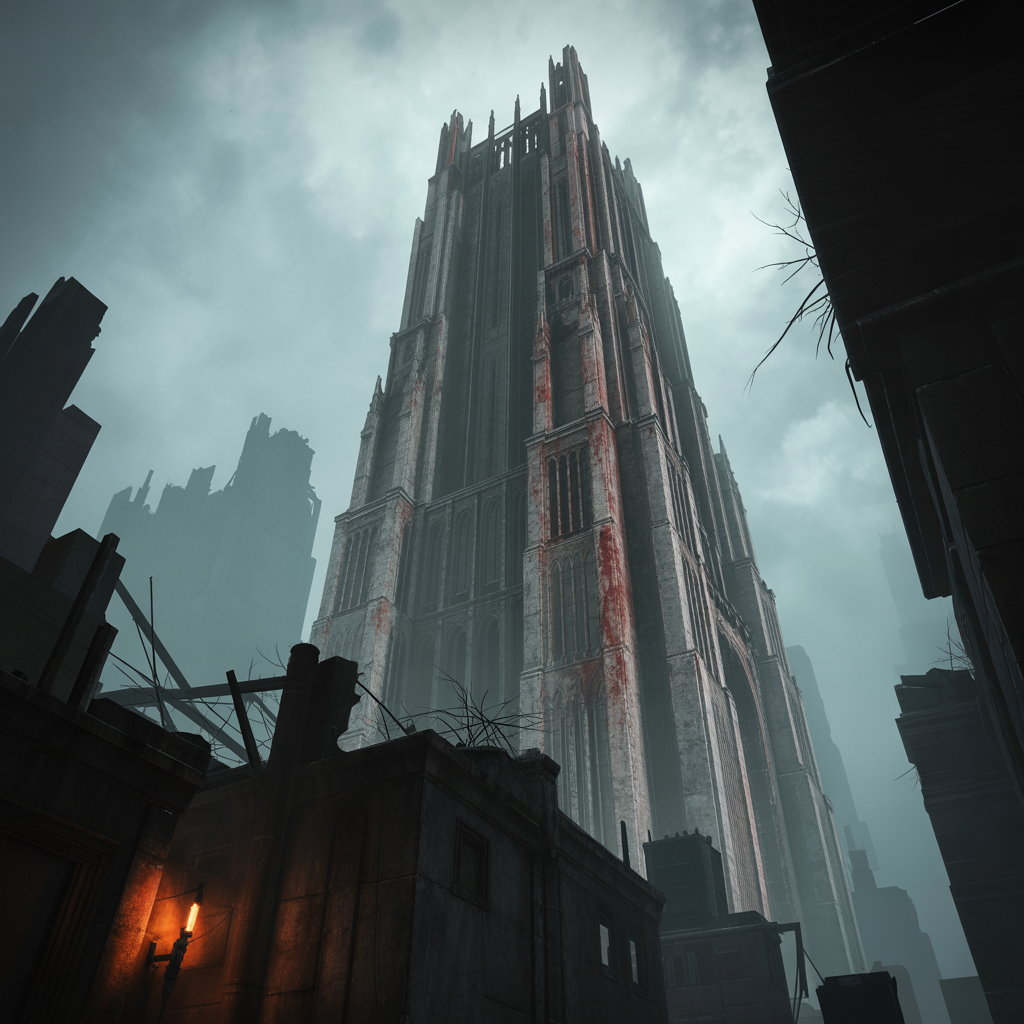
Picture this: a lamp post in Yharnam, wet cobblestones catching the orange glow, and a mob of torch-wielding villagers who have somehow already killed you four times in the first twenty minutes of the game. Not a boss. Not a special encounter. Just regular enemies arranged in a narrow alley with a dog around the corner that you keep forgetting about. This is the opening statement Bloodborne makes, and after ten years it still lands the same way — not as cruelty for its own sake, but as a kind of orientation. The game is telling you exactly what kind of relationship you're about to have.
Bloodborne came out in March 2015 and FromSoftware has not re-released it, remastered it, or touched it in any meaningful way since. It remains trapped on PlayStation 4, running at thirty frames per second, occasionally hiccupping below that on harder hardware. And yet the conversation about it refuses to die. After sixty hours across two playthroughs — the second deliberately choosing the Arcane build that I avoided the first time — it's clear why. The design is doing something specific that most action games still don't attempt.
The trick weapons are load-bearing architecture
Every weapon in Bloodborne has two forms that you toggle mid-combat with L1. The Threaded Cane shifts from a slender walking stick into a long chain-whip; the Kirkhammer goes from a one-handed sword into a comically massive stone hammer. This isn't a cosmetic toggle. The two forms have different range, different stamina costs, different stagger values, and in many cases different scaling with your stats. The Saw Cleaver's extended form gains a serrated bonus against beast-type enemies that the collapsed form doesn't carry. Knowing when to flip — and building combos that transition between forms mid-string — is the fundamental skill the game is trying to teach.
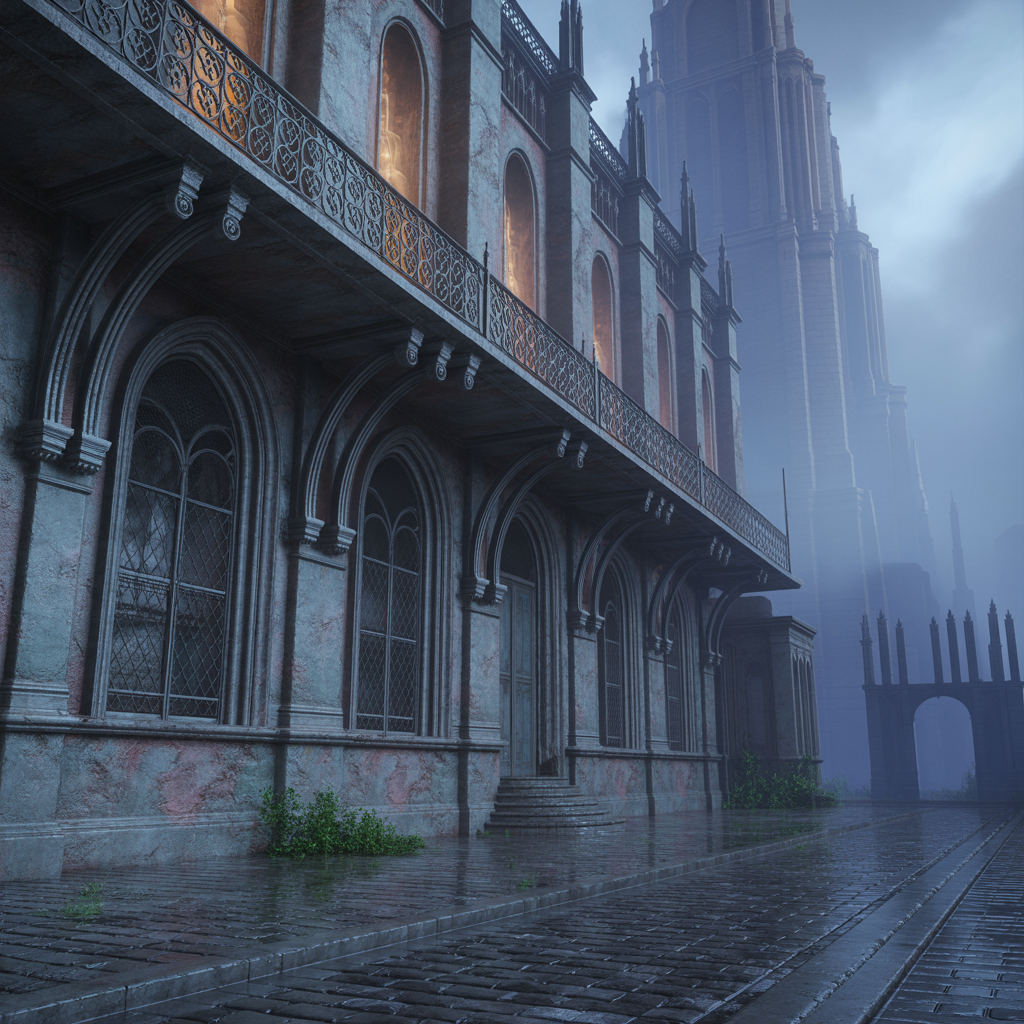 A typical moment in Bloodborne.
What this produces, mechanically, is a game that rewards aggression in a way that Dark Souls never quite did. Bloodborne removed the dedicated shield button entirely. Your left hand holds either a firearm for parrying or an off-hand weapon. You are always moving forward. The regain system — where landing hits immediately after taking damage recovers a portion of your health — is usually cited as the headline mechanic, but the trick weapon duality underpins everything. It's why fights feel like controlled improvisation rather than pattern memorisation. The Logarius' Wheel, spinning in your hands and leaving trails of arcane damage, feels genuinely different from the Ludwig's Holy Blade swung in careful two-handed arcs. Choosing a weapon here is choosing a style of problem-solving.
Yharnam is built to be misread
The world design takes a particular kind of patience to appreciate. Central Yharnam looks, on first contact, like a maze — interconnected bridges and shortcuts that seem more confusing than clever. But Bloodborne's maps are constructed vertically in a way that Lordran was not. From the Cathedral Ward lamp you can eventually reach Hemwick Charnel Lane, Cainhurst Castle, Yahar'gul, and the Forbidden Woods, all radiating outward from a single central hub. The Cathedral Ward is doing the work that the Firelink Shrine does in Dark Souls 3, except the connections are hidden rather than telegraphed, and finding them feels earned.
The shortcuts become a kind of personal narrative. The first time you open the gate that connects the top of the Healing Church Workshop to the bottom of the Cathedral Ward, looping back through fifteen minutes of level in three seconds, there is a genuine moment of spatial revelation. The map was always that shape; you just didn't know it yet. FromSoftware has replicated this feeling in Elden Ring at enormous scale, but Bloodborne's version has a compression to it. The city feels dense, layered, real in a way that an open world can't quite achieve.
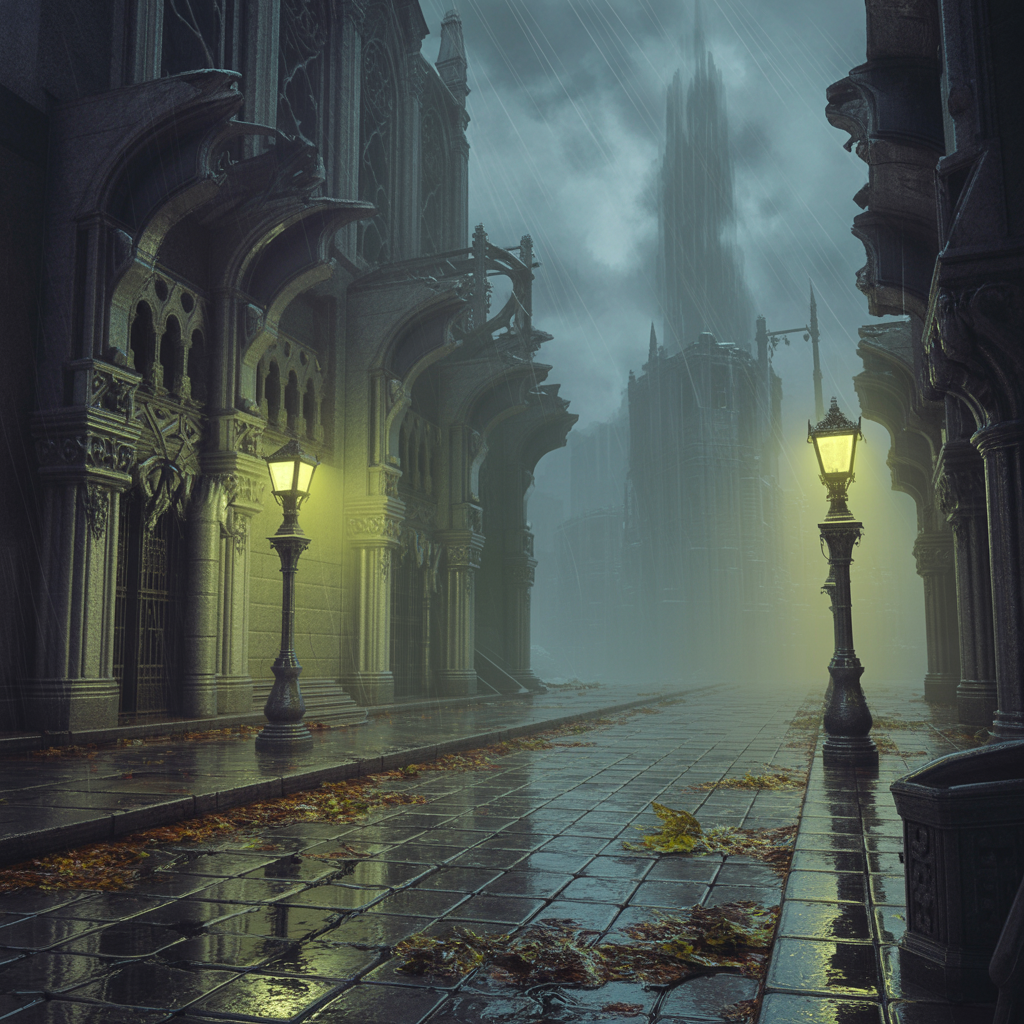 Environmental detail rewards exploration.
The bosses are where confidence becomes overreach
Gascoigne is still one of the best boss encounters FromSoftware has designed. He uses your own dodge windows against you, his shotgun punishes the exact spacing that feels safe against his axe, and the phase transition — triggered by a low health threshold and marked by a visible and audible shift — gives you information you can actually use. He teaches parrying, positioning, and the regain system simultaneously. Fight him enough times and you start to see the lesson plan underneath the aggression.
Then there is Rom, the Vacuous Spider. A boss fight that pauses the proceedings to ask you to chase around a giant immobile arachnid while its offspring rain small spiders onto the ground below your feet. It's not mechanically offensive. It's just inert in a way that the surrounding game is not. The same accusation applies to the Celestial Emissary, which pads out a mid-game stretch with a fight that feels like a discarded prototype. These moments don't break Bloodborne, but they do expose that not every boss here is as considered as Gascoigne or Gehrman or the genuinely extraordinary Ebrietas, Daughter of the Cosmos, who punishes relying on the dodge in ways the entire rest of the game has encouraged.
The Chalice Dungeons remain a philosophical problem
The procedurally assembled Chalice Dungeons sit outside the main game, accessible through rituals at the Hunter's Dream, and they have been divisive since launch. The argument for them is straightforward: they extend play significantly, contain some of the game's strongest stat-boosting gems, and hide a handful of bosses — including Yharnam, Pthumerian Queen — that deliver the kind of lore payoff that main-game players would otherwise miss entirely.
The argument against them is that they feel like Bloodborne assembled from spare parts. The atmospheric density that makes Central Yharnam work — the specific placement of enemies, the readable sightlines, the sense that something terrible happened here in a particular way — is absent. You are walking through corridors because the system generated corridors. After the first few layers you are mostly there for the gem drops, and grinding for stat optimisation in a game this atmospheric feels like eating a meal entirely for the macronutrients. They are content. They are not the same thing as the game.
What the Arcane build changes
The second playthrough with an Arcane-focused character — pumping points into the Arcane stat rather than Strength or Skill — rewrites enough of the combat to feel like a meaningfully different game. Certain tools that appear useless early, like the Flamesprayer or the Tonitrus, become primary weapons. Hunter's Tools, the game's equivalent of spells, scale into genuine offensive options rather than situational utilities. The Rosmarinus, which looks like a perfume bottle and fires a short-range cloud of arcane damage, is frankly hilarious against enemies weak to it.
What this second build reveals is that Bloodborne's stat system is more flexible than it appears and less documented than it should be. Nothing in the game explains that the Burial Blade — Gehrman's personal weapon, only available after the final boss — scales at a hidden level with Arcane that makes it genuinely exceptional on this build. You find this out from the community wiki or you don't find it out. FromSoftware's traditional opacity around mechanical information is mostly interesting, but here it shades into something closer to information hoarding. The depth is real. It could stand to be more accessible.
Ten years and no patch notes
Bloodborne will run at sixty frames per second if you play it on a PlayStation 5 via backward compatibility and install an unofficial fan patch that Sony has, inexplicably, allowed to persist on the console. That this is even a sentence that needs writing tells you something about Sony's relationship with one of its most critically praised exclusives. A proper remaster with a stable frame rate and some quality-of-life adjustments to the Chalice Dungeon gem system would sell. The audience is demonstrably there.
But maybe there is something appropriate about Bloodborne staying exactly as it is — rough, underlit, thirty frames per second, demanding your patience before it gives you anything. Elden Ring is FromSoftware's open-world masterpiece. Sekiro: Shadows Die Twice is its most precisely designed combat system. Bloodborne is something narrower and stranger: a game that decided gothic horror needed to feel like a sprint rather than a creep, wrapped that decision in Victorian architecture and Lovecraftian lore, and released it without ever fully explaining itself. Sixty hours in, you understand why that stubbornness is part of the appeal. It bites because it was built to.
Editorial scoring
Quick facts
How long does it take to finish Bloodborne still bites — and that's the whole point?
Main story runs around 60 hours depending on how thoroughly you explore. Completionists can spend 2-3× that.
Is Bloodborne still bites — and that's the whole point good for newcomers to Gothic Souls-like?
For total newcomers, expect a 5-8 hour ramp-up. Once you internalize the loop, it clicks.
Which platform should I play Bloodborne still bites — and that's the whole point on?
PC version offers the highest fidelity if your rig can handle it. Console versions are polished out of the box.
Was Bloodborne still bites — and that's the whole point worth the launch-day price?
If you're a fan of FromSoftware, yes. If you're new to the studio, a sale price is more comfortable.
Are there DLCs or expansions worth picking up?
Skip the cosmetic DLC. The story expansion is the only one we'd recommend at full price.
What did FromSoftware get right (and what could be better)?
FromSoftware nailed the moment-to-moment loop and the world-building. Pacing in the mid-game and inventory UX have room for improvement.
Reader comments