
Cocoon wraps the universe in a puzzle box and never lets go
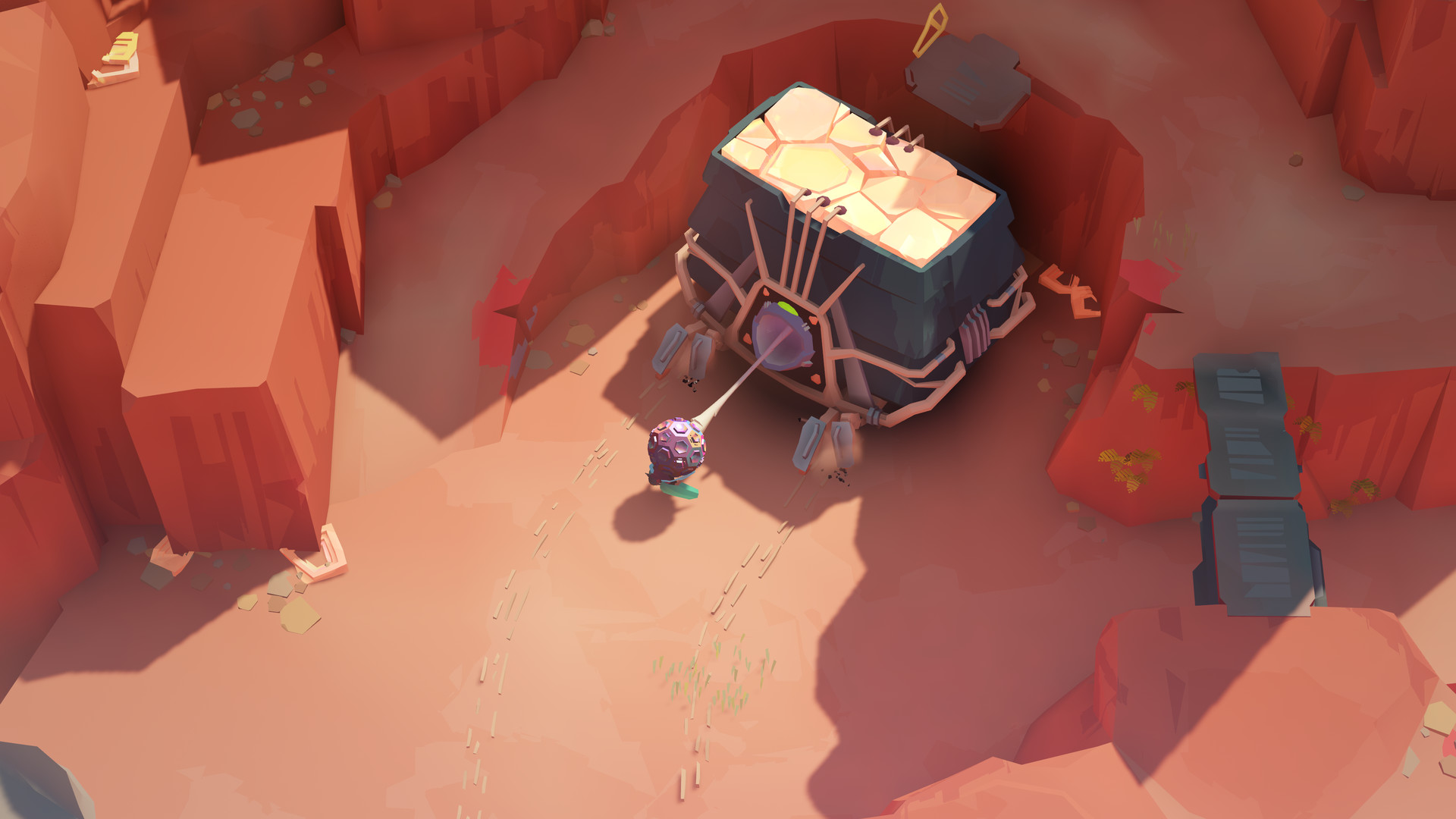
There is a moment early in Cocoon where you pick up an entire world — a glowing orb the size of a basketball, containing biomes, enemies, and unsolved puzzles — and place it on the back of a beetle. The beetle carries it for you. You walk on.
That image tells you almost everything about what Geometric Interactive is building here. Cocoon is a puzzle game about nested worlds, but describing it that way makes it sound more abstract than it actually plays. Every mechanic has weight to it, literally and figuratively. The game released in late 2023 to strong critical reception, and the reputation is deserved — though not for the reasons the marketing suggested. This isn't a transcendent experience about the nature of existence. It's a very well-engineered puzzle box from a small studio that understood exactly how much they could ask of the player, and stopped there.
What the orbs actually do
The core mechanic is carrying orbs between worlds. Each orb is a world you can enter; you can also pick one up and bring it into another. The rules compound without ever becoming arbitrary. Orange orb inside green world. Green orb placed on a specific plinth activates a bridge. The bridge lets you access the entrance to the orange orb you're already inside. It should be bewildering. It isn't, quite, because Geometric front-loads the logic so carefully that by the time complexity arrives, the player has already internalized the grammar.
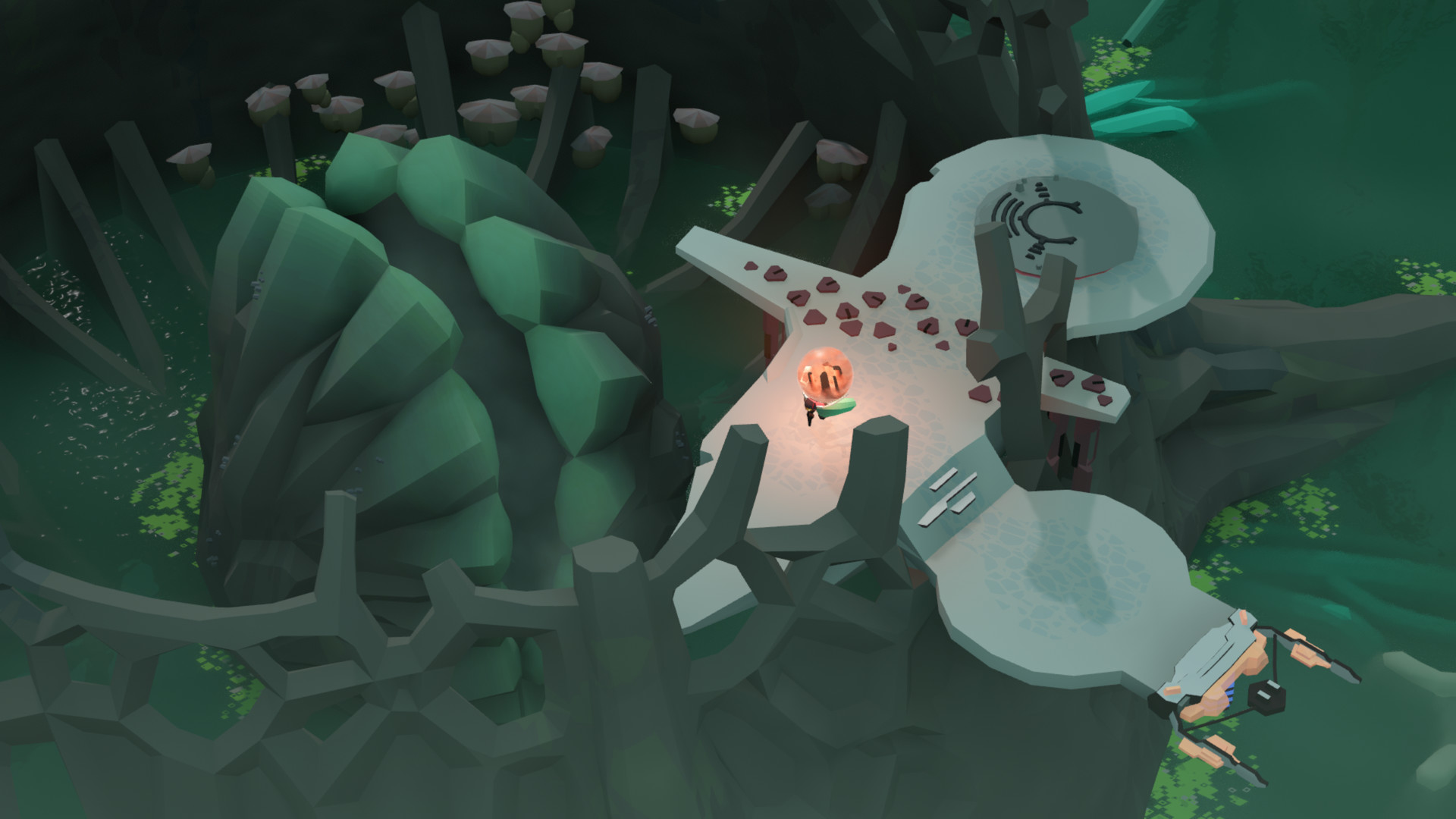 Scene from Cocoon.
The closest structural comparison is probably Jonathan Blow's The Witness — not in tone, which is very different, but in the decision to teach through observation rather than text. Cocoon has zero tutorial prompts. The first puzzle involves a button and a door in a room with no distractions. By the time you're three hours in and routing an orb through two nested worlds to unlock a mechanism, you're doing it without feeling like someone handed you a maths problem. That's a real design achievement, and it's rarer than it should be.
The insect aesthetic is doing more work than you might think
Jeppe Carlsen, who led the gameplay design on both Limbo and Inside at Playdead, co-founded Geometric with designer Jakob Schmid. That lineage is visible in how Cocoon treats visual information. Nothing in the environment is decorative noise. The colour palette — amber, teal, deep violet — maps directly onto orb identity. The architecture in each world reflects that orb's internal logic. The orange world is mechanical and angular; the green world is organic and looping. These aren't just aesthetic choices. They're navigation cues for a game that offers no map.
The insect protagonist is voiceless and small. The worlds it moves through are vast and indifferent. That size contrast isn't just atmospherics — it reinforces a specific feeling that the puzzles are systems you are working within, not problems set for you by a designer who wants applause. The distinction sounds subtle but it changes how frustration registers. When you're stuck in Cocoon, it feels like missing something rather than being blocked by something. That's a difficult register to hit and most puzzle games don't manage it.
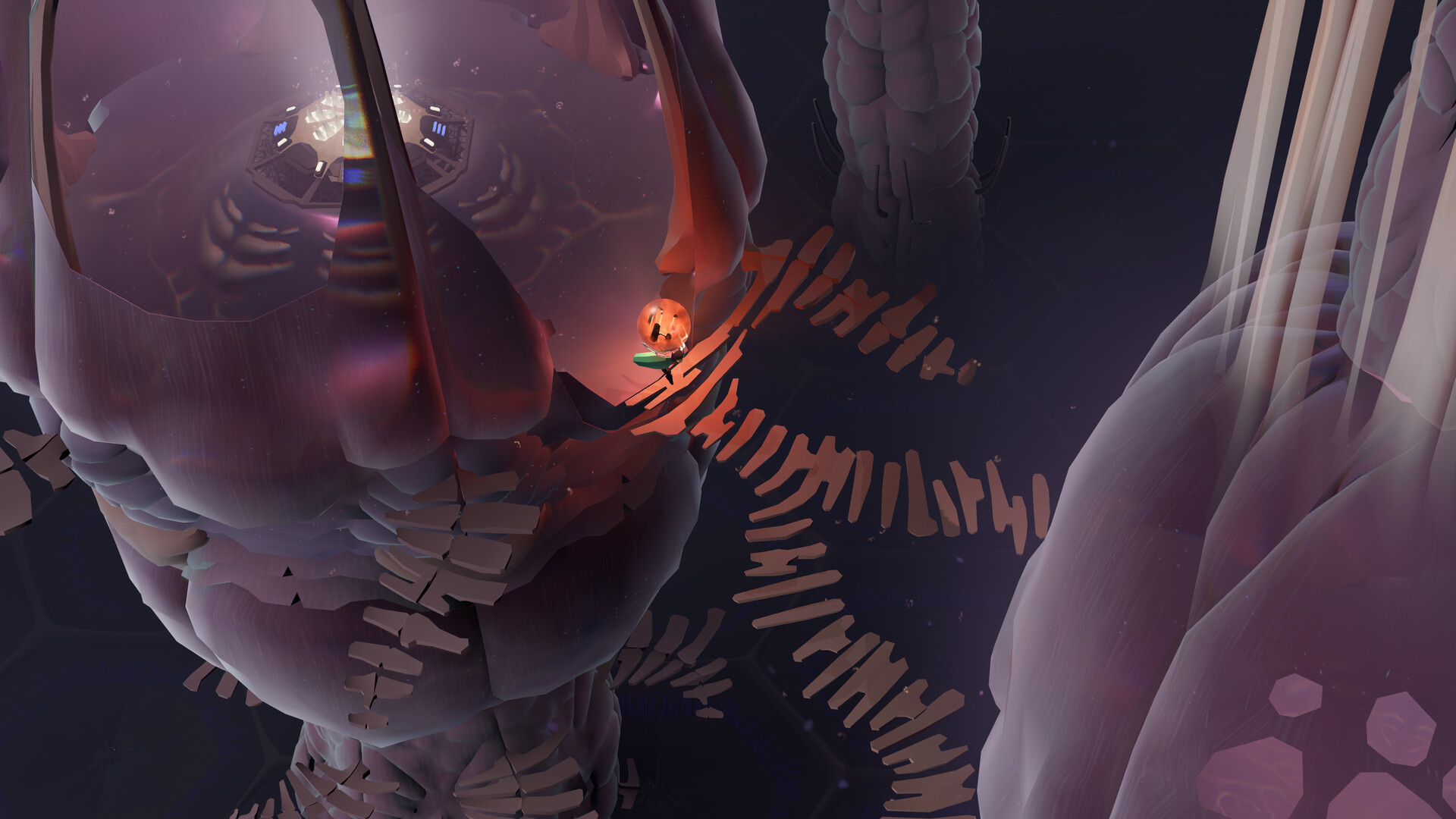 Scene from Cocoon.
Where the pacing goes quiet
The game runs roughly five to six hours. There is a mid-section — probably the third and fourth orb worlds — where the puzzle density eases and the game leans harder on movement and atmosphere. Some players find this a relief. Others will feel the momentum sag. It is genuinely slower, and if you came specifically for the recursive-logic puzzles rather than the visual world-building, those stretches ask for patience you may not have budgeted.
Boss encounters punctuate each major section. They're not hard in the traditional sense — no reaction-window combat, no damage counters — but they require applying the orb mechanics under mild pressure, which is a clean way to test comprehension without gating on reflexes. One boss asks you to route an orb through a moving sequence while the boss pattern changes the available paths. On paper that sounds chaotic. In practice it clicks into place in a way that makes you feel smarter than you probably are, which is good design in any genre.
The recursion: how deep is deep enough
The nested-worlds concept could, theoretically, go further than Cocoon takes it. You can stack worlds three or four layers deep at certain points, carrying an orb that contains a world that contains another orb you need. It gets strange. The game never quite pushes into the territory where the stacking itself becomes the puzzle — it always uses the nesting to solve spatial problems rather than logical ones. Whether that's a missed opportunity or an appropriate limit is a genuine question.
A game willing to go further down that recursive rabbit hole would be more demanding and probably less approachable. Cocoon is clearly not trying to be Antichamber. The choice to keep the nesting as a tool rather than a subject is consistent with everything else about the design — the accessibility-without-hand-holding philosophy, the five-hour length, the clean visual language. It's a considered restraint, not a lack of imagination. Knowing that doesn't stop you imagining the wilder version, though.
What Geometric gets right about scope
There is a tendency in indie puzzle games to pad. Baba Is You is brilliant and also has sections that feel like the designer ran out of clean ideas and filled space with variations on earlier rules. The Witness has rooms that feel like mandatory chores. Cocoon does not pad. Every chamber has a purpose. The game ends when it has said what it set out to say, at a length that respects the player's time without feeling truncated.
That discipline is harder to maintain in a two-person studio than it sounds. Without a publisher mandate for content hours, you have to resist the urge to justify the project's existence through volume. Geometric resisted it. The result is a game that costs less than most AAA DLC packs and delivers a more complete creative statement than many games three times its size. The economics are not the point, but they're worth noting because they reflect a set of priorities that show up everywhere in the design.
Who this is actually for
Cocoon is not for people who want narrative. There are environmental suggestions of a story — ancient machinery, something that was built and then broke — but the game doesn't push them into coherence, and if you're waiting for an emotional payoff in the Hades or Disco Elysium mode, it won't arrive. The satisfaction here is purely architectural. You solve a room, the next room opens, the logic expands. That's the whole contract.
It also isn't, despite the atmosphere, a horror-adjacent experience in the Playdead tradition. Limbo and Inside used dread as a constant low hum. Cocoon is stranger than that — more curious than unsettling. The worlds feel genuinely alien rather than threatening. That shift in register is one of the more interesting things about the project as a Carlsen follow-up. He built two of the more oppressive games of the last fifteen years, and then made something that feels, mostly, like wonder.
Cocoon earns the reputation it arrived with, but for specific reasons that get flattened in most coverage. It isn't a monument to game design philosophy. It's a tightly engineered, visually coherent puzzle game that knows its length, trusts its player, and stops exactly when it should. In a genre where knowing when to stop is genuinely rare, that counts for a lot.
Editorial scoring
Reader Q&A
How long does it take to finish Cocoon wraps the universe in a puzzle box and never lets go?
Main story runs around 47 hours depending on how thoroughly you explore. Completionists can spend 2-3× that.
Is Cocoon wraps the universe in a puzzle box and never lets go good for newcomers to Puzzle Adventure?
Yes — Cocoon wraps the universe in a puzzle box and never lets go is a great entry point. The early hours teach the systems gradually and the difficulty curve is reasonable.
Which platform should I play Cocoon wraps the universe in a puzzle box and never lets go on?
PC version offers the highest fidelity if your rig can handle it. Console versions are polished out of the box.
Was Cocoon wraps the universe in a puzzle box and never lets go worth the launch-day price?
If you're a fan of Geometric Interactive, yes. If you're new to the studio, a sale price is more comfortable.
Are there DLCs or expansions worth picking up?
The base game is complete; expansion DLC adds 10-15 hours of additional content if you want more.
What did Geometric Interactive get right (and what could be better)?
Strongest: art direction, audio design, set-piece variety. Weakest: late-game balance and a few persistent quest-log bugs.
Reader comments