
CS2 rebuilt the rifle shot — did it forget everything else?
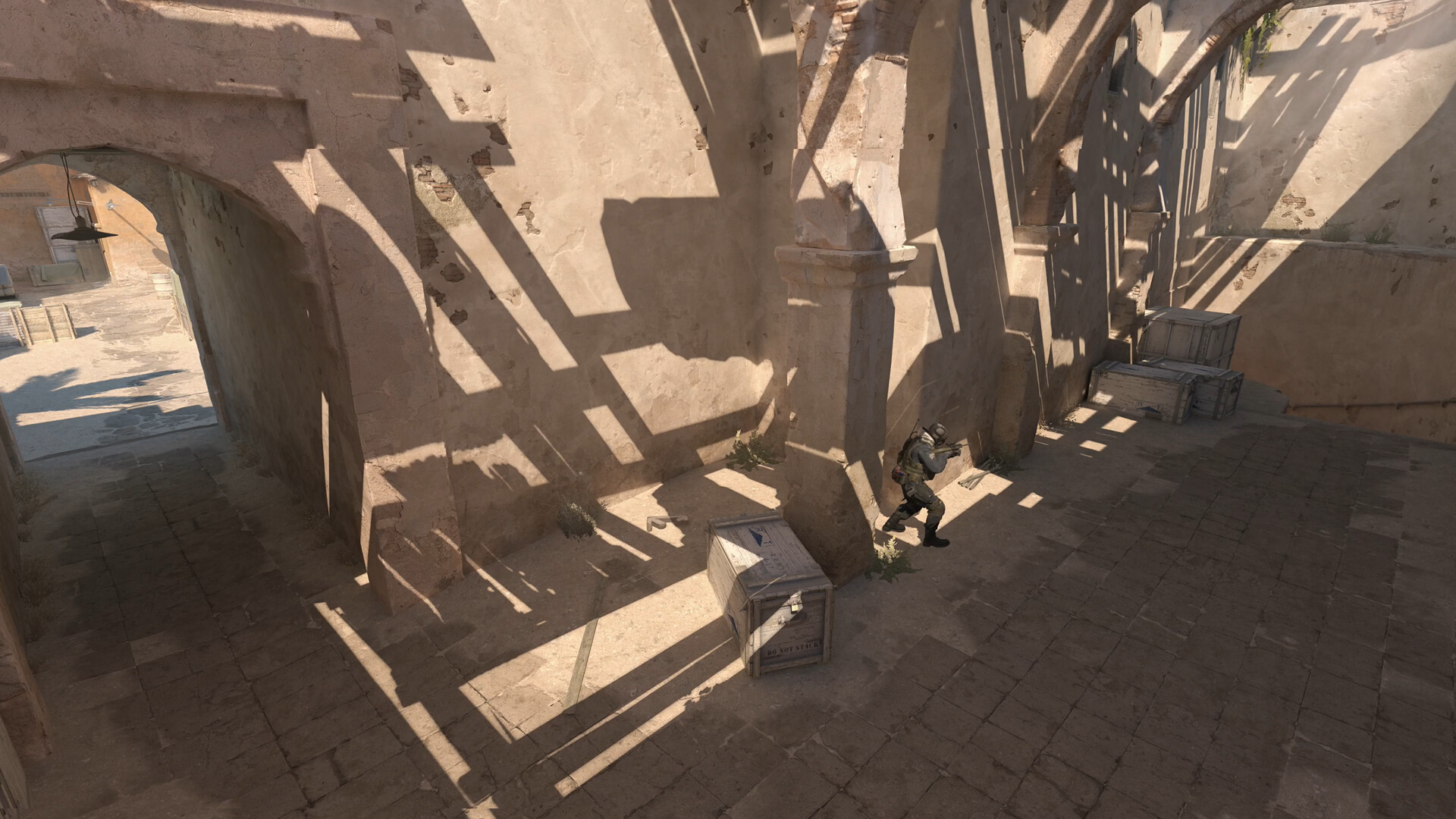
A CT-side player on Mirage A-site, rifle raised, tracking an enemy through a doorframe. The shot connects. The hit registration is clean — almost surgical — and for a half-second the game feels like it was designed specifically for moments like that one. That feeling is real, and it matters. It just doesn't last the whole round.
Counter-Strike 2 launched in September 2023 as a full replacement for CS:GO, erasing access to the old game overnight and dropping players into a Source 2-powered rebuild that Valve had been quietly developing for over a year. Eighteen hours in, spread across competitive matchmaking, Premier mode, and a handful of deathmatch sessions to calibrate muscle memory, here is where it actually sits on the tactical shooter ladder — what it gets right at a mechanical level, where the gaps are, and whether it justifies both the ambition of its remake and the disruption that remake caused.
The shooting is genuinely better, and that's not a small thing
Sub-tick networking is the headline technical change, and for once the marketing claim holds up in practice. CS:GO's tick-rate system meant your input was only registered at fixed intervals — 64 ticks per second on official servers, sometimes lower. CS2's sub-tick architecture records the exact timestamp of every mouse click and movement, which means a shot fired between two tick intervals is still processed accurately. What this produces, concretely, is hit feedback that feels honest. When you miss, you know why you missed.
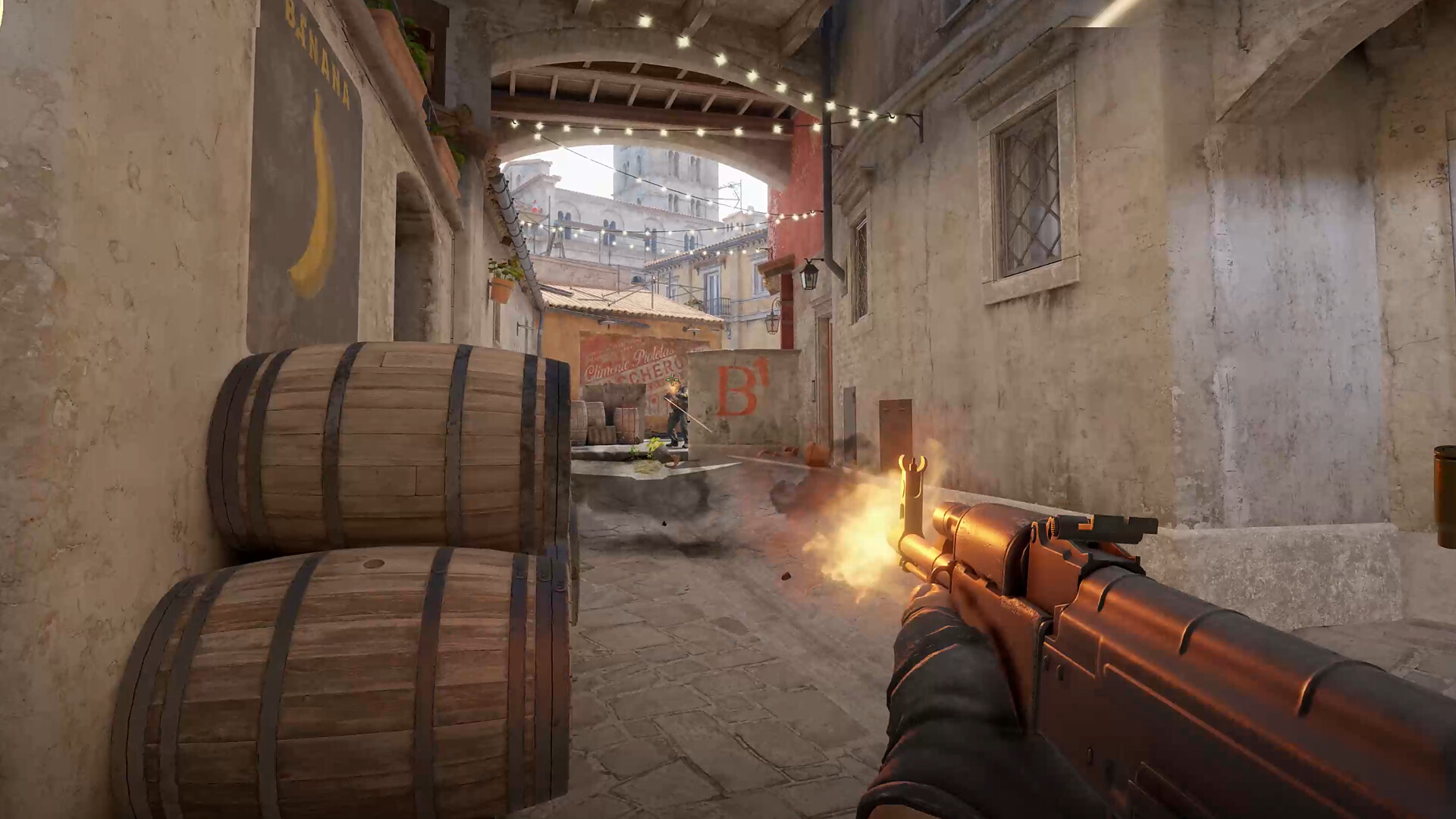 Atmospheric detail in Counter-Strike 2.
The spray patterns on rifles have been recalibrated rather than redesigned. The AK-47's rising left-pull is still there; the M4A4's pattern still demands a controlled downward drag. Valve left the high-level muscle memory intact, which is the correct call. What's different is that those patterns now feel like they belong to the weapon rather than to the server tick. After a few hours, the AK in particular just feels more responsive — pulling a kill through a long-distance spray on Dust 2's mid feels satisfying in a way that the CS:GO version occasionally felt like a lottery.
Smokes and grenades: the environmental shift nobody expected to matter this much
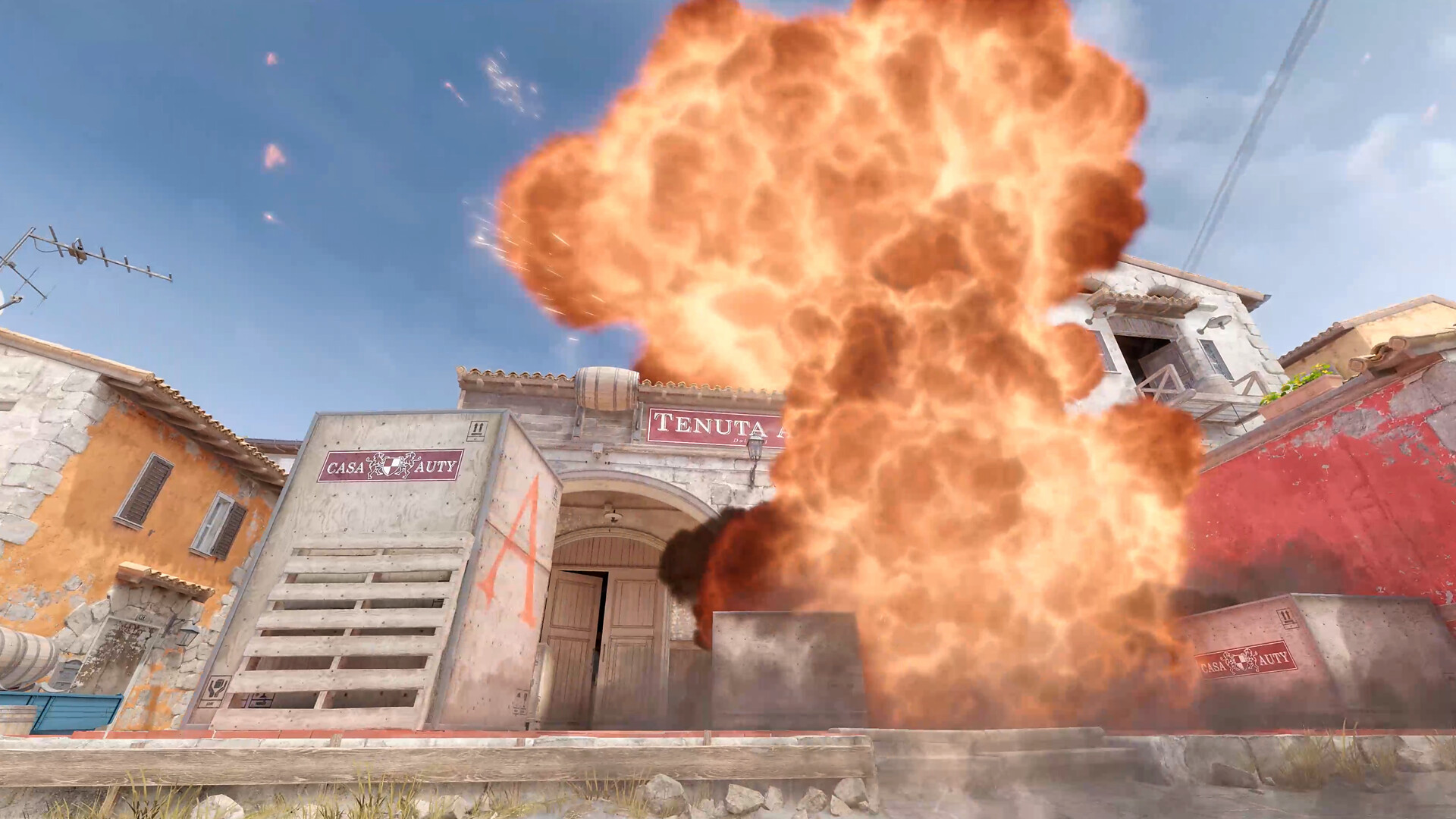
Volumetric smokes are the second major change, and they are legitimately transformative for how rounds play out. In CS:GO, smoke grenades produced an opaque texture placed over a fixed area. In CS2, the smoke is a physical volume that interacts with other objects. Shoot into it and a bullet hole punches a temporary gap in the cloud. Throw a Molotov at the base and the fire displaces the smoke upward. These are not superficial effects — they change the information game that smokes are built around.
Specifically, the pixel-walking lineups that Counter-Strike players spent years memorising to land smokes on exact positions have been made substantially less critical, because the smokes themselves are now more forgiving and more interactive. A slightly imprecise smoke that lands close to a doorframe still fills the gap usefully. Meanwhile, utility combinations that would have been irrelevant in CS:GO — shooting two-tap gaps in smokes to get information on B-site, for instance — are now legitimate tactical options. Teams competing at the ESL Pro League level were already integrating these within weeks of launch.
 Combat encounter in Counter-Strike 2.
Maps, and the choices that are harder to defend
The map pool at launch was reduced, and some of the removed maps have filtered back in through updates. But the handling of Overpass and its removal from the competitive pool in early 2024 illustrates the communication problem Valve persistently has with its own community. Overpass was removed without a timeline for its return, apparently for rework purposes, and players who had built competitive strategies around it were simply told to play something else. This kind of unilateral culling is a pattern rather than an exception.
The maps that are present have received visual overhauls that range from genuinely impressive to slightly clinical. Ancient looks better in Source 2 — the temple geometry reads more clearly, and the sightlines feel more intentional. Inferno's colour palette is richer without becoming distracting. But some of the lighting changes on Dust 2 flatten shadows that players used for positional information, and the resulting visual clarity, while technically sharper, reduces the number of hiding angles that made certain positions interesting to play around. Aesthetic improvement and gameplay depth don't always move together.
Premier mode and the ranked experience
CS2 replaced the old skill group system with a CS Rating number — a single integer score that rises or falls with match results, weighted by performance. On paper this is more transparent than silver/gold/nova rankings that always felt slightly arbitrary. In practice, the Premier queue has a smurfing problem that eighteen hours of matchmaking does not let you forget. At the lower-to-mid rating bands, the gap in experience within a single match is often severe enough that the round outcome feels predetermined before the first buy phase ends.
Valve has made incremental adjustments to the matchmaking algorithm since launch, and the situation has improved from the early months when the player base was being funnelled into Premier ratings from scratch. But compared to how Rainbow Six Siege, for all its other problems, manages ranked calibration — using multiple placement matches and historical data before assigning a visible rank — CS2's system still produces visibly lopsided lobbies with a frequency that becomes a friction point. The competitive experience is only as good as the matchmaking that delivers it.
The workshop and the missing features
At launch, CS2 shipped without a functioning Workshop map system, without the ability to play custom game modes, and without the community server browser that had sustained the game's non-competitive population for years. Some of this has come back. Workshop support resumed in late 2023, and custom servers have returned in limited form. But the launch stripped the game of the ecosystem that kept casual players invested between competitive sessions — surf maps, KZ training, aim training servers, deathrun modes. The population that played CS:GO without ever touching ranked essentially had no game for several months.
This is a real cost, and it's one that doesn't show up in reviews that focus exclusively on the competitive shooting. Tactical Reach, the third-party aim trainer, filled some of the gap for players who just wanted to practice mechanics without sitting in a queue. But that's a workaround, not a solution. A game replacing its predecessor entirely has an obligation to carry forward the reasons people played the original. Valve acknowledged the gap by accelerating the Workshop update timeline, but the window where those players were looking for alternatives was months long.
Cosmetics and the economy question
Skins carried over from CS:GO and the cosmetic economy is intact, which for long-term players is important. CS2 skin prices on the Steam Market adjusted after the graphical upgrade, because Source 2's improved rendering made the same skin look different — occasionally better, occasionally worse depending on the finish type. Fade finishes look richer. Some older finishes lost a texture quality the previous engine had rendered more warmly. Valve did not offer any compensation mechanism for cases where a player's inventory visually degraded.
The case system continues to exist, and the economics of the cosmetic side remain what they are. What's more notable editorially is that Valve has made no structural change to how cosmetics work, despite CS2 representing the largest overhaul to the game in its history. A full engine rebuild happened. The monetisation architecture stayed identical. That's not inherently a criticism — players who like the skin economy got continuity — but for a project that reimagined hit registration and grenade physics, leaving the cosmetic side untouched is a conspicuous choice.
CS2 is a better-built game than CS:GO at the level where it matters most — the individual shot, the grenade interaction, the read-and-react of a clutch round. Those improvements are substantive enough to justify the upgrade. But the launch stripped features that mattered to a large section of the playerbase, the matchmaking quality is inconsistent at non-elite ratings, and Valve's communication habits haven't changed: decisions arrive without explanation, timelines without commitments. The core of the game earns its place near the top of the tactical shooter genre. The shell around that core is still, in places, half-assembled.
Editorial scoring
Quick facts
How long does it take to finish CS2 rebuilt the rifle shot — did it forget everything else??
Main story runs around 18 hours depending on how thoroughly you explore. Completionists can spend 2-3× that.
Is CS2 rebuilt the rifle shot — did it forget everything else? good for newcomers to Tactical Shooter?
Yes — CS2 rebuilt the rifle shot — did it forget everything else? is a great entry point. The early hours teach the systems gradually and the difficulty curve is reasonable.
Which platform should I play CS2 rebuilt the rifle shot — did it forget everything else? on?
Steam Deck handles this title well — verified compatibility on most recent patches.
Was CS2 rebuilt the rifle shot — did it forget everything else? worth the launch-day price?
If you're a fan of Valve, yes. If you're new to the studio, a sale price is more comfortable.
Are there DLCs or expansions worth picking up?
Wait for the Game of the Year edition — it bundles everything at a fair discount.
What did Valve get right (and what could be better)?
The systems are confident and the combat is satisfying. The story handoffs and load times are the rough spots.
Reader comments