
Phantom Liberty proves Night City still has secrets worth bleeding for
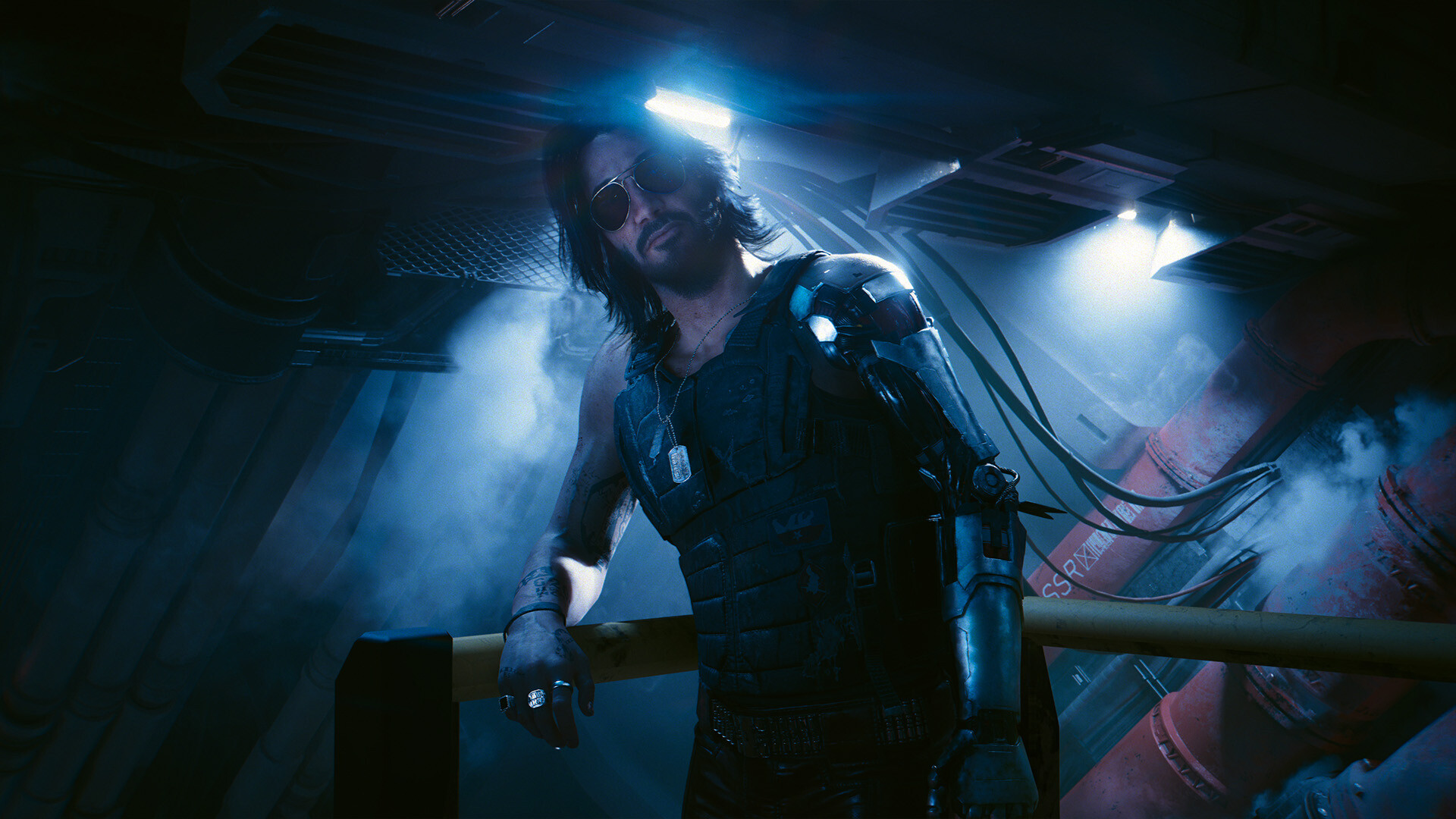
CD Projekt Red spent three years earning back trust it probably should never have squandered in the first place. The original Cyberpunk 2077 launch in December 2020 was, depending on which platform you were on, either a slightly rough ride or a genuinely unplayable disaster. What followed was a long, quiet rehabilitation — patches, optimisations, a next-gen upgrade, and finally, in September 2023, Phantom Liberty: a proper expansion set in a new district called Dogtown, built around a spy thriller premise that feels deliberately unlike anything else in the base game. Eighteen hours later, having wrapped the main quest, worked through most of the side content, and spent an uncomfortable amount of time staring at V's skill tree, the question isn't whether Phantom Liberty justifies the cost. It does, easily. The more interesting question is what it reveals about the design philosophy CDPR has quietly been developing since 2.0 rewrote the rules.
For context: Phantom Liberty is inseparable from the 2.0 patch that dropped alongside it, a free update that overhauled the perk system, reworked police AI, and rebuilt cyberware from the ground up. You cannot meaningfully review the expansion without acknowledging that the game underneath it has fundamentally changed. A Netrunner build in 2023 operates on completely different logic from the same archetype in 2022 — the old system let you passively chain quickhacks across half a district; the new one requires deliberate RAM management and forces trade-offs that actually sting. That redesign gives Phantom Liberty's content something the base game often lacked: encounters where your build is genuinely tested rather than merely expressed.
Dogtown is Night City's most coherent space
The base game's districts are striking but often feel like set dressing — beautifully rendered backdrops for missions that could theoretically happen anywhere. Dogtown is different. It's a sealed-off military enclave controlled by a warlord named Kurt Hansen, its borders enforced by checkpoints and its internal economy running on scarcity and violence. The spatial design enforces this. Buildings are repurposed, crumbling, patched with corrugated metal and jury-rigged neon. The verticality that the base game gestures toward is actually functional here; you'll regularly use mantis blades or double-jump cyberware to reach rooftops that contain meaningful shortcuts, alternative entry points, or just a sniper with a very particular interest in your continued mortality.
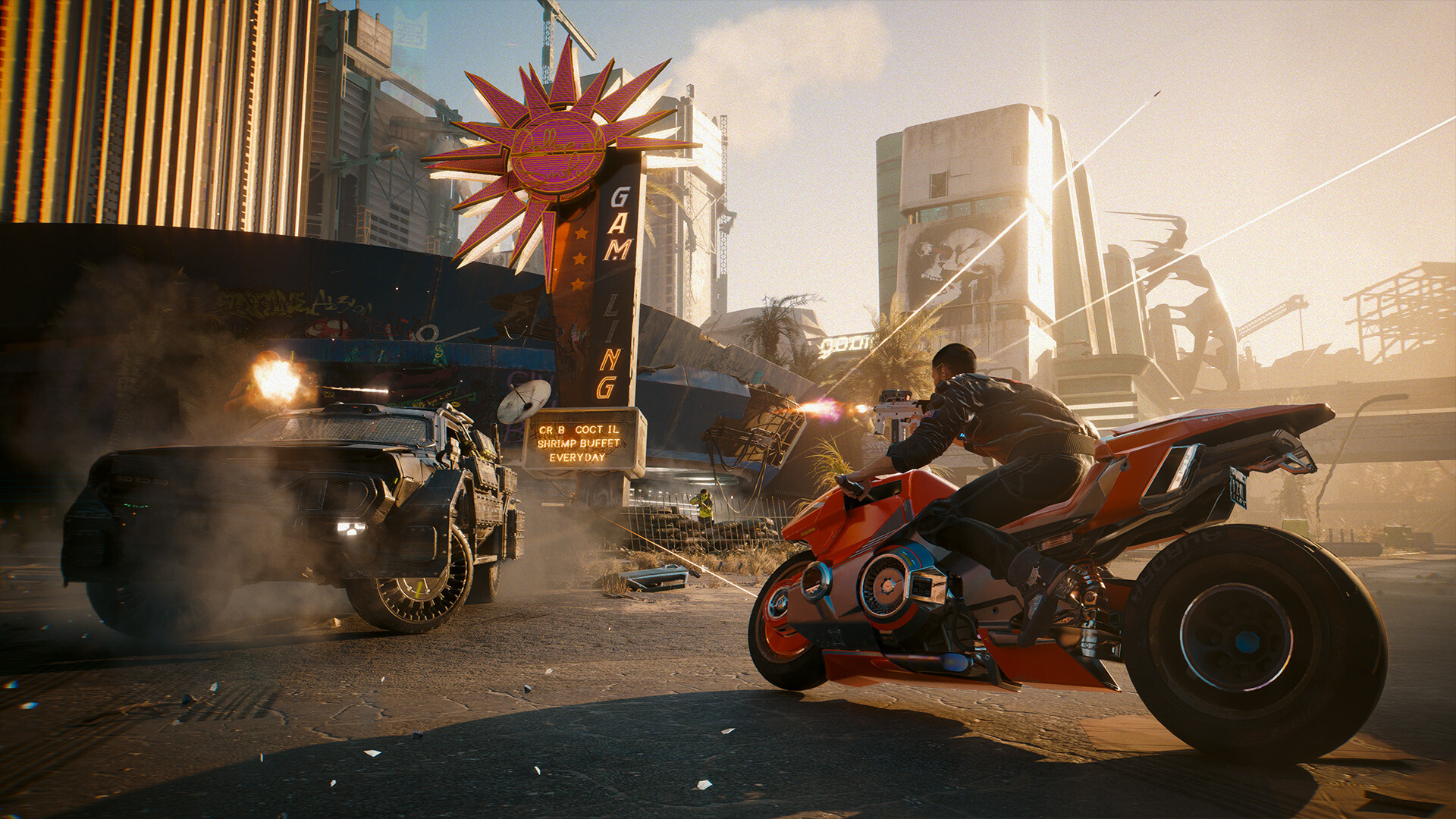 Scene from Cyberpunk 2077: Phantom Liberty.
What this means in practice is that Dogtown rewards the kind of spatial reading that FromSoftware has spent two decades making people care about. It's not as intricate as a Souls level — the open-world format imposes limits on that kind of density — but there's a genuine sense that the environment was designed for traversal rather than aesthetically staged for screenshot opportunities. Side gigs in Dogtown tend to have multiple approach vectors in ways that the base game's equivalent content often didn't bother with. A weapons cache hidden in a half-collapsed stadium might have three or four distinct entry paths depending on whether you're running Sandevistan dashes, hacking through cameras, or just bribing the right contact for a keycard.
The one caveat: Dogtown is physically small. For players expecting a Ghost of Tsushima: Iki Island level of geographic scope, there will be some adjustment required. The trade-off is density over breadth, and CDPR has clearly made a deliberate call there — but it does mean that the sense of discovery exhausts itself faster than you'd like.
Idris Elba as Reed is doing serious lifting
The expansion's central relationship is between V and Solomon Reed, a sleeper FIA agent played by Idris Elba with the kind of restrained intensity that makes the motion capture team's work genuinely matter. Reed is not a sidekick and not quite an ally; he's a man who has been waiting twenty-five years for a mission that may or may not justify what that wait cost him, and Elba communicates that weight through posture and pacing rather than exposition dumps. The writing gives him room to be morally compromised without requiring the player to simply accept his worldview — which is, frankly, more sophistication than most games extend to their deuteragonists.
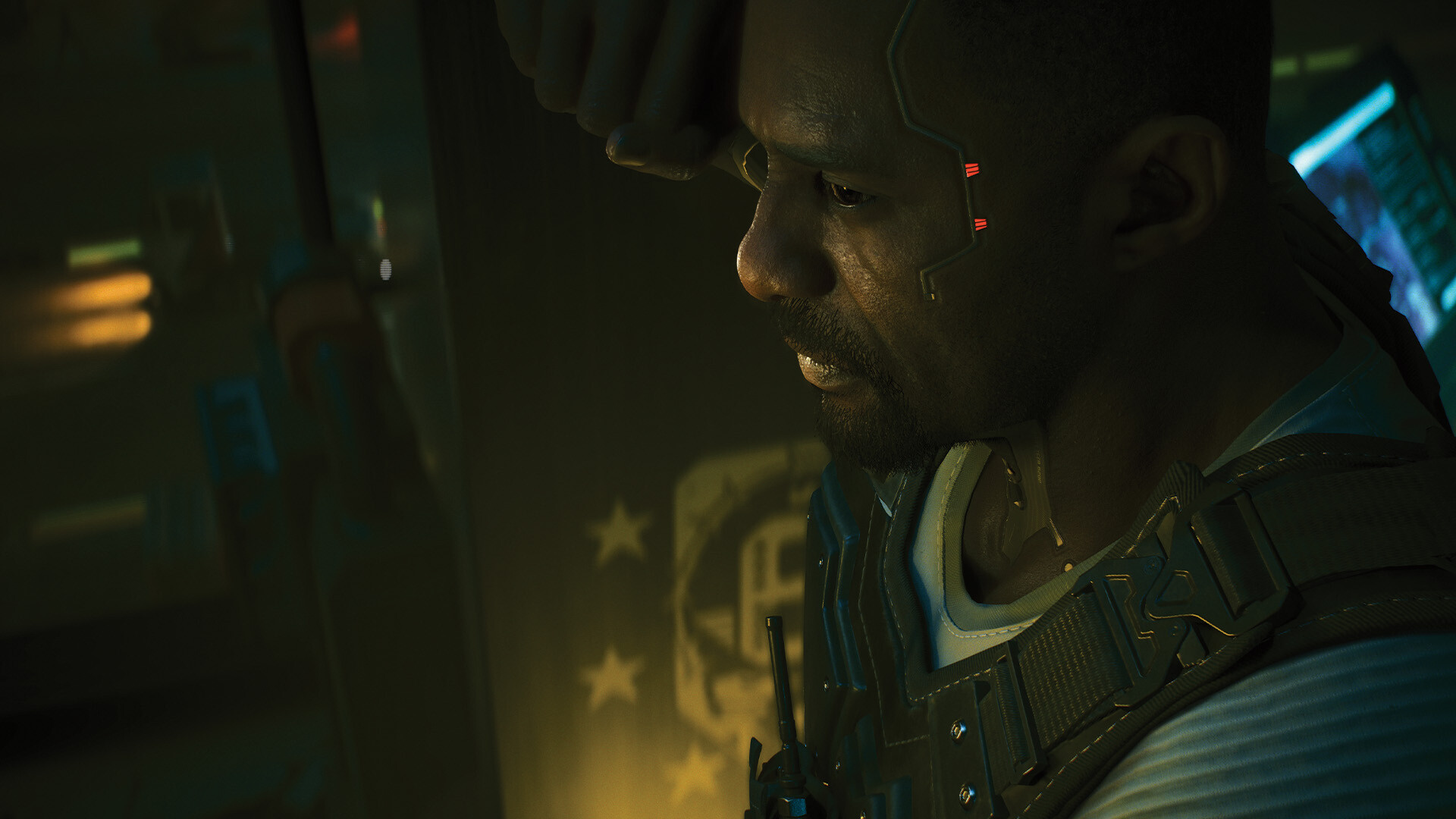 Scene from Cyberpunk 2077: Phantom Liberty.
Songbird, the netrunner V is tasked with extracting, is the more complex creation. Her arc has a structural dishonesty baked into it that the game is aware of and uses deliberately — there are two major endings to the expansion's main quest, and the emotional logic of each depends entirely on how much you've invested in reading her as a survivor rather than a manipulator. That ambiguity is genuinely maintained; the game doesn't tip its hand cheaply. Some players will find this frustrating. That's probably correct. Phantom Liberty's story is not interested in being tidy.
The new perks and cyberware actually change how you play, not just what numbers you're stacking
With 2.0's overhaul, CDPR moved away from a flat skill tree toward something with more explicit build identity — each major archetype (Netrunner, Assault, Stealth, Tech) now has perks that actively conflict with adjacent trees, which means spreading points thinly produces a character who does many things adequately and nothing well. This is a meaningful shift. The old system was generous enough that a competent all-rounder was always viable; the new one nudges you toward committing to a role, and the Phantom Liberty content was clearly designed around that narrowed identity. Combat encounters in Dogtown have sniper nests, patrol patterns, and hardened cyberware enemies in concentrations that punish underprepared builds while rewarding players who've actually read what their perks do.
The cyberware changes are even more impactful. Humanity — the stat tracking how much chrome you've installed — now functions as a genuine constraint rather than a soft suggestion. You can push past comfortable thresholds, but the cyberpsychosis risk increases in ways the game communicates through increasingly destabilised visual and audio design rather than a simple warning dialogue. It's subtle enough that first-time players might not clock it immediately, which feels like the right call; the horror of overchroming should creep up on you.
Where it stumbles
Phantom Liberty's side content is uneven in a way that becomes more visible toward the end of a playthrough. The gigs — the bite-sized contract missions that fill out Dogtown's activity layer — range from tightly constructed little scenarios with genuine narrative texture to thin objective-delivery structures that feel like holdovers from pre-2.0 design logic. A mission involving a rogue Militech AI negotiation is exceptional; two or three others amount to "go here, kill these people, extract." The gap between the best and least interesting gigs is wide enough to undercut the district's otherwise consistent tone.
There's also a pacing issue in the expansion's second act that's hard to fully explain without heavy spoilers, but which amounts to this: the story asks you to pause its own momentum for a sequence that functions more like a mechanical showcase than a narrative beat. It's not without interest — the sequence is technically ambitious — but it arrives at a moment when the plot has built genuine urgency, and the interruption deflates rather than escalates. Supergiant managed momentum better in Hades' final stretch; Phantom Liberty's equivalent wobbles.
Performance and technical state
On PC with a mid-to-high-end configuration (a 3080-class card and a mid-tier Ryzen), Dogtown runs cleanly at 60-plus frames in most scenarios. Ray tracing remains the same expensive proposition it always was; Path Tracing with Overdrive mode is beautiful in the way that a tech demo is beautiful, which is to say you'll turn it on, admire it, and then turn it off when you want to play. On PlayStation 5, the Performance mode holds well; Quality mode introduces occasional frame drops in the densest areas of Dogtown, particularly during peak combat when particle effects are competing for attention. Nothing that impedes play, but worth noting.
The bugs that plagued the 2020 release are largely absent. In eighteen hours, one mission trigger failed to fire on first approach and resolved immediately on reload. That's a far cry from a launch window where entire quest lines could break irreparably. CDPR has done the work. The game that exists now is not the same object that shipped three years ago.
Where Phantom Liberty sits
The best DLC expansions — The Witcher 3: Blood and Wine, Dark Souls III: The Ringed City, Horizon Forbidden West: Burning Shores — tend to have a single quality in common: they feel like the developer fully understanding what they built and pushing it further in the direction it was always trying to go. Phantom Liberty is that, mostly. It's Cyberpunk 2077 with the equivocations stripped out, designed around systems that have been rebuilt rather than apologised for, set in a district that actually behaves like a place rather than a backdrop. The story earns its ambiguity. Reed and Songbird are the most interesting new characters CDPR has written since Gaunter O'Dimm.
Night City has always promised more texture than it could consistently deliver. In Dogtown, for eighteen hours at least, it keeps that promise. The scars from the original launch haven't entirely healed — the uneven gig content is a reminder of old habits — but Phantom Liberty is the clearest evidence yet that CDPR has figured out, maybe finally, what kind of game they were actually making all along. That's worth more than a clean launch would have been, if only slightly.
Editorial scoring
Quick facts
How long does it take to finish Phantom Liberty proves Night City still has secrets worth bleeding for?
Main story runs around 18 hours depending on how thoroughly you explore. Completionists can spend 2-3× that.
Is Phantom Liberty proves Night City still has secrets worth bleeding for good for newcomers to Open-World RPG (DLC)?
It depends. The systems are deep but the tutorial does a fair job. Veterans of Open-World RPG (DLC) will feel at home faster.
Which platform should I play Phantom Liberty proves Night City still has secrets worth bleeding for on?
Console version is the most stable on launch. PC version benefits from the modding scene long-term.
Was Phantom Liberty proves Night City still has secrets worth bleeding for worth the launch-day price?
Released in 2023, and as of writing it holds up. Wait for a sale if you're price-sensitive — major discounts arrive within 6 months.
Are there DLCs or expansions worth picking up?
Wait for the Game of the Year edition — it bundles everything at a fair discount.
What did CD Projekt Red get right (and what could be better)?
Strongest: art direction, audio design, set-piece variety. Weakest: late-game balance and a few persistent quest-log bugs.
Reader comments