
Final Fantasy XVI burns down its own legacy to feel something
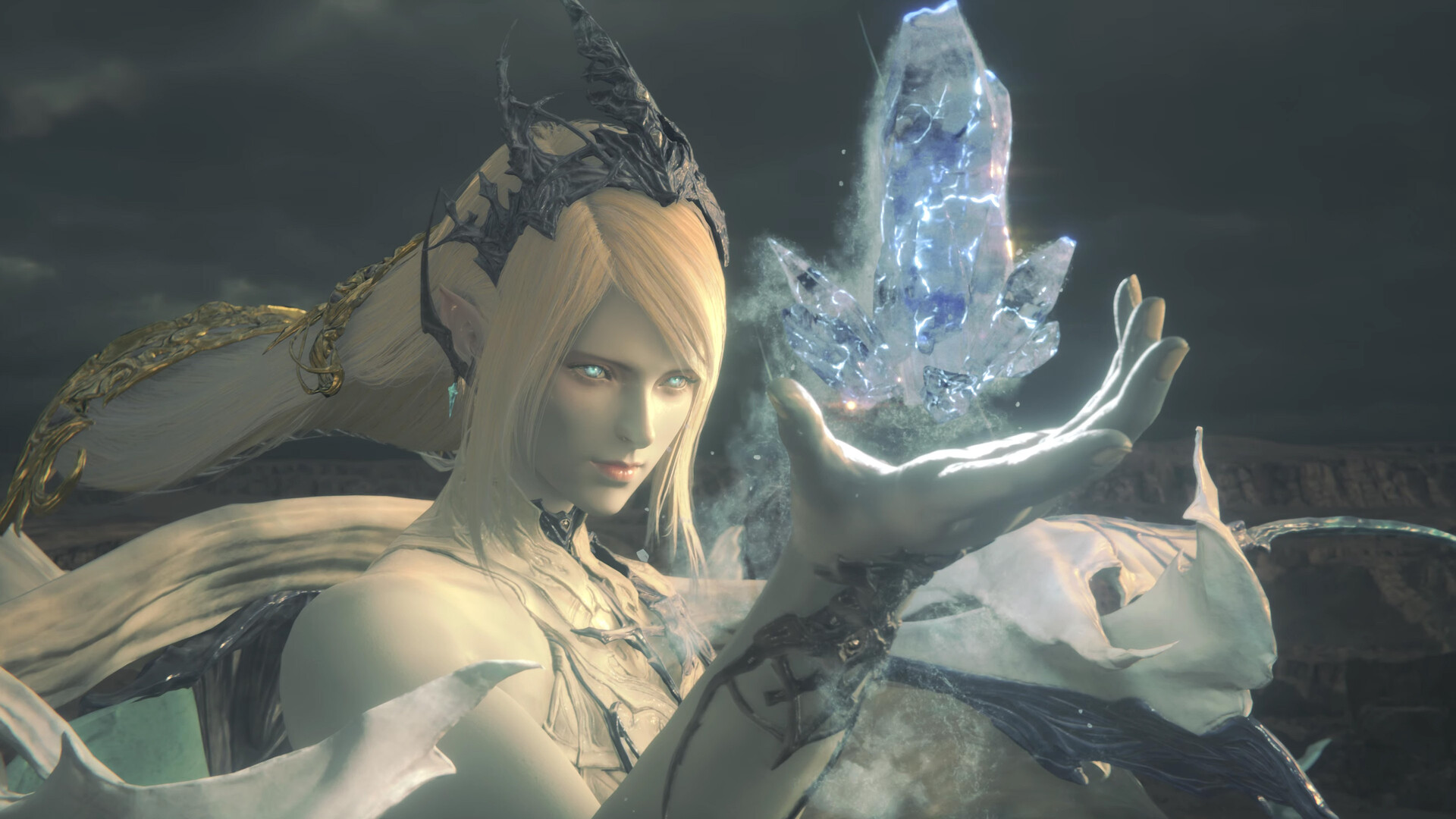
Square Enix has been quietly terrified of Final Fantasy for at least a decade. You can see it in the hedging — the way XIII splintered into sequels nobody asked for, the way XV launched half-built and then drowned in DLC apologies, the way the Remake project for VII became a multi-game philosophical treatise on what a remake is even allowed to be. FFXVI is the company's loudest, most committed answer to all of that anxiety, and the answer turns out to be: burn it down. Strip the party. Kill the turn-based skeleton. Hire Ryota Suzuki, who built the combo architecture for Devil May Cry 5, and let him reshape what a Final Fantasy combat system can feel like in motion. The result is a game that fights beautifully and RPGs barely at all.
Eighteen hours in — past the opening political tragedy, past the first major Eikon clash, well into Clive Rosfield's second life as a wanted man — the shape of the game becomes fairly clear. Director Hiroshi Takai and producer Naoki Yoshida have made something that is genuinely exciting to play in thirty-second windows and occasionally exhausting to live inside for three hours straight. That tension is real, and it doesn't fully resolve.
Combat that actually earns its action-game credentials
The Eikon ability system is the smartest design decision in the game, and it works in a way that pure action titles rarely manage: it gives you a modular toolkit where swapping an equipped ability slot forces you to re-examine your entire combo flow. Clive inherits powers from multiple Eikons — Garuda's aerial pull, Phoenix's dash-cancel, Titan's charged parry — and the game lets you mix three sets simultaneously. In practice this means you're not just choosing what looks cool; you're choosing what enables what. Phoenix's Heatwave creates a window; Garuda's Gouge extends a juggle; Shiva's Rime amplifies the stagger bar right before a finisher lands. The depth is real, even if the game is slow to show you the seams.
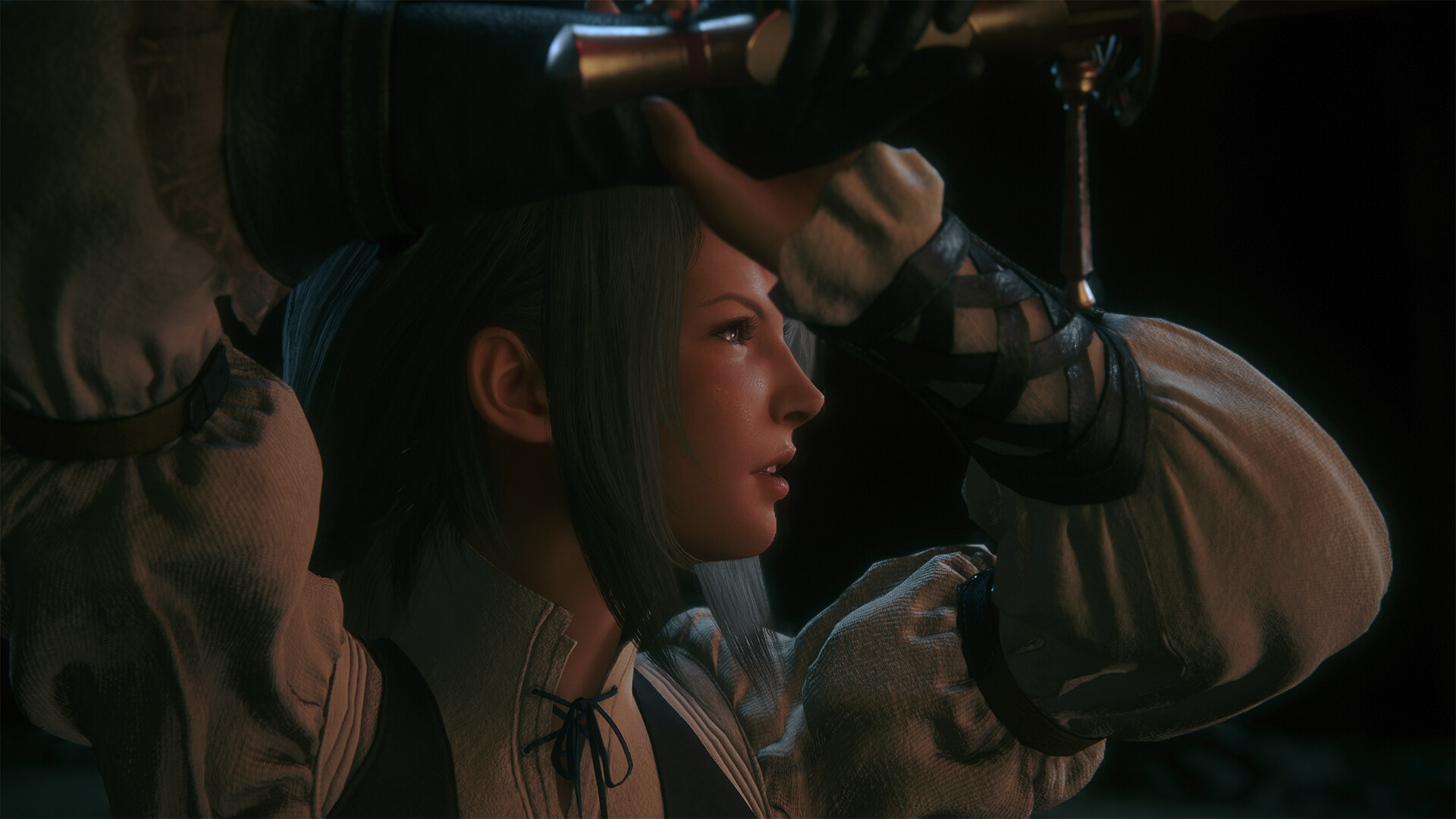 Atmospheric detail in Final Fantasy XVI.
Suzuki's fingerprints are visible throughout. Precision dodges trigger a slow-time window that feels immediately legible, like Witch Time in Bayonetta, without being as generous. Enemy tells are readable but not telegraphed two seconds in advance the way some action-RPG hybrids handle them — there's actual timing required. The stagger system, borrowed structurally from FFVII Remake but tuned differently here, creates a rhythm where the first half of a boss fight is about building pressure and the second half is about cashing it in cleanly. When it clicks, it clicks hard.
The RPG skeleton is mostly decorative
This is where the game earns honest criticism rather than deflection. The equipment system is, functionally, a number-go-up formality. You find a sword with a slightly higher attack rating, you equip it, you move on. There is no meaningful tradeoff in the gear, no build direction that the equipment reinforces or contradicts. Accessories offer a few passive bonuses — extended stagger duration, elemental damage riders — but these feel like footnotes rather than load-bearing design. Compare this to how Hades handles its boon combinations, where a Poseidon-Aphrodite stack genuinely changes your moment-to-moment aggression level, and FFXVI's item economy looks threadbare.
The skill tree is cleaner but similarly thin. You unlock new Eikon abilities by spending ability points, and those abilities can be upgraded to deal more damage or reduce cooldowns. The ceiling on this is low. There's no real wrong path through it, which means there's also no meaningful right one. Players who arrived hoping for the kind of systemic RPG depth that Larian has been refining in Divinity and Baldur's Gate, or even the more modest but considered character-building in Elden Ring, will find that the game simply isn't interested in that conversation.
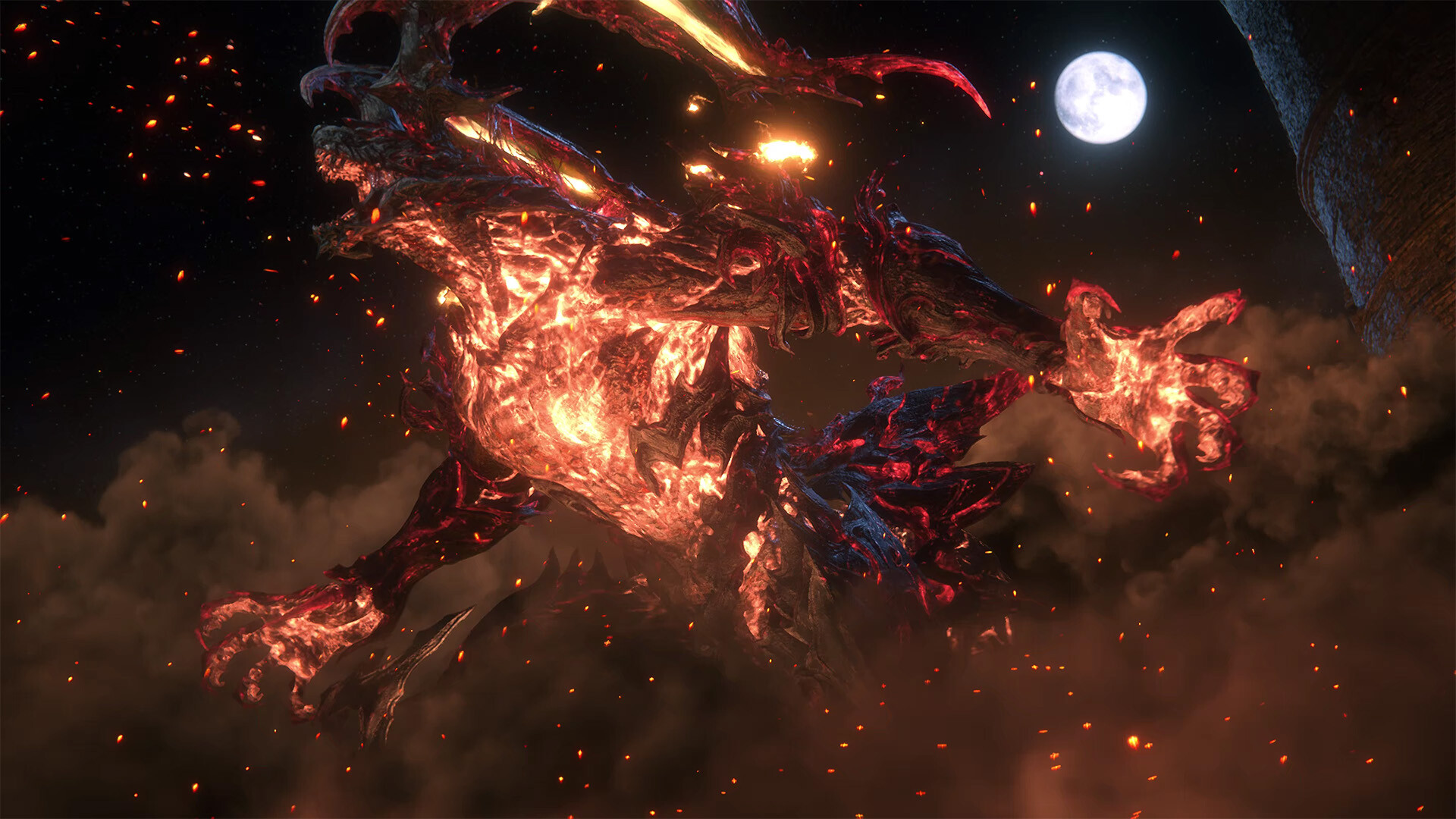 Combat encounter in Final Fantasy XVI.
Eikon battles as set pieces, not gameplay
The Eikon versus Eikon clashes are the game's most marketed spectacle, and they are, to be fair, genuinely spectacular in a cinema sense. The Titan fight in particular has a scale and a sound design that make the PS5's hardware feel justified. But these sequences operate largely as interactive cutscenes — simplified quick-time events wrapped in extraordinary visuals. The player's actual agency during them is narrow: dodge a telegraphed beam, hammer a button prompt at the right moment, watch Clive's health bar as a formality because the sequences are essentially scripted to proceed. As a pacing device they're effective; they punctuate the story at intervals where a conventional boss fight would feel small. As game design they're closer to a rollercoaster: well-engineered, thrilling, and entirely on rails.
This matters more than it might seem. The Eikon fights are positioned as the emotional and structural climaxes of each chapter. If the moment when two demigods tear a mountain range apart is fundamentally a cutscene, then the game is admitting that its deepest emotional notes require it to take control away from you. That's a design philosophy, and a defensible one — David Cage has built a career on it, and so in a different way has Fumito Ueda. But it sits awkwardly alongside the genuinely demanding combat system Suzuki built for the normal encounters. FFXVI wants to be both, and the two halves don't always convince you they belong together.
Valisthea is darker than it needed to be, and that's mostly fine
Yoshida has been direct in interviews about wanting a mature tone, and the script delivers on that in ways that occasionally surprise. The early arc around Joshua and the Iron Kingdom has genuine weight; the political machinery around the Blight and the Mothercrystals is conveyed with more restraint than the franchise usually manages. The game is not interested in whimsy. Cidolfus Telamon — this entry's Cid — is the most functional version of that archetype the series has produced in years, written as a person with actual convictions rather than a plot function wearing a name.
The tone does calcify, though. By hour fifteen, the register of almost every conversation is tragedy-or-determination, and the absence of tonal variation starts to feel like a limitation rather than a choice. The original FFXIV — Yoshida's other major project — knew how to use levity as structural relief without cheapening its serious moments. FFXVI seems unwilling to risk that. There's no equivalent to the absurdist side content that made FFVII Remake's Gold Saucer sequence feel like a genuine exhale. The world is beautifully rendered and insistently, almost stubbornly grim.
Where it sits on the action-RPG ladder after 18 hours
The honest answer is somewhere in the upper-middle range, occupying a position that's more secure than it is prestigious. The combat system is genuinely excellent — not "excellent for a Final Fantasy game" but excellent as measured against dedicated action titles. The story has craft and commitment behind it. The production values are, in every technical dimension, beyond question. These are not small things.
But the RPG systems feel like they were included because omitting them entirely would have created a PR problem rather than because they add anything meaningful. The Eikon spectacle sequences solve the wrong problem — they make the story feel big but make the player feel small. And the tonal monoculture of the writing means that when the story wants you to feel something acutely, you've sometimes already been at that frequency for four hours and the signal has faded.
What FFXVI demonstrates most clearly is that Square Enix made a confident, specific set of choices rather than the usual hedged compromise — and that confidence produces a game with real edges, real pleasures, and real gaps that a more cautious design wouldn't have exposed. Whether that trade is worth it depends almost entirely on whether you're here for the combat or the RPG, because the game has decided, with remarkable conviction, that you can't fully have both.
Editorial scoring
Reader Q&A
How long does it take to finish Final Fantasy XVI burns down its own legacy to feel something?
Main story runs around 18 hours depending on how thoroughly you explore. Completionists can spend 2-3× that.
Is Final Fantasy XVI burns down its own legacy to feel something good for newcomers to Action RPG?
Yes — Final Fantasy XVI burns down its own legacy to feel something is a great entry point. The early hours teach the systems gradually and the difficulty curve is reasonable.
Which platform should I play Final Fantasy XVI burns down its own legacy to feel something on?
Console version is the most stable on launch. PC version benefits from the modding scene long-term.
Was Final Fantasy XVI burns down its own legacy to feel something worth the launch-day price?
Released in 2023, and as of writing it holds up. Wait for a sale if you're price-sensitive — major discounts arrive within 6 months.
Are there DLCs or expansions worth picking up?
Wait for the Game of the Year edition — it bundles everything at a fair discount.
What did Square Enix get right (and what could be better)?
The systems are confident and the combat is satisfying. The story handoffs and load times are the rough spots.
Reader comments