
Ragnarök is magnificent, and I'm still not over it
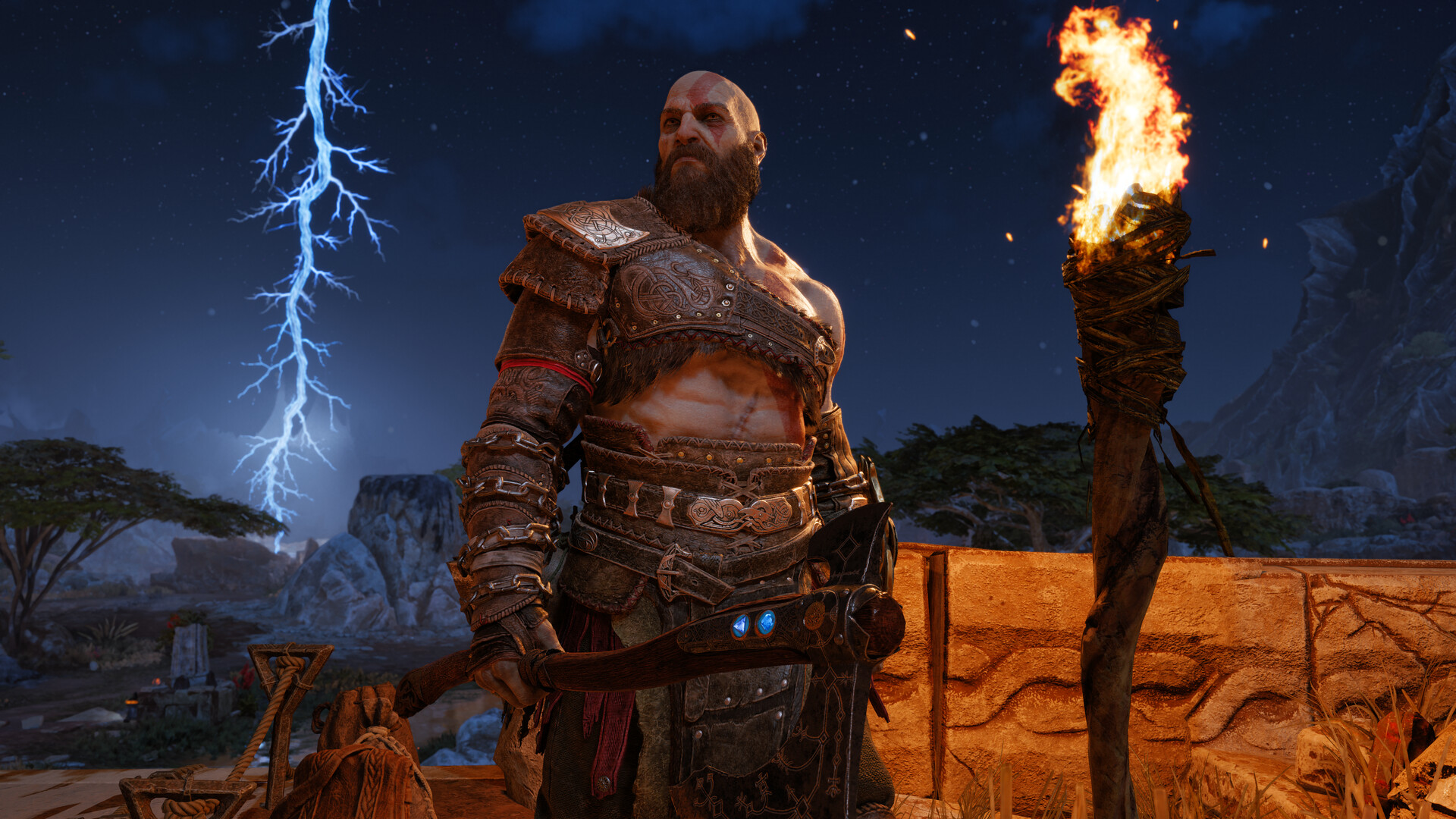
There is a moment roughly two-thirds through God of War Ragnarök where Kratos sits on a hillside and listens. Not prepares. Not strategises. Just sits, while someone he loves works through grief out loud. Santa Monica Studio could have cut that scene entirely and the plot would function identically. They kept it. That choice, more than any boss encounter or set-piece, tells you what kind of game this is.
Released in November 2022 on PlayStation 4 and 5, Ragnarök is the direct sequel to the 2018 God of War reboot — a game that had no business being as emotionally coherent as it was. The sequel carries a heavier structural load: more realms, more playable characters, a mythological endgame it has to deliver on, and a father-son relationship that has been quietly building toward rupture for two games. Mostly, it handles all of that. Not flawlessly, but with enough craft and conviction that the rough edges feel like the cost of ambition rather than failures of execution.
Combat that trusts you to build something
The Leviathan Axe returns, predictably, but what Santa Monica have done with the combat system since 2018 is expand the verb count without muddying the grammar. Kratos now cycles between the Axe, the Blades of Chaos, and the Draupnir Spear — a new weapon that embeds explosive spear-shards into surfaces and enemies before you detonate them with a separate input. Each weapon has its own skill tree, its own elemental identity, and genuinely different tactical applications. The Spear rewards spacing and setup. The Axe rewards patience and freeze-state management. The Blades punish grouped enemies fast.
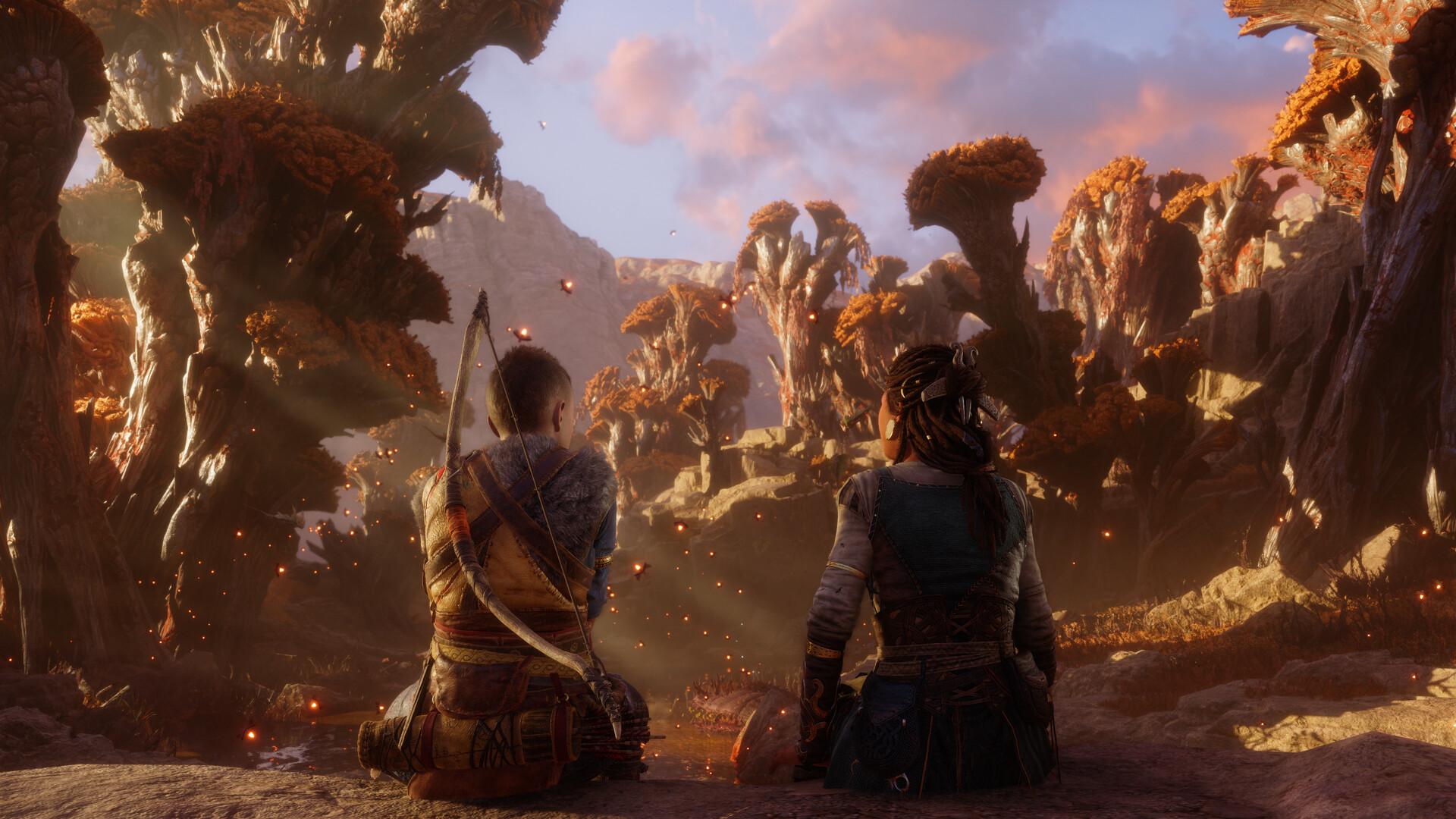 Atmospheric detail in God of War Ragnarök.
On Give Me No Mercy — the second-hardest difficulty — encounters stop being executable the moment you try to coast on muscle memory from the first game. Berserker bosses in particular have tight, unforgiving windows that force you to use the shield's parry timing correctly, not just defensively. The Shield Bash off a blocked strike, the cooldown cycling between runic attacks, knowing which weapon to throw and recall at which moment — the system has enough moving parts that you can feel yourself improving at it, which is rarer than it should be in action games.
Nine realms, uneven terrain
The 2018 game was architecturally patient — mostly Norse wilderness, Midgard as a hub, a handful of spectacular detours. Ragnarök accelerates, moving Kratos and Atreus through Svartalfheim, Alfheim, Vanaheim, and Asgard, among others, at a pace that occasionally shortchanges individual locations. Vanaheim is the most generous of the new realms, a day-night cycle mechanic revealing different fauna and puzzles in the same geography, and it earns repeat visits. Asgard, by contrast, feels comparatively thin for what it is mythologically — you want to linger, the game rushes you.
Svartalfheim deserves specific mention because it solves something the first game sometimes struggled with: environmental puzzle logic that coheres with the world's physical rules rather than feeling like a separate layer dropped on top. Water locks, ore machinery, and dwarf engineering create puzzles that feel like you're operating a real industrial system, not solving a game-designer brain-teaser. It's the kind of thing that only registers when you notice you never had to check a guide.
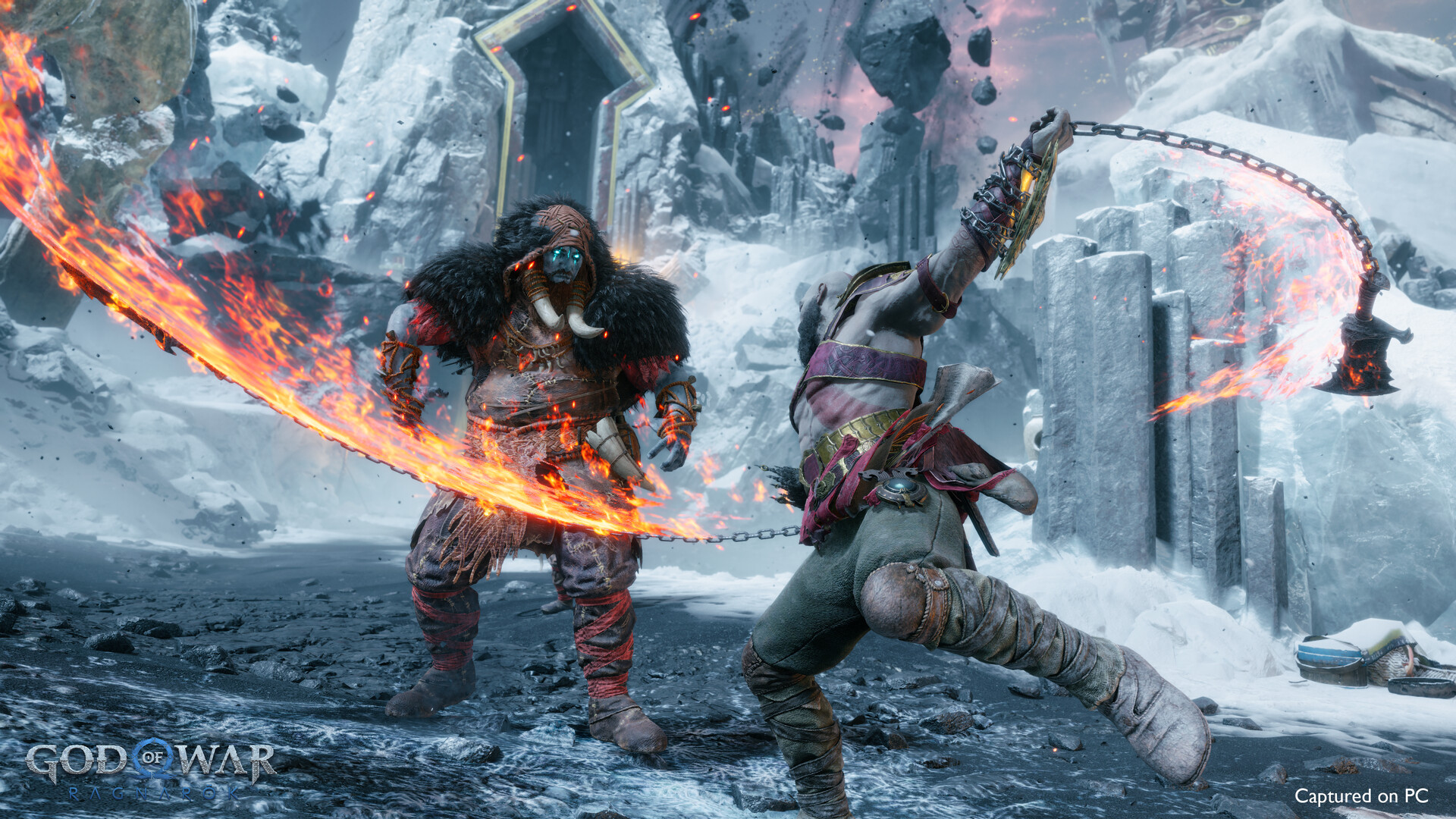 Combat encounter in God of War Ragnarök.
Side content is substantial but uneven in the same way. The Berserker Gravestones are excellent optional boss fights that reward exploration without requiring it. The Draugr Holes are less interesting — repeatable arena encounters that pad runtime without adding much texture. Ragnarök is not a tight sixty hours, but the fat isn't evenly distributed.
Atreus, alone
The game splits its protagonist duties more aggressively than the first game did, and the Atreus sections have divided players since launch. His chapters are lighter mechanically — Freya doesn't hit like Kratos, the enemy design scales accordingly — but the storytelling in those stretches is doing some of the heaviest lifting in the whole script. Atreus seeking his own identity, away from his father's gravity, is the emotional engine of the sequel in a way the marketing somewhat obscured.
Whether you find those chapters a relief or a drag probably maps onto whether you came for spectacle or story. They slow the combat rhythm noticeably. But the sequence in Asgard where Atreus plays at being someone else — fitting in, being wanted — lands with a specific adolescent ache that feels earned rather than manipulative. Santa Monica wrote a teenager who reads like a teenager, which is not the low bar it sounds like.
The writing, which is doing a lot
Mimir remains the game's best conversational engine — Christopher Judge and Sunny Suljic are committed performances, but Alastair Duncan's delivery finds notes of genuine warmth and dry humiliation in equal measure. The boat conversations return, still voluntary, still good. What the sequel adds is a willingness to let side characters carry scenes without Kratos anchoring them. Brok and Sindri's arc across the full runtime is the most surprising structural choice in the game, and describing it further would be a disservice.
There are places where the writing stretches. Odin as a villain is compelling in his scenes but underused in the third act — the final hours needed one more confrontational conversation between him and Kratos, something that the mythology seems to be setting up and then sidesteps. Thor's arc is handled better: his first appearance sets one expectation, his later scenes complicate it, and Ryan Hurst makes the transition credible. The game earns its emotional beats more often than it fumbles them, but the final hour is slightly rushed compared to the care taken in the middle.
Where it lands against the first game
The 2018 game had the advantage of surprise. Nobody expected a God of War reboot to have the emotional architecture it turned out to have, which meant every resonant moment hit harder for being unexpected. Ragnarök cannot replicate that effect — you come in with calibrated expectations, and the game knows it, which is partly why it pushes further rather than just delivering more of the same.
It is a bigger game in almost every measurable sense: more weapons, more realms, more characters, longer runtime, higher production ceiling. Whether bigger serves it depends on the sequence. At its best — the Ironwood chapters, the Vanaheim night encounters, the Brok material — it is genuinely superior to the original in craft and emotional impact. At its worst, it feels like a second game negotiating with the weight of being a second game.
Technical notes and platform gaps
On PlayStation 5 in Performance Mode, the game runs at a locked sixty frames and uses the DualSense's haptic triggers meaningfully — the Draupnir Spear's throw has a specific resistance that the Axe doesn't, which is a small thing that reinforces the weapons' distinct identities. The PS4 version holds up creditably for a cross-generation release, though the loading between realms is noticeably longer and some of the particle density in late-game encounters is dialled back. It's playable; it's not the same.
The PC port, released in September 2024, runs well on mid-range hardware with some tuning and adds full ultrawide support and an unlocked frame rate ceiling. It's a clean port. If you have the option and the patience to wait for a sale, it's now the best way to play.
God of War Ragnarök ends on a note that is quieter than the scale of its mythology demands, and that restraint is the point. Kratos choosing to be present rather than triumphant is a harder thing to dramatise than a climactic battle, and Santa Monica chose the harder thing. Two-plus years on, that hillside scene still sits with me. That's the version of this franchise I didn't know I wanted, and now can't stop thinking about.
Editorial scoring
Reader Q&A
How long does it take to finish Ragnarök is magnificent, and I'm still not over it?
Main story runs around 18 hours depending on how thoroughly you explore. Completionists can spend 2-3× that.
Is Ragnarök is magnificent, and I'm still not over it good for newcomers to Action-Adventure?
It depends. The systems are deep but the tutorial does a fair job. Veterans of Action-Adventure will feel at home faster.
Which platform should I play Ragnarök is magnificent, and I'm still not over it on?
Steam Deck handles this title well — verified compatibility on most recent patches.
Was Ragnarök is magnificent, and I'm still not over it worth the launch-day price?
Depends on backlog. The replay value justifies the price for genre fans; casual players should wait for a 40%+ discount.
Are there DLCs or expansions worth picking up?
Wait for the Game of the Year edition — it bundles everything at a fair discount.
What did Santa Monica Studio get right (and what could be better)?
Strongest: art direction, audio design, set-piece variety. Weakest: late-game balance and a few persistent quest-log bugs.
Reader comments