
Los Santos was always the real heist
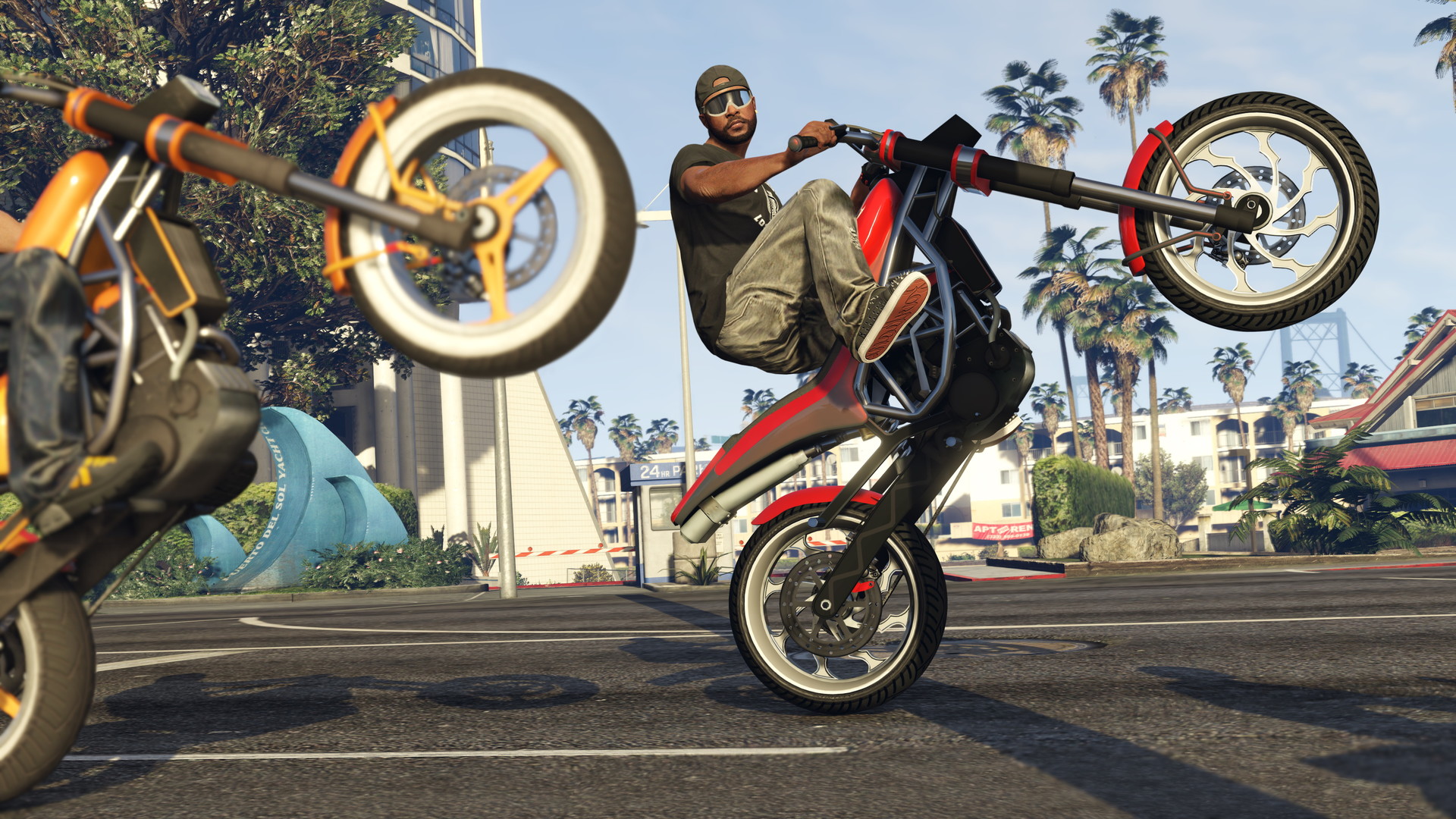
There is a moment, somewhere around hour six, where you are supposed to be doing a heist. Instead you are standing on the roof of the Vinewood Hills mansion you just burglarized, watching the sun set over the Pacific, and you have completely forgotten what the objective marker wanted from you. The city below hums with traffic, the hills behind you catch the last light, and a jogger is getting mauled by a cougar on the road to your left. Grand Theft Auto V does not need to ask for your attention. It just arranges the furniture until staying on task feels faintly ridiculous.
Rockstar Games released GTA V in 2013, re-released it for PlayStation 4 and Xbox One in 2014, and then again for PlayStation 5 and Xbox Series X/S in 2022. Reviewing it now, in 2025, with eighteen hours logged across the current-generation version, feels slightly absurd — but so does the fact that it is still one of the most-played games on any platform. So here we are. The question worth asking is not whether GTA V holds up as a technical achievement; it does, mostly. The question is whether the open world still earns the hours you give it, or whether a decade of design evolution has quietly exposed its seams.
Three Characters, One City, Variable Results
GTA V's central gambit — splitting the protagonist role between Michael De Santa, Trevor Philips, and Franklin Clinton — still reads as structurally ambitious. Most open-world games from the same era asked you to project yourself onto a single blank vessel. Rockstar instead gave you three distinct people with conflicting priorities and then made you care about how they fit together. Michael is mid-life-crisis personified, a retired criminal whose boredom is indistinguishable from self-loathing. Trevor is chaos rendered as a human being, funny and genuinely disturbing in almost equal measure. Franklin is the straight man who holds the group's logic together, which unfortunately also makes him the least interesting to spend time with.
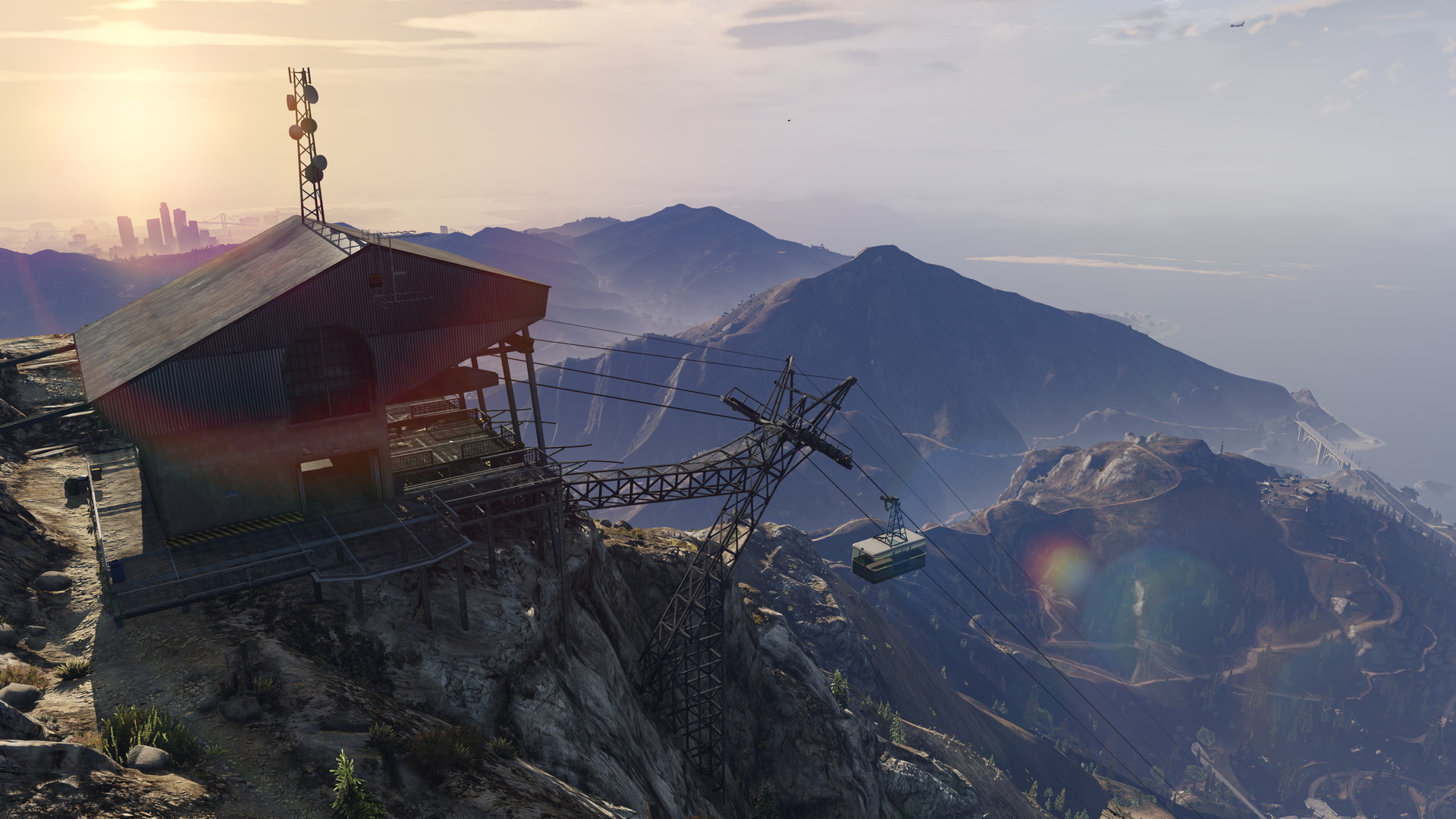 Atmospheric detail in Grand Theft Auto V.
The ability to switch between them mid-session, using the radial dial in the bottom corner, should feel more dynamic than it does. In practice, you find a favorite quickly — Trevor, almost always Trevor — and the switches to the others start to feel like interruptions. What the system does accomplish is geographical range. Each character anchors a different part of Los Santos and its surrounding county. Switching to Franklin drops you in Strawberry or Vinewood. Switching to Trevor teleports you to the Alamo Sea, the game's dusty, meth-lab-adjacent hinterland that functions as the id of the entire map. Both regions feel authored rather than procedurally inflated.
The story that ties them together is less coherent than nostalgia tends to remember. The FIB subplot, in particular, drags. Several missions exist purely to move pieces on a board that never quite resolves satisfyingly. The three endings — accessed by a choice in the final mission — are a good idea poorly weighted. Two of them are essentially punishment scenarios. The third, which requires a specific sequence of actions without being clearly telegraphed, is the only one that earns its runtime. First-time players miss it routinely.
The Heists Hold Up Better Than the Gunplay
GTA V's heist missions — the Jewel Store Job, the Merryweather Heist, the Paleto Score, and most notably the Union Depository finale — were the selling point in 2013 and remain the game's most tightly constructed content. Each heist comes with an approach selection and a setup chain of smaller missions, which creates a low-key planning phase that makes the execution feel earned. The Paleto Score, where you rob a bank in a small coastal town and then fight through waves of increasingly armored police while wearing stolen military armor, still produces a particular kind of sustained tension that few action games replicate.
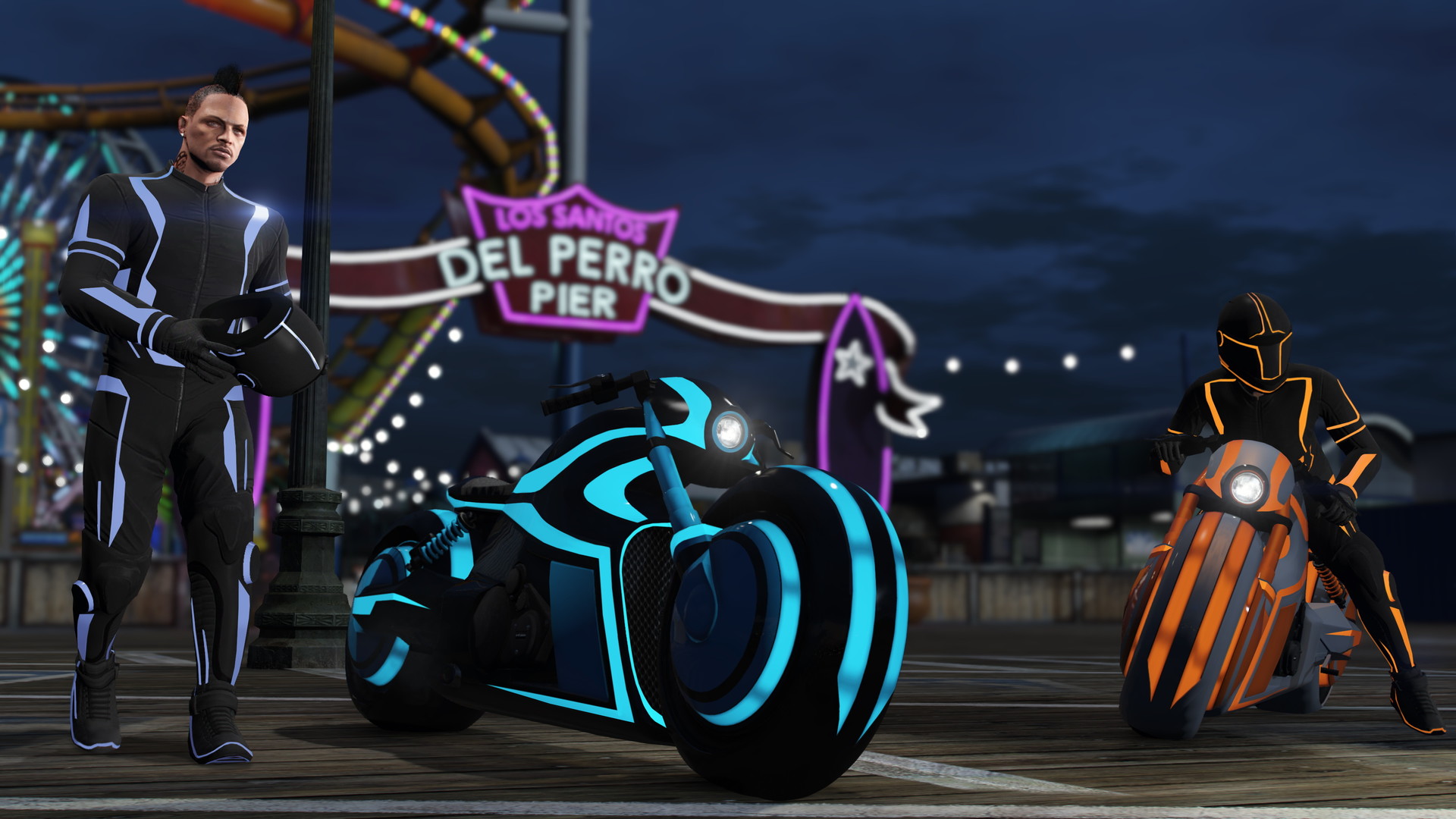 Combat encounter in Grand Theft Auto V.
The gunplay itself is a different conversation. Rockstar overhauled the shooting mechanics significantly from GTA IV, adding cover behavior and aiming that borrowed from Max Payne 3 — which Rockstar also developed and released the year prior. The cover system is functional. The auto-aim on controller, however, creates a difficulty curve that barely exists. On the default setting, most gunfights play out as target-switching exercises rather than actual combat encounters. PC players using mouse input get something closer to a real challenge, but the encounter design was clearly balanced around the controller auto-aim, which means even without the assist, enemy placement and counts rarely push back hard enough.
The Map Is Still the Best Argument for the Game
Los Santos and Blaine County together cover roughly 49 square miles of playable space — a figure that sounds like marketing until you spend time driving from the sandy flats around Sandy Shores up through the Zancudo River valley and into the forested hills north of the city. The map shifts in register. The humor shifts with it. Downtown Los Santos is satirizing Los Angeles with the volume cranked. The Alamo Sea is bleaker, almost elegiac in the way it depicts rural poverty and isolation. Mount Chiliad, the game's central geographical landmark, is just a mountain — and a surprisingly effective one for what it is.
What Rockstar understood, and what many later open-world games failed to replicate, is density of incidental detail at ground level. The NPCs have schedules, have arguments, call the police on you for running red lights, and occasionally have full-on breakdowns on street corners for no reason you're ever given. The radio stations — there are seventeen of them in the current-gen version — do more worldbuilding per minute than most games manage in cutscenes. East Los FM and Rebel Radio alone are worth the commute. Comparing GTA V's world construction to something like Watch Dogs: Legion, which released seven years later, is not flattering to the latter.
The current-gen visual upgrade, specifically the PS5 and Series X version, adds improved shadow rendering, faster load times, and a fidelity mode targeting 4K at 30 frames per second or a performance mode at 60. The performance mode is the right choice. Sixty frames transforms the handling model enough that it feels like a different game. The difference between driving the Infernus at 30fps and 60fps is not subtle.
GTA Online Casts a Long Shadow Over the Single-Player
It would be dishonest to review GTA V without acknowledging what it became. The single-player campaign is, at this point, a side attraction to GTA Online, which has received consistent content updates for over eleven years. Rockstar's financial commitment has flowed almost entirely toward the multiplayer component, and that priority shows in the single-player's sparse post-launch support. Story DLC — which was discussed, promised in various developer comments, and then quietly abandoned — never arrived. You get the campaign as it shipped in 2013, with the three playable characters and their missions, and nothing else.
GTA Online itself deserves its own treatment, but its existence shapes how you experience the base game. The monetization structure in Online, which revolves around in-game currency purchasable with in-game-currency, has pushed Rockstar's design instincts toward content that encourages spending rather than content that respects your time. None of that bleeds directly into the single-player campaign — there are no purchase prompts mid-mission — but the corporate context colors things. When you pick up GTA V in 2025, you are buying into an ecosystem that Rockstar has spent a decade optimizing for recurring revenue rather than narrative ambition.
Satire With a Short Memory
GTA V's Los Santos is built on the premise that America is ridiculous and that depicting it with sufficient granularity constitutes critique. The in-game internet, the talk radio, the television programming — all of it lampoons consumerism, celebrity culture, and political hypocrisy with reasonable wit. The problem is that satire requires a point of view, and GTA V's point of view is wherever the joke is funniest. It mocks misogyny while also being routinely misogynistic. It satirizes violence as entertainment while functioning primarily as a violence-as-entertainment delivery system. This is not a new observation about the series, but it lands differently when you are actually inside the game for eighteen hours rather than defending it in the abstract.
Trevor's relationship with women in particular has aged poorly. Several missions that are played for dark comedy — involving characters like Ashley Butler or the various women Trevor picks up and discards in Sandy Shores — reveal a writing room that was much more comfortable skewering male ego than examining what that ego costs other people. The game gestures at Trevor's psychology as explanation, but explanation and interrogation are different things.
Where It Lands After Eighteen Hours
GTA V is a genuinely great open world attached to a good-but-uneven crime story attached to a monetization apparatus that Rockstar has spent a decade feeding at the expense of everything else. The map earns its reputation. The heists earn theirs. The three-character structure is more interesting as a concept than it is in consistent execution, and the gunplay has been lapped by most modern action games without Rockstar appearing particularly concerned about it.
For new players coming in through a sale or a subscription service, the case for playing is still solid — the heist campaign alone justifies around fifteen hours of focused play, and the world will eat whatever time you let it have. For anyone expecting it to feel current across the board, the gaps are real. The combat is too soft, the story too scattered in its second half, and the absence of any single-player expansion after twelve years is a creative failure that no amount of map detail can fill.
What lingers, two weeks after closing the app, is not the story's ending or a particular mission. It is that sunset from the Vinewood Hills roof, the cougar doing its thing on the road below, and the small surprise that a game released before much of its current audience was in high school can still arrange a moment that makes you forget what you were supposed to be doing. That is not nothing. It is also not quite enough to call it essential anymore, and anyone telling you otherwise probably stopped playing around hour twelve.
Editorial scoring
Quick facts
How long does it take to finish Los Santos was always the real heist?
Main story runs around 120 hours depending on how thoroughly you explore. Completionists can spend 2-3× that.
Is Los Santos was always the real heist good for newcomers to Open-World Action?
For total newcomers, expect a 5-8 hour ramp-up. Once you internalize the loop, it clicks.
Which platform should I play Los Santos was always the real heist on?
Console version is the most stable on launch. PC version benefits from the modding scene long-term.
Was Los Santos was always the real heist worth the launch-day price?
If you're a fan of Rockstar Games, yes. If you're new to the studio, a sale price is more comfortable.
Are there DLCs or expansions worth picking up?
The base game is complete; expansion DLC adds 10-15 hours of additional content if you want more.
What did Rockstar Games get right (and what could be better)?
The systems are confident and the combat is satisfying. The story handoffs and load times are the rough spots.
Reader comments