
47 agents, one sandbox, infinite ways to ruin a dinner party
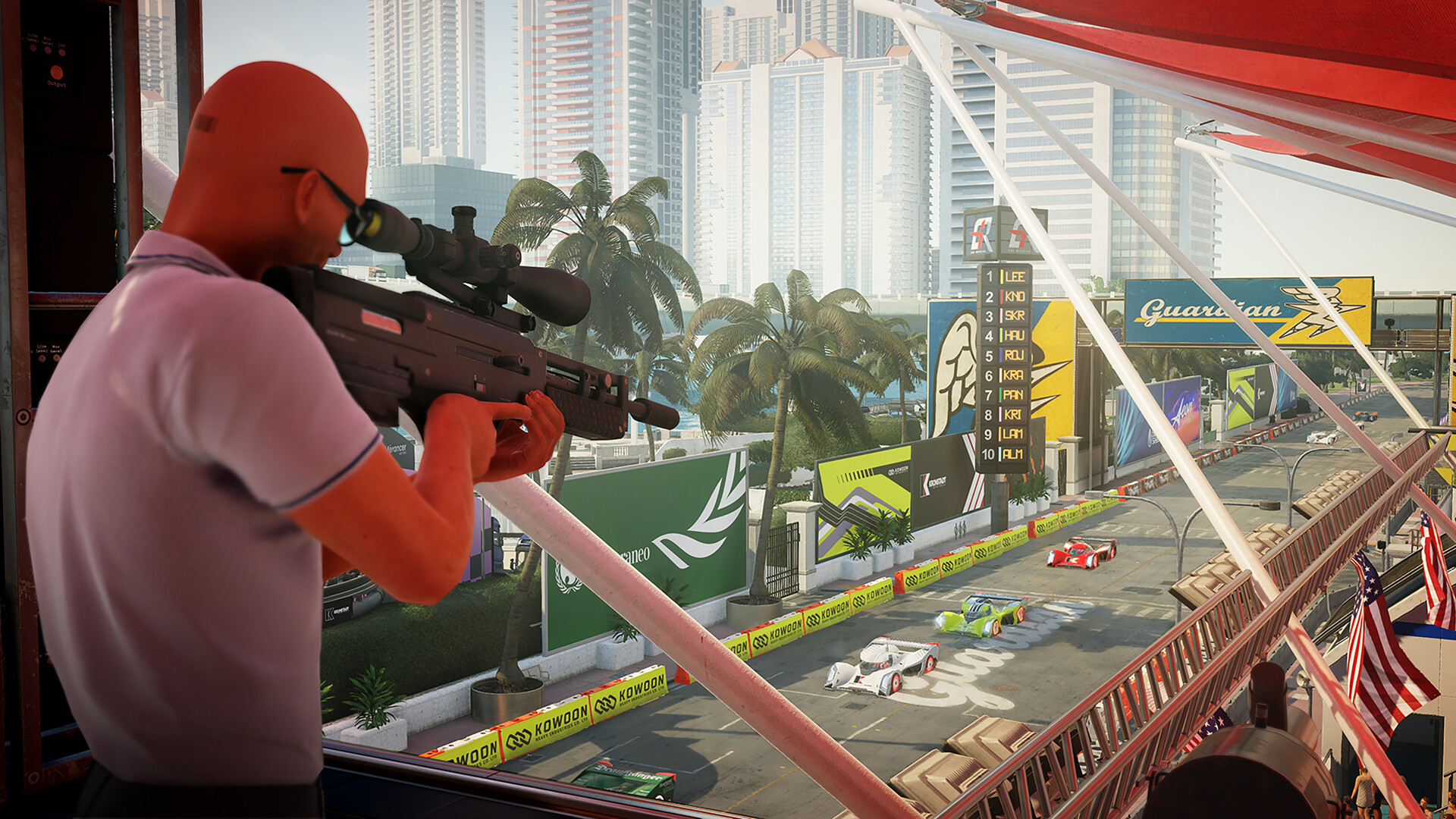
The Carpathian Mountains mission that closes HITMAN World of Assassination gives you a speeding train, a single target, and almost no tools. After spending dozens of hours dressing as a chef to poison a pasta course in Sapienza, or rewiring a chandelier above a Marrakesh general, the game strips everything away and asks whether you learned anything. Most players, if they're honest, will cheese it on the first attempt and feel a little ashamed. That's the kind of game this is — generous enough to let you be sloppy, constructed well enough to make you want to do better.
IO Interactive has been refining Agent 47's sandbox across three numbered entries and what feels like a decade of live updates. World of Assassination bundles Hitman 2016, Hitman 2, and Hitman 3 into one launcher, smooths out the old content delivery friction, and adds enough quality-of-life improvements that returning to Paris or Miami no longer feels like rummaging through a storage unit. At roughly 20 maps of meaningful size, a full seasonal Elusive Target system, and the Freelancer roguelite mode added in early 2023, this is the definitive version of a game that has been very good for a very long time. It is also, occasionally, maddening in ways that feel entirely preventable.
What IO Actually Built
The core loop is a target elimination sandbox. You land in a location — a fashion show in Paris, a racetrack in Miami, a Romanian vineyard — scout a target's patrol route, acquire disguises or tools through environmental storytelling, and find the most elegant (or most deranged) path to a kill. The elegance is mechanical. Poison a glass, leave the room, hear a body drop. Rig a fuse box to a microphone stand so a rock star electrocutes himself mid-performance. These are puzzles with permissive solution sets, which is a much harder design problem to solve than it sounds.
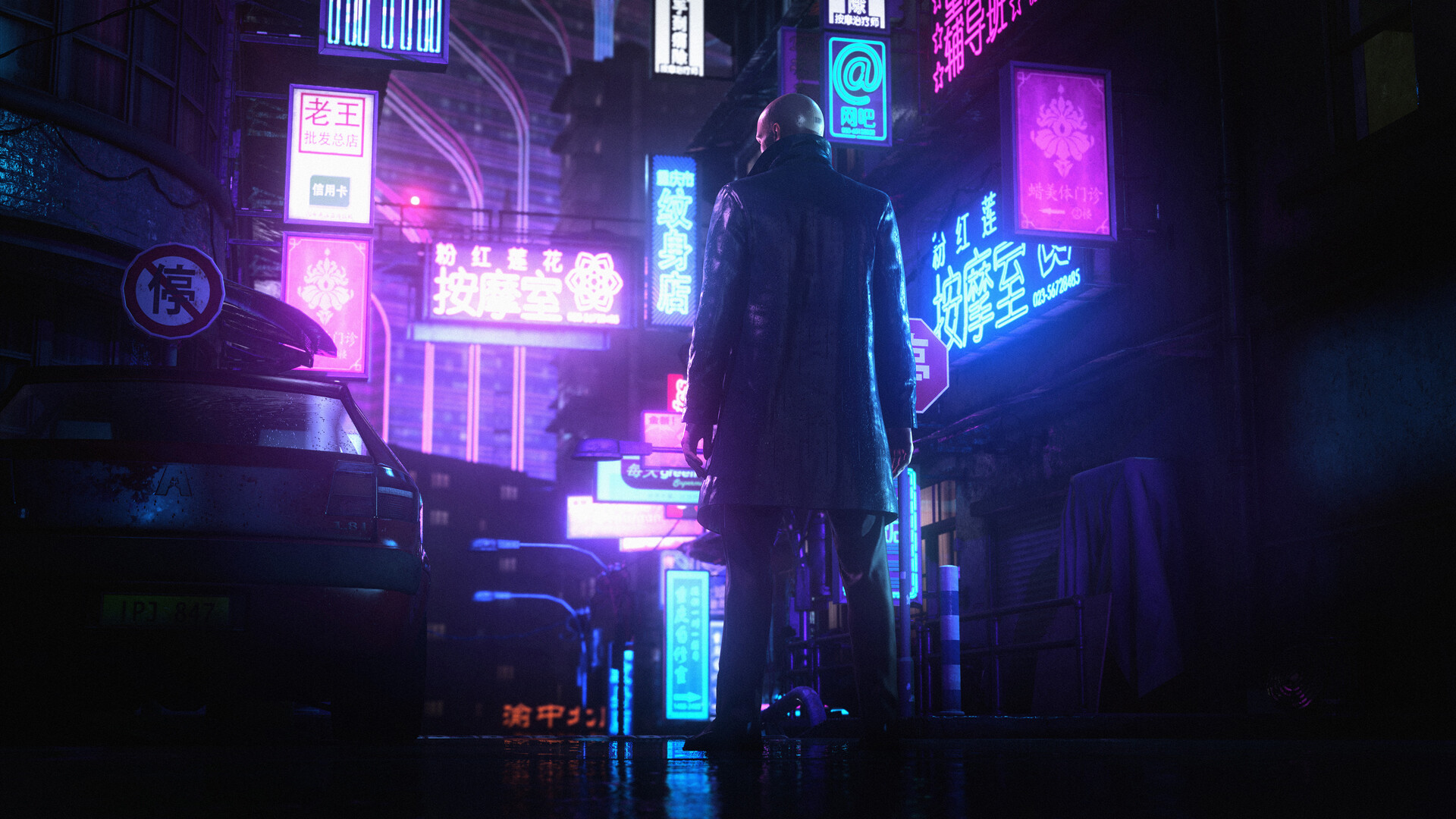 Atmospheric detail in HITMAN World of Assassination.
IO introduced the Mastery system to give these sandboxes replay depth. Completing challenges — silent assassin ratings, specific kill methods, discovered shortcuts — unlocks agency pickups and new starting locations. After ten runs through Dartmoor, you stop entering through the front gate like a tourist and start spawning as a detective with a pre-built alibi. It's a sensible progression design, one that Arkane would recognize even if the player fantasy is entirely different from Dishonored's. The difference is that Arkane tends to write its spaces around moral weight. IO writes them around spectacle, and spectacle turns out to be enough.
The storytelling is deliberately thin. 47 is a cipher, Diana Burnwood is underused, and the trilogy's overarching Providence conspiracy never generates real tension. That's fine. The stories that matter are procedural — the ones you assemble from cause and effect inside a single level. The narrative backbone exists to justify moving between postcard locations, and it fulfills that function without embarrassing itself.
The Maps That Work and the Ones That Don't
Sapienza is still the benchmark. The Italian coastal town is dense without being cramped, stratified without being vertical to the point of absurdity, and it hides a second mission objective underground that surprises players on their third or fourth visit. Paris's fashion show layers a public event over a private criminal auction in ways that reward social infiltration. Chongqing, from Hitman 3, leans into rain-slicked neon and a genuinely unsettling underground facility. These maps feel authored. Someone thought about how real people move through space and then designed around that.
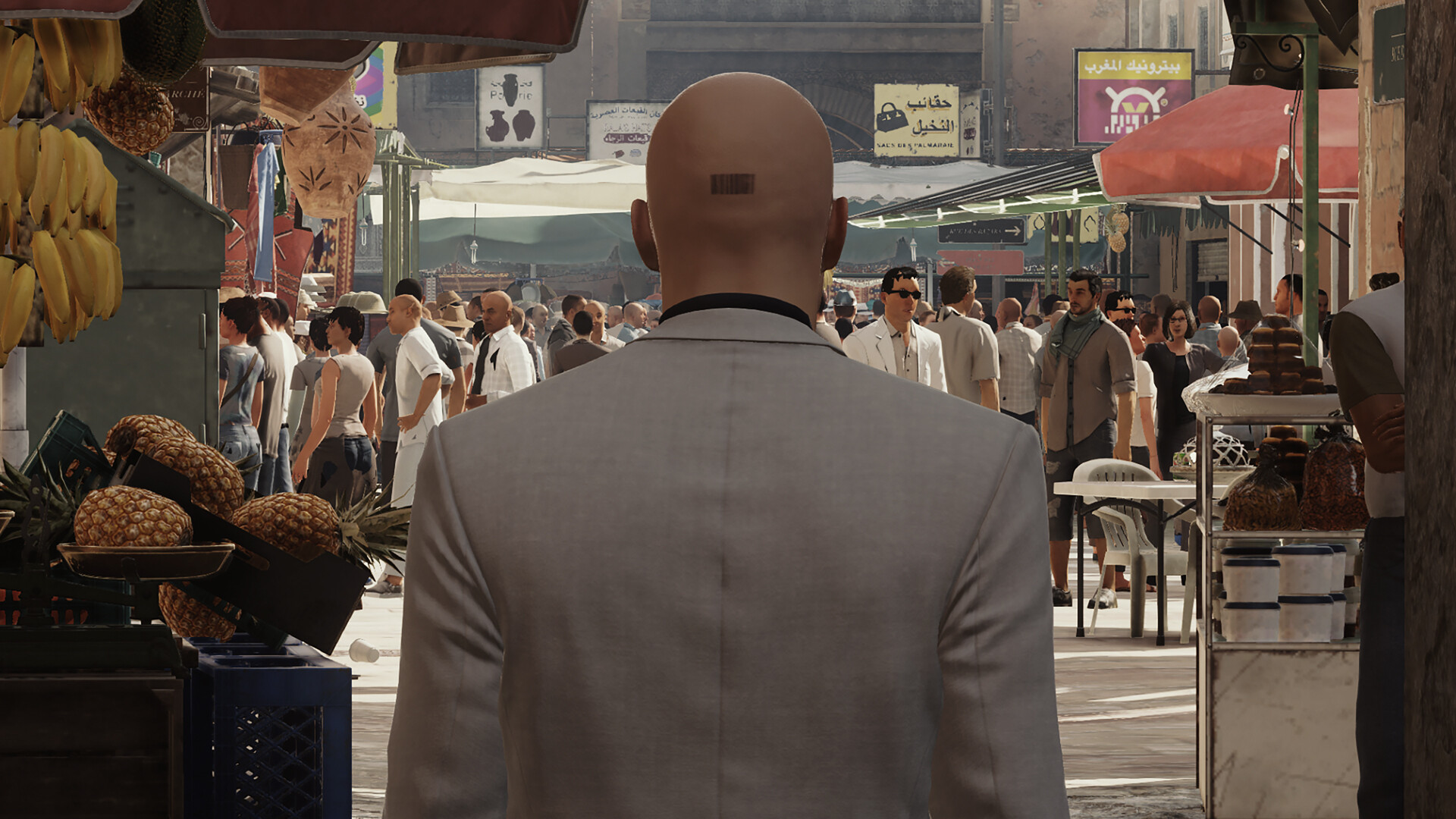 Combat encounter in HITMAN World of Assassination.
Others don't hold up as well. Whittleton Creek, a suburban American neighborhood from Hitman 2, is mechanically sound but spatially boring — a grid of identical lawns that trades the series' sense of spectacle for a tone it never quite commits to. The Isle of Sgàil has atmosphere in abundance and feels like a missed opportunity every time you play it, its remote castle setting promising isolation and consequence and delivering instead a maze that punishes navigation more than improvisation. It's not that these levels are bad. They're just less interesting than the ones surrounding them, and in a package this large, contrast is merciless.
Freelancer Mode: A Different Kind of Pressure
The Freelancer mode, added post-launch, deserves separate attention because it changes the psychological math of the whole game. In standard missions, failure is consequence-free — restart, adjust, try again. Freelancer introduces campaign runs across multiple maps, permadeath for your safehouse items, and a requirement to correctly identify targets from a list of suspects. Eliminate the wrong person and the campaign collapses. The first time it happens — and it will happen — the feeling is closer to Darkest Dungeon than anything IO had previously attempted.
The safehouse between missions is a nice touch. You curate your loadout from a limited pool, upgrade workbenches, and make the space feel like yours over time. It's light, but it provides a pause rhythm that longer roguelite structures often skip. Some players will find Freelancer more compelling than the core campaign. Others will find the randomized target identification system occasionally unfair in ways that feel arbitrary rather than earned. Both groups are right. IO was solving a specific problem — how do you create meaningful stakes in a game built around infinite retry? — and Freelancer is a credible answer even when the execution frays.
The Technical State of Things
World of Assassination runs well on PC with a reasonable mid-range build and acceptably on current-generation consoles. The real technical complaint is the NPC behavior, which has been inconsistent since 2016 and remains so now. Guards who should notice a body don't. Guards who shouldn't notice a piano wire from thirty meters away do. The AI operates on rules that feel locally coherent but globally arbitrary, which means stealth planning is sometimes undercut by moments that feel less like fair failure and more like the system glitching on you. It doesn't happen constantly, but it happens enough to remain a talking point.
The content packaging, meanwhile, has gotten less confusing since the earlier days of the trilogy's episodic release, but World of Assassination still has a tiered access structure that requires reading before you understand what you own. The Freelancer and Elusive Target Arcade content is locked to the top tier. For players buying in fresh, the value proposition is strong. For players who owned previous entries and are navigating upgrade pricing, it's more complicated than it should be, and IO hasn't made the explanation easy to find.
Where It Sits on the Stealth Ladder
Compare this to the competition and the picture clarifies quickly. Splinter Cell Blacklist's stealth is tighter mechanically but its world is dead compared to IO's crowded, gossiping NPCs. Dishonored 2 has more interesting characters and better level design in its peak moments — the Clockwork Mansion remains one of the best single levels in any stealth game — but Arkane was never trying to build a sandbox you'd return to forty or fifty times. Those are different ambitions. Metal Gear Solid V has the superior moment-to-moment movement system and arguably the best open-world stealth ever made, but its second act is famously unfinished and the story actively damages the experience.
World of Assassination doesn't have a single level that touches the Clockwork Mansion. It also doesn't have an unfinished second act, a broken campaign, or a movement system that undermines the stealth design. What it has is consistency, volume, and an AI-driven toybox that still surprises after 120 hours. Sapienza at year nine of this trilogy still produces stories you haven't seen before. That's a harder achievement than it looks.
A Few Remaining Grievances
The Silent Assassin rating system encourages a specific kind of play that becomes a crutch. Players who never experiment beyond fiber wire and poison vials are playing a much smaller game than IO built, and the game's challenge design sometimes actively steers toward that narrowness. The Elusive Targets, which offer one-attempt kills on time-limited special targets, should create genuine tension. They sometimes do. They also sometimes drop into maps like Bangkok where the setup is thin and the tension evaporates within two minutes of scouting. The concept remains stronger than some of its implementations.
The camera, which functions as both evidence and threat in certain missions, is underused across the trilogy. Hitman 3's Chongqing and Berlin hint at what a level designed around surveillance infrastructure could look like. Neither fully commits. It feels like IO identified a compelling design thread and then pulled on it halfway.
None of this changes the verdict, exactly. World of Assassination is the best version of a game that has been improving continuously since 2016, and Freelancer mode gives it a structural freshness that extends the shelf life further. 47 targets into this particular sandbox, the cruelty still feels creative. The 48th is probably already waiting in a map IO hasn't announced yet, and — against all reasonable expectation after this many hours — that's actually something to look forward to.
Editorial scoring
Quick facts
How long does it take to finish 47 agents, one sandbox, infinite ways to ruin a dinner party?
Main story runs around 24 hours depending on how thoroughly you explore. Completionists can spend 2-3× that.
Is 47 agents, one sandbox, infinite ways to ruin a dinner party good for newcomers to Stealth Sandbox?
Yes — 47 agents, one sandbox, infinite ways to ruin a dinner party is a great entry point. The early hours teach the systems gradually and the difficulty curve is reasonable.
Which platform should I play 47 agents, one sandbox, infinite ways to ruin a dinner party on?
PC version offers the highest fidelity if your rig can handle it. Console versions are polished out of the box.
Was 47 agents, one sandbox, infinite ways to ruin a dinner party worth the launch-day price?
If you're a fan of IO Interactive, yes. If you're new to the studio, a sale price is more comfortable.
Are there DLCs or expansions worth picking up?
Wait for the Game of the Year edition — it bundles everything at a fair discount.
What did IO Interactive get right (and what could be better)?
The systems are confident and the combat is satisfying. The story handoffs and load times are the rough spots.
Reader comments