
Hollow Knight earns every inch of its darkness
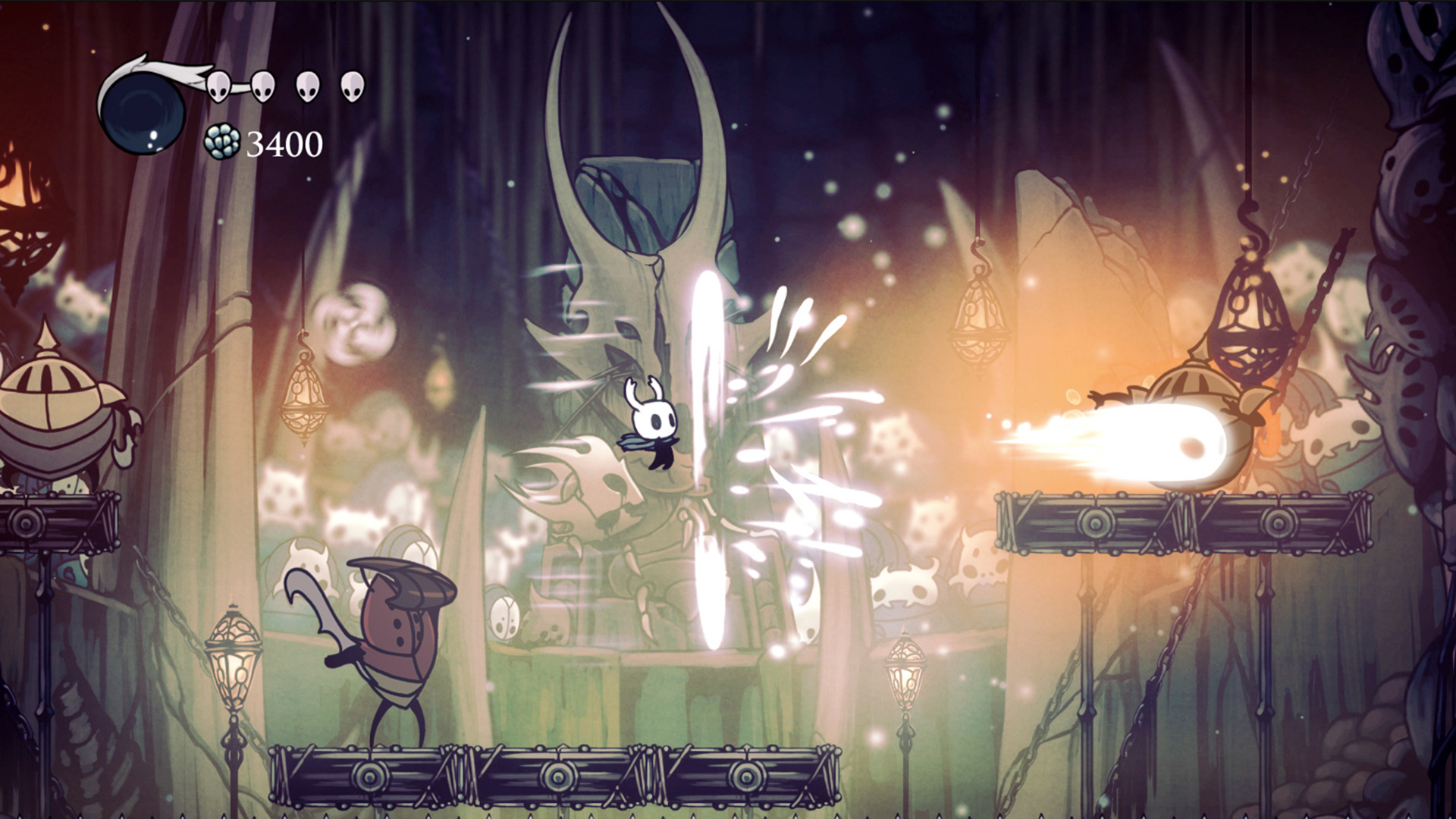
Hollow Knight arrived in 2017 from a three-person Australian studio, Team Cherry, and promptly became the game that every subsequent Metroidvania had to reckon with. The hype accumulated fast and loud, which is exactly the kind of thing that makes honest assessment harder. When a game earns the word 'masterpiece' before most people have cleared its second area, the critical vocabulary surrounding it tends to calcify into reverence. So here is a more practical question: how does Hollow Knight actually hold up when you sit down and play it, area by area, system by system, without the accumulated weight of community mythology pressing down on every session?
The answer, on balance, is that it holds up well — but not uniformly, and not always for the reasons people cite. The atmospheric art direction and the haunting score from Christopher Larkin get discussed constantly, because they are immediately legible as achievements. The design systems underneath them are harder to articulate and occasionally harder to love. Getting specific about both feels more useful than another run of superlatives.
What the movement actually does
The Knight's movement is deceptively minimal at the start: a short hop, a slash, a dash you unlock inside the first hour. What Team Cherry understood is that a small, clean toolkit frontloads readability. You know exactly what you can do, which means you know exactly when you fail. There is no ambiguity about whether a bad jump was a control issue or a capability gap. That clarity becomes the foundation everything else builds on, which is something a lot of action-platformers fumble by handing the player too many verbs too early.
 Scene from Hollow Knight.
The nail arts — charged slash attacks that require holding the attack button — add depth without cluttering the verb list. Cyclone Slash, the spinning aerial attack, changes how you approach clustered enemies in a way that feels earned rather than bolted on. The pogo mechanic, bouncing off enemies and hazards by slashing downward, turns vertical traversal into a skill expression rather than a checkbox. These are small things that compound into a movement language that rewards time spent with it.
The charm system: flexible but uneven
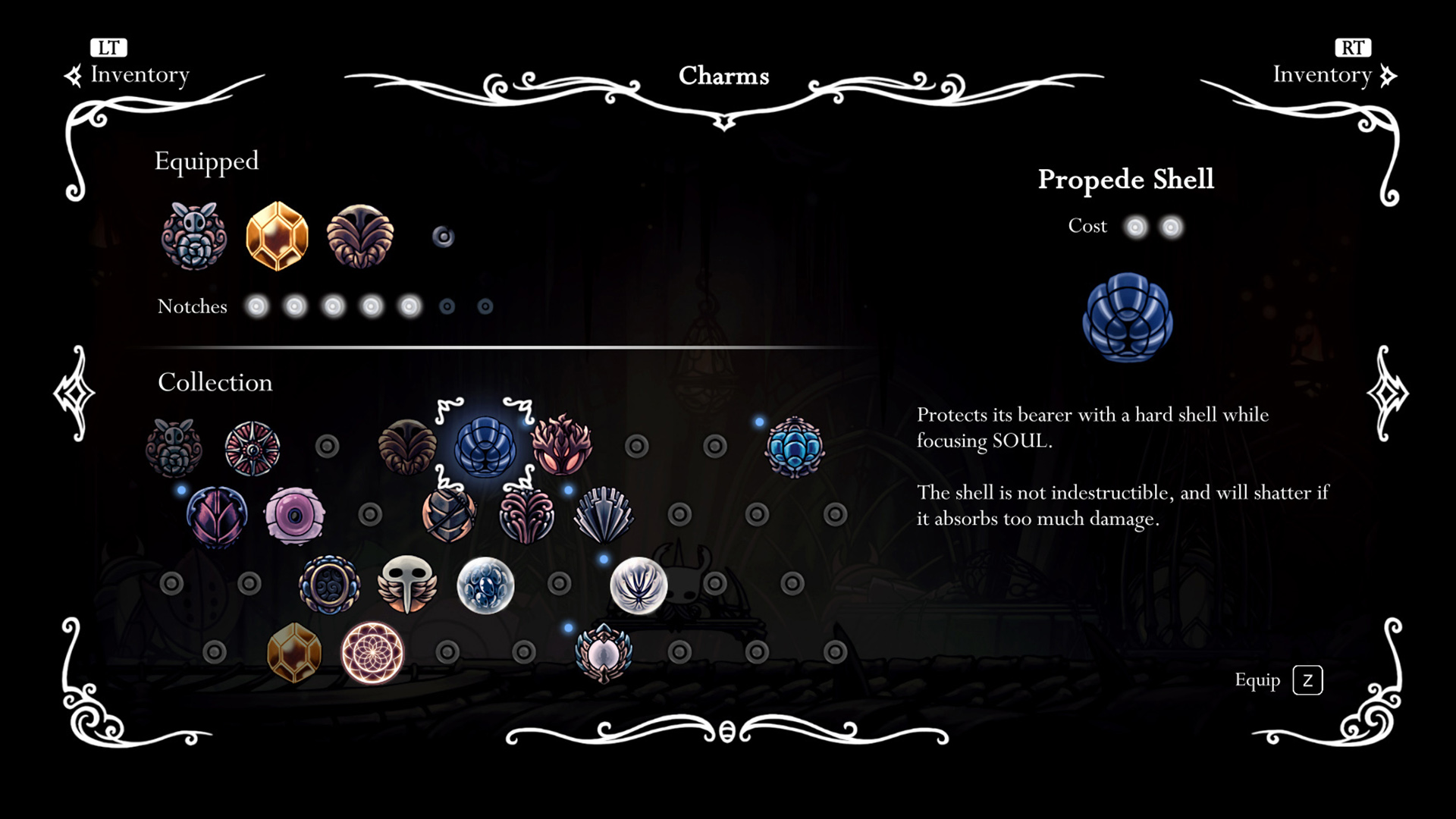
Equippable charms are where Hollow Knight makes its clearest bid for build variety, and the system is genuinely thoughtful in structure. You have a limited number of notches, charms cost different amounts, and the combinations occasionally produce synergies that Team Cherry baked in deliberately — the Fragile Strength and Quick Slash pairing is the obvious example, pushing damage output into territory that reshapes boss pacing entirely. The system encourages experimentation in a way that feels like actual customisation rather than peripheral number-tweaking.
The less comfortable truth is that a substantial portion of the charm roster sees very little practical use across a full playthrough. Grubsong, which generates Soul when you take damage, has a logic to it, but in a game that rewards minimising damage taken, it is working against your incentives. Baldur Shell, which gives you a defence buff when you have full soul, is similarly situational to the point of near-irrelevance. This is not fatal — most deep item systems carry dead weight — but it is worth naming, because the best charms are so good that the weaker ones tend to disappear from memory, which inflates the perceived quality of the whole pool.
 Scene from Hollow Knight.
How the world is structured, and why it matters
Hallownest is genuinely large; the base game contains somewhere around forty hours of content for a thorough first playthrough, and the Grimm Troupe and Hidden Dreams DLCs pushed that number higher. More importantly, the geography is coherent in a way that Metroidvania maps often are not. The transition from the Forgotten Crossroads to the Fungal Wastes to the City of Tears has an environmental logic that communicates the world's internal history without relying on text dumps. You feel the decay moving in particular directions. That sense of a place that once functioned and no longer does is embedded in the geometry itself.
The lack of fast travel in the early game is the one structural decision that has aged most contentiously. Hollownest's interconnected design means backtracking is rarely meaningless — you spot things differently on a return pass — but the time cost is real, and there are stretches, particularly around the Royal Waterways and the lower portions of the Ancient Basin, where movement feels punitive in a way that isn't testing skill so much as testing patience. The Stagways help once you have enough of them unlocked, but 'once you have enough of them unlocked' does meaningful work in that sentence.
The boss design: mostly excellent, occasionally exhausting
The boss roster is where Hollow Knight's reputation sits most securely, and for good reason. Fights like Hornet, Mantis Lords, and Broken Vessel demonstrate a clarity of telegraphing that makes repeated attempts feel instructional rather than arbitrary. The Mantis Lords in particular — a two-phase encounter involving two then three opponents whose attack patterns interlock — teaches parrying through pressure rather than through a tutorial. You learn the rhythm because the fight forces you into it. That is boss design doing genuine pedagogical work.
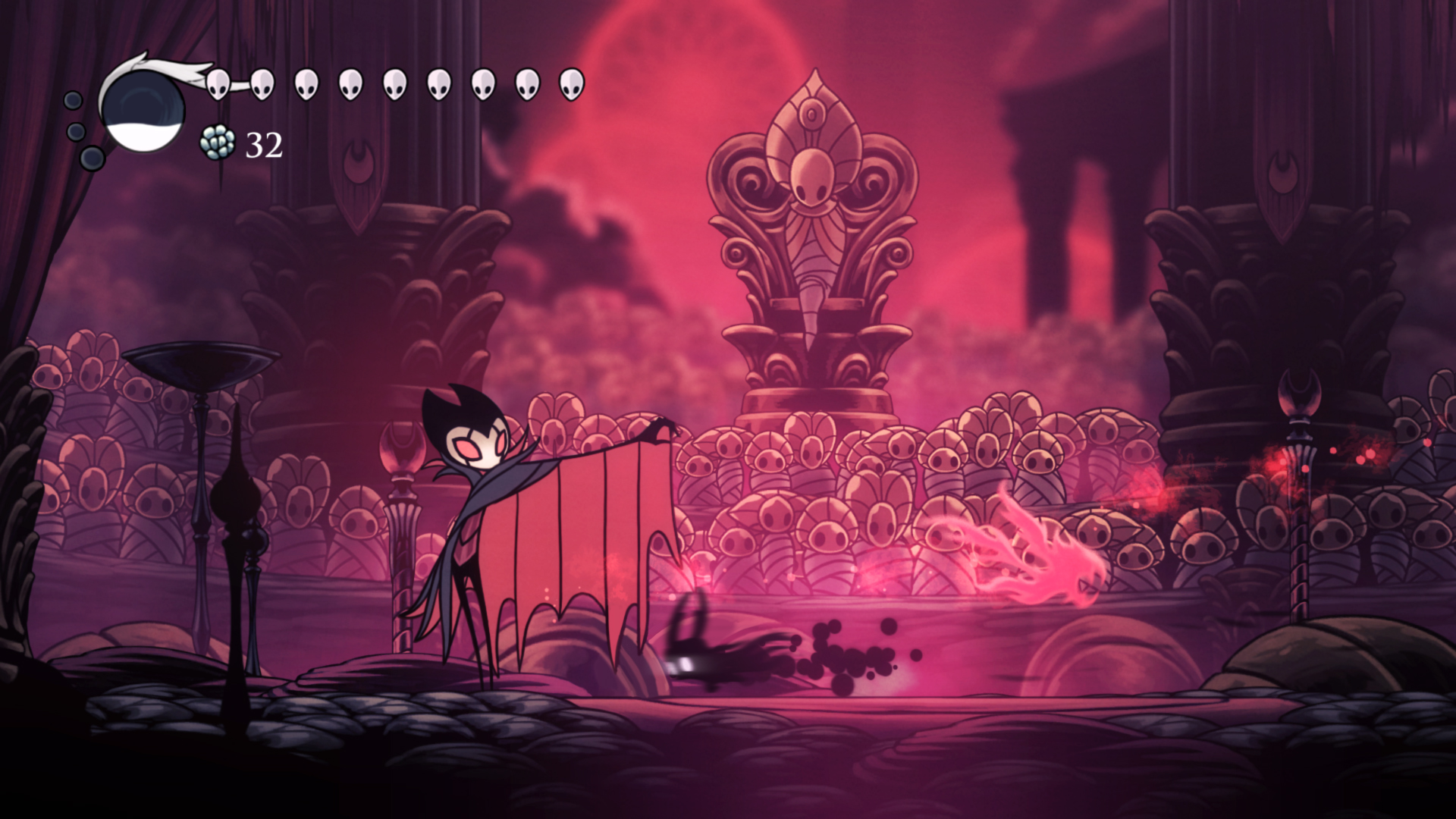
The Godhome content introduced in the Godmaster DLC tilts the difficulty curve into territory that has a narrower audience, and that is fine — optional content does not need to be universally accessible. But within the base game, the radiant difficulty spikes around certain Dream Boss encounters sit awkwardly. The Nightmare King Grimm fight, in particular, has an attack-density ceiling that starts to feel less like skill expression and more like reaction-time gatekeeping. It is still a well-constructed encounter. It is also the point in the game where some players will simply stop, not from lack of ability but from a reasonable assessment that the time investment has crossed a personal threshold.
The narrative: ambient and earned
Team Cherry's approach to storytelling owes more to FromSoftware's item-description archaeology than to anything resembling conventional narrative delivery. What you understand about the Pale King, the Radiance, and the Vessel project accumulates across NPC dialogue, journal entries, and environmental inference rather than cutscenes. This has a real cost: the first eight hours contain almost no scaffolding for what any of it means, and players who want story to orient them rather than reward them will find the approach alienating.
Where it pays off is in the texture of discovery. Finding Cloth's journey resolving across multiple areas, or piecing together what happened to the Resting Grounds from architectural remnants alone, produces the specific satisfaction of having worked for understanding rather than received it. The Vessel's complete silence is either a hollow affectation or the game's sharpest storytelling decision depending on how much you engage with what silence is being asked to carry. Most players who get deep enough into Hallownest land on the second reading.
The geo economy and death penalties
Geo — the game's currency — exists in that uncomfortable middle space between meaningful resource and soft obstacle. Losing your geo on death and having to retrieve your shade is a mechanic borrowed from the Souls series, and it functions similarly: it makes each run feel consequential without making death catastrophic. The tension around shade retrieval is real. Whether it is interesting tension or merely annoying tension depends entirely on where you died and what you were doing.
The cost of map acquisition through Cornifer, of stag stations, of charms at Sly's shop — none of it is punishing enough to feel unfair, but collectively it means that players who explore conservatively can find themselves resource-constrained in ways that feel arbitrary. The Fragile charms breaking on death, requiring repair from Nailsmith's brother at a fee, adds a penalty layer that the game's designers clearly believed was worth the friction. Whether it earns that friction depends on how you weight scarcity as a design tool.
Hollow Knight is not a perfect game, and insisting otherwise does it a disservice; it is a game with a handful of systems that slightly overstay their welcome attached to a core that is quietly, stubbornly brilliant. What Team Cherry built in Hallownest — with a budget a major studio would spend on a single cutscene — is a place that feels like it existed before you arrived and will persist after you leave. That is rarer than any individual mechanic, and it is the thing that makes the whole enterprise worth your time, frustrations and all.
Editorial scoring
Reader Q&A
How long does it take to finish Hollow Knight earns every inch of its darkness?
Main story runs around 32 hours depending on how thoroughly you explore. Completionists can spend 2-3× that.
Is Hollow Knight earns every inch of its darkness good for newcomers to Metroidvania?
Yes — Hollow Knight earns every inch of its darkness is a great entry point. The early hours teach the systems gradually and the difficulty curve is reasonable.
Which platform should I play Hollow Knight earns every inch of its darkness on?
Steam Deck handles this title well — verified compatibility on most recent patches.
Was Hollow Knight earns every inch of its darkness worth the launch-day price?
If you're a fan of Team Cherry, yes. If you're new to the studio, a sale price is more comfortable.
Are there DLCs or expansions worth picking up?
The base game is complete; expansion DLC adds 10-15 hours of additional content if you want more.
What did Team Cherry get right (and what could be better)?
Team Cherry nailed the moment-to-moment loop and the world-building. Pacing in the mid-game and inventory UX have room for improvement.
Reader comments