
Horizon Forbidden West is breathtaking and a little hollow
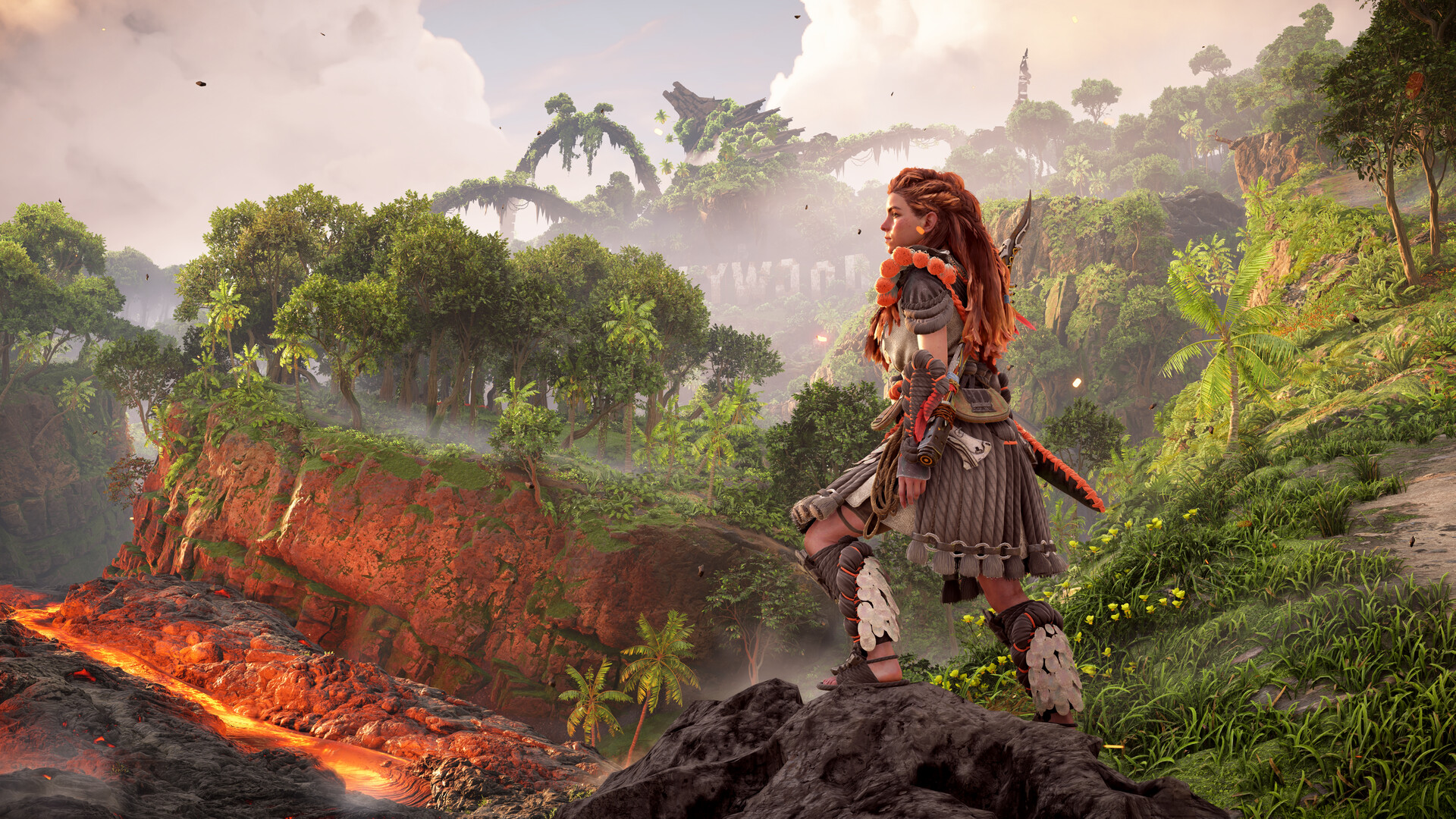
Guerrilla Games spent years building a world so visually detailed it sometimes obscures the question of whether anything interesting is happening inside it. Horizon Forbidden West, the 2022 sequel to the studio's breakout Horizon Zero Dawn, is the most technically accomplished open-world game Sony has shipped on PlayStation 5, and it carries that distinction like a trophy it earned but isn't sure what to do with. The machines are spectacular. The biomes — flooded ruins of Las Vegas, the redwood sprawl of northern California reclassified as the Sacred Lands' wilderness, the volcanic Burning Shores added in DLC — are genuinely gorgeous environments to move through. And yet, forty hours in, something nags.
That nag is worth naming, because Forbidden West is not a bad game. It's often a very good one. But Guerrilla built a combat system with real mechanical depth and then designed a world that rarely demands you use it. The gap between what this game can do and what it usually asks you to do is the central tension, and it's more interesting than any review score.
The machine fights are the argument
Aloy has access to a sling, a sharpshooter bow, a spike thrower, a blastsling, and a handful of other ranged weapons, each loaded with multiple ammo types targeting different elemental resistances. Slap a Purgewater canister into a Fireclaw's face to strip its fire immunity, then layer on plasma bolts to induce an overloaded state that causes it to stagger. That's a four-step interaction you can execute in about eight seconds once you've internalized it, and it feels like genuine problem-solving rather than pattern-matching.
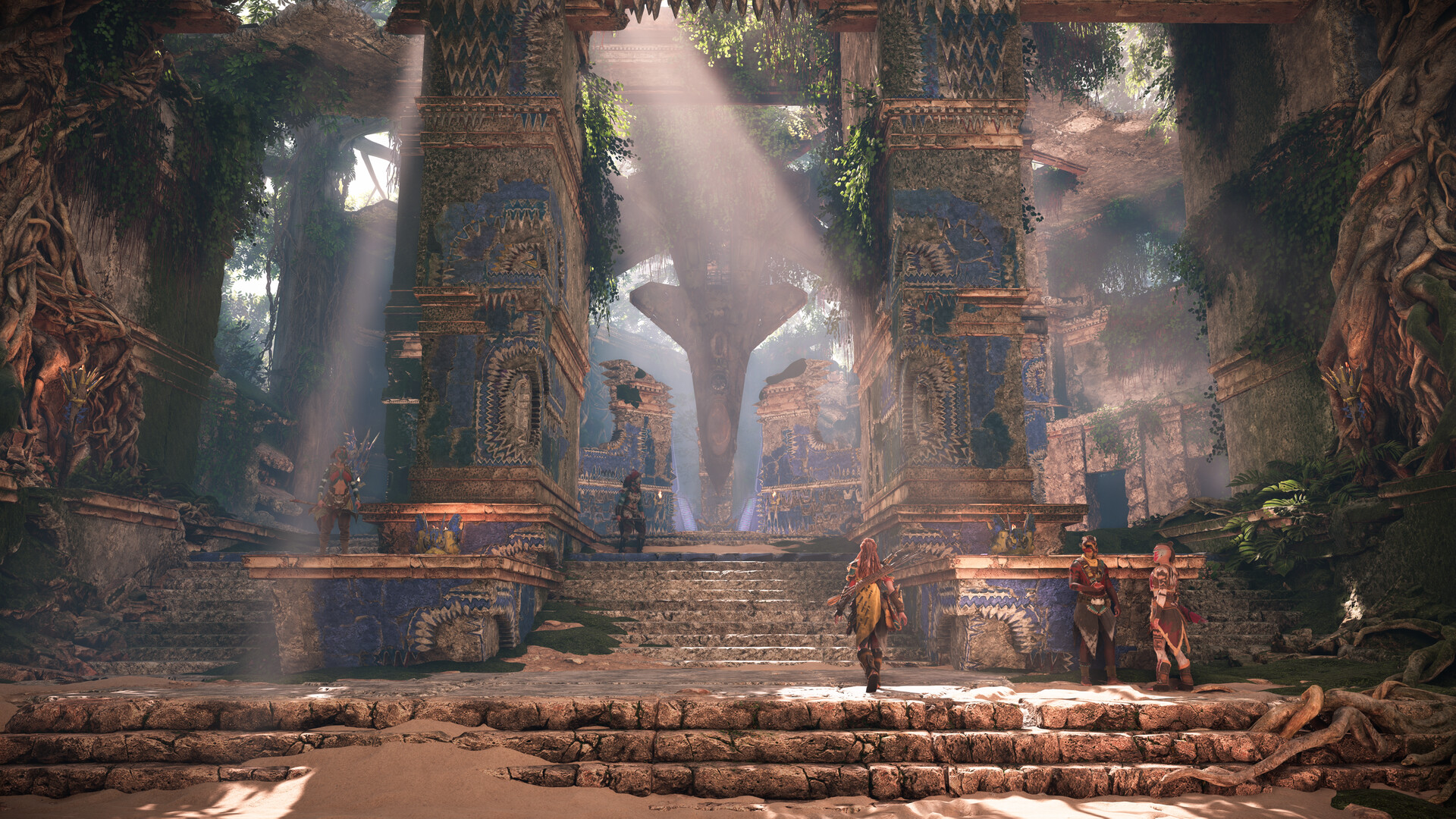 Scene from Horizon Forbidden West.
The Slitherfang, the Tremortusk, the Clawstrider — these machines are individually well-designed, with weak points that reward observation rather than memorization. The Tremortusk in particular is a masterclass in communicating danger; the way it uses its trunk as a battering ram while its tusks generate an electrical field forces you to reposition constantly rather than plant and shoot. Compare that to fighting a Behemoth in Final Fantasy XV, where you mostly hold a button and hope. The contrast is stark.
What the combat asks of you in a hard-difficulty playthrough is genuinely different from what it asks on normal. Resistance stacking and elemental sequencing matter. Aloy's valor surge abilities — earned by landing specific hit types — add a resource management layer that keeps you invested between big machines. This is a system built for people who want to engage with it. The problem is the rest of the game doesn't always return that investment.
An open world that keeps apologizing for itself
Forbidden West's map is enormous and it knows it. Guerrilla's response to scale is density: outposts, rebel camps, hunting grounds, cauldrons, melee pits, salvage contracts, relic ruins, survey drones, vista points, and a progression of question marks that would embarrass an Assassin's Creed title circa 2015. Each activity type has its own rewards track. The melee pits introduce a separate combat style with distinct unlock trees. Hunting grounds offer weapon-specific challenges timed in seconds. On paper, this is variety. In practice, you spend a lot of time doing things that are fine.
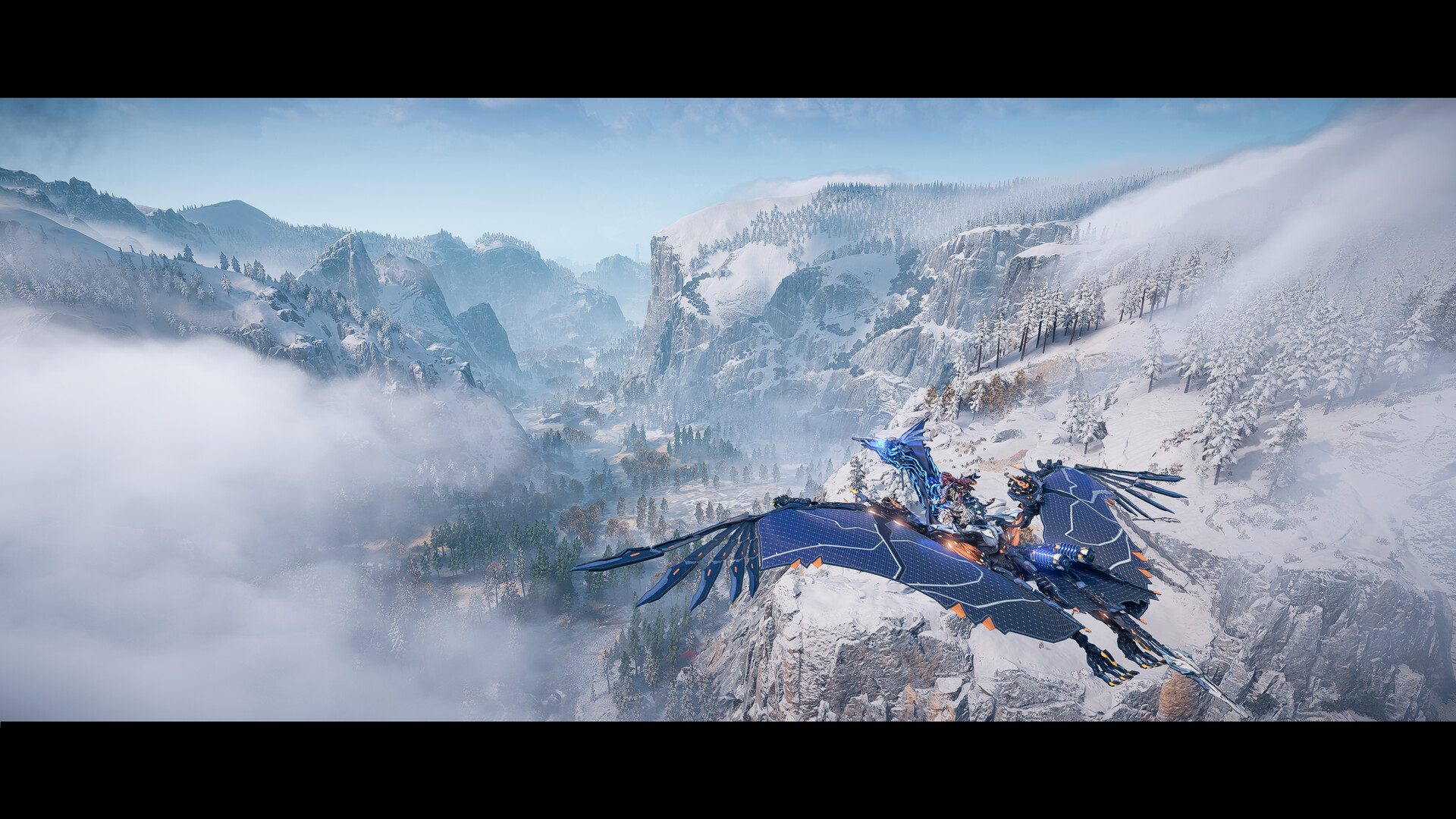 Scene from Horizon Forbidden West.
The rebel camps are the clearest offender. You approach, you scan the enemies, you clear the camp. The enemies are human. Human combat in this game is functional and nothing more — no elemental interactions, no component destruction, no real tactics beyond "stay out of the yellow cone." Clearing a camp takes three minutes and rewards you with minor crafting resources. Repeat this thirty-five times across the map. The camps exist to give you something to do between the genuinely good content, which is a way of saying they exist to inflate a number.
The cauldrons are the inverse. These underground facilities require Aloy to solve traversal puzzles and fight a sequence of machines in controlled arenas, culminating in a boss encounter that actually uses the elemental system. They feel like the game's designers made peace with what they'd built. There are a dozen or so of them, and they're too short.
Aloy, the character who outpaced her own story
Aloy in Horizon Zero Dawn was refreshingly unromantic about the post-apocalyptic world she inhabited — curious, impatient, frequently dismissive of the tribal mysticism surrounding her. She was defined by competence rather than chosen-one destiny, at least in the early acts. By Forbidden West, the mythology has caught up with her. She is, canonically, the most important person alive, carrying Earth's last hope in a datapoint named GAIA, and the game treats this with the gravity you'd expect.
The supporting cast in the new game is better, to be fair. Erend is still there being Erend. But characters like Kotallo, the Tenakth marshal Aloy recruits mid-game, have a specificity that Zero Dawn's companions lacked. His relationship with his tribe's warrior culture and what he loses in the story is handled with enough restraint that it lands. Zo's storyline is quieter and more affecting than anything in the main quest's final third.
The main quest's villain problem, though, is real. The Zeniths — the wealthy off-world humans who engineered the current apocalypse scenario — are thin in ways the game doesn't seem to recognize. They are motivated by wanting to live forever because they are selfish. This is explained clearly and repeatedly. HADES, the rogue terraforming subroutine from the first game, had more menace as an abstraction than Zenith antagonist Tilda van der Meer does as a physically present character in the last four hours of the main story.
Skill trees, gear, and the cost of abundance
The skill tree is large. You unlock nodes across six categories — Warrior, Trapper, Hunter, Survivor, Machine Master, Infiltrator — and a separate valor surge system gates powerful abilities behind combat-style requirements. This sounds like a recipe for meaningful build choices. It mostly isn't. The skills are useful but rarely transformative; by hour thirty you've unlocked enough nodes that the remaining ones feel optional. A system in Elden Ring or even Dragon's Dogma 2 uses scarcity to make you commit to a direction. Forbidden West doesn't want to make you feel bad, so it gives you enough points that specialization is a choice rather than a necessity.
Gear is the sharper problem. Weapons belong to tiers — common, uncommon, rare, very rare, legendary — and the upgrade economy requires machine parts that are genuinely hard to farm consistently. Legendary gear can only be obtained through specific vendors or quest rewards, which is reasonable. Less reasonable: the visual difference between a legendary Sharpshot Bow and a very rare one is marginal enough that new players won't understand why the jump matters. The game could communicate the mechanical gap more clearly without dumbing anything down.
What Guerrilla got right that's easy to overlook
The traversal deserves more credit than it gets. Aloy's pullcaster — a grappling hook that attaches to designated surfaces — combined with the shieldwing glider changes how vertical space feels. Climbing in Forbidden West is more tactile than in most contemporary open-world games; there's a sense of weight and commitment to grabbing ledges that Ghost of Tsushima, for all its elegance, doesn't quite match. Scaling a ruin in the Shining Wastes while a Stormbird circles overhead is the kind of moment that makes the world feel inhabited rather than scenic.
The accessibility options are genuinely comprehensive. Aim assist, traversal assist, custom difficulty sliders, toggle versus hold for every action — Guerrilla clearly put time here, and it shows in ways that players who don't need these features will never notice. That's exactly how it should work.
The underwater sections, which replace the frustrating absence of water traversal from the first game, are among the best in the genre. Melee kits, horizontal movement, and machine encounters that use three-dimensional space competently. It took Sony first-party studios a while to crack underwater gameplay that doesn't feel like being trapped in slow motion. These sequences suggest what the whole game could have been if Guerrilla had cut twenty percent of the content and deepened the remainder.
Where it leaves you
Horizon Forbidden West is the work of a studio that can build almost anything but hasn't yet decided what to build less of. The machine encounters are as good as anything in the action-RPG space right now. The traversal is underrated. The world is visually astonishing in ways that still register on a second playthrough. But the content density is a hedge against boredom rather than a design philosophy, and that difference shows up somewhere around hour twenty-five when you realize you're clearing another rebel camp not because it's interesting but because the icon was there.
If you played Zero Dawn and wanted more of it, Forbidden West delivers, with real improvements to every mechanical layer that mattered. If you bounced off Zero Dawn's open-world structure, the sequel does not fix that problem — it scales it. The systems are good enough that they deserve a tighter, more demanding game around them. Maybe the third entry in the series will be that. For now, Forbidden West is the most impressive open world Sony has shipped since Sucker Punch's Ghost of Tsushima, and it still spends too much of its runtime settling for impressive.
Editorial scoring
Reader Q&A
How long does it take to finish Horizon Forbidden West is breathtaking and a little hollow?
Main story runs around 18 hours depending on how thoroughly you explore. Completionists can spend 2-3× that.
Is Horizon Forbidden West is breathtaking and a little hollow good for newcomers to Open-World Action RPG?
Yes — Horizon Forbidden West is breathtaking and a little hollow is a great entry point. The early hours teach the systems gradually and the difficulty curve is reasonable.
Which platform should I play Horizon Forbidden West is breathtaking and a little hollow on?
Console version is the most stable on launch. PC version benefits from the modding scene long-term.
Was Horizon Forbidden West is breathtaking and a little hollow worth the launch-day price?
If you're a fan of Guerrilla Games, yes. If you're new to the studio, a sale price is more comfortable.
Are there DLCs or expansions worth picking up?
Skip the cosmetic DLC. The story expansion is the only one we'd recommend at full price.
What did Guerrilla Games get right (and what could be better)?
Strongest: art direction, audio design, set-piece variety. Weakest: late-game balance and a few persistent quest-log bugs.
Reader comments