
Lies of P respects you enough to lie straight to your face
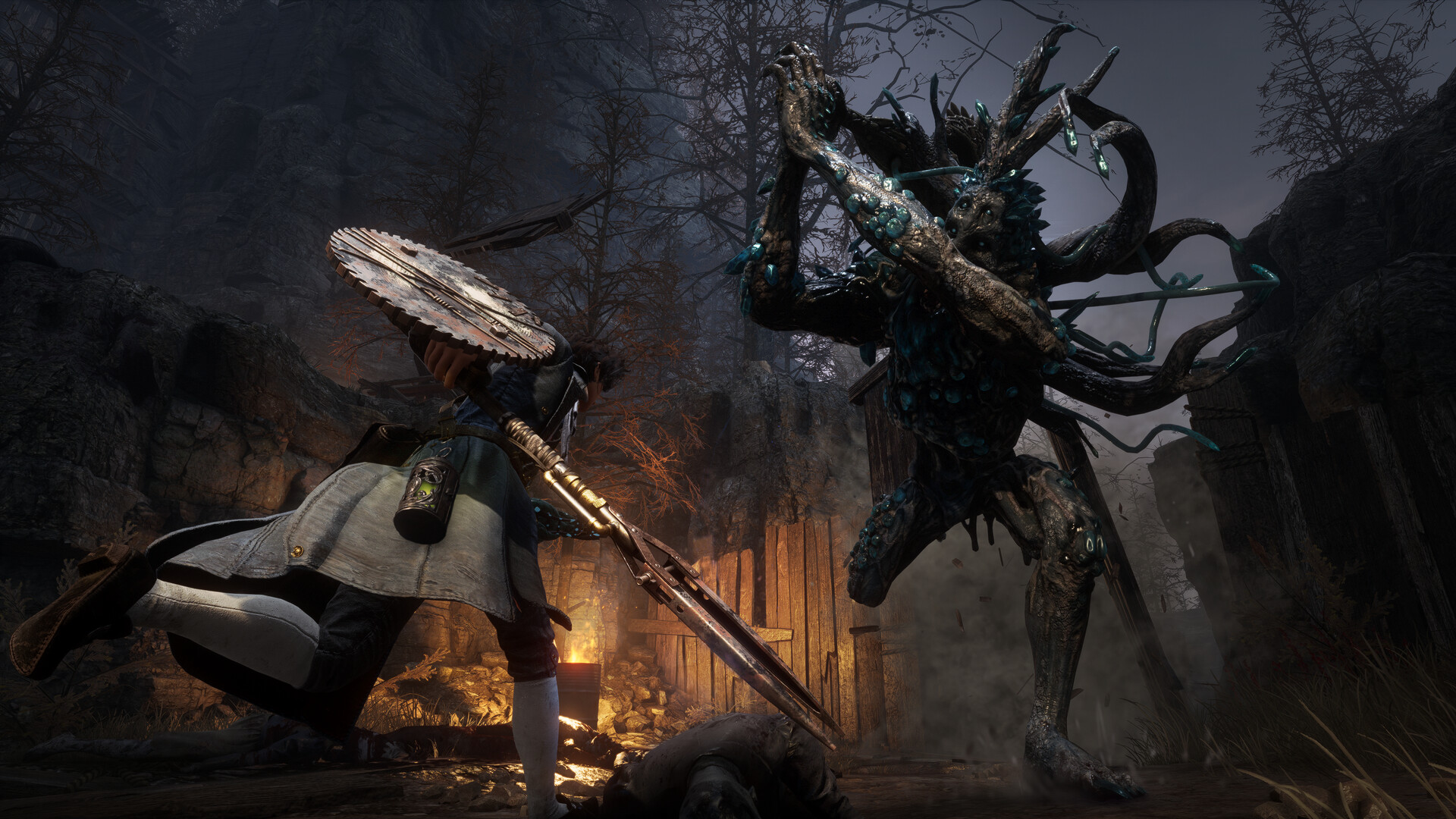
Round8 Studio's Lies of P is a game about deception, and it commits to the bit harder than most. Pinocchio, reimagined as a puppet soldier navigating a crumbling Belle Époque city called Krat, cannot speak a single honest sentence without suffering for it. The lie mechanic — where you select fabricated dialogue options and slowly build a capacity for human-like deception — is such a neat inversion of the usual RPG morality slider that it almost distracts you from how disciplined the rest of the design is. Almost.
After thirty-two hours, two full boss runs on the Parade Master before I figured out the deflect timing, and one regrettable decision to skip an NPC questline I cannot undo, here is where this thing actually lands. It is not FromSoftware. It is not trying to be Elden Ring. What it is, more precisely, is a very sharp piece of craftsmanship from a studio that understood the assignment and then quietly rewrote parts of it.
Krat is doing a lot of heavy lifting
The setting is probably Lies of P's biggest individual achievement. Krat is a city that clearly used to work — the architecture suggests civic pride, the hotel you operate from still has functioning gramophone players and staff portraits on the walls — and the contrast between that former order and the current puppet carnage lands with real weight. Games like Bloodborne built dread through abstraction. Krat builds it through specificity: a collapsed theatre, a factory floor with puppets still posed at their stations.
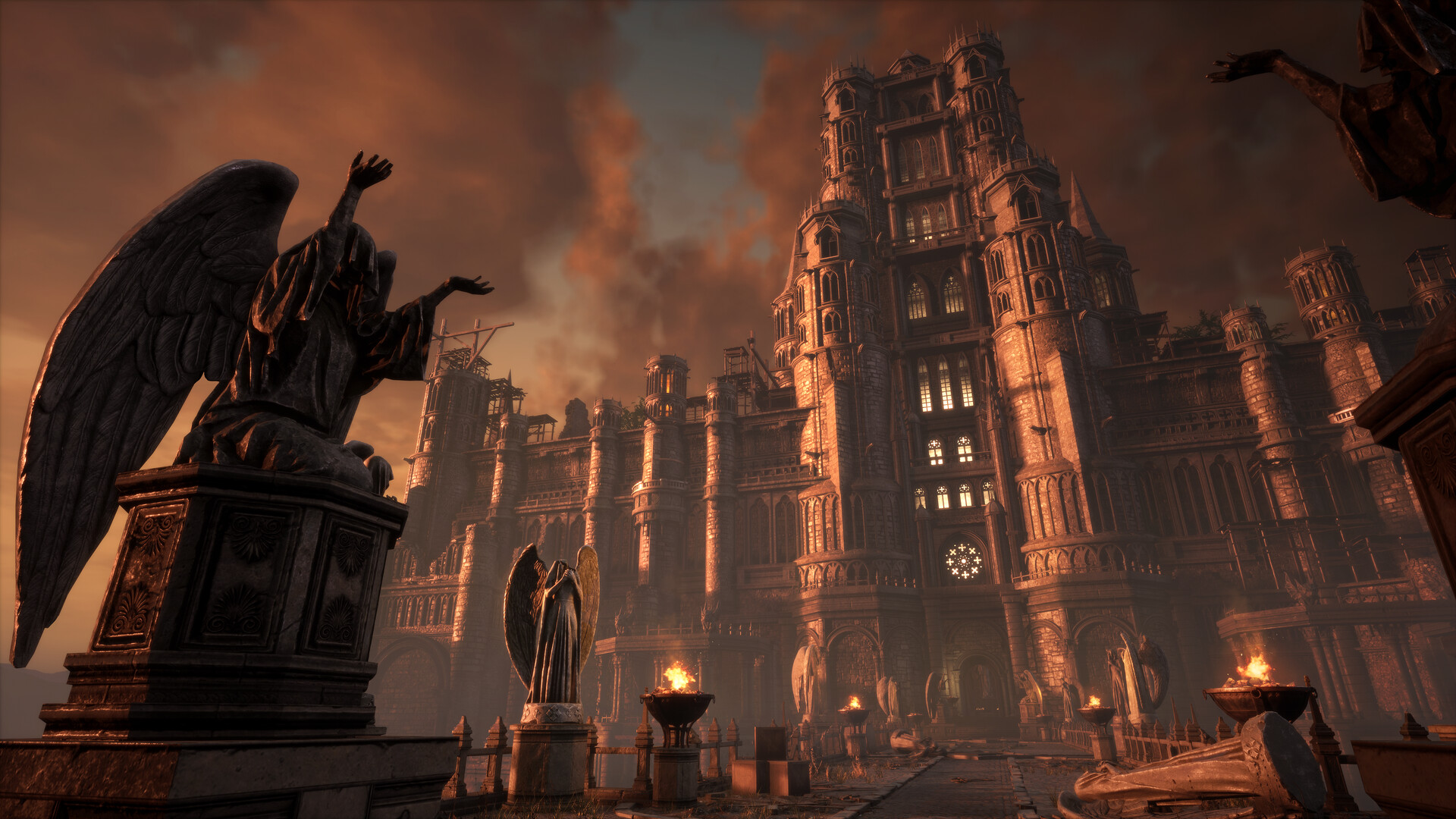 Scene from Lies of P.
The lore is delivered in the usual item-description parcels and optional NPC conversations, which will either suit you or it won't. What Round8 does better than many contemporaries is make the environmental storytelling redundant by design — you can read the notes or you can just look at the rooms, and both methods reach the same conclusions. That is harder to execute than it sounds. Signalis does it. Most games dump lore in one channel and rely on you finding it.
The weapon assembly system earns its complexity
Here is the mechanical hook that separates Lies of P from a straight genre exercise: weapons are split into blades and handles, and the two halves carry separate move sets, weight classes, and scaling affinities. You can attach a sawblade to a greatsword grip or put a rapid-fire fable blade on a cane handle. The combinations produce genuinely different playstyles rather than just stat reshuffles. After a dozen hours I was still finding pairings that changed how I approached a checkpoint.
The Fable Arts system — essentially special moves tied to weapon handles — deserves specific mention because it functions as a second-layer combat vocabulary that the game never forces on you but rewards heavily when you engage. The police baton handle's Fable Art charges a short-range explosive hit that staggers mid-tier enemies. Pairing it with a fast blade turns a weapon type that should feel slow and heavy into something disruptive and rhythmically satisfying. This is the kind of design Wo Long: Fallen Dynasty gestures at without fully committing to.
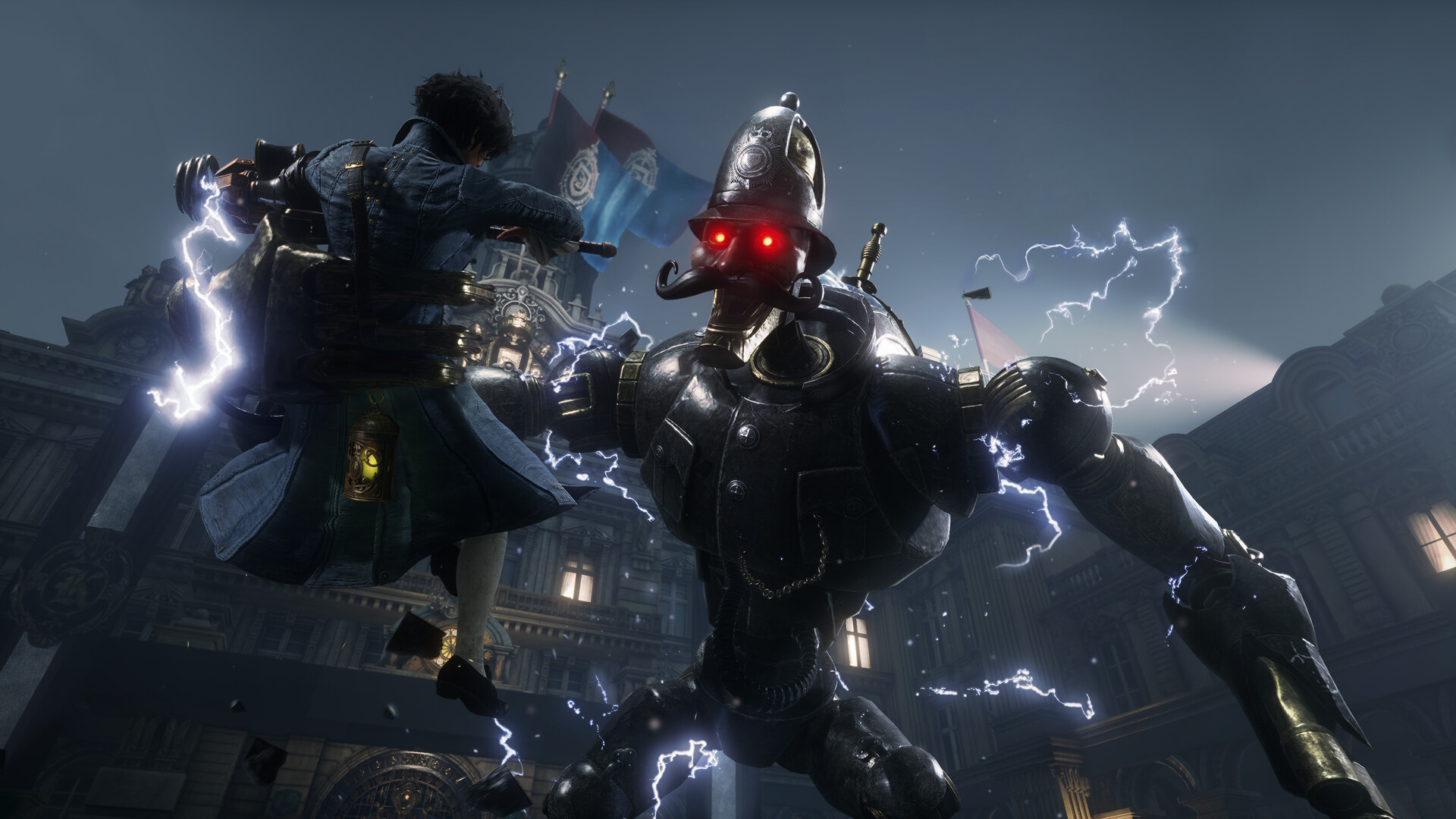 Scene from Lies of P.
One genuine caveat: the game gives you so many components in the first half that inventory management becomes a minor chore. The upgrade material for handles and blades is shared, which sounds streamlined but occasionally means you have upgraded a handle you no longer want to use. It is a small tax on experimentation rather than a barrier, but it is there.
Deflect or die, and the game is honest about which
The guard and deflect system is where Round8 made their most opinionated design call. Blocking with perfect timing returns a piece of your health called the Pulse Cell gauge, which you then spend to heal mid-fight. Dodge-only builds are viable but the game clearly prefers you to stand in front of things. This is not Sekiro's parry window — the timing is marginally more forgiving — but it is closer to that end of the spectrum than to Dark Souls' more passive roll-and-punish loop.
Boss designs reflect this philosophy. The Scrapped Watchman, a mid-game mechanical boss, has an attack sequence that is almost impossible to punish with roll timings but becomes readable once you treat the whole string as a deflect chain. The game is teaching through pressure. It wants you to get close and stay there. Players coming from Nioh 2's ki-pulse rhythm will adapt faster than those who spent a thousand hours in Elden Ring rolling through everything.
Where the lies start to show
The back third of the game has pacing problems. After a mid-game section that I will not name because it represents the design at its peak, the remaining levels feel contracted — shorter, less visually distinct, with fewer of the side paths and optional rooms that made the earlier areas worth exploring slowly. It reads like a production schedule caught up with an ambition. The final two major areas in particular reuse enemy types to a degree that earlier zones do not.
The NPC questlines, which feed into the ending you receive, are fragile in the manner of FromSoftware's worst habits. Miss a specific conversation before a boss, or buy an item from the wrong vendor at the wrong time, and a chain breaks silently. One questline involving a character named Antonia requires you to bring her a specific wine at a point the game never flags as a deadline. There is no journal. There is no marker. You either know, or you do not. That is a deliberate design choice from a certain tradition of game-making, but it is also a choice that has aged badly.
None of this is disqualifying. The lie mechanic does eventually matter — choices compound into a late-game reveal that recontextualises several earlier encounters in a way that feels earned rather than arbitrary. But the narrative architecture relies on you catching things a first-time player is unlikely to catch, which is a problem if the multiple-ending structure is meant to be something other than a New Game Plus reward.
The soundtrack is doing more work than the reviews mention
Worth flagging because it keeps getting undersold: the music in Lies of P is doing structural work. The hotel hub plays period-appropriate songs — actual recordings of 1920s jazz and classical pieces — and the tracklist shifts as the story progresses. It is the same device Disco Elysium uses with its ambient score, where the music functions as a mood-state indicator rather than just atmosphere. When a song in the hotel changes, something has changed in Krat. Learning to read those shifts makes the world feel alive in a way that the visual design alone does not achieve.
The combat music is more conventional but composed with enough dynamic variance that long boss attempts do not become aurally exhausting. That is a practical consideration most reviews skip over entirely, and Round8 clearly thought about it.
The verdict, such as it is
Lies of P is the best argument in recent memory that the Souls-like genre still has room for studios who actually have something specific to say rather than just borrowing the verbs. Round8 picked a premise that could have been embarrassing — Pinocchio, steampunk, lies — and turned it into a coherent mechanical-thematic unit. The weapon system gives builds genuine texture. Krat is a place worth understanding. The deflect timing will click, and when it does, the combat becomes one of the more satisfying feedback loops in the genre right now.
The back-half pacing and the silent questline breaks are real flaws, not quirks. If Round8 gets a sequel — and the ending strongly implies they want one — those are the things that need fixing before anything else. For a first original entry from a studio that previously worked on licensed games, though, Lies of P lands with a confidence that took FromSoftware until Dark Souls to fully develop. That is not faint praise. That is just where the bar is, and this one clears it.
Editorial scoring
Reader Q&A
How long does it take to finish Lies of P respects you enough to lie straight to your face?
Main story runs around 32 hours depending on how thoroughly you explore. Completionists can spend 2-3× that.
Is Lies of P respects you enough to lie straight to your face good for newcomers to Souls-like?
For total newcomers, expect a 5-8 hour ramp-up. Once you internalize the loop, it clicks.
Which platform should I play Lies of P respects you enough to lie straight to your face on?
Console version is the most stable on launch. PC version benefits from the modding scene long-term.
Was Lies of P respects you enough to lie straight to your face worth the launch-day price?
If you're a fan of Round8 Studio, yes. If you're new to the studio, a sale price is more comfortable.
Are there DLCs or expansions worth picking up?
Skip the cosmetic DLC. The story expansion is the only one we'd recommend at full price.
What did Round8 Studio get right (and what could be better)?
Round8 Studio nailed the moment-to-moment loop and the world-building. Pacing in the mid-game and inventory UX have room for improvement.
Reader comments