
Manor Lords is quietly one of the most honest city-builders in years
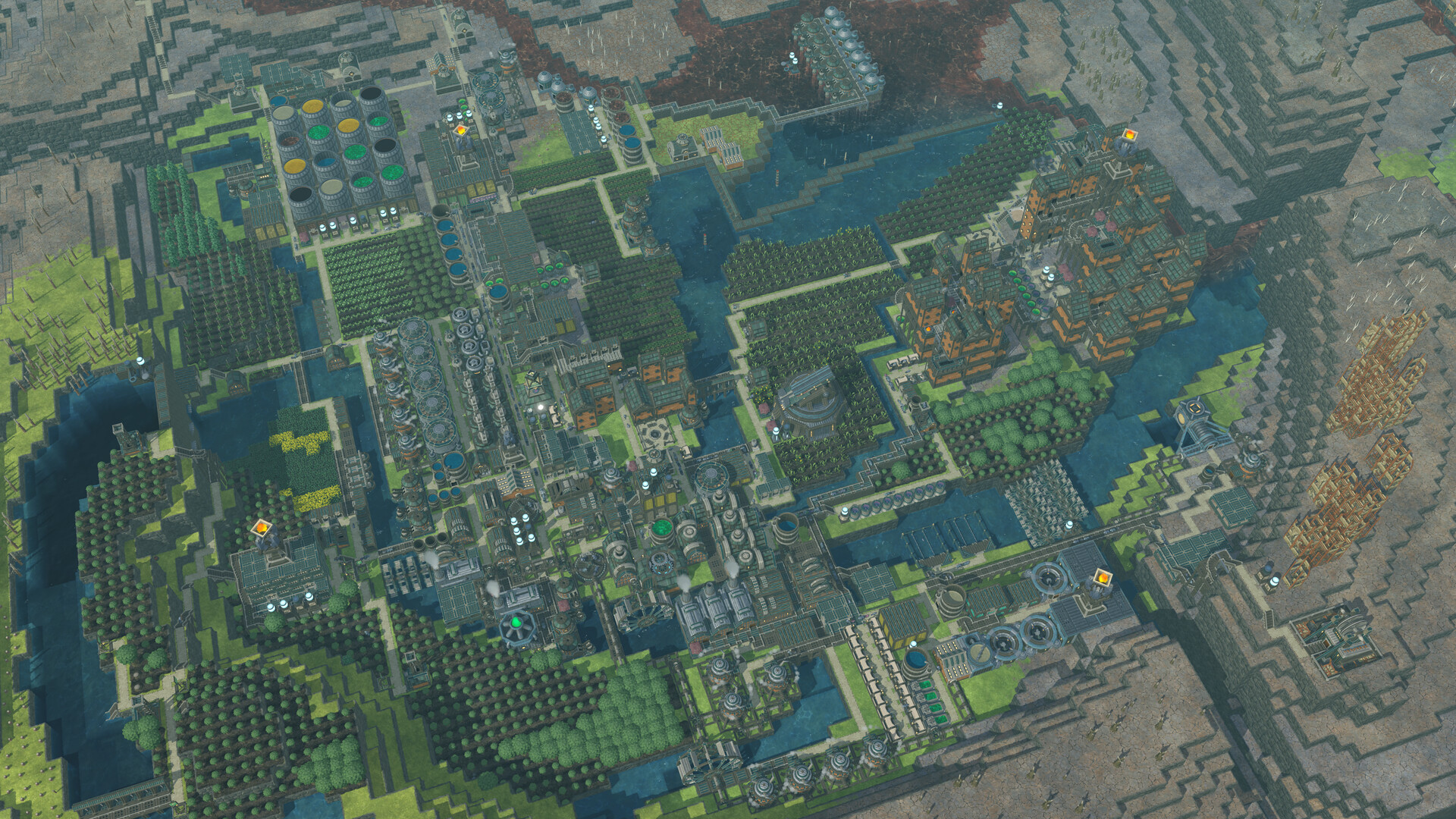
There is a moment in Manor Lords, early on, when your first burgage plots are finally producing enough bread to keep everyone fed, your market stalls are stocked, and the little animated villagers are going about their days with apparent contentment. You feel like you have achieved something. Then winter arrives, your firewood supply collapses, and four families abandon their homes. The game does not punish you with a dramatic horn or a red screen. It just quietly updates the population counter. That restraint tells you almost everything about what kind of city-builder Slavic Magic has made.
Manor Lords arrived in Steam Early Access in April 2024 and accumulated around three million players within its first week, a number that immediately generated the kind of hype that tends to bury interesting games under misplaced expectations. Critics and Steam reviewers lined up to declare it either a genre revolution or a half-finished disappointment, as if those were the only two options. Both readings miss what is actually going on. This is a game built by a single developer — Greg Styczeń, working under the Slavic Magic name — with a design philosophy that prioritises feel and friction over feature completeness. That philosophy produces something genuinely worth thinking about, with real limitations that are equally worth naming.
The organic settlement loop is doing real work
Most city-builders give you a grid and a palette of buildings. You paint infrastructure onto the land. Manor Lords inverts this in one specific, consequential way: your roads emerge from where you place buildings, and plots conform to the terrain rather than snapping to a universal tile system. The result is settlements that look like they grew rather than were designed, which sounds cosmetic until you realise it also changes how you think about expansion. You are not optimising a spreadsheet layout. You are reading the land, figuring out where a mill can sit near water without flooding, where a market square can form naturally from foot traffic patterns.
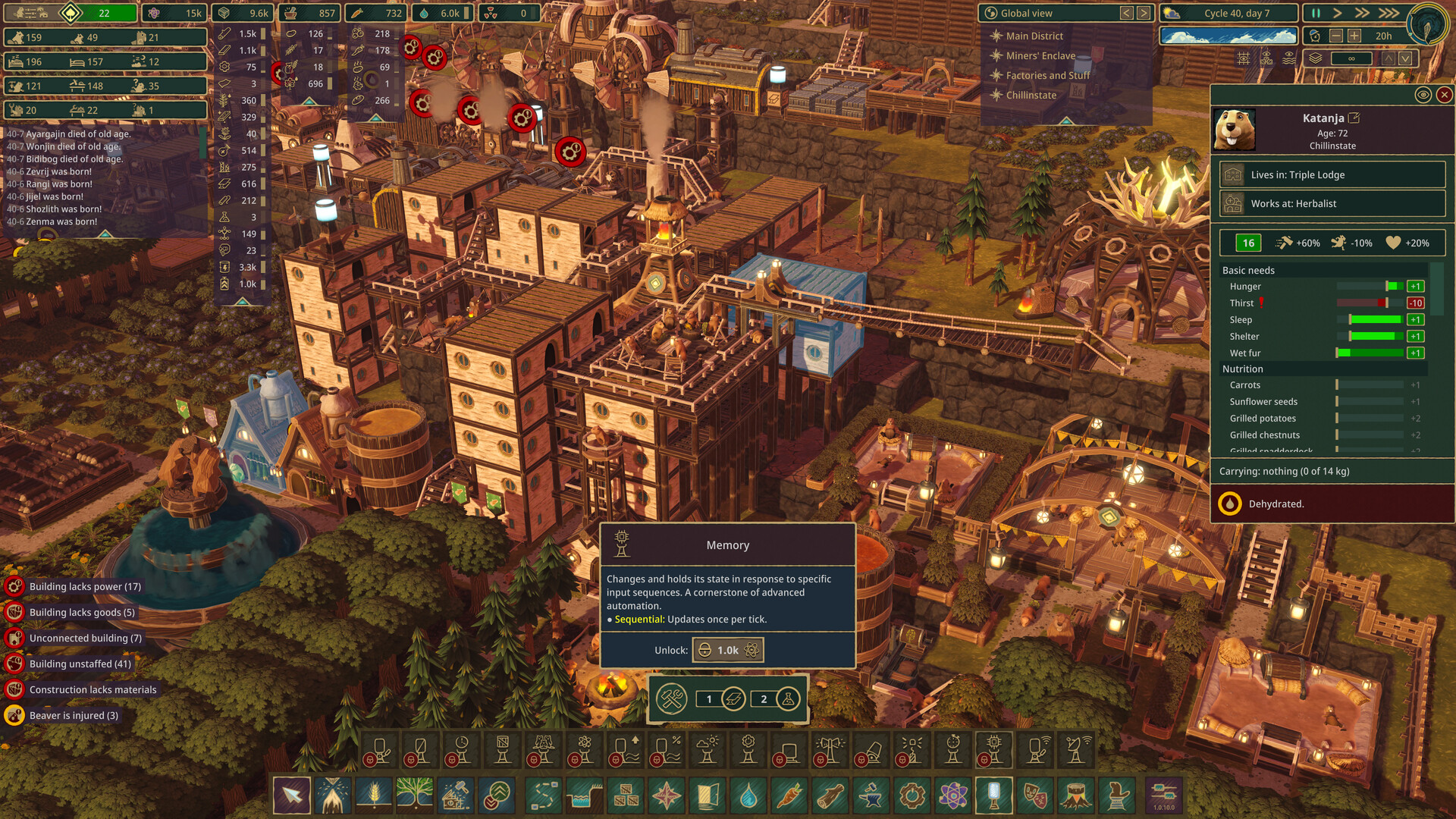 Scene from Manor Lords.
The burgage plot system deserves particular attention here. Each plot can be extended into its backyard to add a secondary production building — a home with a goat pen, or a vegetable garden attached to a tannery worker's house. It is a small mechanic, but it enforces a pleasing logic: prosperity grows outward from the plot rather than being imported wholesale from a distant industrial zone. Games like Frostpunk 2 or Anno 1800 are magnificent, but they are fundamentally about managing flows and ratios at scale. Manor Lords is more interested in whether a single family has enough wool to make it through January.
Where this loop occasionally breaks down is in the labour assignment system. Workers do not automatically redistribute when supply chains become unbalanced. If your tanner's workshop is producing surplus leather while your cobbler is short-staffed, the game will watch that imbalance widen without nudging you. Whether that is realistic simulation or unfinished UI is a fair question, and at this stage of Early Access it remains genuinely unclear.
The military layer is present, not polished
Combat in Manor Lords is, charitably, rudimentary. Units clash in real-time on the field map, with some formation controls and a morale system that can route enemies if you hit their flanks. The bones are fine. The problem is that fielding a capable retinue requires diverting resources from the settlement economy — iron for weapons, food for upkeep — and the return on that investment rarely feels proportional to the disruption it causes. A bandit raid in year two can feel genuinely threatening. A lord-versus-lord territorial dispute in year four plays out with so little tactical nuance that it registers more as an interruption than a challenge.
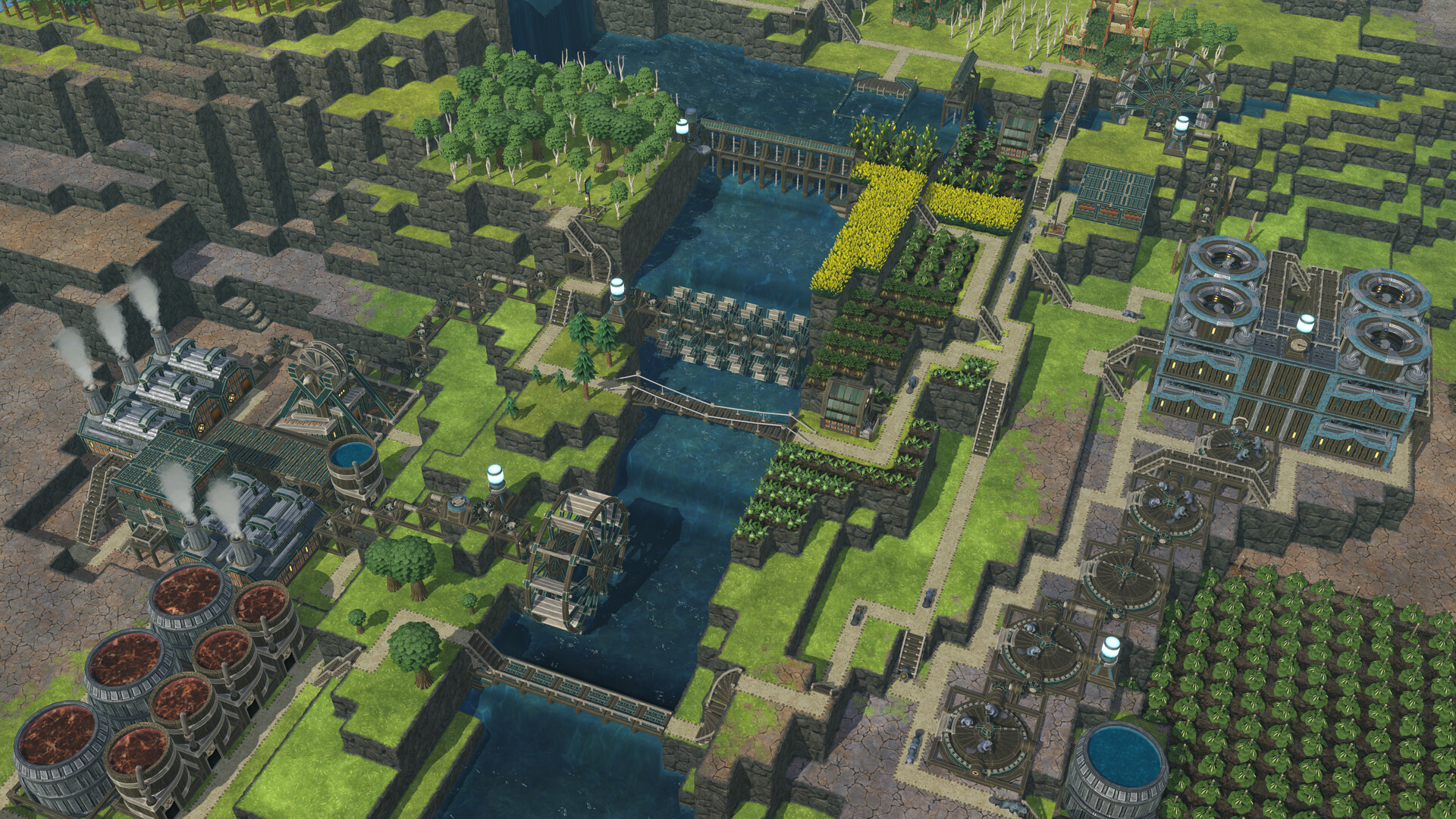 Scene from Manor Lords.
This matters because the map layer, where you expand your regional influence by claiming territories with approval ratings and trading posts, has real potential. It is essentially a slow-burn political simulation sitting on top of the settlement sim, and the two systems talk to each other in interesting ways. But they need the combat layer to add meaningful consequence, and right now it does not quite deliver that. Styczeń has acknowledged this gap in development updates, pointing toward more differentiated unit types in future patches. For now, the military side functions primarily as a threat to defend against rather than a tool to play with.
Honest scarcity, not manufactured difficulty
One of the more telling design choices in Manor Lords is how resources feel finite without feeling arbitrary. Fertility maps vary by region. Clay deposits run out. A forest cleared for farmland does not regenerate within a useful timeframe. These constraints are communicated through the environment itself rather than through timers or artificial caps. When your clay runs low, you see the deposits shrinking on the map. That kind of visual honesty is rarer than it should be in the genre.
Compare this to how resource scarcity works in something like Tropico 6, where the systemic pressure mostly exists to funnel you toward specific building combos. In Manor Lords, scarcity creates genuine geographical decision-making. Your second settlement cannot just be a copy of your first because the land it sits on is different. One region might have excellent grain fertility but no nearby iron. Another might have dense forest for charcoal production but terrible soil. The map encourages regional specialisation and trade between settlements in a way that feels motivated by actual conditions rather than by design decree.
That said, the trading system as it currently stands is thin. You can set up trade routes and import what you lack, but the interface for managing them is clunky, and the AI merchants operate on schedules that are difficult to read. It works, mostly. It does not sing.
What Early Access transparency actually looks like
Styczeń has been unusually candid in developer communications, posting detailed roadmaps and acknowledging specific systems that are placeholder or absent. The game launched without a functioning church influence system, without deep diplomacy, and with limited late-game content. He said so directly. That kind of forthrightness is not universal in Early Access launches, and it matters because it sets accurate expectations — which is exactly what Manor Lords the game also tries to do.
There is something consistent about that alignment between creator communication style and design philosophy. The game does not dress up its limitations with visual spectacle. It presents its systems plainly and lets you engage with them on their own terms. When something is not there yet, there is usually just an empty slot in the UI rather than a shim mechanic papering over the gap. That is honest in a way that games with larger teams and bigger marketing budgets rarely manage.
The performance question
Settlements in Manor Lords are rendered with individual simulated characters going about granular daily routines, which is part of what makes them feel alive. It is also part of why the game becomes CPU-intensive at population scales beyond roughly 500 residents. On a mid-range machine with a quad-core processor, late-game framerates can dip into single digits during busy market days. This is not a fringe issue; it is one of the most consistent complaints in the Steam discussion forums, and it has persisted across several patches.
It is worth noting that optimisation is explicitly listed on the roadmap, and performance has improved meaningfully since the April 2024 launch build. But if you are running older hardware, this is relevant information, not a footnote. The simulation fidelity that makes the game feel distinct is the same thing taxing your processor. That is a genuine trade-off, not a bug to be patched out entirely.
Who this is actually for
Manor Lords is not the city-builder that replaces Anno 1800 or Cities: Skylines. It is not trying to be. The scale is smaller, the pace is slower, and the ambition is pointed in a specific direction: making a medieval settlement feel like a place that exists within a physical landscape rather than on a design canvas. That is a legitimate and underserved design goal, and Slavic Magic has made more progress toward it than most studios with ten times the staff.
The game suits players who find satisfaction in watching a grain surplus slowly accumulate before winter, who enjoy reading a map for soil quality before placing a farm, and who are comfortable playing something that will change substantially over the next year or two. Players who want a complete, balanced experience with a functioning endgame should wait. The choice of when to buy is genuinely context-dependent, which is exactly the kind of honest assessment the game itself seems to invite.
What Styczeń has already demonstrated, even in this incomplete state, is a coherent design sensibility — something that cannot be patched in later. That sensibility is why Manor Lords keeps getting discussed in terms of what it might become, rather than written off as another Early Access sketch. Some games earn that attention. This one does.
Editorial scoring
Reader Q&A
How long does it take to finish Manor Lords is quietly one of the most honest city-builders in years?
Main story runs around 32 hours depending on how thoroughly you explore. Completionists can spend 2-3× that.
Is Manor Lords is quietly one of the most honest city-builders in years good for newcomers to City-Builder?
For total newcomers, expect a 5-8 hour ramp-up. Once you internalize the loop, it clicks.
Which platform should I play Manor Lords is quietly one of the most honest city-builders in years on?
Console version is the most stable on launch. PC version benefits from the modding scene long-term.
Was Manor Lords is quietly one of the most honest city-builders in years worth the launch-day price?
If you're a fan of Slavic Magic, yes. If you're new to the studio, a sale price is more comfortable.
Are there DLCs or expansions worth picking up?
Wait for the Game of the Year edition — it bundles everything at a fair discount.
What did Slavic Magic get right (and what could be better)?
The systems are confident and the combat is satisfying. The story handoffs and load times are the rough spots.
Reader comments