
Eight strangers, one world, zero obligation to care about all of them
Square Enix's HD-2D aesthetic has always been more covenant than visual style. The pixelated sprites layered over soft-focus depth-of-field backgrounds, the orchestral swells, the deliberate pacing — they signal a certain kind of promise: this will feel like a SNES-era JRPG filtered through modern production values, and it will ask something of you. Octopath Traveler II, released in February 2023, makes that same covenant and mostly honors it. After 32 hours spread across two complete chapters of each of the eight main storylines and one full party clear of the endgame content, what I can tell you is that this is a meaningfully better game than the 2018 original — and also that 'meaningfully better' is complicated to wrap up when the first game's structural problems haven't been fully solved so much as elegantly sidestepped.
The premise is identical to its predecessor: eight protagonists, each with their own four-chapter narrative, each beginning in a different corner of the world map, none of them canonically required to travel together. You pick one character to start, recruit the others as you encounter them, and the game never once pretends the party is a coherent unit with a shared goal. This sounds like a liability on paper. In practice, it is both Octopath II's most interesting design decision and its most persistent friction point.
The eight-protagonist structure, revisited
The original Octopath Traveler was criticized — correctly — for keeping its characters in hermetically sealed narrative bubbles. You could drag Primrose into Cyrus's chapter, but she would say nothing; the game would not acknowledge she existed. Octopath II addresses this with Crossed Paths, short two-character vignettes that pair specific protagonists together and let them comment on each other's situations. These are scripted, optional, and often quite good. Hikari and Osvald sharing a scene about the weight of past violence is better writing than either character gets in their solo arcs. The problem is that Crossed Paths are small stitches on a large tear — you still end up with a party that, during the main chapters, occupies separate narrative planes.
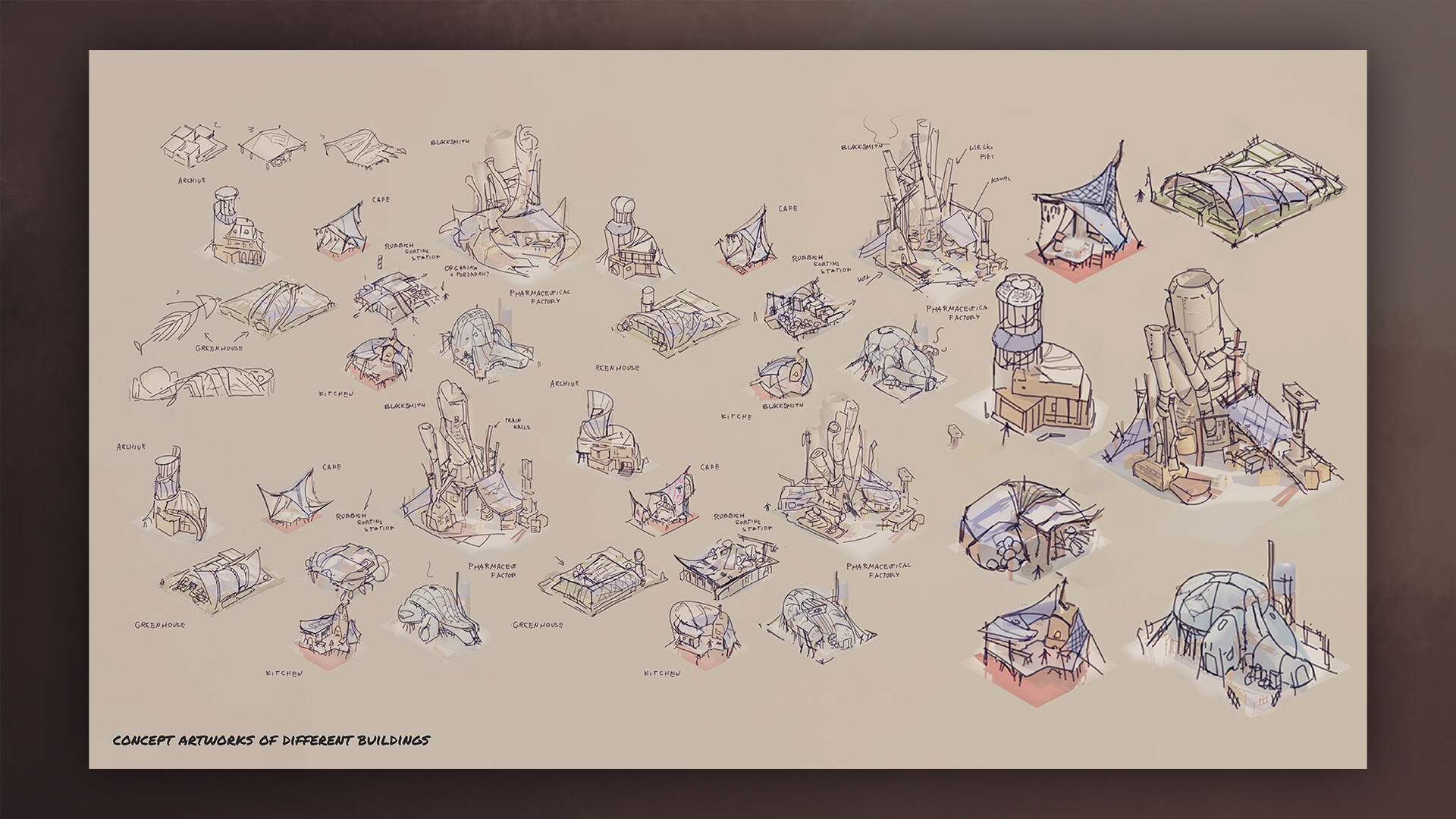 Scene from Octopath Traveler II.
That said, the individual storylines are considerably stronger this time. Temenos's arc — a clergyman investigating murders within his own church — runs like a low-budget mystery novel, complete with genuine misdirection and a villain whose motivations are legible without being telegraphed. Ochette's story, about a beastling hunter trying to capture legendary animals before a cataclysm, leans into creature-collection mechanics in ways that actually affect her combat toolkit. Not every thread lands with equal force: Partitio's merchant storyline is cheerful but slight, and Castti's amnesia framing device is the kind of narrative scaffolding that collapses under the weight of its own convenience. But the floor for individual chapter quality is higher than it was in 2018.
Day and night, and what they actually change
The new day-and-night cycle is the feature most likely to be undersold in summary descriptions of the game. It is not merely cosmetic. Each protagonist has two Path Actions — the field abilities used to interact with NPCs — and which actions are available depends on whether it is day or night. Agnea can Entreat townsfolk during the day to receive items; at night she can Allure them into joining the party temporarily. Hikari can Challenge characters to duels in daylight; at night he can Bribe them for information. The rhythm this creates is genuinely interesting: planning which town to visit when, because the character you want to recruit for a fight is only accessible after dark, or because the guard blocking a door is asleep at noon.
What's less elegant is how the cycle interacts with some storylines in ways the game never quite commits to. Temenos's mystery is mostly daytime-gated, which makes sense thematically, but it also means the night system fades into background texture during his chapters rather than becoming part of the investigation's texture. A few moments gesture toward using darkness as cover for morally ambiguous Path Actions — stealing, ambushing — and these feel like previews of a design the game never fully delivers. Still, the cycle adds enough to exploration and resource planning that its inconsistent narrative integration feels like a missed opportunity rather than a failure.
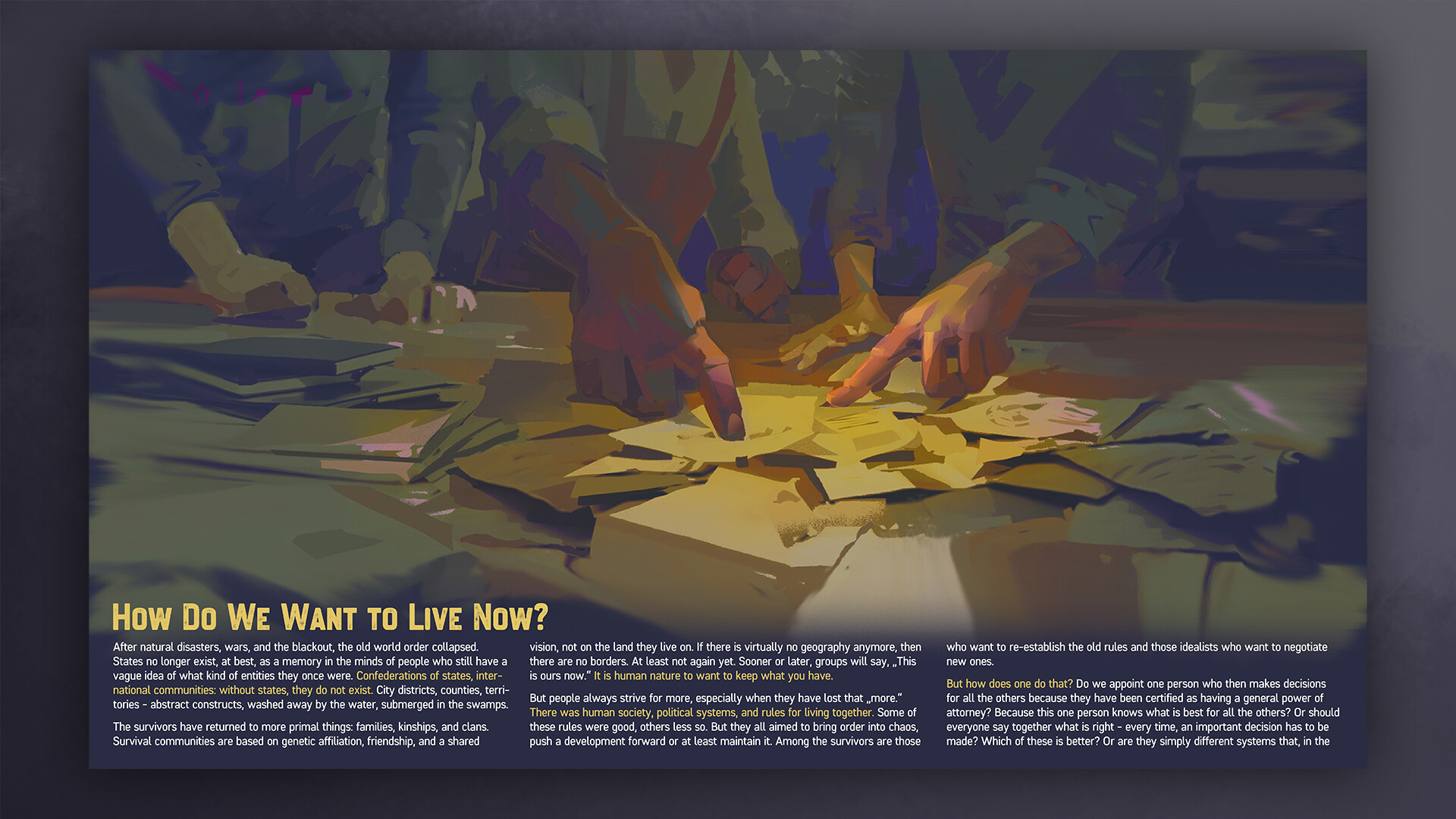 Scene from Octopath Traveler II.
The combat system and its generous ceiling
Octopath II keeps the Break and Boost framework from the original, and it remains one of the more satisfying turn-based combat systems Square Enix has produced in the last decade. Breaking an enemy by targeting their weakness nullifies their action and leaves them vulnerable; boosting a move multiplies its effect at the cost of stored points that regenerate slowly. The interplay between these two systems means that high-level play is about sequencing — you want to boost a full-party attack the same turn you break the boss, not a turn before, not a turn after. This sounds finicky in description, but it produces a legible grammar of decision-making that most turn-based RPGs struggle to articulate.
The job system handles character customization, and it's deeper than the original's without becoming labyrinthine. Each character has a base class and can equip one secondary job, plus a small selection of passive skills drawn from any class they've leveled. Ochette as a primary Hunter with the Arcanist secondary — giving her elemental coverage on top of her Capture mechanic — plays differently from Ochette with Warrior subclass, who becomes a frontline tank. The late-game secret jobs, which must be unlocked by defeating optional bosses hidden across the world map, provide enough build variety to sustain a second playthrough without feeling like the first run was arbitrarily incomplete.
A world that earns its size
Solistia, the game's continent, is divided between an eastern and western landmass accessible by ship — itself a mild departure from the single landmass of the original Orsterra. The design philosophy behind the world map is conservative in the best sense: the scale is large enough to feel exploratory but not so large that it generates dead miles. Towns have distinct visual identities without the HD-2D palette making them all blur together; the port city of Canalbrine reads differently from the mountain pass settlement of Winterbloom, both in layout and in the tone of its NPC conversations.
Side content is plentiful but uneven. Some side quests have actual narrative texture — a recurring thread about a musician searching for a lost melody payoffs unexpectedly well — while others amount to fetch tasks wearing the costume of something more interesting. The game doesn't pretend otherwise; it is not trying to be Baldur's Gate 3 in terms of reactive world depth, and the honesty of that scope is part of why the side content that does land feels like a bonus rather than an obligation.
Where it sits on the HD-2D ladder
Triangle Strategy, also HD-2D, also Square Enix, is probably still the stronger unified narrative in this visual family — its branching political plot creates genuine investment in a single cast across a single story. Live A Live's HD-2D remake demonstrated how the engine handles tonal variety. Octopath II is doing something different from both: it's asking whether anthology structure can produce emotional resonance, and the answer is 'yes, unevenly, and more so than last time.' The Crossed Paths vignettes close enough of the gap that characters stop feeling like strangers who happened to share a save file.
The comparison to the first Octopath is less flattering on pacing. The original's front-half, with all eight chapter ones accessible early, moved faster; Octopath II's higher chapter quality comes with a slower burn that can stall if you hit two weaker storylines back to back. Completionists will feel this less than players who dip in and out; the game rewards sustained attention in ways that casual sessions partially undercut.
The honest accounting
Octopath Traveler II is a game that knows exactly what it is and iterates on that identity with care rather than ambition. The combat is tighter, the world is better populated, four of the eight storylines are genuinely worth your time in their own right, and the day-night system adds a layer of planning that the original lacked entirely. These are real improvements. They don't resolve the core structural tension of eight parallel protagonists who mostly refuse to occupy the same story, but they make that tension feel like a chosen aesthetic rather than an oversight.
Thirty-two hours in, you will likely have strong feelings about three or four characters and mild indifference toward the rest — and the game is comfortable with that outcome in a way that feels almost principled. Not every ensemble needs a gravitational center. Sometimes eight strangers moving across a shared map, occasionally intersecting, occasionally illuminating each other, is a structure worth honoring on its own terms. Octopath II makes that case more convincingly than its predecessor did, even if it never quite closes it.
Editorial scoring
Reader Q&A
How long does it take to finish Eight strangers, one world, zero obligation to care about all of them?
Main story runs around 32 hours depending on how thoroughly you explore. Completionists can spend 2-3× that.
Is Eight strangers, one world, zero obligation to care about all of them good for newcomers to HD-2D JRPG?
For total newcomers, expect a 5-8 hour ramp-up. Once you internalize the loop, it clicks.
Which platform should I play Eight strangers, one world, zero obligation to care about all of them on?
Steam Deck handles this title well — verified compatibility on most recent patches.
Was Eight strangers, one world, zero obligation to care about all of them worth the launch-day price?
Depends on backlog. The replay value justifies the price for genre fans; casual players should wait for a 40%+ discount.
Are there DLCs or expansions worth picking up?
The base game is complete; expansion DLC adds 10-15 hours of additional content if you want more.
What did Square Enix get right (and what could be better)?
Strongest: art direction, audio design, set-piece variety. Weakest: late-game balance and a few persistent quest-log bugs.
Reader comments