
PAYDAY 3 had one job, and it fumbled the getaway
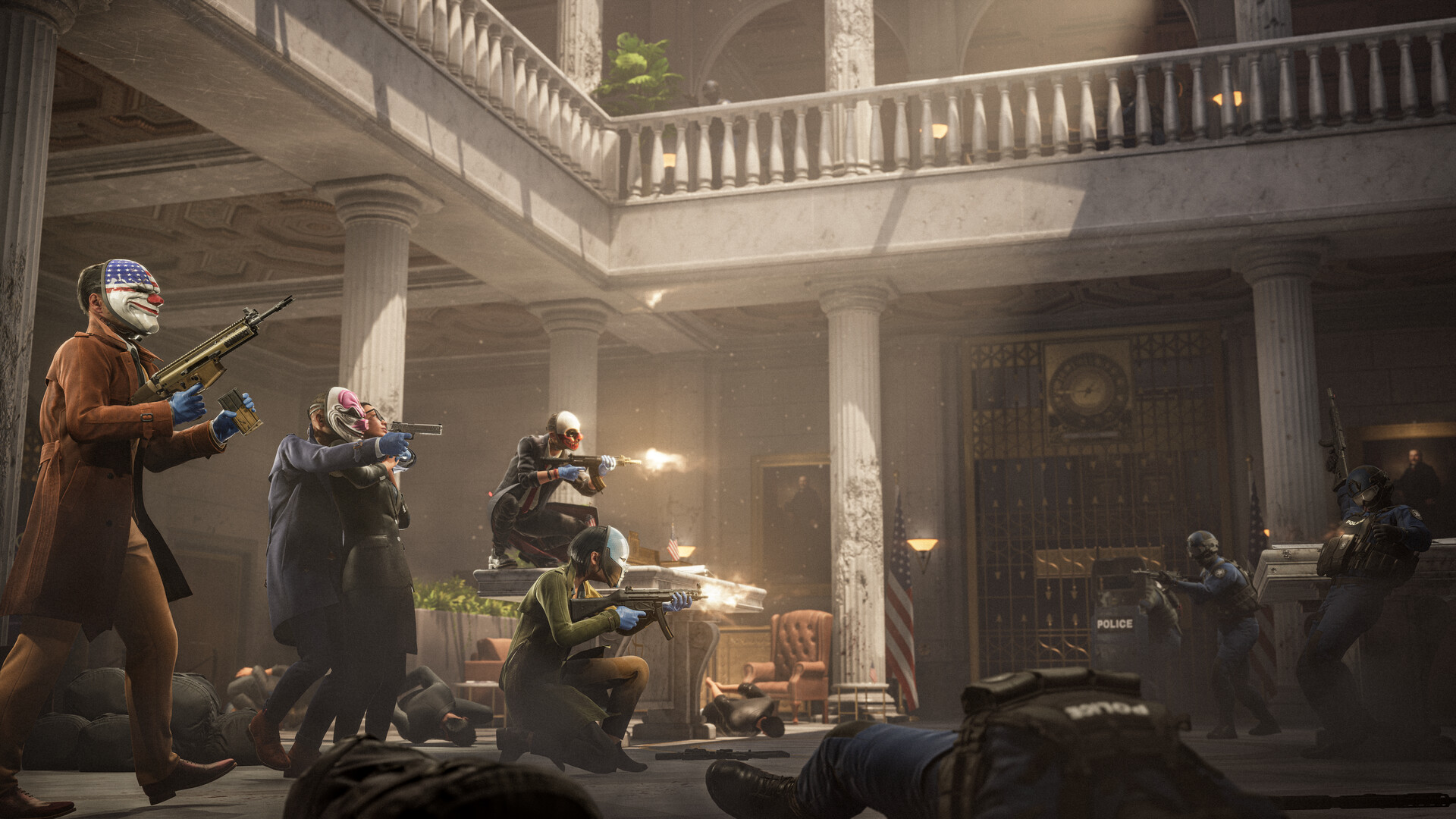
PAYDAY 3 arrived in September 2023 carrying the weight of a decade-long franchise expectation and a server infrastructure that collapsed almost immediately under launch traffic. Starbreeze Studios had spent years rebuilding from near-bankruptcy, and this was supposed to be the game that proved the studio still knew how to run a heist. After something in the range of 120 hours across stealth runs, aggressive loud approaches, and a handful of solo experiments with bots that you shouldn't attempt unless you enjoy shouting at walls, the picture is clearer — though not exactly what Starbreeze would want it to be.
The honest version: PAYDAY 3 is a better-designed game than PAYDAY 2 in several measurable ways, and a worse live-service product in almost every way that a player would notice within the first week. That tension — between disciplined moment-to-moment design and a progression and content economy that feels like it was assembled by committee — runs through every hour of it. The bones are genuinely interesting. The flesh around them is inconsistently applied.
The Stealth Layer Is the Most Interesting Thing Here
What Starbreeze got right, and what critics undersold amid the launch chaos, is the stealth rework. PAYDAY 2's stealth was a binary state — either you were undetected or the alarm was blaring and guards were spawning endlessly. PAYDAY 3 introduces an answer to that binary: a "loud" and "undetected" distinction, yes, but also a middle layer where guards are suspicious, where cameras can be in "spotted" state without necessarily triggering a full response, and where your team can sometimes recover a compromised situation through specific actions rather than just riding out the alarm. Casing mode, where you walk the map unarmed and without a mask, lets you scout guard rotations, identify security panel locations, and plan before committing. It sounds simple. In practice, it adds a planning dimension that PAYDAY 2 rarely had.
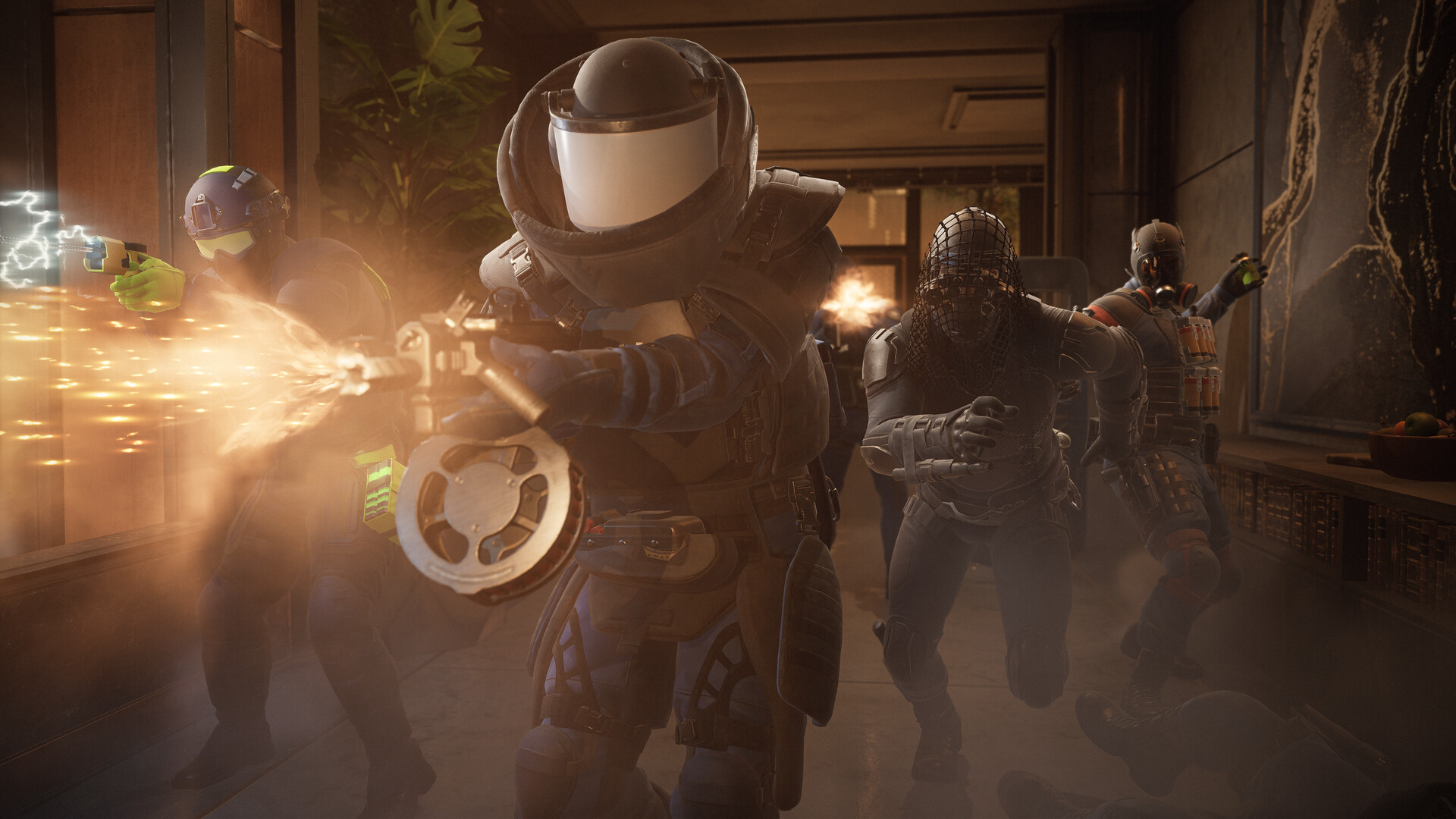 Scene from PAYDAY 3.
The Rock the Cradle mission — a nightclub heist built around finding crypto wallet access in a layered VIP environment — demonstrates exactly what this system can achieve. Navigating staff areas without the right keycard, managing which cameras are looping, timing a grab around a roving guard and a suspicious bouncer, all while your crew coordinates on voice chat: it clicks in a way that feels genuinely heist-like rather than just a shooting gallery with a countdown timer. When it works, PAYDAY 3 justifies its existence as a sequel rather than an expansion.
Eight Maps at Launch Is a Structural Problem, Not a Minor Quibble
Then there's the content question, which Starbreeze has tried to paper over with post-launch additions but hasn't fully resolved. PAYDAY 3 shipped with eight heists. For comparison, PAYDAY 2 launched with nine and had a paid-DLC pipeline running within months that eventually bloated the game to an almost absurd degree — over 200 DLC packs by the end of its commercial life. PAYDAY 3 pivoted to a seasonal live-service model, with free heist additions and a paid cosmetic track. The intention was cleaner. The execution exposed a game that, at its core offering, asked players to replay the same small handful of maps for dozens of hours to progress.
That might be tolerable if the challenge structure varied substantially across those maps, but the difficulty scaling in PAYDAY 3 — moving from Normal through Hard, Very Hard, Overkill, and into the higher tiers — mainly functions by increasing enemy health and spawn rates rather than redesigning objective logic. Loud runs on Overkill start to feel like endurance exercises rather than encounters that test decision-making. The maps themselves don't reshape when you push difficulty upward, which means you're leaning more on mechanical execution and less on the spatial reasoning that made the stealth layer so promising.
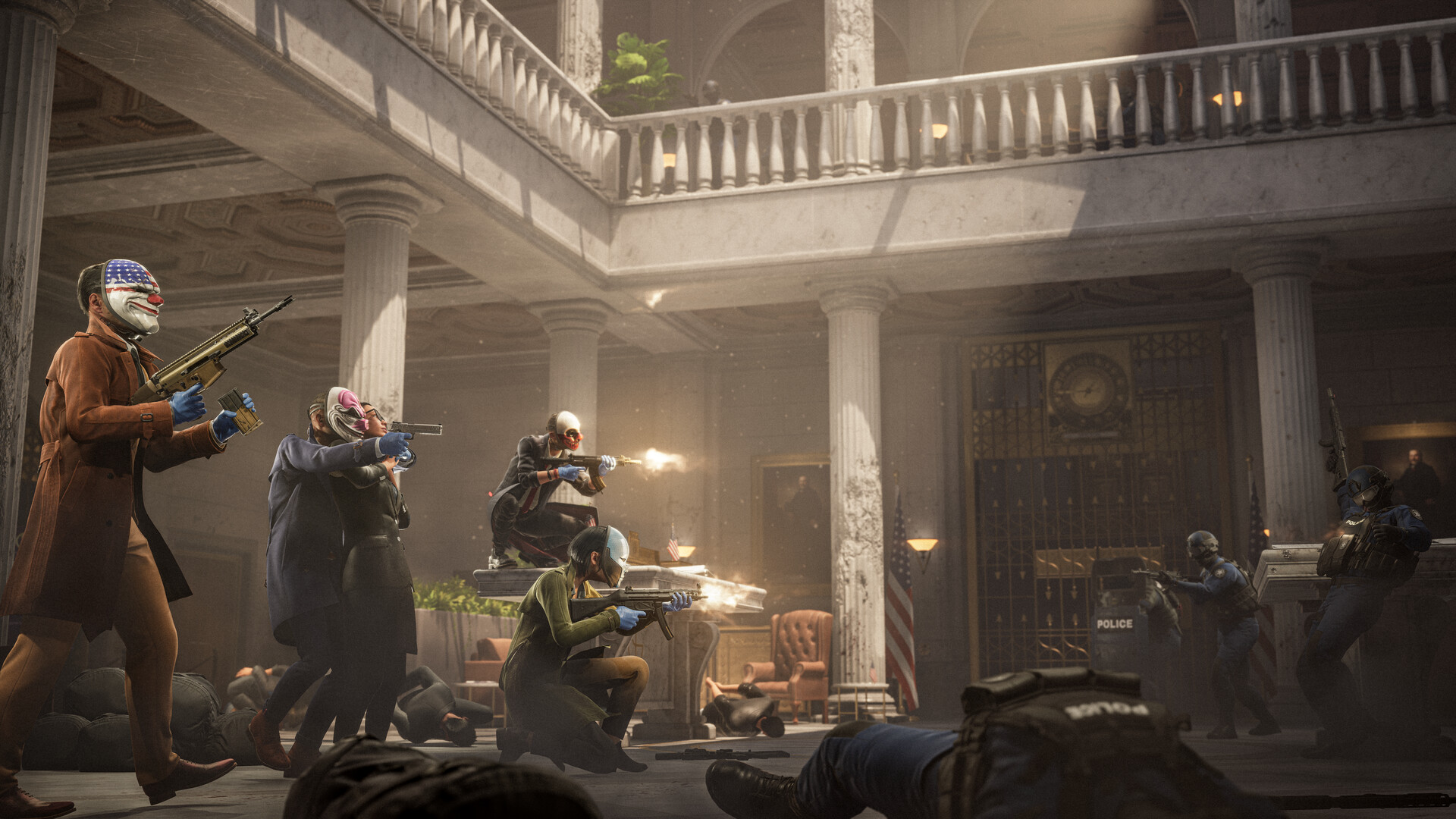 Scene from PAYDAY 3.
The Skill System: Committed to Commitment
PAYDAY 3's skill system is more opinionated than its predecessor's, and that's genuinely interesting even when it's occasionally frustrating. Instead of PAYDAY 2's vast tree of passive modifiers and upgrades spread across multiple criminal specializations, PAYDAY 3 gives you a more constrained set of skill lines — Grit, Fugitive, Enforcer, Mastermind, Technician, Ghost — each containing a small handful of active and passive abilities. The catch is that equipping skills costs "skill points" which are not infinitely refreshable mid-session; you build a loadout before a heist and live with it.
This forces a kind of character commitment that PAYDAY 2 never really demanded. A Doctor Bag specialist who has built around Mastermind support abilities is a genuinely different crew asset than an Enforcer who carries an armour kit and runs crowd-suppression tools. Crew composition starts to matter in a way it didn't when everyone could vaguely cover every role through enough grinding. Whether that's meaningful depth or just artificial restriction depends on how tolerant you are of not being able to pivot mid-campaign; a missed modifier choice for a heist type you don't realise you'll be running isn't fun to discover halfway through. But the design intention is sound, and experienced crews coordinate their loadouts in ways that produce genuine synergies.
Progression Doesn't Respect Your Time
The C-word that applies to PAYDAY 3's live-service layer is "challenge." Progression — both account-level and the currency you use to unlock gear — is gated almost entirely behind completing specific challenge objectives rather than accruing experience through play. Kill a certain number of enemies with a specific weapon type; complete a heist at a specific difficulty without going down; perform a stealth run on a map you've already cleared a dozen times. The theory, presumably, is that this directs player behaviour toward varied playstyles. The practice is that it sends players toward artificial constraints that frequently conflict with what a crew actually wants to do.
The weapon unlock system compounds this. New weapons aren't purchasable outright with earned currency; they're unlocked through challenge completion, which means access to loadout variety is dictated not by how much you've played but by whether you've played in the specific ways the challenge board demands. It's a system designed around engagement metrics rather than player satisfaction, and it shows. After the first twenty or so hours, the gap between "wanting to try a new build" and "actually having access to the components for a new build" starts to drag. Other live-service co-op games — Deep Rock Galactic from Ghost Ship Games being the obvious contrast — have demonstrated that progression systems can feel generous without destroying the underlying economy.
Technically: Better Than Launch, Still Not Stable
Starbreeze has patched consistently since the September 2023 disaster, and the server situation is materially better. Cross-play arrived. The matchmaking, which at launch would leave players staring at a lobby screen for minutes before populating, now functions at something approaching reasonable speed during peak hours. Graphically, PAYDAY 3 looks noticeably cleaner than its predecessor — Unreal Engine 5 gives the environments a weight and surface detail that PAYDAY 2 never had, and the heist locations themselves are well-realized spaces that feel like real places rather than abstract combat arenas.
Performance is less consistent. On mid-range PC hardware, frame-pacing issues appear in loud engagements where particle effects stack; console versions have struggled more noticeably with these drops. For a game where split-second reads on enemy position matter in the upper difficulty tiers, dropped frames aren't a cosmetic problem. It's the kind of technical debt that doesn't make headlines eighteen months post-launch but quietly erodes the experience for players who aren't running high-end rigs.
Where Starbreeze Goes From Here
The post-launch roadmap has added heists — Syntax Error, Boys in Blue, Fear & Greed, and others — and each addition has strengthened the argument for the game's moment-to-moment design while doing less to address the systemic progression issues. Fear & Greed in particular, a stock-exchange heist with multi-stage objectives, is among the best maps in the game and shows that the level design team understands what makes the stealth layer compelling. More maps of that quality, combined with a progression rethink, would reshape the overall verdict substantially.
As it stands after 120 hours, PAYDAY 3 sits in a position that feels familiar for Starbreeze: a studio with real craft working against structural and commercial decisions that undercut its best instincts. The stealth system is the most thoughtfully designed the series has ever had. The skill loadout philosophy has genuine strategic merit. The content volume and progression friction are problems that competent live-service management could have avoided. Whether Starbreeze has the runway — financial and otherwise — to fully deliver on what the underlying design promises is a question the game itself can't answer. What it can do is occasionally, in the middle of a clean four-person stealth run on Rock the Cradle when every rotation is covered and nobody trips a camera, feel exactly like the heist game it's still trying to become.
Editorial scoring
Quick facts
How long does it take to finish PAYDAY 3 had one job, and it fumbled the getaway?
Main story runs around 120 hours depending on how thoroughly you explore. Completionists can spend 2-3× that.
Is PAYDAY 3 had one job, and it fumbled the getaway good for newcomers to Co-op Heist FPS?
For total newcomers, expect a 5-8 hour ramp-up. Once you internalize the loop, it clicks.
Which platform should I play PAYDAY 3 had one job, and it fumbled the getaway on?
Console version is the most stable on launch. PC version benefits from the modding scene long-term.
Was PAYDAY 3 had one job, and it fumbled the getaway worth the launch-day price?
If you're a fan of Starbreeze Studios, yes. If you're new to the studio, a sale price is more comfortable.
Are there DLCs or expansions worth picking up?
Wait for the Game of the Year edition — it bundles everything at a fair discount.
What did Starbreeze Studios get right (and what could be better)?
Starbreeze Studios nailed the moment-to-moment loop and the world-building. Pacing in the mid-game and inventory UX have room for improvement.
Reader comments