
Sea of Stars is gorgeous, patient, and almost great
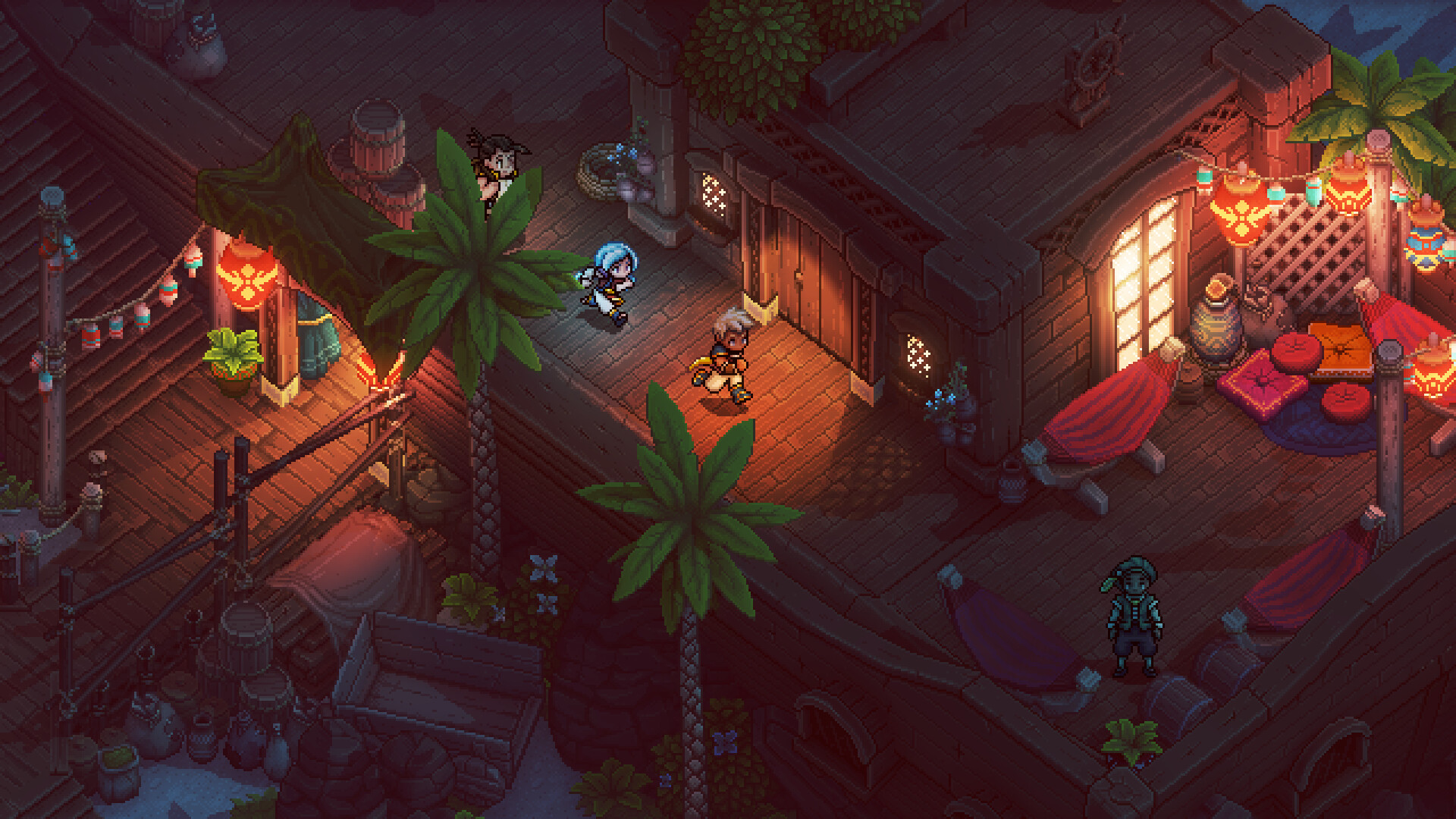
Sixty hours with Sea of Stars leaves you in a strange position: you've witnessed some of the most lovingly composed pixel art in recent memory, heard an original score by Yasunori Mitsuda and Eric W. Brown that sits comfortably alongside the Chrono Trigger soundtrack it so clearly reveres, and yet you keep catching yourself mid-dungeon wondering why none of it is quite landing the way it should. Sabotage Studio built something that looks, on paper, like a corrective to every complaint lodged against the modern retro-JRPG revival — meaningful turn-based combat, no random encounters, a world with actual scale. The problem is that the execution keeps undercutting the promise, often in ways that are quiet enough to be hard to articulate in the moment but accumulating enough to become impossible to ignore by the back half.
That back half matters enormously here, because Sea of Stars is not a short game, and it does not feel short while you are playing it. The pacing stretches. Characters introduced with genuine flair recede into scenery. A villain whose presence in the first act crackles with menace is eventually replaced by something larger and more generic, which is a creative trade most games lose. None of this is catastrophic, but it is persistently deflating, and deflation is its own kind of exhaustion.
The combat system carries more weight than it can hold
Sea of Stars' battle system is built around timed hits and a mechanic called the Lock system, where enemies telegraph incoming attacks with icons representing different damage types, and you're expected to spend the intervening turns breaking those locks to reduce or nullify the hit. On paper it is an elegant solution to the passivity problem that plagues turn-based combat — you always have something to do, and paying attention always pays off. In practice, over sixty hours, the system reveals itself to be narrower than it first appears.
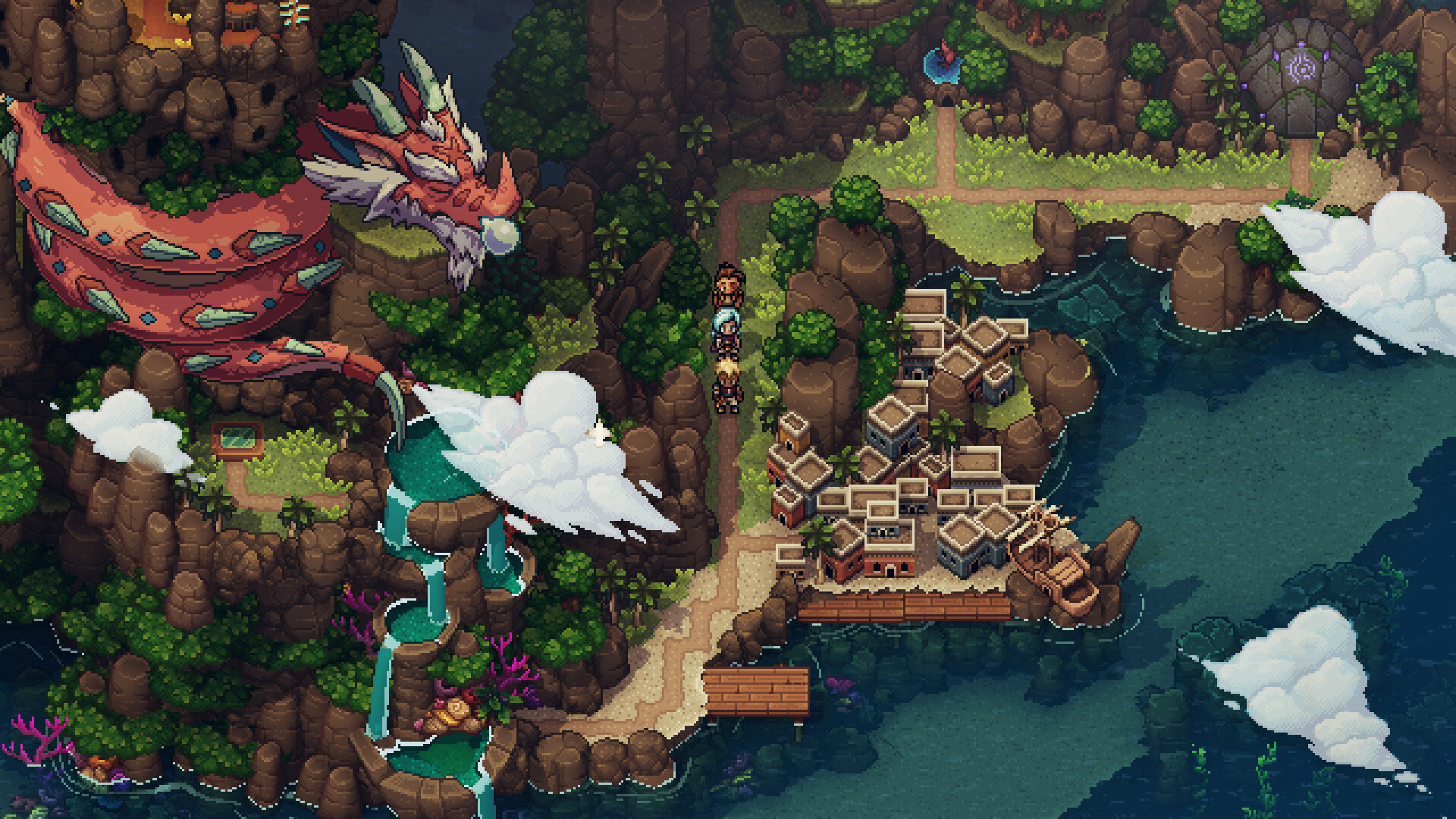 Atmospheric detail in Sea of Stars.
Breaking locks almost always takes priority over everything else in your action economy, which means the interesting decisions about spell selection and party positioning get crowded out by a kind of janitor work — which character has the right damage type to knock this particular icon before the timer ticks down. The timed block mechanic, which should make defense feel active, stops being demanding fast enough that it becomes a background reflex rather than a genuine skill. Compare this to Chained Echoes, released in the same general window, where Matthias Linda's tension-meter system keeps applying real pressure throughout the runtime. Sea of Stars' combat is most alive in its first eight hours. After that, it is mostly maintenance.
The boss designs occasionally push back against this flatness — the Dweller of Strife fight asks you to think in ways the regular encounter pool rarely demands — but these moments feel like glimpses of a more rigorous game that Sabotage elected not to make. Whether that was a deliberate accessibility choice or a balancing failure is hard to know from the outside, but the result is the same either way.
The writing is working with blunt tools
Zale and Valere, the game's two central Solstice Warriors, are archetypes rather than characters for most of the runtime — the measured, thoughtful one and the impulsive, warm one, arranged in a relationship the game insists is profound without doing the scene work to make you feel it. Supporting figures like Garl are more interesting precisely because they exist outside the mechanical axis of the story; he has a personality the game didn't build to function, so it could just let him be someone. When the plot takes his arc somewhere genuinely unexpected in the mid-game, it is the most emotionally coherent thing Sea of Stars does.
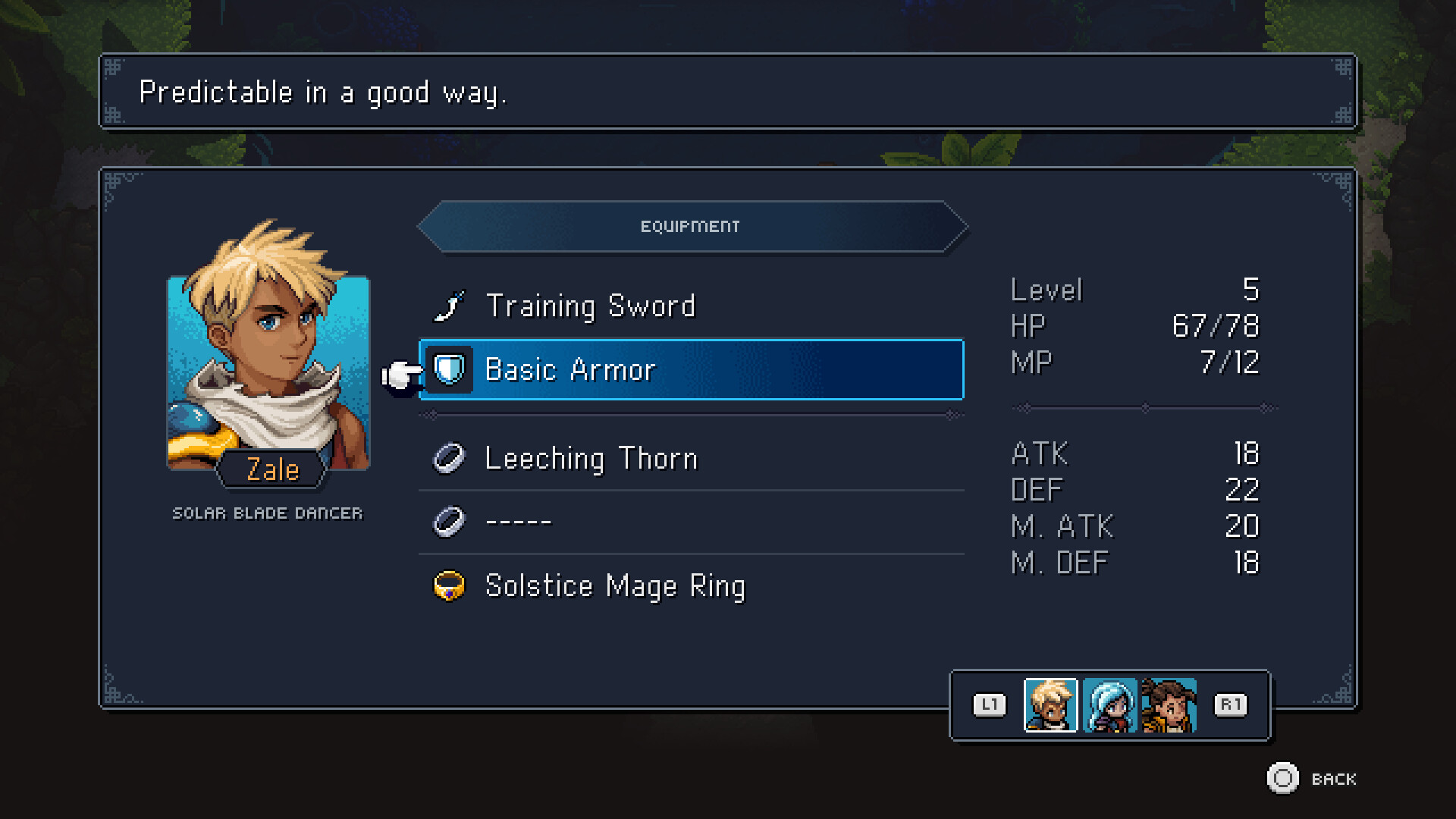 Combat encounter in Sea of Stars.
The world's lore is dense, occasionally inventive, and delivered primarily through the kind of monologue dumps that even the 16-bit games this title idolizes eventually learned to break up with character behavior and environmental contrast. The Fleshmancer works as a concept; he works less well as a presence, because the writing reaches for menace through description rather than demonstration. When FromSoftware wants you to feel dread about a figure like Maliketh or Malenia, you feel it in how the arena is designed, in how the music shifts, long before text is involved. Sea of Stars tries to do that work with dialogue, and dialogue is the slower route.
The world design is where Sabotage earns real credit
Whatever reservations accumulate around the combat and the writing, the visual and spatial design of Sea of Stars is a genuine achievement. This is not merely a case of good pixel art, though the pixel art is very good — it is about how the environments are built to feel traversable rather than decorative. The lighting system, which shifts dynamically with the eclipse mechanic central to the story, changes how spaces read at different times without ever feeling like a technical demonstration. The Docarria Village, the Sacrosanct Spires, the Mesa Island area: these places have legible geography and visual identity that holds up across a lengthy runtime.
The overworld navigation, which gives you a swimming, climbing, and sailing toolkit that expands gradually, keeps the act of moving through the world interesting even when the reasons for moving there feel thin. It is a design philosophy borrowed partly from Super Mario RPG and partly from the better Zelda overworlds, and it is applied with enough confidence that it produces moments of pure spatial pleasure — cresting a cliff to find a vista you weren't expecting, or realizing a route you assumed was closed has been quietly accessible for hours. That kind of environmental craft is rarer than it should be.
The soundtrack deserves more than a footnote
Mitsuda's contributions are the headline, as they were always going to be, and they deliver — the tracks bearing his fingerprints carry that specific quality his best work has, a melodic richness that doesn't announce itself as emotionally manipulative but gets under your defenses anyway. But it would be a genuine disservice to Eric W. Brown's work to treat the score as a Mitsuda album with support. Brown's compositions carry the day-to-day weight of the soundtrack, and they are consistently excellent: varied in texture, tonally appropriate, patient in a way that retro-style scores often fail to be.
The Mitsuda guest tracks land hardest because of where they're placed in the narrative — they arrive at moments of stillness and reflection, which is where his compositional instincts have always been most effective. As a complete object, the Sea of Stars score is probably the game's strongest individual element, which tells you something about where Sabotage's priorities were calibrated.
Where it sits on the ladder, honestly
The retro-JRPG space has become crowded enough that releasing something beautiful and competent is no longer sufficient for a top-tier verdict. Octopath Traveler II deepened a battle system that already rewarded mastery. Chained Echoes sustained its mechanical pressure from hour one to hour forty. Even Sea of Stars' Kickstarter predecessor, The Messenger, demonstrated a sharper design sensibility than its follow-up has managed. Sabotage built something that outclasses most of what it's competing with on presentation — and falls behind on almost every dimension that requires sustained design rigor.
None of this makes Sea of Stars a bad game; it makes it an uneven one, which is arguably harder to write about and harder to recommend cleanly. The people for whom this will be a transformative experience — those for whom the aesthetic and the soundtrack and the nostalgia register hit at the exact right frequency — will find something real here. But the design underneath that surface has gaps large enough to fall through, and sixty hours gives you a long time to find them.
Sabotage Studio has demonstrated, across two projects now, that they can build a world you want to exist in. What remains unproven is whether they can build systems worth staying for.
Editorial scoring
Quick facts
How long does it take to finish Sea of Stars is gorgeous, patient, and almost great?
Main story runs around 24 hours depending on how thoroughly you explore. Completionists can spend 2-3× that.
Is Sea of Stars is gorgeous, patient, and almost great good for newcomers to Retro JRPG?
It depends. The systems are deep but the tutorial does a fair job. Veterans of Retro JRPG will feel at home faster.
Which platform should I play Sea of Stars is gorgeous, patient, and almost great on?
Console version is the most stable on launch. PC version benefits from the modding scene long-term.
Was Sea of Stars is gorgeous, patient, and almost great worth the launch-day price?
If you're a fan of Sabotage Studio, yes. If you're new to the studio, a sale price is more comfortable.
Are there DLCs or expansions worth picking up?
The base game is complete; expansion DLC adds 10-15 hours of additional content if you want more.
What did Sabotage Studio get right (and what could be better)?
The systems are confident and the combat is satisfying. The story handoffs and load times are the rough spots.
Reader comments