
Sekiro demands fluency, not patience
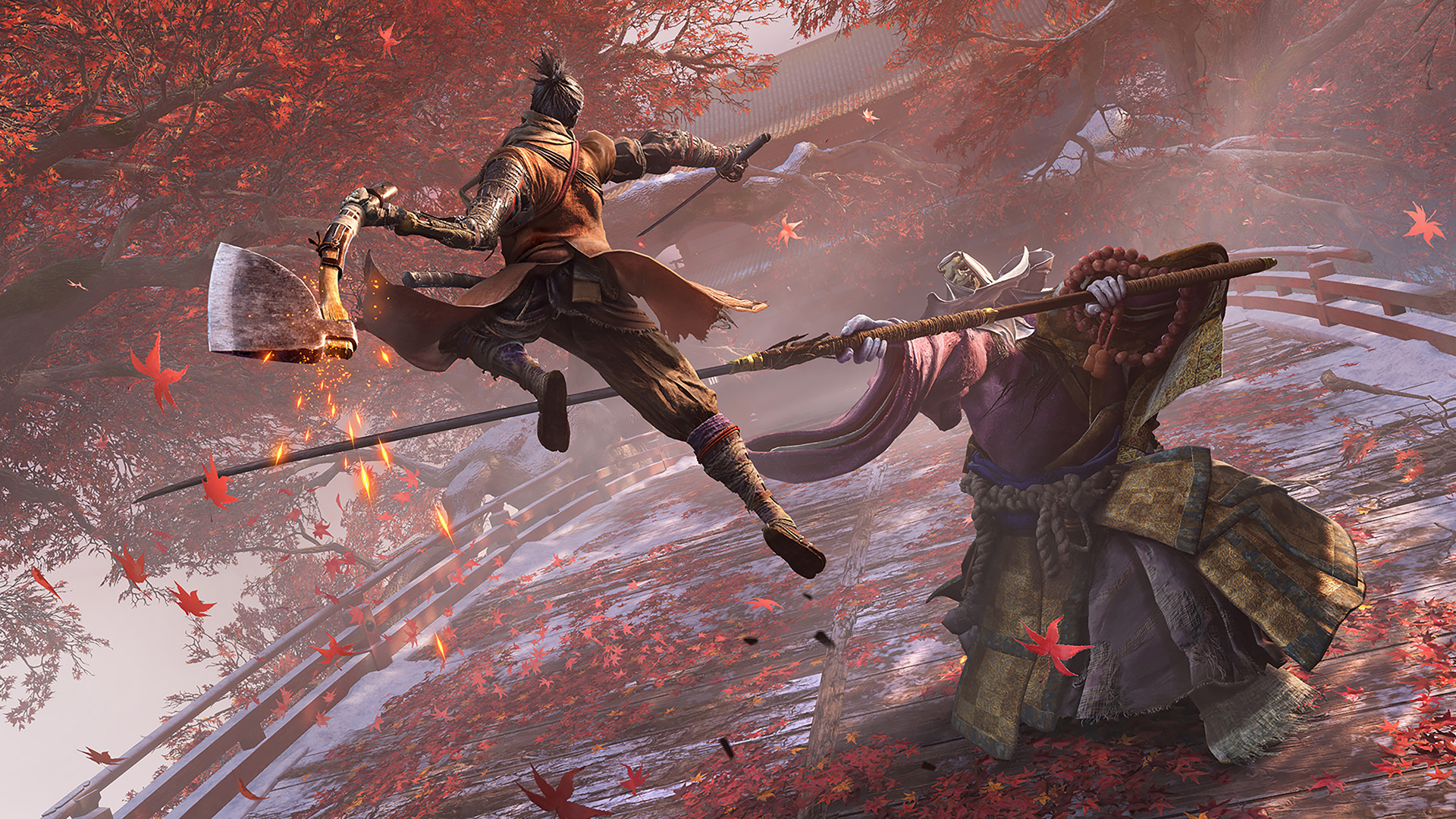
FromSoftware has spent the better part of a decade training players to eat punishment and come back for more. Dark Souls made death a classroom. Bloodborne made it a rhythm. Sekiro: Shadows Die Twice does something more confrontational than either: it makes death a diagnostic. Every time the screen goes dark and Wolf crumples to the ground, the game is telling you something specific about what you're doing wrong. The question is whether you're listening or just grinding.
Twenty-four hours in, and Sekiro sits in an uncomfortable but fascinating position. It is arguably the studio's most mechanically coherent game. It is also the least forgiving of the strategies players used to survive the earlier catalogue. Summoning a co-op phantom won't save you here. Farming extra levels to outlast a boss won't either. Sekiro asks for something closer to fluency — a read-and-respond literacy that feels foreign at first and then, abruptly, obvious.
The posture system is the whole argument
If you've come from Dark Souls 3 or Elden Ring, your instinct is to manage health bars. Chip away, retreat, heal, chip again. That loop works in those games because stamina and distance are your primary currencies. Sekiro replaces that with posture — a hidden pressure meter that fills for both you and your opponents as attacks are deflected or absorbed. Fill an enemy's posture meter and you get a deathblow, usually bypassing however much health remains. It's a fundamentally different contract.
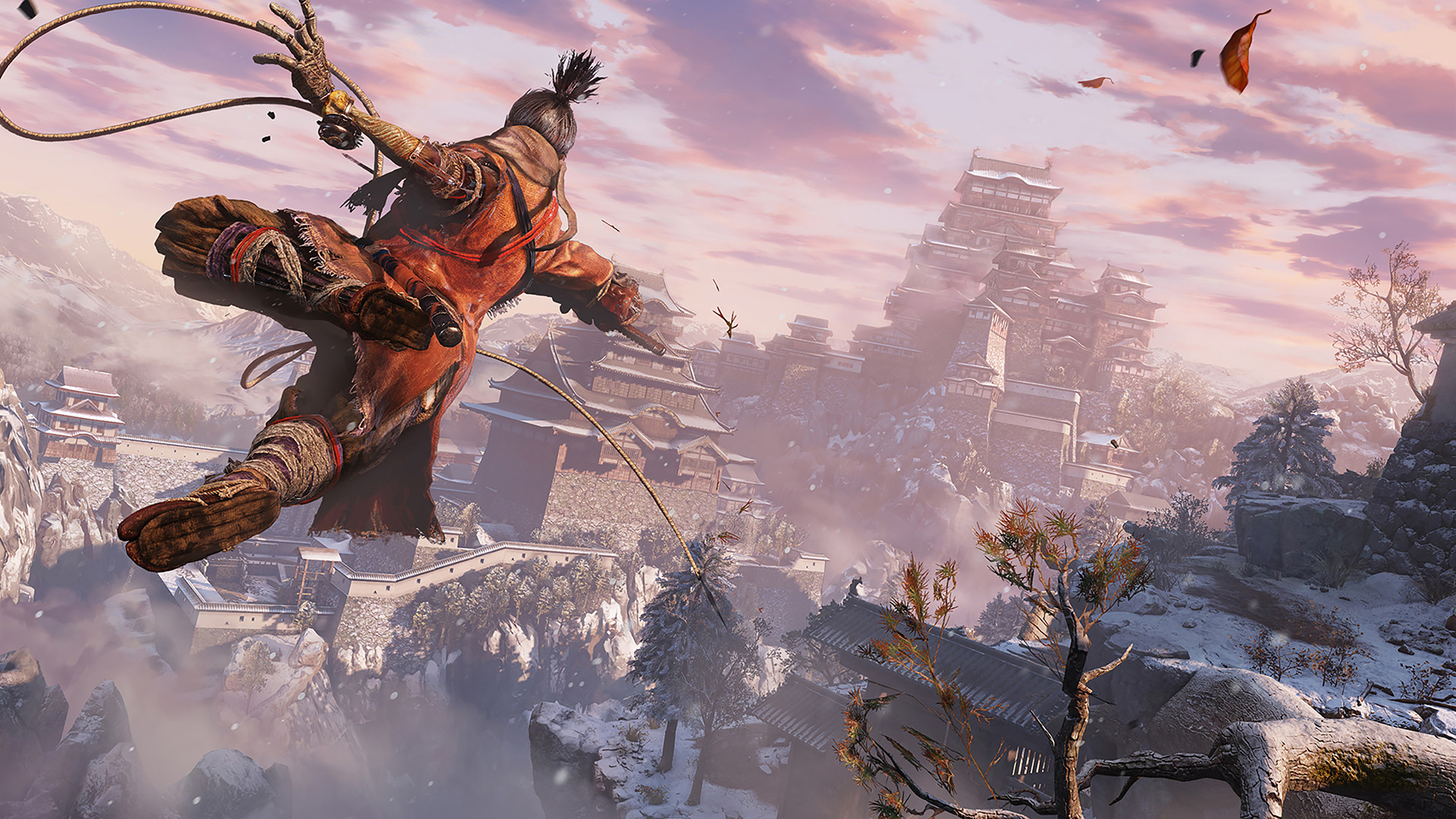 Atmospheric detail in Sekiro: Shadows Die Twice.
The payoff is the duel with Genichiro Ashina at the top of Ashina Castle, which the game uses as a hard filter roughly three or four hours in. Genichiro telegraphs every attack with a distinct animation, uses a perilous sweep that punishes turtling, and recovers posture quickly if you break contact. Fighting him the Souls way — patient, defensive, reactive — gets you killed repeatedly. Fighting him as the game intends, deflecting in tight rhythm and holding pressure, ends the fight in under two minutes. The shift in approach feels like switching languages mid-sentence and suddenly being understood.
Credit to the animation team: the visual language on enemy attacks is cleaner than anything in the studio's previous work. The red kanji flash for unblockable moves has been criticised as hand-holding, but it's actually doing the same job that audio cues do in fighting games — giving you something to react to rather than memorise. The game isn't being generous. It's being legible.
Movement is an argument too, and most players ignore it
The grappling hook gets introduced early and then largely forgotten by players who treat Sekiro as a corridor fighter with prettier geometry. That's a waste. The verticality built into most major encounters — Gyoubu Masataka Oniwa's horse-mounted charge across an open courtyard, the Guardian Ape's chaotic arena — rewards players who think in three dimensions. Grappling to a distant post during Gyoubu's charge resets the engagement cleanly and sets up a plunging attack, which does substantial posture damage. Most guides don't even mention it.
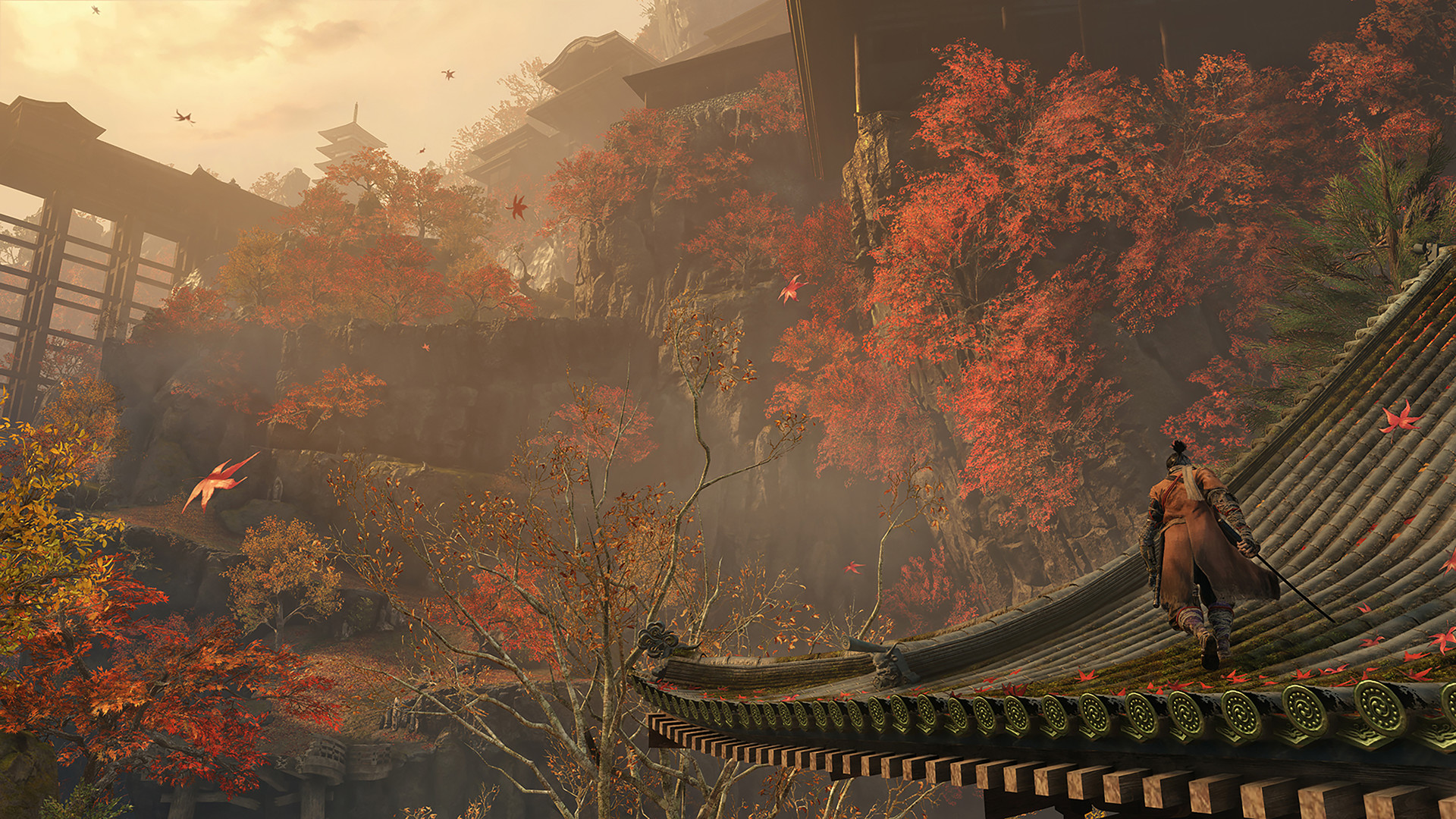 Combat encounter in Sekiro: Shadows Die Twice.
The shinobi tools — the shuriken, the axe, the firecrackers — extend this further. Firecrackers stagger the horse during Gyoubu's fight. The loaded axe breaks shields that deflection alone can't crack. These aren't gimmicks bolted onto a core system; they're the core system's second vocabulary. Ignoring them means playing a deliberately impoverished version of the game, which is fine as a self-imposed challenge but shouldn't be mistaken for how Sekiro is designed to be experienced.
Where patience actually is required: the world itself
Ashina is dense with overlapping paths, hidden NPCs, and environmental storytelling that refuses to explain itself. The sculptor at the Dilapidated Temple. Inosuke Nogami's mother and the chain of events that follows her. The way the castle's geography changes after a late-game narrative shift. None of this is telegraphed. You can finish Sekiro and understand maybe sixty percent of what actually happened if you didn't stop to read item descriptions and eavesdrop on conversations.
It's slower world-building than something like Hollow Knight — Team Cherry uses environmental cues more economically — but Sekiro's lore rewards the second playthrough in a way few action games bother with. Knowing what the Dragon's Heritage actually means changes how you read the opening sequence entirely. The game trusts that some players will care enough to find out, and doesn't waste time nudging the ones who don't.
The merchant and NPC system is looser than it should be, though. Certain questlines can fail silently — Anayama the Peddler, Kotaro, O'Rin of the Water — and the conditions are obscure enough that first-time players will almost certainly miss them without a guide. That's a design choice with a cost, and it's worth naming plainly rather than dressing it up as deliberate opacity.
The bosses are a curriculum, not a gauntlet
The boss sequencing in Sekiro is more deliberate than it first appears. Lady Butterfly teaches you to handle fast, combo-heavy humanoid enemies with persistent posture pressure. The Guardian Ape teaches you to manage fear — the shock of a second phase after an apparent kill. Owl teaches you to deflect prosthetic attacks you've been throwing at enemies all game. Each encounter codifies a skill and then examines you on it.
Isshin, the Sword Saint — the game's final boss and one of the better designed encounters in action gaming from the last decade — pulls everything together. Three phases, each requiring a different application of the mechanics you've been building. He's not a difficulty spike; he's a final exam. Getting to him underprepared is possible, but fighting him fluently is its own reward, the combat equivalent of a sentence where every clause lands right.
The one significant stumble is the Demon of Hatred, an optional boss who feels imported from a different game entirely. Large, aggressive, and requiring a patient attrition strategy rather than posture management, he contradicts the thesis Sekiro spends twenty-plus hours building. He's not impossible, but winning against him doesn't feel like proof of fluency. It feels like an exception that the curriculum quietly pretends didn't happen.
How it sits against the action-adventure field
Compare Sekiro to, say, Hades. Supergiant's game is generous — it adjusts difficulty incrementally, it rewards multiple playstyles, it folds narrative into every run. Sekiro offers none of that generosity. It has one character build, one fixed difficulty, and a combat system that punishes deviation from its principles. That's a narrower design space. Within that space, though, it achieves something Hades doesn't attempt: the sensation of mastering a physical language.
Ghost of Tsushima, released the following year by Sucker Punch, borrowed Sekiro's feudal Japan setting and some of its aesthetic vocabulary but landed somewhere friendlier. Jin Sakai's combat has mechanical range and adjustable accessibility. It's a good game. It's also a fundamentally less demanding one, and that difference matters depending on what you want the experience to cost you. Sekiro isn't trying to be accessible. It's trying to be precise.
The accessibility conversation deserves a direct answer
The argument about whether Sekiro needs an easy mode surfaces reliably whenever the game comes up, and it's worth engaging rather than dismissing. Some players are excluded by the reflex demands of the combat — that's real, not a failure of will. At the same time, the single-difficulty design is load-bearing. The pressure that builds in a fight against Genichiro exists partly because there's no adjacent option to soften it. Removing that pressure changes what the game is, not just how hard it is.
Where FromSoftware could improve without compromising the design is in the communicative layer — more explicit feedback on why a run failed, clearer flagging of NPC questline states, perhaps a replay function for boss encounters to practice without losing sen and loot. These are changes that help players learn the language faster without translating it into something simpler.
After twenty-four hours, Sekiro reads as the studio's most fully argued game — a work that commits to a single mechanical thesis and builds everything around it without apology. It will shed players who want latitude it has no interest in providing. For everyone else, the moment Genichiro finally falls cleanly — posture shattered, deathblow landing, the screen holding on Wolf standing in the rain — is the kind of payoff that reminds you why uncompromising design exists.
Editorial scoring
Reader Q&A
How long does it take to finish Sekiro demands fluency, not patience?
Main story runs around 24 hours depending on how thoroughly you explore. Completionists can spend 2-3× that.
Is Sekiro demands fluency, not patience good for newcomers to Action-Adventure?
For total newcomers, expect a 5-8 hour ramp-up. Once you internalize the loop, it clicks.
Which platform should I play Sekiro demands fluency, not patience on?
PC version offers the highest fidelity if your rig can handle it. Console versions are polished out of the box.
Was Sekiro demands fluency, not patience worth the launch-day price?
Released in 2019, and as of writing it holds up. Wait for a sale if you're price-sensitive — major discounts arrive within 6 months.
Are there DLCs or expansions worth picking up?
Wait for the Game of the Year edition — it bundles everything at a fair discount.
What did FromSoftware get right (and what could be better)?
The systems are confident and the combat is satisfying. The story handoffs and load times are the rough spots.
Reader comments