
Why Sleeping Dogs' casino missions still beat GTA V's, ten years later
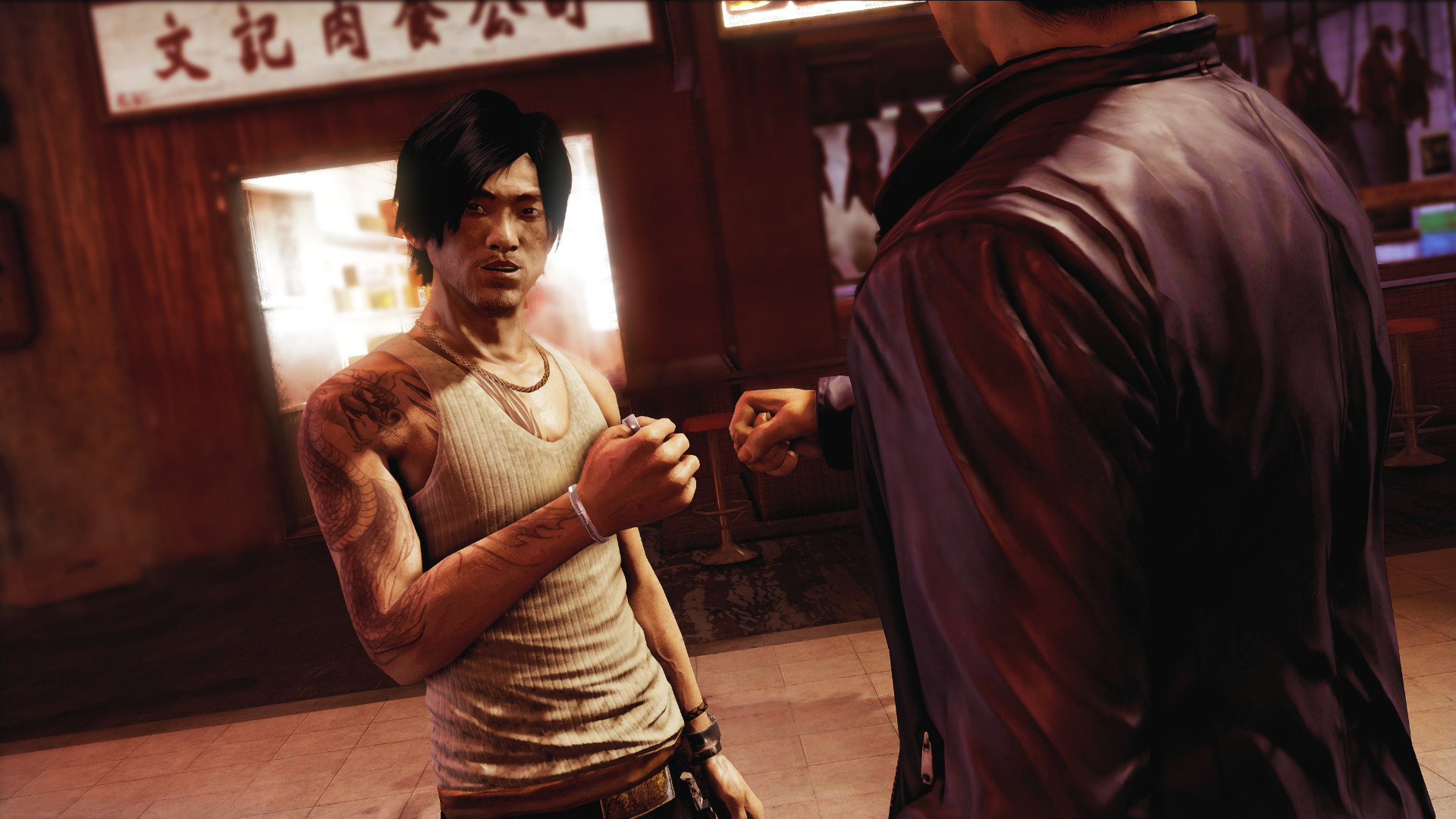
There is a moment early in Sleeping Dogs where Wei Shen, undercover cop and reluctant triad muscle, is handed a stack of chips and told to look like he belongs in a private venue tucked behind a Mong Kok restaurant. The camera does not linger on the felt table or the croupier's hands. It lingers on Wei's face — the calculation, the performance, the proximity to people who would kill him if they knew who he paid his salary to. United Front Games shipped that game in 2012, and that single setup does more narrative heavy lifting than almost anything the Diamond Casino Heist mission in Grand Theft Auto V manages across its considerably more expensive runtime.
The comparison sounds unfair on paper. GTA V had a budget that dwarfed most film productions, a map the size of a small country, and Rockstar's full institutional weight behind it. Sleeping Dogs was a Square Enix rescue project built on the bones of the cancelled True Crime: Hong Kong, developed by a mid-size studio that had to fight for every asset. And yet, a decade-plus on, the heist sequences in United Front's game feel more considered, more grounded, more cinematically coherent than the choreographed chaos of the Strip. The question worth asking is why that is, because the answer says something useful about what heist design in games actually requires.
The Geography of Tension
Heist fiction works because of space. In Heat (1995), Michael Mann builds every set-piece around a specific location that the audience learns to read — the bank, the armored car route, the diner booth. When action breaks out, we know what ground has been lost. Ocean's Eleven is meticulous about layout: the audience is given floor plans and vault schematics almost as a courtesy, so the pleasure of the reveal is geometric. Good heist game design borrows this same logic. The New Vegas Strip operates as a hub-zone with branching faction quests partly because the Mojave Wasteland's writers understood that a venue only feels consequential when you know its corridors and its power structures before the crisis hits.
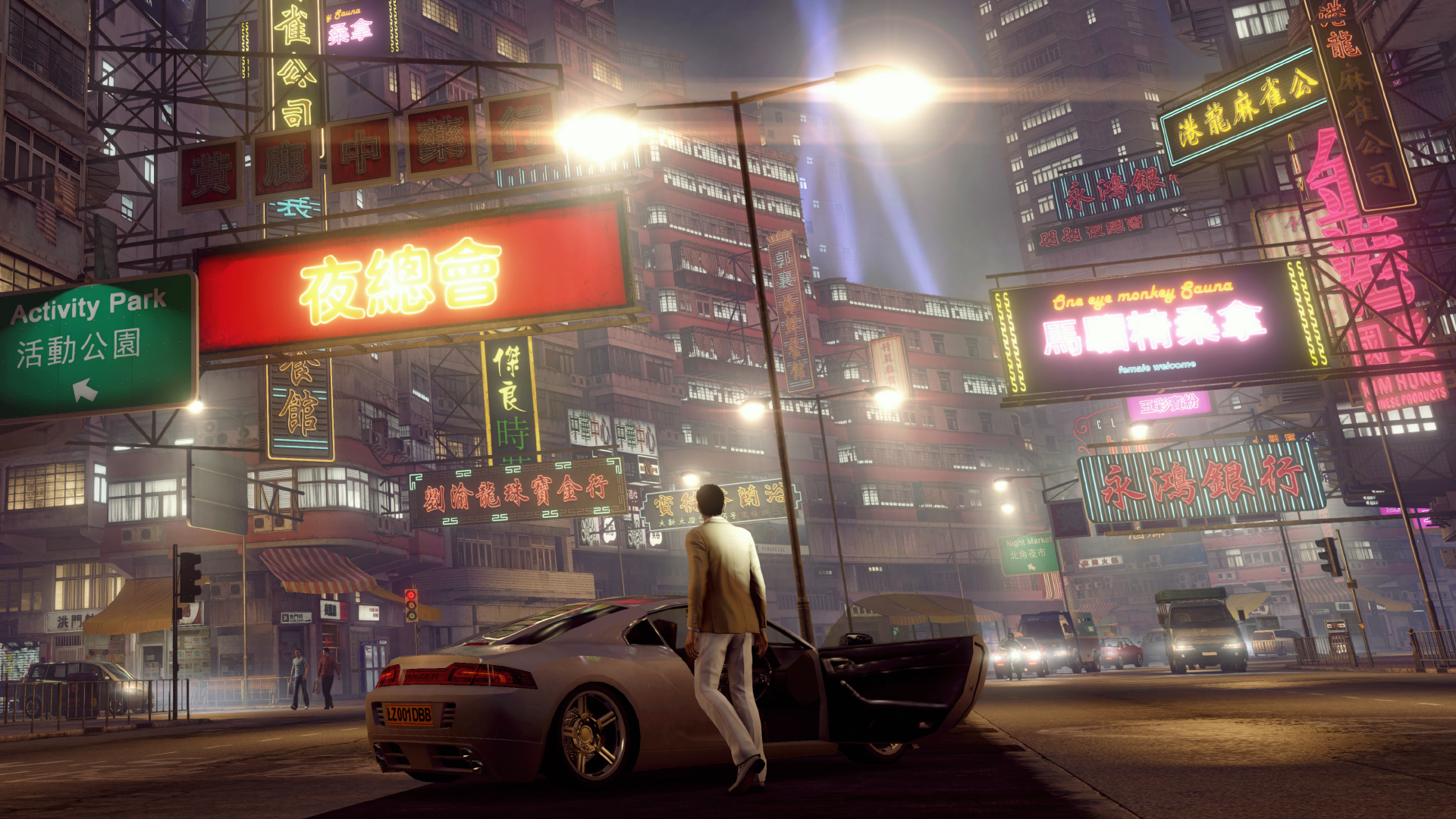 Atmospheric detail in Sleeping Dogs: Definitive Edition.
Sleeping Dogs applies exactly this principle. Before Wei ever enters the private room in the game's underground sequence, you have walked those streets. You have done favors for the people who run them. The alley behind the noodle shop is not abstracted level geometry — it is somewhere you have been chased and somewhere you have chased others. When the violence erupts inside a confined venue, the spatial memory you have built over hours of play makes it land differently. The tension is architectural. GTA V's Diamond-floor missions, by contrast, drop you into a meticulously rendered space that you have no particular reason to care about, dressed in a rented tuxedo that costs in-game currency you probably farmed rather than earned through story progression. The rooms are gorgeous. They are also weightless.
Character Stakes vs. Variable Rewards
One structural difference: Sleeping Dogs never pretends its undercover missions are about money. Wei is not there to get rich. He is there to survive and to maintain a cover that is already fraying. That narrative pressure is present in the control scheme — the game asks you to do things in these spaces that compromise Wei, not just mechanically but emotionally. The system of "face" running underneath the main progression is doing work here. Gaining triad respect and losing cop credibility are not flavor text; they affect what missions unlock and how NPCs address you. The heist arc is threaded through the game's identity crisis rather than bolted onto its side.
GTA V's structure is more honest about what it is, and that is not entirely a criticism. The three-approach format for the Diamond Casino Heist mission — aggressive, stealth, Big Con — is genuinely clever mission architecture, and the Big Con variant in particular has moments that recall the best of the film 21's procedural pleasure. Payday 3's the heist sequence vault scenario takes inspiration from cinematic heist films in a similar way, building tension through role assignment and synchronized execution. But both games frame their payoffs primarily as numerical outputs: the bigger crew cut, the cleaner run, the higher star rating. When the numbers are the point, the spaces become delivery mechanisms rather than places.
What Yakuza Understood That Rockstar Didn't
Sega's Yakuza series — and its successor Like a Dragon: Infinite Wealth — has built a cottage industry out of in-game venue design, and the reason those spaces work is the same reason Sleeping Dogs' work: they are embedded in character logic. Yakuza's arcade and cabaret club subgames demonstrate Sega's commitment to side-content depth not because the mini-games themselves are technically exceptional (some of them are frankly ancient) but because Kiryu or Ichiban playing mahjong in a Kamurocho parlor feels like something that person would actually do. The venue management mini-game in Yakuza 0 is essentially a separate game, but it is a separate game that the writing treats seriously. Even Ichiban's fondness for Dragon Quest-adjacent fantasy is woven into why the turn-based combat system looks the way it does. Coherence, not polish, is the operative value.
Red Dead Redemption 2 makes a similar argument through poker. The card game subgame is not especially deep by poker simulation standards, but sitting across a table from NPCs with histories, in a saloon in a town the game has spent forty hours making you care about, produces a different quality of attention than an isolated mini-game would. Rockstar's own work in RDR2 demonstrates that the studio knows how to do this. The gap between that game's ambient design and GTA Online's in-game the venue feature — functional, pretty, architecturally hollow — suggests that live-service economics changed the brief somewhere along the way.
The Mission Design Specifics
Sleeping Dogs uses its underground venue sequences structurally: they are escalation points, not set-pieces for their own sake. The mission that has you maintaining composure at the table while scanning for threats borrows from the same cinematic grammar as the Rounders (1998) underground game, where the spatial logic of who is watching whom determines everything. United Front built that sequence with limited resources and it shows in places — the NPC pathfinding occasionally glitches, the pre-brawl dialogue loops if you stand still too long. But the design intent is clear: this is a place with rules Wei doesn't fully control, and the gameplay communicates that.
GTA V's equivalent set-pieces lean on spectacle — the vault sequence, the getaway, the choreographed chaos of the aggressive approach. Individually, those moments are well-executed. The issue is sequence: the game moves so quickly through its venue that the space never becomes legible as a place. Watch Dogs 2, for all its flaws, understood this better in its corporate infiltration missions, where DedSec's preparation phase — the recon, the tool setup, the social engineering — gave the environments meaning before the action started. Hitman: World of Assassination's Mendoza vineyard does the same thing at a higher level of craft, letting you learn the space across multiple runs until the layout is internalized. Sleeping Dogs achieved something close to that within a linear structure, which is the harder problem.
Why the Budget Gap Doesn't Explain It
The temptation is to frame this as a scrappy underdog story — small studio heart vs. corporate scale. That reading is too convenient. Supergiant Games makes extremely personal work on small teams, but so does Larian, which is not small anymore. The Mafia trilogy's narrative includes mob-owned venues that drive the story arcs across all three games with varying degrees of success, and those games span multiple generations of development budgets. Budget does not determine whether a space feels inhabited. Intent does.
Sleeping Dogs' underground sequences feel earned because United Front committed to the fiction. The venues are expressions of the world's power structures, not decorative interruptions in a progression system. That commitment required craft choices — in writing, in level design, in the specific way the game ties its combat reputation system to its narrative identity — that money cannot substitute for. Fallout: New Vegas proved the same thing two years earlier: the New Vegas Strip's visual splendor is secondary to the fact that every faction operating inside it has legible motivations and histories, and that your character has a reason to be there beyond accumulating resources.
What It Means for the Subgenre Now
The heist subgenre in games is not going anywhere. Payday 3, GTA Online updates, the continued expansion of Like a Dragon: Infinite Wealth's side content — there is obvious appetite. But the genre has a recurring problem: developers treat the set-piece as the destination and neglect the approach. The films that inspired this design tradition — Heat, Ocean's Eleven, Rififi (1955), if you want to go back — are almost all about the approach. The job itself is usually where things go wrong. The tension lives in preparation and in the specific texture of the space being infiltrated.
Sleeping Dogs understood that, somewhat accidentally, because it had no choice but to make its world feel lived-in before the missions escalated. The constraints of its development — limited scope, rescued from cancellation, Hong Kong as a specific and underused setting — forced United Front into design decisions that turned out to be exactly right. GTA V had everything and sometimes felt like it. If the next major entry in this subgenre wants to do something genuinely memorable, it should probably study the budget and the approach of the underdog rather than the production values of the giant.
Editorial scoring
Reader Q&A
What's the standout set-piece in Sleeping Dogs: Definitive Edition like?
Mission-driven and well-paced. Multiple approach angles — stealth or loud — and consequences depend on enemy AI and scripted triggers. Most players settle into a rhythm by the second attempt.
How long is the major mission arc in Sleeping Dogs: Definitive Edition?
Around 4-8 hours depending on how thoroughly you scout. The full campaign is significantly longer; this arc is one set-piece among many.
Do I need prior series knowledge before playing Sleeping Dogs: Definitive Edition?
Most entries in this lineage stand alone. Helpful context if you've played the predecessors, but not required. Each title resets the player's frame of reference.
What makes a heist-style sequence land?
Sightline clarity, NPC density, audio cues, set-piece pacing. When all four align, the sequence is memorable. When even one's off — say, flat NPC behaviour — it falls flat.
Is Sleeping Dogs: Definitive Edition accessible to newcomers to the genre?
Generally yes. Systems are introduced gradually and difficulty is forgiving on default. Veterans will get more from the deeper systems, but the surface layer welcomes new players.
Which films influenced this design lineage?
Soderbergh's Ocean's Eleven, Mann's Heat, and Scorsese-era crime films are the obvious roots. Designers from this subgenre have cited those films in interviews going back twenty years.
Reader comments