
Hong Kong deserves better heroes than Wei Shen — good thing he disagrees
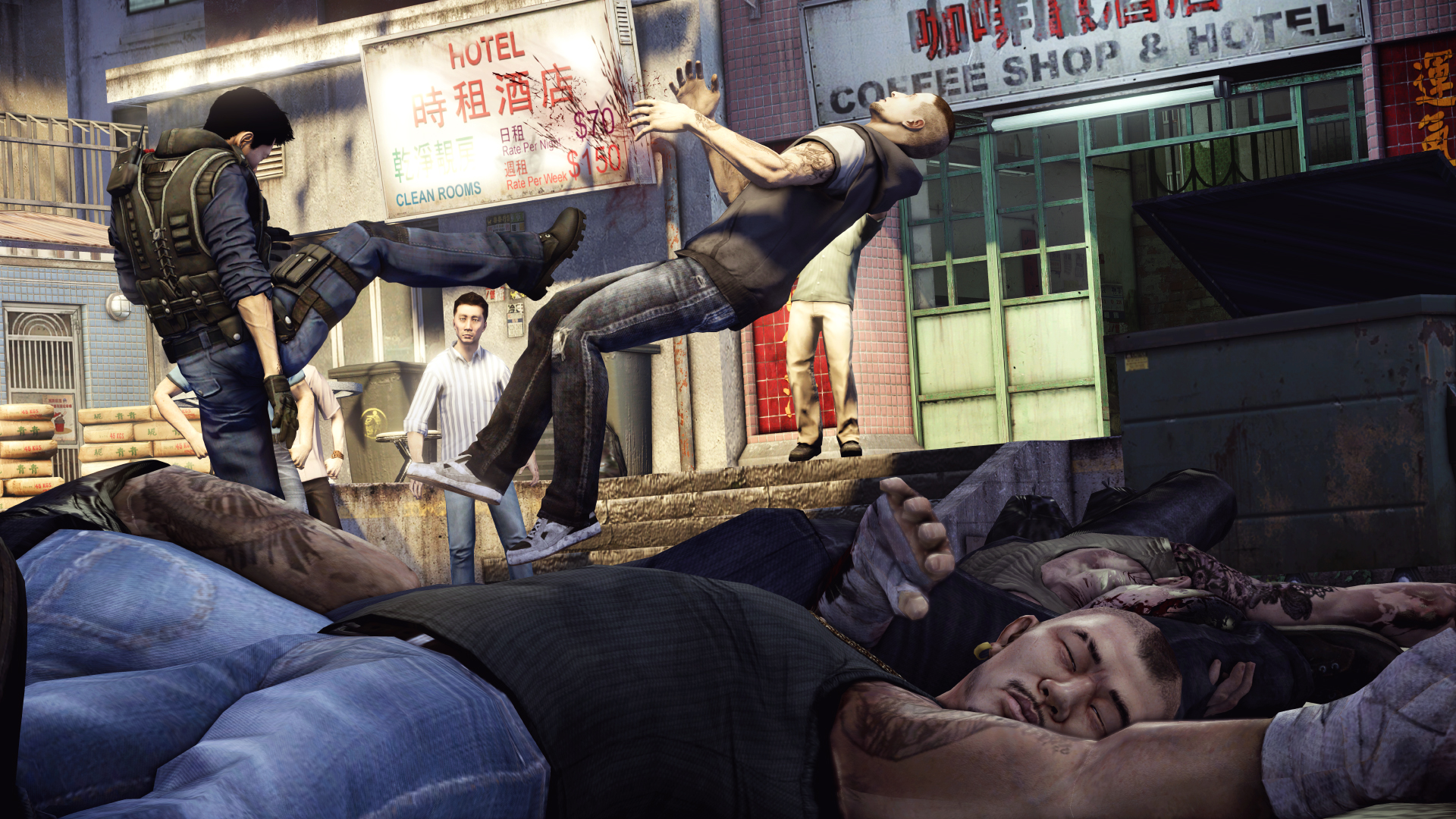
Sleeping Dogs arrived in 2012 carrying the weight of a troubled development — originally an Activision project called Black Lotus, then True Crime: Hong Kong, before Square Enix picked up the pieces and United Front Games shipped something that felt, against reasonable expectation, genuinely coherent. The Definitive Edition, released in 2014 with all DLC folded in, is the version most people encounter now. After sixty hours with it, the question worth asking is not whether it holds up aesthetically — it mostly does not, the texture work was never going to age gracefully — but whether the design underneath the dated sheen still has anything to teach the genre.
The short answer is yes, and the reason is Wei Shen. Not because he is the most complex protagonist in the open-world canon, but because the tension at the center of his characterisation is one that the game's systems actually support rather than contradict. He is an undercover cop going native inside the Sun On Yee triad, and the mechanical reinforcement of that split identity — cop XP, triad XP, face XP, each unlocking different ability trees — is among the more honest expressions of theme-through-design you will find in a sandbox game from that era.
The city as friction, not backdrop
Hong Kong in Sleeping Dogs is not large by contemporary standards. The map would fit inside a corner of GTA V's Los Santos with room to spare. What United Front chose to do with that constraint is front-load every district with density — wet markets, temple courtyards, rooftop walkways, noodle stalls that double as fast travel points after Wei buys enough soup. Moving through it on foot rarely feels like crossing dead space, which is something Ubisoft's open worlds have struggled with across eight Assassin's Creed games regardless of the size increase.
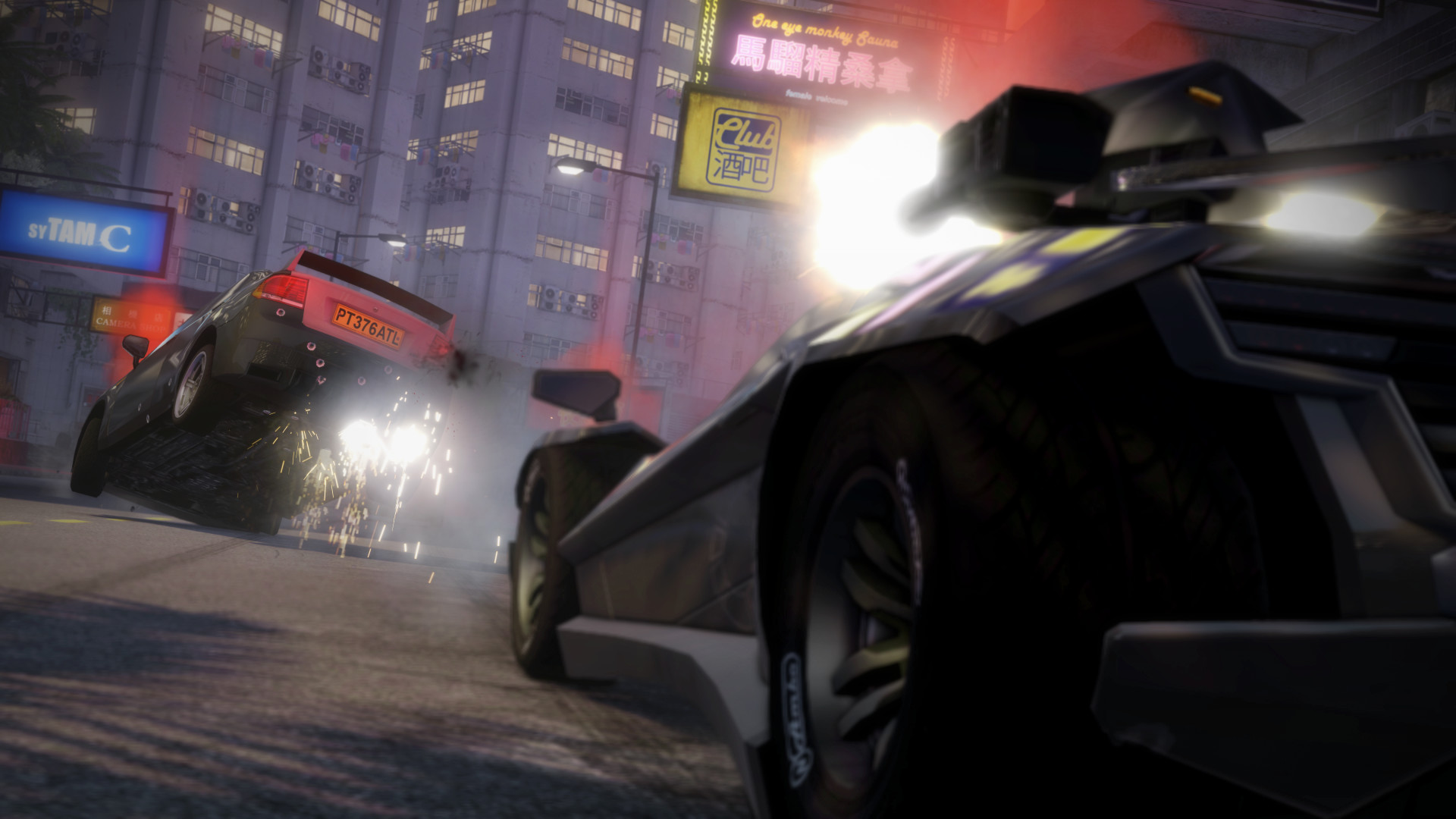 Atmospheric detail in Sleeping Dogs: Definitive Edition.
The verticality is understated but deliberate. Wei can scale most surfaces with a parkour system that reads the environment rather than requiring dedicated climb prompts. It is looser than Mirror's Edge and more contextual than the Arkham series' traversal, sitting somewhere in a useful middle ground where it rewards curiosity without demanding mastery. Aberdeen, Kennedy Town, the night market strip in North Point — the areas feel architecturally distinct enough that navigation becomes partially a matter of reading the skyline, which is a small but meaningful detail.
The driving controls are an ongoing argument. United Front made the deliberate choice to tune the vehicles with a heavy, rear-weighted feel that makes chases feel chaotic rather than surgical. Plenty of players found this infuriating; sixty hours in, it reads as intentional texture — the city resists Wei at the wheel as much as it does on foot. Whether that constitutes good design philosophy or a rationalised inconvenience probably depends on your tolerance for sliding through a junction sideways into a produce stall at high speed.
Combat that borrows intelligently
The hand-to-hand system is Sleeping Dogs' most obvious debt to Rocksteady's Batman: Arkham Asylum, which had shipped three years earlier and redefined what melee combat could feel like in third-person action. United Front took the counter-timing core and pushed it somewhere more brutal: grapple transitions, environmental executions involving car bonnets and phone booths and fish tank lids, and a stun-to-throw chain that rewards reading enemy positions rather than just waiting for a cue to flash. It is not as precise as Arkham's system — the hit detection has moments where it loses confidence in itself — but the emphasis on context-specific brutality gives it a texture that feels appropriate for what the story is doing.
 Combat encounter in Sleeping Dogs: Definitive Edition.
The triad XP tree here is doing real thematic lifting. Brutal combat — extended combos, environmental kills, grapple finishers — earns the most triad standing. Playing cautiously, taking fewer arrests and keeping civilian damage down, feeds cop XP. Nothing in the game forces you to min-max one tree, but the implicit suggestion that Wei becomes more effective in the Sun On Yee's language by leaning into the violence is a coherent design decision, not decoration. It is the kind of systems thinking that Rockstar gestures at in Red Dead Redemption 2's honour mechanic but rarely commits to with the same structural clarity.
Where the mission design earns and loses its credibility
The main story missions are the game's best argument for itself. The first ten hours especially — the initial infiltration, the slow accumulation of Sun On Yee trust, the early gun runs and gang mediations — are constructed with a patience that later open-world games often sacrifice for constant spectacle. United Front seems to understand that dread requires build-up; the scenes involving Winston Chu's family carry weight partly because the preceding hour was quiet enough for character texture to develop.
The mid-game stumbles. There is a section where the missions fall into a rhythm of: drive here, fight these people, call this contact, drive back — with reduced narrative insulation between tasks. The pacing loosens in a way that makes the open world feel like a commute rather than an environment. The DLC content, Year of the Snake in particular, has this problem throughout; it is playable, and it adds some police-focused mission structure that contrasts well with the main campaign, but it has the energy of a budget extension rather than a considered story beat.
The face XP system, which tracks Wei's social reputation and unlocks cosmetic and minor gameplay perks through optional activities, deserves a specific mention for what it avoids. It never becomes a completion-anxiety machine. Side activities — cock fights (spectating only, before anyone asks), singing competitions in karaoke bars, foot chases through the night market — contribute to face without gating anything critical. It is a measurably softer progression philosophy than, say, the Ubisoft tower-reveal model that was dominating the genre simultaneously.
The writing, graded honestly
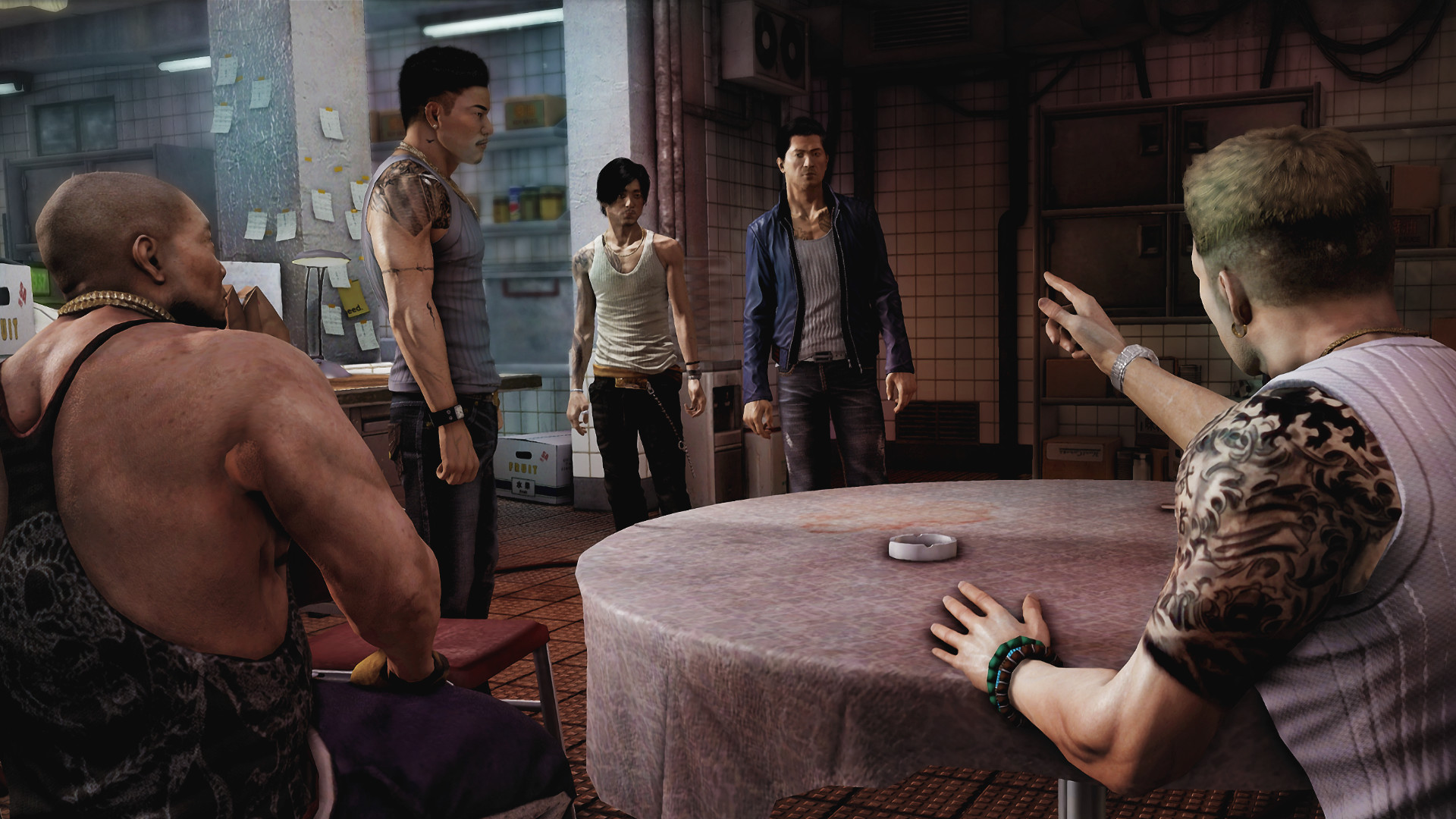
The casting is exceptional and the writing is uneven, which is a frustrating combination. Will Yun Lee's performance as Wei does a significant amount of narrative heavy lifting through line delivery alone — his shifts between Cantonese and English mid-conversation, the specific tiredness he brings to scenes where Wei is being pulled in incompatible directions, are more sophisticated than the dialogue usually deserves. Lucy Liu, Edison Chen, Tom Wilkinson, Kelly Hu — the supporting cast is stacked, and the voice direction is clearly where production attention went.
The script struggles most in its second act, where exposition gets front-loaded into car-ride conversations and some of the triad politics become difficult to track without a dramatis personae. The game also sidesteps the most uncomfortable implications of its premise — a Chinese-American man going undercover in a Hong Kong triad, policed by a British-inflected colonial justice system — which represents a real missed opportunity given how much the setting could support that friction. The game knows what Wei is; it just occasionally loses its nerve about what that means.
The Definitive Edition question
The Definitive Edition bundles in twenty-four pieces of DLC, including the narrative extensions and what feels like an overabundance of cosmetic and vehicle packs that have no material effect on play. The resolution bump and environmental improvements over the 2012 release are real, though the character models retain their original geometry and look noticeably dated against current standards. Nothing here approaches the generational gap between, say, the original Dark Souls and the Remastered version, but the Definitive Edition is the correct version to own if you are approaching the game fresh.
Pricing has fluctuated significantly on PC over the years; the game appears on sale with regularity on Steam, and the cost-per-hour on a full playthrough is one of the more defensible equations in the mid-budget action space. Year of the Snake and Nightmare in North Point are included; the latter is an enjoyable horror-inflected side story that runs about three hours and demonstrates United Front's ability to code-switch tonally without losing grip on the character.
What it asks you to forgive
The question any 2012 open-world game has to answer in 2024 is whether its central loop was interesting enough to survive the visual comparison to whatever shipped last month. Sleeping Dogs passes that test more consistently than most of its contemporaries — more than Saints Row IV, more than the pre-reboot Infamous games, arguably more than Mafia II despite that game's superior cinematic construction. The melee combat still has rhythm. The city still has density. Wei Shen still has more going on internally than protagonists three generations newer have managed.
United Front closed in 2016, which means Sleeping Dogs Definitive Edition is the studio's final word. It is not a perfect game — the mid-game sag is real, the script leaves ideas undeveloped, and the driving will continue to divide opinion until the heat death of the universe. But it is a game with a specific point of view about its city and its protagonist, built with systems that argue for that point of view rather than merely decorating it. In a genre that has historically been more interested in the size of the map than the coherence of what fills it, that specificity is not a minor thing.
Editorial scoring
Reader Q&A
How long does it take to finish Hong Kong deserves better heroes than Wei Shen — good thing he disagrees?
Main story runs around 60 hours depending on how thoroughly you explore. Completionists can spend 2-3× that.
Is Hong Kong deserves better heroes than Wei Shen — good thing he disagrees good for newcomers to Open-World Action?
For total newcomers, expect a 5-8 hour ramp-up. Once you internalize the loop, it clicks.
Which platform should I play Hong Kong deserves better heroes than Wei Shen — good thing he disagrees on?
Console version is the most stable on launch. PC version benefits from the modding scene long-term.
Was Hong Kong deserves better heroes than Wei Shen — good thing he disagrees worth the launch-day price?
Released in 2014, and as of writing it holds up. Wait for a sale if you're price-sensitive — major discounts arrive within 6 months.
Are there DLCs or expansions worth picking up?
The base game is complete; expansion DLC adds 10-15 hours of additional content if you want more.
What did United Front Games get right (and what could be better)?
United Front Games nailed the moment-to-moment loop and the world-building. Pacing in the mid-game and inventory UX have room for improvement.
Reader comments