
Songs of Conquest Earns Every Hour It Demands
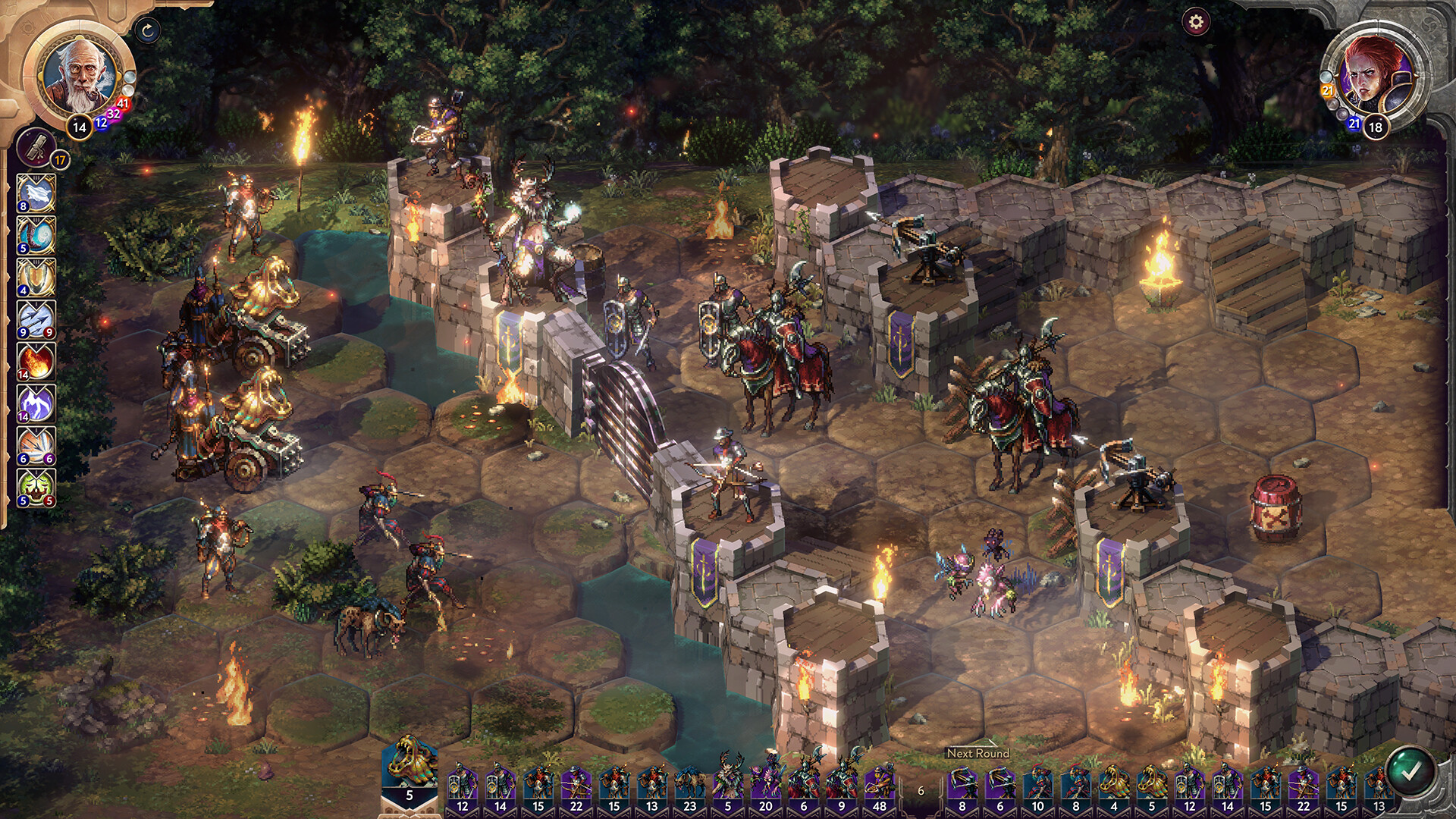
Songs of Conquest doesn't announce itself. There's no cinematic opener, no narrated lore dump, no sweeping orchestral swell designed to convince you that you're playing something important. What Lavapotion's strategy RPG does instead is place a small army on a hex grid, point you toward a flagged settlement two screens away, and let the systems do the talking. For a certain kind of player — the kind who reads resource tooltips before moving a single unit — this is enough. For everyone else, there's a real possibility the game bounces off them inside twenty minutes, which would be a genuine shame.
The obvious reference point is Heroes of Might and Magic III, and Lavapotion isn't shy about that lineage. The structure is identical in its bones: explore an overworld, capture resource nodes, build up a town, recruit creatures, and fight turn-based battles whenever two armies meet. But Songs of Conquest is not a nostalgia product wearing its influences like a costume. It has its own ideas about pacing, spell construction, and what makes a campaign map worth studying, and those ideas accumulate into something that earns its forty-plus hours rather than merely filling them.
The Wielder System Is Where the Design Lives
The single most consequential design decision Lavapotion made was tying magic to your Wielder characters rather than to discrete spell books or mana pools you fill passively. Each Wielder channels essence — fire, wind, growth, decay, and a few others depending on faction — based on the troops they command. A stack of undead soldiers generates a different essence type than a unit of archers, and the spells you can cast mid-battle depend on what those troops are producing right now. This means army composition is never just a numbers question. It's also a question of what you want to be able to do at the decisive moment.
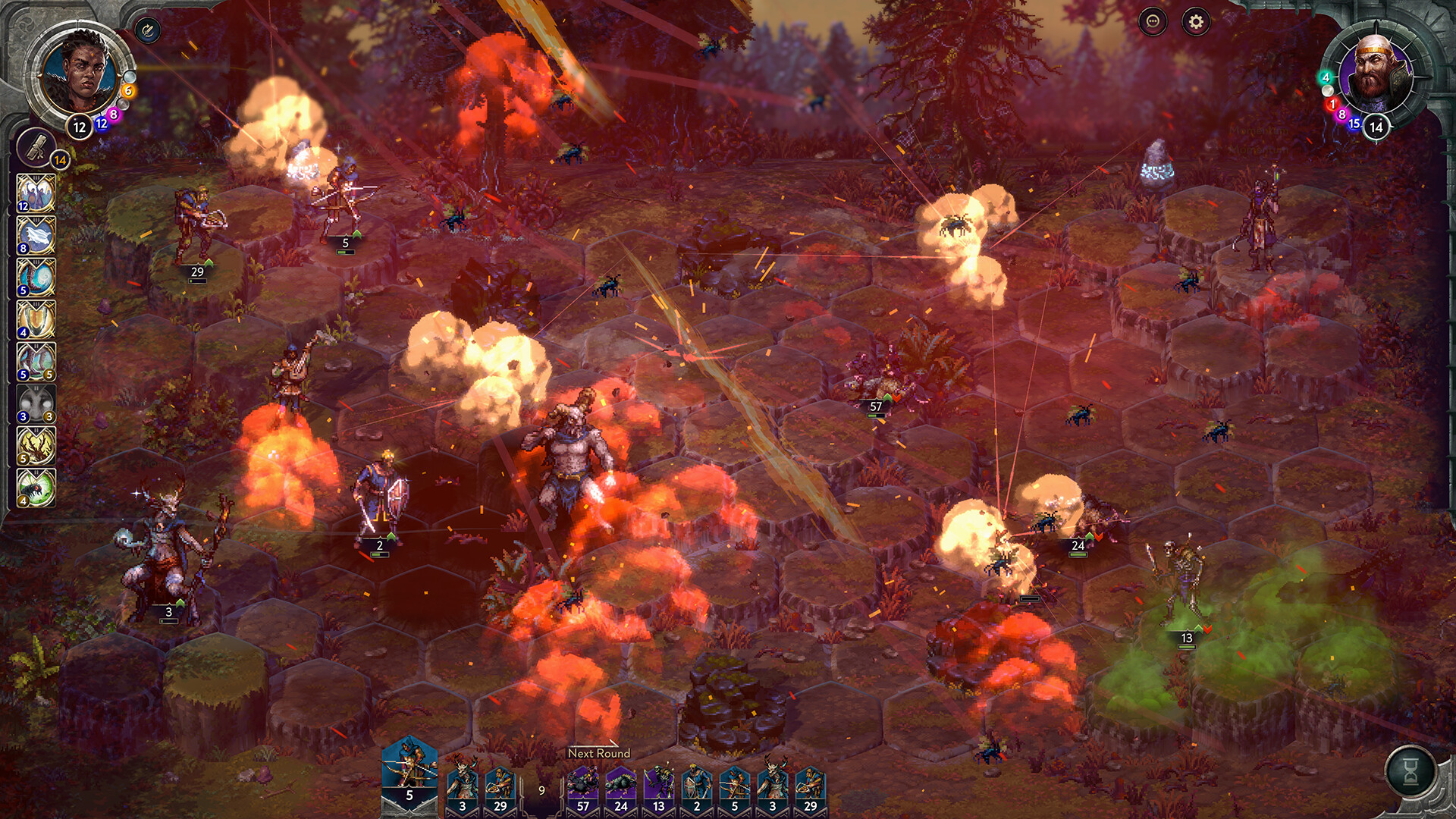 Atmospheric detail in Songs of Conquest.
The elegance of it is that this creates genuine tactical tension without requiring a separate resource bar to watch. If you strip out your weaker essence-generating units to travel faster across the map, you arrive at a battle with less flexibility. That's a real trade-off, one that emerges from the core loop rather than being imposed by a separate mechanic. It also makes the game's faction differentiation feel substantive: Arleon's affinity for structure and order essence plays very differently from Rana's swamp-heavy growth-and-decay toolkit, and you feel that difference in the kinds of decisions you're making, not just in the visual palette.
Spells themselves are constructed by combining essence types, and several of the more powerful options require two or three different types simultaneously. Getting to a point where your army reliably generates mixed essence is partly a recruitment question and partly a map-control question, since essence production can also be boosted by certain buildings and artifacts. It's layered without being complicated in the way that drives people to wikis.
Campaign Maps Reward Attention, Not Speed
Songs of Conquest plays better slowly, and the campaign maps are designed to accommodate that. Resource nodes respawn on a seasonal timer; there are hidden passages and flagged locations that change behavior depending on whether you've visited them in a particular order; some neutral armies guard artifacts that are genuinely worth the attrition cost and some don't. Learning to read a map — which choke points matter, which resource routes your opponent is likely to contest, where it's safe to split your secondary hero — is a skill the game teaches gradually by making the consequences of getting it wrong legible rather than punishing.
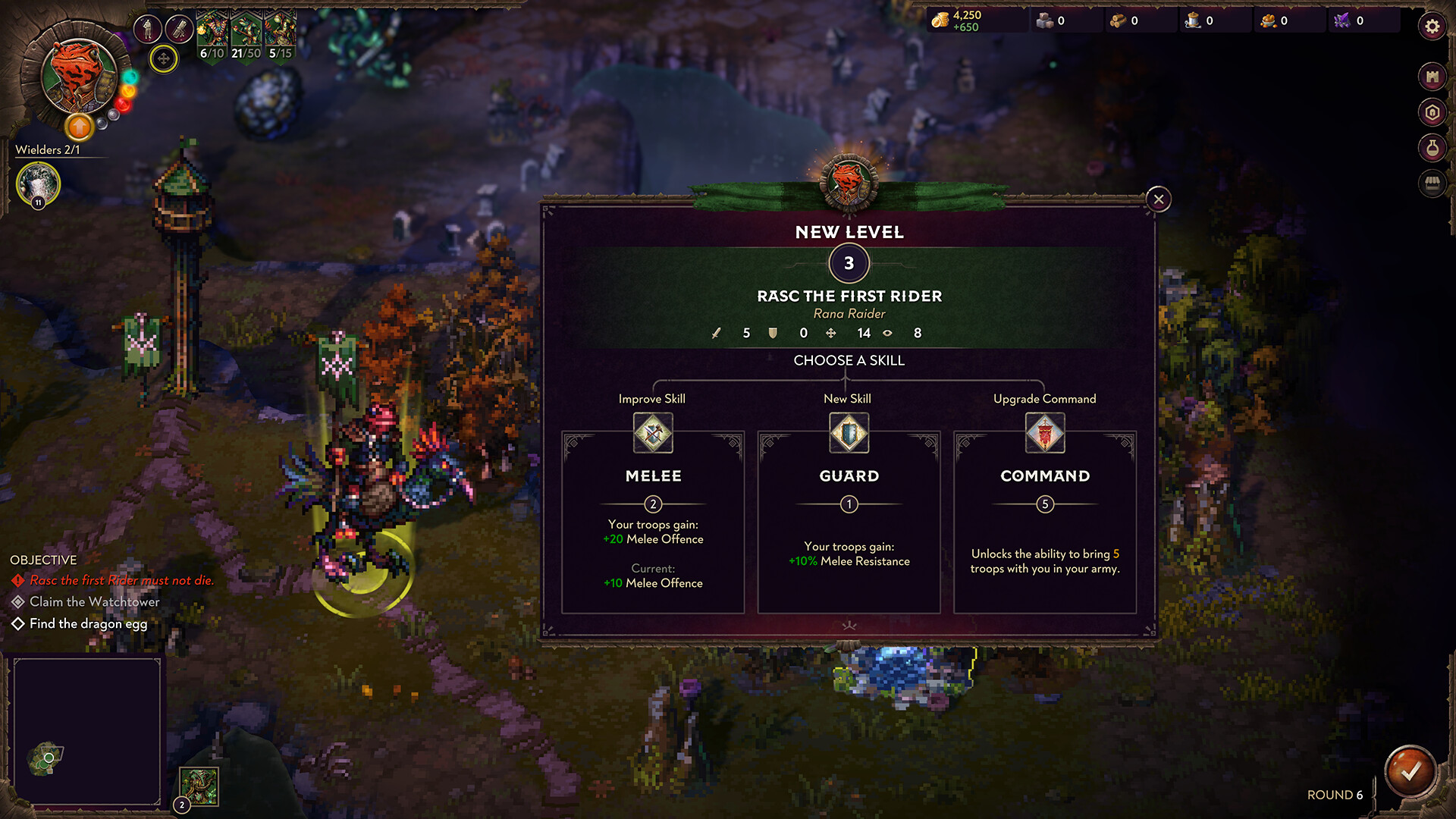 Combat encounter in Songs of Conquest.
The campaign itself spans four factions across four separate storylines, each running somewhere between eight and fourteen hours depending on difficulty and how thoroughly you explore. The narrative is light — functional rather than compelling, with a few character moments that land and a lot that don't — but the missions are well-structured enough that the story largely gets out of the way. What matters is the map, and the maps are good. One mid-campaign Arleon mission in particular, which splits your starting forces and asks you to manage two separated armies converging on a central objective, is some of the best scenario design in the genre since Age of Wonders 4 started doing interesting things with its map generation.
The Presentation Is Doing Real Work
There's a specific visual language that pixel art strategy games have settled into over the past decade — clean sprites, readable tile art, functional iconography — and Songs of Conquest sits in that space but pushes noticeably further. The battle animations in particular are more expressive than they need to be; watching a unit of Arleon knights charge across a cobblestone map has a weight and clarity that makes the tactical information legible and looks genuinely great. Lavapotion clearly spent time on the art budget that other studios in this tier redirect toward feature count.
The soundtrack by Niklas Aberg deserves a specific mention because it's doing something unusual: the music shifts tonally based on what faction you're playing and what phase of the campaign you're in, but it doesn't do so in a way that calls attention to itself. It's ambient support rather than emotional underscoring, which is exactly what a strategy game that asks you to think for long stretches actually needs. A lot of strategy game scores are scored like action movies; this one understands what the player is actually doing.
The UI is mostly clean, with a few irritations. The tooltip hierarchy takes some adjustment — certain upgrade descriptions bury the relevant numbers under flavor text — and the minimap could communicate contested territory more clearly during late-game scenarios when the board gets crowded. These are friction points rather than failures, but they're noticeable.
Where It Slows Down
The game's pacing has one structural problem: the mid-campaign slump is real. Around the halfway point of each faction's storyline, there's a stretch where you've learned the systems, you're not yet at the point where those systems produce interesting late-game interactions, and the maps feel like they're running time rather than using it. It's not a long stretch — maybe four or five hours across the full campaign — but it's the window where players who aren't fully bought in will start weighing the game against something else in their library.
The multiplayer has potential that feels underrealized at present. Skirmish maps against human opponents are where the essence system becomes genuinely ferocious — the decision-making compresses, every resource node becomes a negotiation — but the map pool is limited and the matchmaking is sparse. This is a game that clearly wants to be played competitively in the way HoMM III still is, in 2024, among a loyal community. Whether Songs of Conquest builds that community is a question the next year or two will answer.
Who This Is For
Songs of Conquest is built for players who treat the pause button as a thinking tool and who find satisfaction in optimizing a decision tree rather than reacting to moment-to-moment stimuli. If you're the person who spent three hours on a single Heroes of Might and Magic map not because you had to but because leaving it unfinished felt wrong, this game is speaking directly to you. If your strategy game instinct is closer to real-time titles — StarCraft II, Company of Heroes, anything where speed of execution is the primary variable — the turn-based deliberateness here will feel like standing still.
That's not a criticism of either kind of player. It's just a fact about what Songs of Conquest is. Lavapotion built something specific rather than something broadly appealing, and the specificity is a feature. A game that tries to accommodate every strategic preference usually waters down all of them.
The Verdict
Songs of Conquest is meticulous in the places that matter: the essence system gives battles genuine strategic texture; the maps are designed with legible intent; the presentation treats the genre seriously rather than ironically. The mid-campaign drag and the undercooked multiplayer pool are real issues, but they're the kind of issues that patches and expansions can address. What they can't add after the fact — the foundational design clarity, the faction differentiation, the sense that someone thought hard about what every moving part was for — is already here. Lavapotion's first major release asks for patience it hasn't quite fully earned in every moment, and then, in the moments that count, it pays back that patience with interest.
Editorial scoring
Reader Q&A
How long does it take to finish Songs of Conquest?
Main story runs around 120 hours depending on how thoroughly you explore. Completionists can spend 2-3× that.
Is Songs of Conquest good for newcomers to Turn-based Strategy?
It depends. The systems are deep but the tutorial does a fair job. Veterans of Turn-based Strategy will feel at home faster.
Which platform should I play Songs of Conquest on?
Console version is the most stable on launch. PC version benefits from the modding scene long-term.
Was Songs of Conquest worth the launch-day price?
Depends on backlog. The replay value justifies the price for genre fans; casual players should wait for a 40%+ discount.
Are there DLCs or expansions worth picking up?
The base game is complete; expansion DLC adds 10-15 hours of additional content if you want more.
What did Lavapotion get right (and what could be better)?
Strongest: art direction, audio design, set-piece variety. Weakest: late-game balance and a few persistent quest-log bugs.
Reader comments