
Sons of the Forest Never Lets You Feel Safe Enough
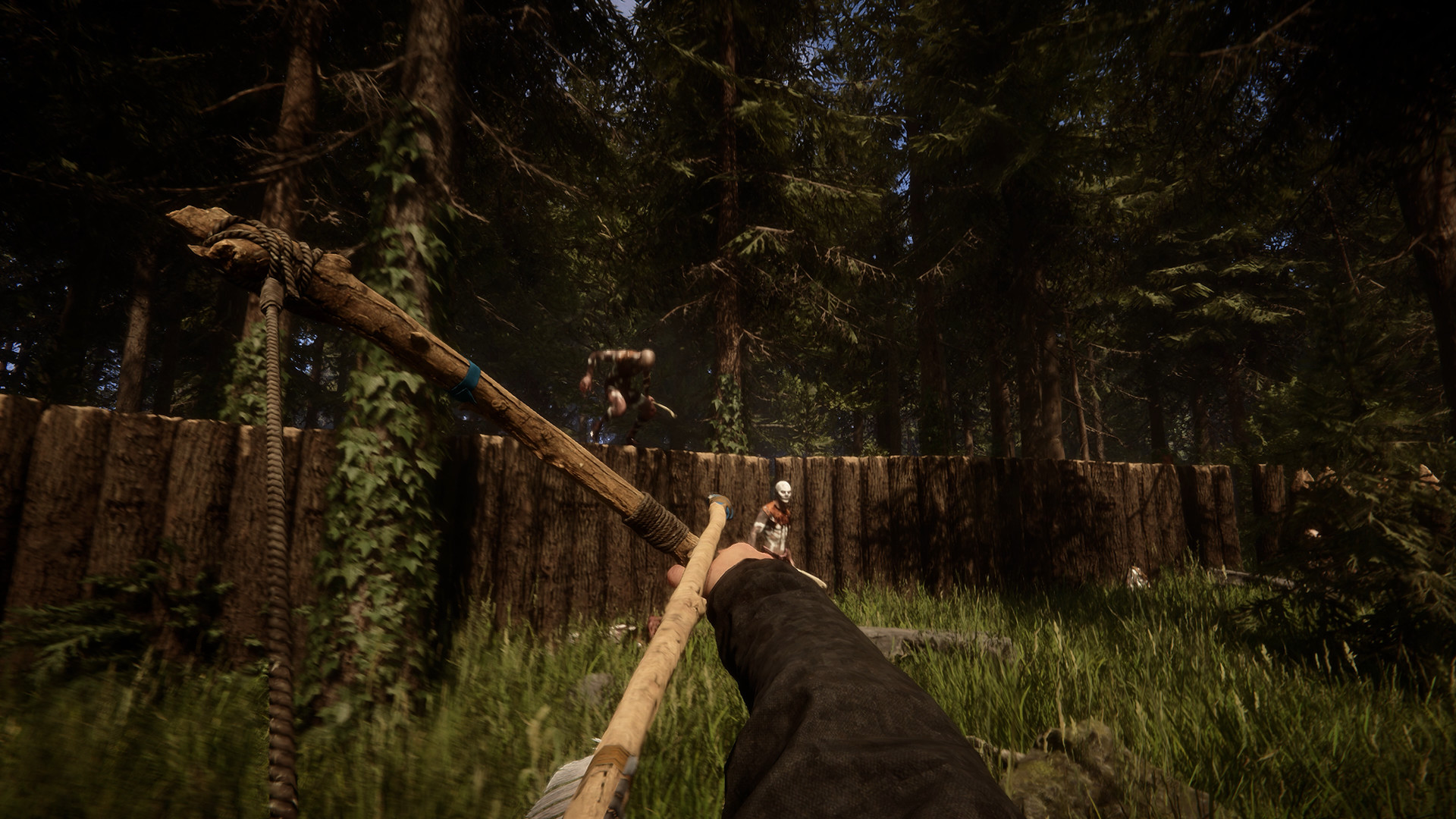
Endnight Games released Sons of the Forest in February 2023 after a string of delays that, honestly, turned out to be warranted. The original The Forest from 2014 was a modest, slightly janky survival horror that found a cult audience partly because of its cannibal AI and partly because it was one of the few games in the genre that felt like it had actual intentions rather than a checklist. Sons of the Forest arrives with a bigger budget, a companion system, and a narrative that tries to be something other than window dressing. Whether it fully delivers on that ambition is complicated. What is not complicated is that it remains one of the most persistently uncomfortable survival games released in recent years, and that discomfort is almost entirely earned.
The premise is familiar enough: you are a private security operative dropped onto a remote island to find a billionaire's missing family, and within minutes the helicopter is a smoking ruin and something with too many limbs is watching you from the tree line. What distinguishes Sons of the Forest from its contemporaries — from Valheim's structured progression or Green Hell's meticulous simulation — is the specific way it engineers dread through scarcity of information rather than scarcity of resources. You are never entirely sure what the enemies want, where they come from, or when they will arrive. That uncertainty does real work.
The Companion System Is Better Than It Has Any Right to Be
Kelvin is an AI companion who is deaf and mute, communicating through a notepad interface where you assign him tasks — gather logs, build a fire, collect berries — and he ambles off to do them with the reliability of a golden retriever that has watched too many construction videos. On paper this sounds like a gimmick. In practice, Kelvin offloads enough mundane survival admin that you actually have time to pay attention to your surroundings, which is exactly where Sons of the Forest wants your attention. His occasional mistakes, like delivering seventeen logs to the wrong location or failing to comprehend an ambiguous instruction, read less as bugs and more as a companion who is also very concussed, which is what the lore says he is.
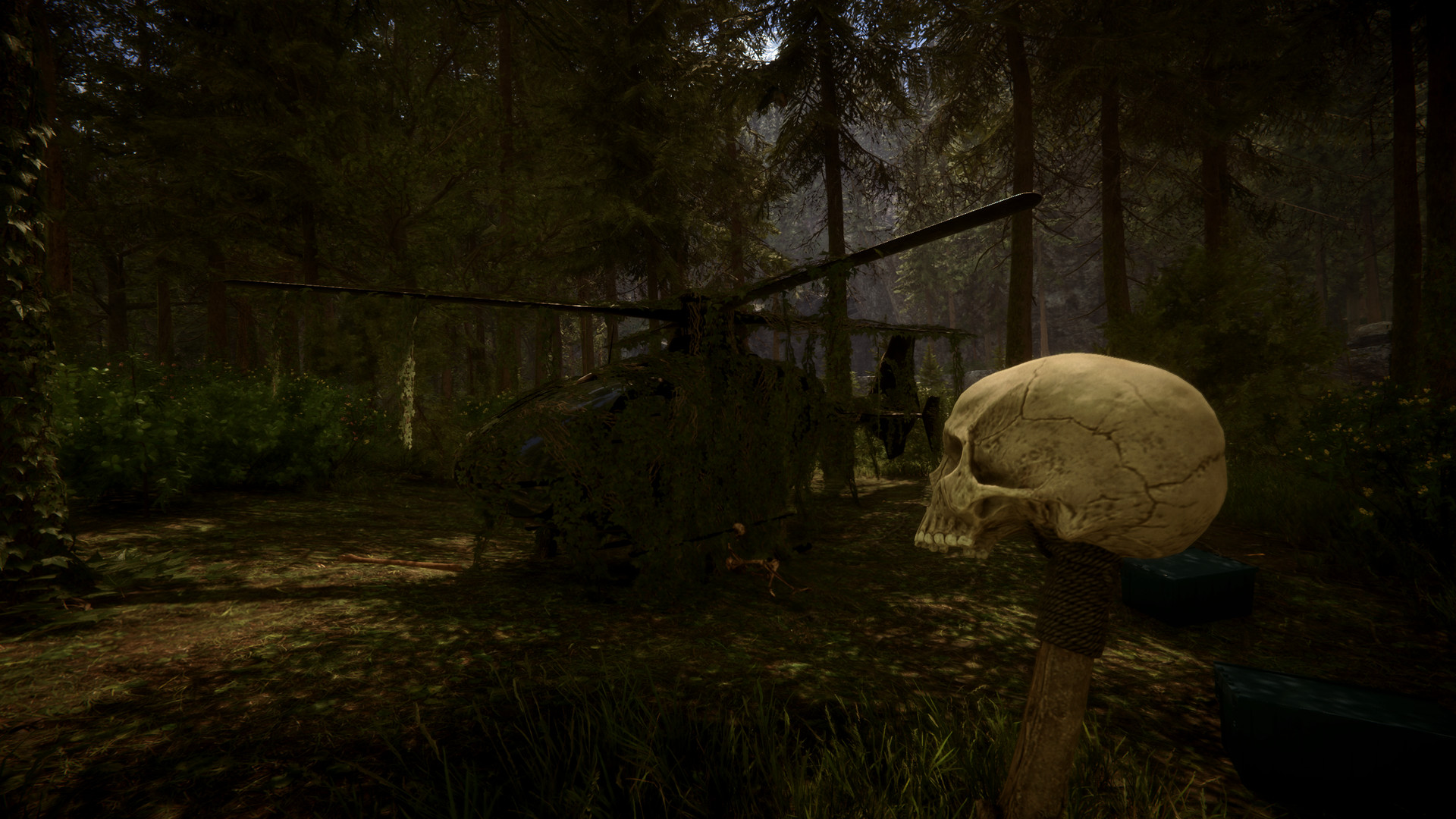 Atmospheric detail in Sons of the Forest.
Virginia, the second companion added mid-development, operates differently. She is a mutant with three arms and three legs who begins as a skittish presence you can scare away permanently if you approach too aggressively. Earn her trust gradually and she will follow you, accept gear, and eventually fight alongside you with a shotgun. Her arc is almost entirely communicated through behavior rather than dialogue, and it is one of the more quietly affecting character relationships the genre has produced. The design choice to make her irreversibly lost if you mishandle early encounters is the kind of mechanic that sounds punishing on paper but in context feels true to the world Endnight built.
Combat That Respects Your Stress Response
The combat in the original The Forest was serviceable but never the point. Sons of the Forest makes it the point more often, and the results are uneven in a way that leans toward interesting rather than broken. Melee swings have genuine weight; a bone club hitting a creeper feels different from a crafted spear, and enemy knockback is physics-driven enough that positioning in tight spaces genuinely matters. The shotgun feels like a last resort the way a real last resort should feel — loud, devastating, and immediately announcing your location to everything within a significant radius of the island.
Where the combat stumbles is in the larger mutant variants, which have hit boxes that do not always match their animations and attack patterns that can shift mid-swing in ways that feel less like telegraphing and more like input unpredictability. This is a real problem in caves, where the environmental darkness and tight corridors already put you at a disadvantage. The Finger Mutant — long-limbed, fast, and deeply unsettling to look at — is the clearest example of an enemy whose visual design creates more fear than its combat model can actually support.
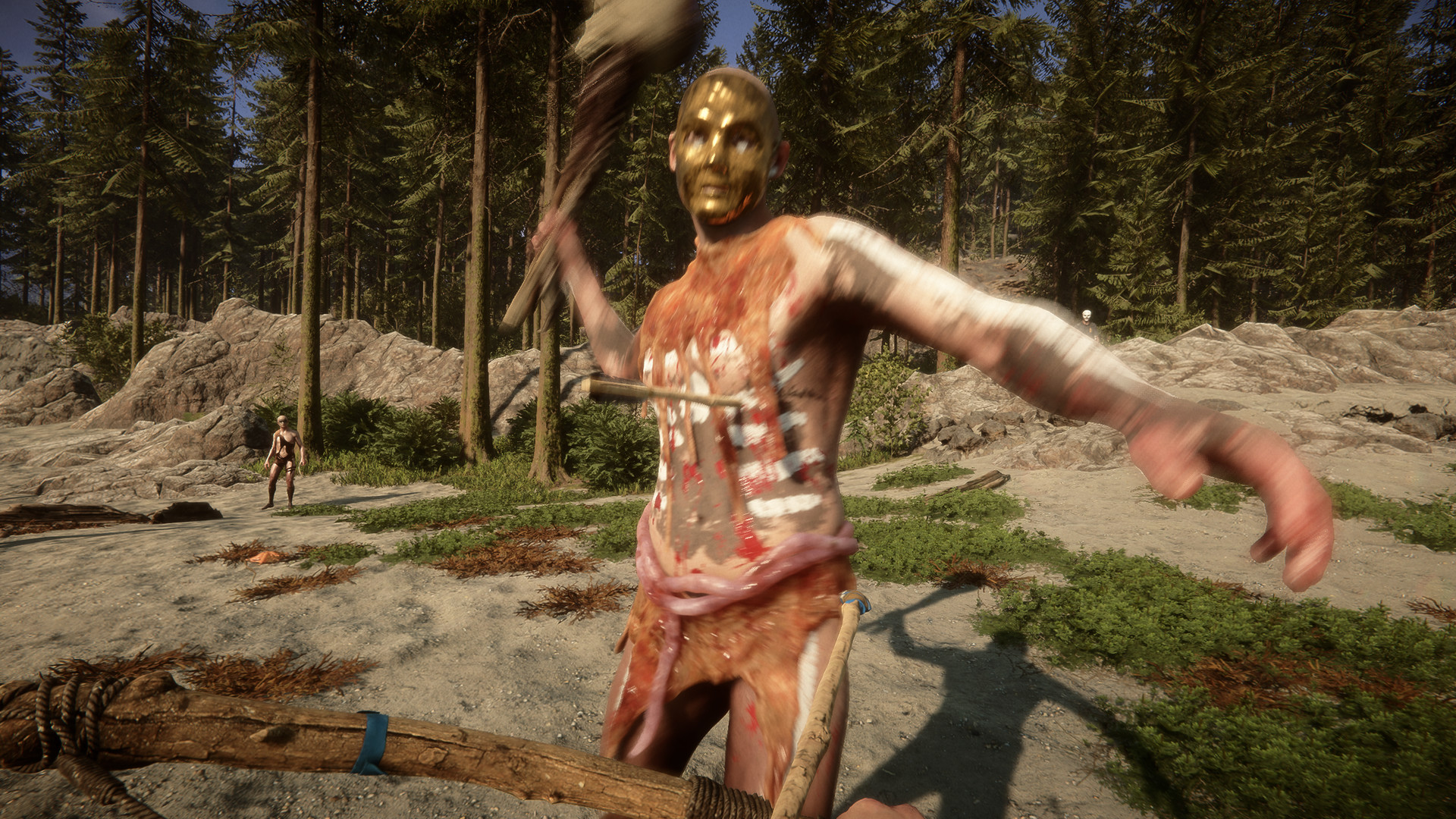 Combat encounter in Sons of the Forest.
Building as Anxiety Management
The construction system in Sons of the Forest is, without much competition, the best implementation of freeform base-building a survival game has shipped with. You are not snapping wall sections into prefab slots. You are physically placing logs, trimming them to length, and assembling structures beam by beam in a system that respects spatial logic. A roof that overhangs too far will buckle. A wall with no support will lean. It takes longer than the grid-based systems in something like 7 Days to Die, but the investment creates genuine attachment to what you build, which makes the nights when the cannibals come to test the walls considerably more tense.
There is a design philosophy at work here that ties the building directly to the horror. You are never building from a position of security; you are building because something is already outside. The first log cabin you assemble will be inadequate. The second one might hold. The third, if you have figured out guard towers and spiked perimeters, will make you feel, briefly, like you have the situation under control — and that feeling is exactly when Sons of the Forest introduces something that your fortifications were not designed for. The game treats player confidence as an invitation.
The Story Earns More Than It Spends
The narrative is delivered through environmental detail, scattered documents, and a third act that moves into a series of increasingly surreal underground facilities. The Solafite Corporation backstory — missing family, human experimentation, a billionaire with ambitions that escalated well past hubris — is more coherent than survival games usually manage, partly because Endnight trusts the player to assemble it rather than delivering it in voiced cutscenes. The late-game environments shift the tone significantly; what begins as a horror survival game starts to approach something more like a conspiracy thriller, and while that tonal shift does not fully resolve, it keeps the final hours feeling like they are building toward something rather than simply extending a loop.
The endings — there are three, depending on the decisions you make in the final sequences — are not all equally satisfying. One feels genuinely earned, one feels ambiguous in a way that respects your intelligence, and one is clearly the canonical bad ending that exists to acknowledge the choice exists. The game does not hold your hand toward the preferred one, which is consistent with how it handles everything else.
What It Gets Wrong, and Why It Matters Less Than It Should
The optimization was rough at launch and improved substantially across the 1.0 patch cycle, but performance on mid-range hardware still stutters in the dense forest sections at certain times of day, specifically dawn and dusk when the lighting calculations are working hardest. The inventory management, improved over the Early Access build, still requires too many steps to achieve simple equipment swaps in moments when you would rather not be in any menu at all. These are complaints that will be immediately familiar to anyone who has spent time in the survival genre, which does not make them trivial.
The multiplayer, which supports up to eight players, changes the experience more than you might expect. The fear almost entirely evaporates with a full lobby; the tension that the game builds through isolation and resource scarcity collapses when you have six people covering every angle. Sons of the Forest is best played solo or with one trusted person who agrees to take it seriously, ideally someone who will not immediately point a flashlight at the forest and start narrating.
A Survival Game That Remembers What the Genre Is For
Sons of the Forest does something that a significant number of survival games have quietly stopped doing: it makes the act of surviving feel meaningful because the alternative is consistently awful. The resource loop, the building, the combat — these are not pleasant mini-games decorating a prettier lobby. They are the friction that makes safety temporary and therefore worth fighting for. The game does not offer clean victories. You carve out enough space to breathe, and then something finds you again.
Endnight built a more ambitious, better-looking, and structurally tighter game than its predecessor while preserving the particular quality that made The Forest worth paying attention to: the sense that the island has its own logic and does not particularly care whether you understand it. Sons of the Forest will leave specific images in your head — a structure you built still standing at midnight, a companion you almost lost looking at you from across a clearing, something you did not see clearly enough to name watching from the dark between the trees. That it accomplishes this while also shipping a functional base-building system and a companion who collects berries on command is, on reflection, a remarkable balancing act.
Editorial scoring
Reader Q&A
How long does it take to finish Sons of the Forest?
Main story runs around 18 hours depending on how thoroughly you explore. Completionists can spend 2-3× that.
Is Sons of the Forest good for newcomers to Survival Horror?
It depends. The systems are deep but the tutorial does a fair job. Veterans of Survival Horror will feel at home faster.
Which platform should I play Sons of the Forest on?
Steam Deck handles this title well — verified compatibility on most recent patches.
Was Sons of the Forest worth the launch-day price?
Depends on backlog. The replay value justifies the price for genre fans; casual players should wait for a 40%+ discount.
Are there DLCs or expansions worth picking up?
Wait for the Game of the Year edition — it bundles everything at a fair discount.
What did Endnight Games get right (and what could be better)?
Endnight Games nailed the moment-to-moment loop and the world-building. Pacing in the mid-game and inventory UX have room for improvement.
Reader comments