
Tekken 8 hits so hard it almost forgives how loud it is
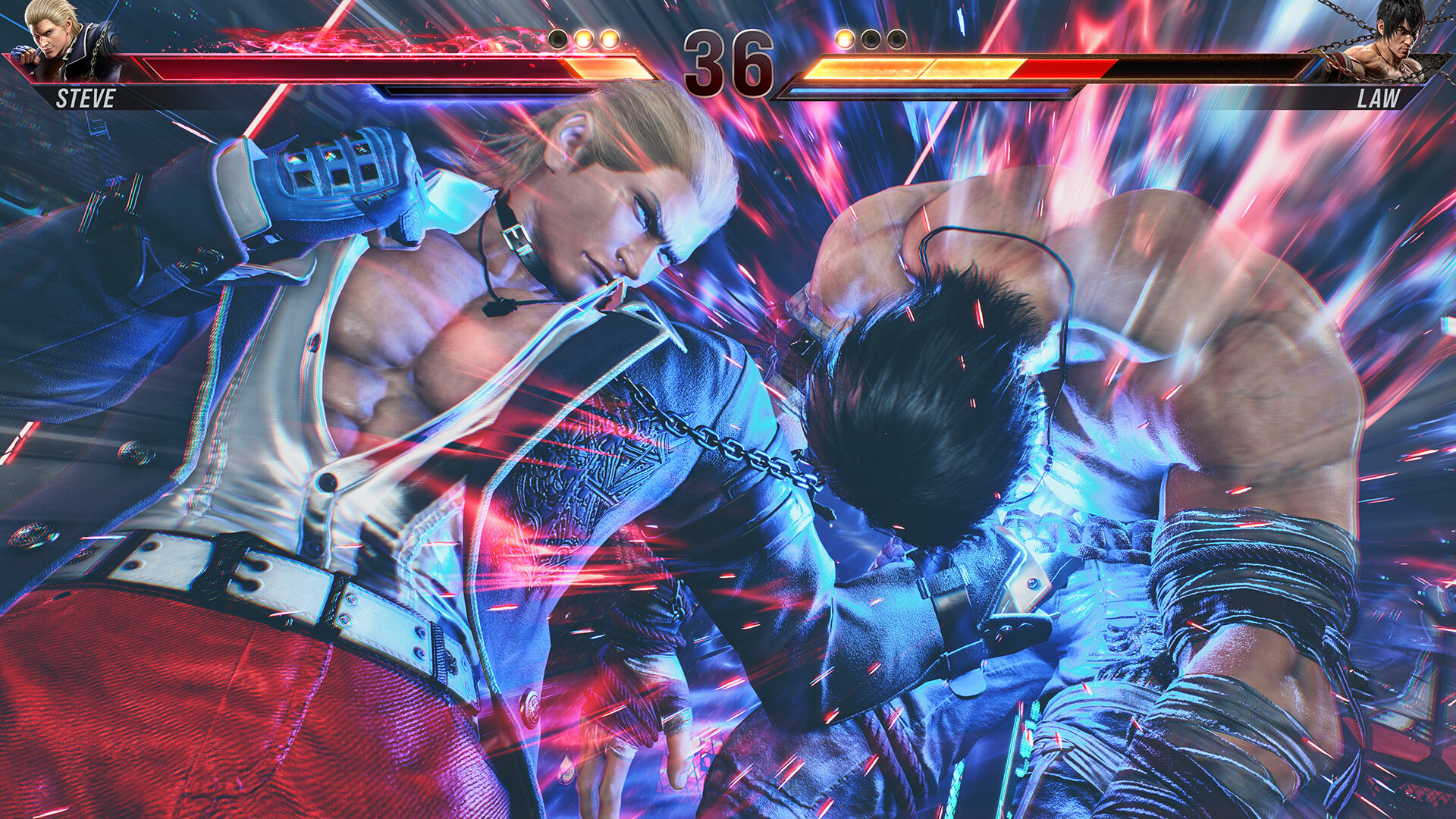
Tekken 8 is a game that wants you to feel everything immediately. The screen shakes when Jin Kazama lands a Power Crush through a counterhit. The announcer shouts with the urgency of a man whose house is on fire. Even the menus have momentum — swipe a finger across a touchpad and the camera lurches like a handheld film shoot. Bandai Namco has made a fighting game so committed to sensation that the question of whether it is a good fighting game almost gets lost in the noise.
Almost. Because underneath the Heat system, the cinematic wall-splat animations, and the very aggressive use of orchestral drums, there is a fundamentally sound mechanical redesign that does more than rearrange furniture. Tekken 8 changes what the neutral game rewards, shifts the risk calculus around aggression, and — in doing so — makes some character archetypes genuinely stronger while quietly disadvantaging others. Whether those changes serve the game long-term is more interesting to think about than the straightforward verdict of 'buy it'.
What the Heat system actually does
Heat is Tekken 8's signature addition: a renewable resource that you activate by spending a button press or landing a specific move, triggering a timed state where certain attacks gain extra properties — chip damage on block, follow-up options that don't exist outside Heat, and in some cases full combo extensions. The design intent seems clear. Tekken 7's neutral game, especially at high level, was cautious to the point of being passive. Long stretches of movement and whiff-punishing didn't always produce exciting matches for spectators or satisfying sessions for players still learning the spacing game. Heat is a response to that.
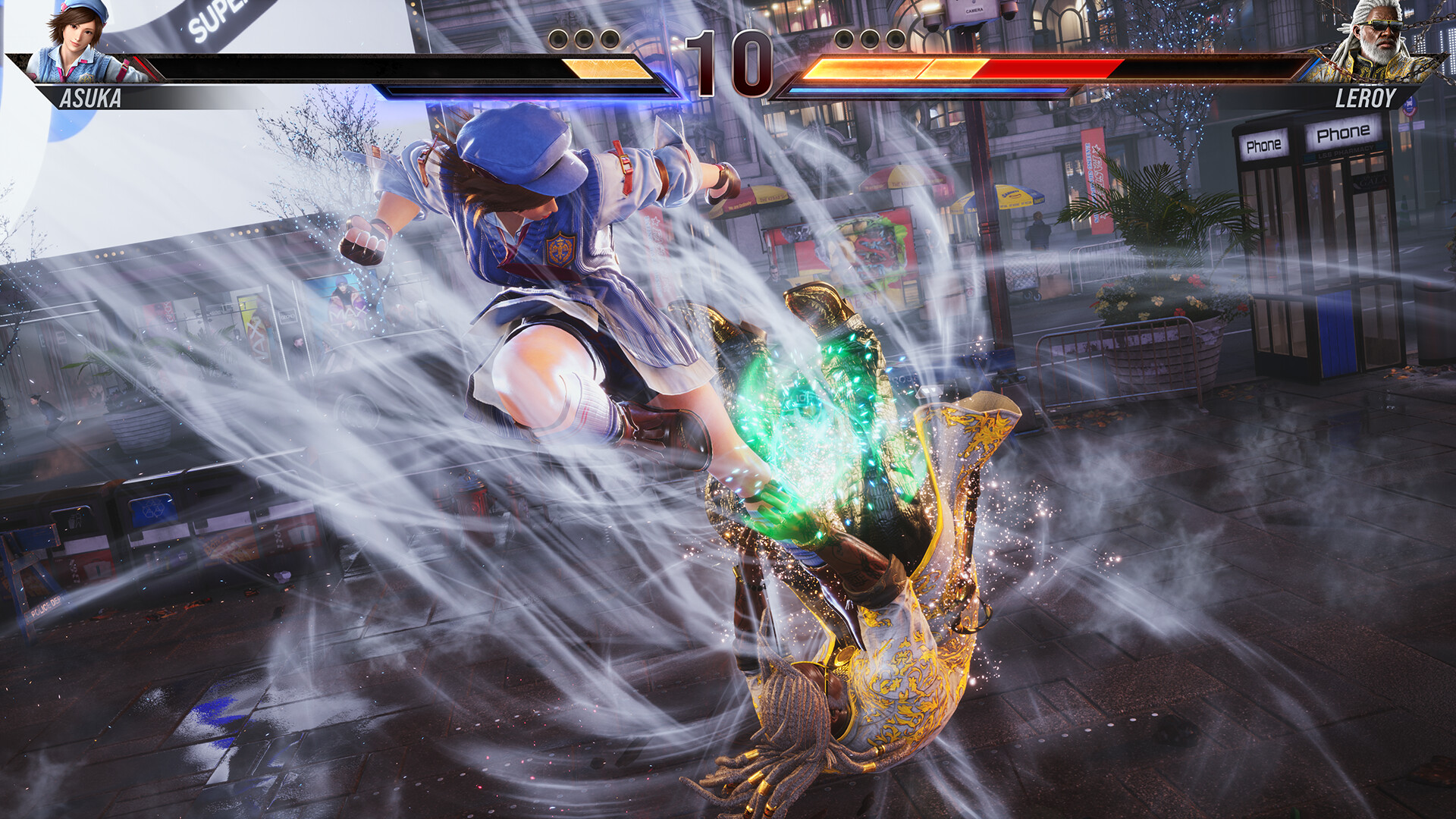 Scene from Tekken 8.
The result is that the game now has a consistent 'do something dramatic' engine built in. Activating Heat during a match creates a clear tempo shift — it signals intent, pressures the opponent to respond, and gives newer players a visible moment of agency that pure Tekken spacing could deny them for entire matches. The chip damage on block is the most debated piece. It is small per hit but it changes blocking from a completely safe option to a slowly losing position, which pushes players toward parries, sidesteps, and defensive moves that the system already rewards — moves that beginners often don't know exist. Bandai Namco is, in effect, teaching through pressure. Whether that lesson lands depends entirely on how much time you put into the game before you hit that pressure.
What Heat does not do well is distribute fairly across the roster. Characters with strong Heat Smash moves — the cinematic, high-damage attacks available during Heat — benefit from the system in ways that characters with weaker Heat activations simply do not. Dragunov's Heat Smash, for instance, is fast and covers ground in a way that makes him disproportionately punishing in the system's current tuning. Compare that to older-kit characters who received less obvious Heat integration, and you start to see the seams of a feature designed around some characters first.
The roster and what it says about priorities
Twenty-three characters at launch, with additional fighters arriving post-release through the Season Pass structure. The returning cast is mostly intact where it matters: Nina Williams still has her oppressive chain-throw mix-ups with an extended Heat-enabled oki game; Kazuya's Electric Wind God Fist is still the skill-ceiling test that separates committed Mishima players from tourists. The new additions — Reina, who plays like a cleaner Heihachi with a slightly different juggle structure, and Victor Chevalier, a grappler-adjacent brawler — are well-designed in isolation. Reina especially feels like she was built for the Heat system from the ground up rather than retrofitted.
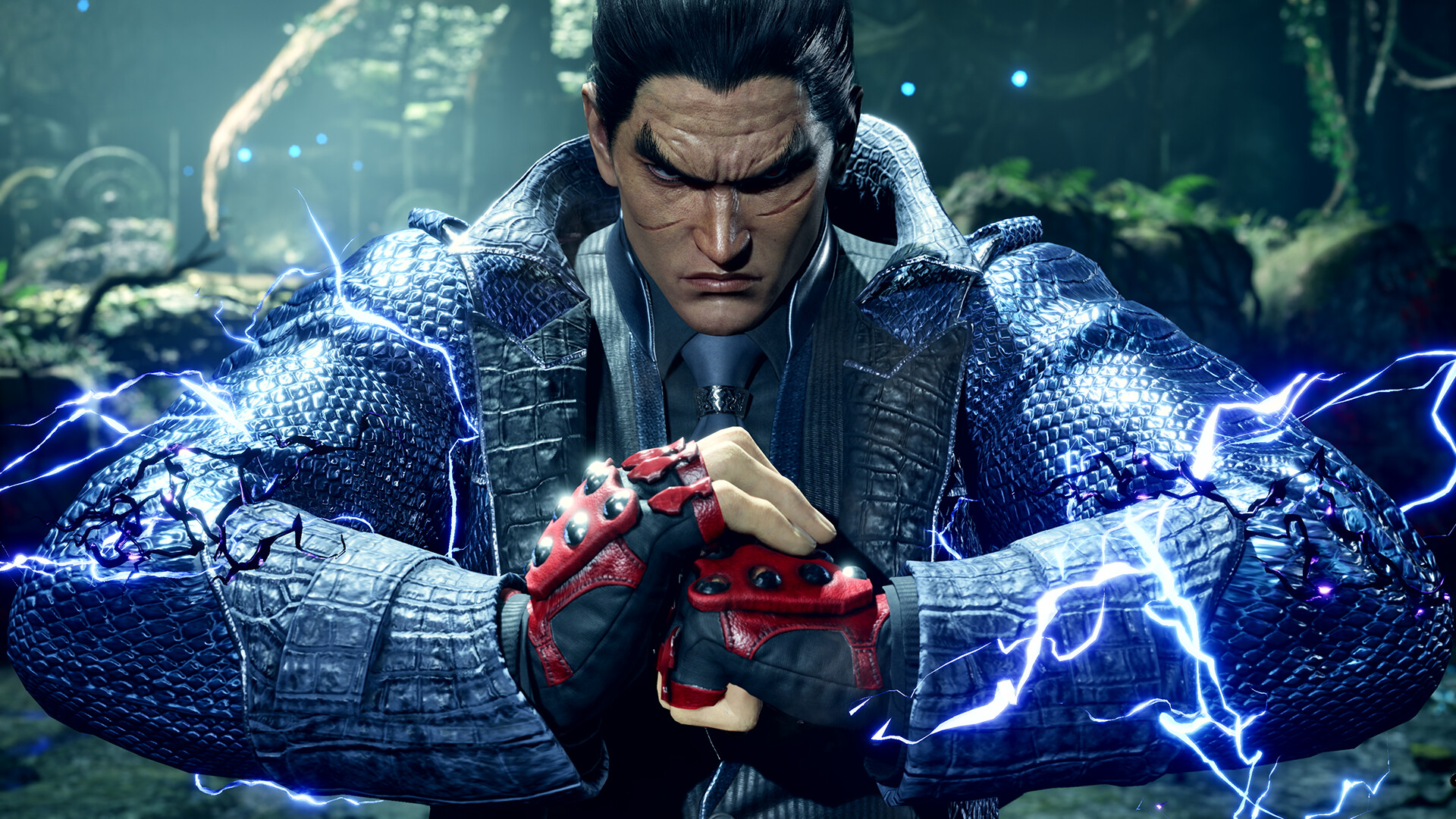 Scene from Tekken 8.
The roster issue that's worth naming is depth of differentiation. In Tekken 7 the gap between, say, Lee Chaolan's execution-heavy precision game and Gigas's simple-big-damage-simple-reads approach was wide enough that picking a character felt like a genuine commitment to a playstyle. Tekken 8 compresses some of that gap. Heat gives every character a damage ceiling and a pressure tool that looks different visually but lands in a similar strategic space. The game has not homogenised its roster — the differences are still real — but the system adds a layer of sameness that wasn't there before.
Arcade Quest and the Tekken 8 pitch to new players
Arcade Quest is the most direct attempt Bandai Namco has made in years to recruit players who bounced off previous entries. It is a light narrative mode where a custom avatar travels between fictional arcades, fights CPU opponents, and learns the game through escalating match conditions. The presentation is charming in a deliberately retro-anime way — neon-lit venues, rival characters with personality, dialogue that is sometimes actually funny — and the mode's pacing is careful. You are not thrown into frame-data theory immediately. You're asked to do specific things with specific characters in matches designed to make those things feel achievable.
It's better than Tekken 7's tutorial suite, which was a wiki article with animations. Whether it closes the genre's onboarding gap against titles like Street Fighter 6, which delivered a genuinely comprehensive World Tour mode, is a harder case to make. Arcade Quest works as encouragement; it functions less well as a teaching tool for the game's deeper movement system — the backdash cancelling, the Korean Back Dash, the specific timing of sidestep windows that still define high-level play. Those mechanics are documented in the separate Tekken 8 Fight Lounge tutorial tooltips, but the connective tissue between Arcade Quest's friendly matches and ranked online play still has a cliff in it.
Online and the infrastructure question
Tekken 8 ships with rollback netcode, which should be stated plainly because for a long time in the series it was not the standard. The implementation is good. Matches at equivalent connection quality feel responsive; the input lag introduced to smooth over latency is lower than what Tekken 7's delay-based code produced consistently. Cross-platform play is present. The ranked system uses a granular point-based tier structure that climbs from Beginner through to Tekken God, with visible rank floors at certain milestones that help stop rank anxiety from spiralling into a full reset.
The Fight Lounge, Tekken 8's social hub, is a curious choice. It tries to recreate arcade culture — your avatar sits at a cabinet, watches matches, challenges other players — but in practice most people bypass it for direct queue matchmaking, which is faster. The idea is appealing in the same way that fighting game community spaces are appealing, and Bandai Namco deserves some credit for trying to build a social layer rather than a raw lobby list. The execution is slow, visually noisy, and slightly confusing to navigate compared to simply pressing Find Match. Intention and result do not quite meet.
Where Tekken 8 sits against its own history
Tekken 5 is the game the community references when it talks about series balance — varied, readable, deep enough to sustain years of competition. Tekken 7 had a prolonged awkward adolescence before patches and DLC characters rounded it into something genuinely beloved. Tekken 8 is, right now, somewhere in between. It has the production quality of a series-best entry, a mechanical ambition that Tekken 7 lacked in its first year, and a visual identity that is coherent even when it is aggressively loud. It also has the Heat system's uneven character integration and an online social layer that outreaches its own usability.
The Story mode, for the record, is unhinged in ways that feel intentional — extended cutscenes, emotional confrontations between Kazamas, a production budget visibly being spent in real time. Fans of Tekken's peculiar soap-opera mythology will find it generous. People who wanted a tight, understated narrative will find it approximately forty-five minutes too long and thirty percent too many camera spins. Both reactions are correct.
The honest position
Tekken 8 is not for people who want fighting games to be quiet or considered or to respect their time in small doses. It is built for impact — every system, every visual choice, every menu transition is calibrated to make you feel like something important is happening. When that calibration hits, it produces some of the most satisfying fighting game moments available right now; a well-timed Heat activation into a full juggle, killed off with a wall-splat Rage Art, is genuinely spectacular in a way that transcends whether you earned it through superior footwork.
The design-systems skepticism is real, though. Heat is a strong idea with an uneven implementation across a roster that needed more time to absorb it uniformly. Arcade Quest is a promising onboarding tool that stops short of being a complete one. The online infrastructure, for the first time in the series' history, is actually good. Tekken 8 is a game with compounding strengths and specific, nameable weaknesses rather than vague ones — which, for a series entry, is actually the more encouraging condition. It will be patched and expanded, and the foundation is strong enough that those patches have something to work with.
What it is right now is the loudest, most technically ambitious, and — in the specific matter of getting new players to land their first real combo and feel something — most emotionally effective Tekken since 5. That is not nothing. The question of whether the Heat system's rough edges calcify into defining problems or get solved in post-launch support is the one that will determine whether Tekken 8 becomes the definitive entry people call it or just a very good one that needed another six months.
Editorial scoring
Reader Q&A
How long does it take to finish Tekken 8 hits so hard it almost forgives how loud it is?
Main story runs around 85 hours depending on how thoroughly you explore. Completionists can spend 2-3× that.
Is Tekken 8 hits so hard it almost forgives how loud it is good for newcomers to Fighting?
Yes — Tekken 8 hits so hard it almost forgives how loud it is is a great entry point. The early hours teach the systems gradually and the difficulty curve is reasonable.
Which platform should I play Tekken 8 hits so hard it almost forgives how loud it is on?
Console version is the most stable on launch. PC version benefits from the modding scene long-term.
Was Tekken 8 hits so hard it almost forgives how loud it is worth the launch-day price?
Released in 2024, and as of writing it holds up. Wait for a sale if you're price-sensitive — major discounts arrive within 6 months.
Are there DLCs or expansions worth picking up?
Wait for the Game of the Year edition — it bundles everything at a fair discount.
What did Bandai Namco get right (and what could be better)?
Bandai Namco nailed the moment-to-moment loop and the world-building. Pacing in the mid-game and inventory UX have room for improvement.
Reader comments