
The Witcher 3 still sets the bar nobody else can clear
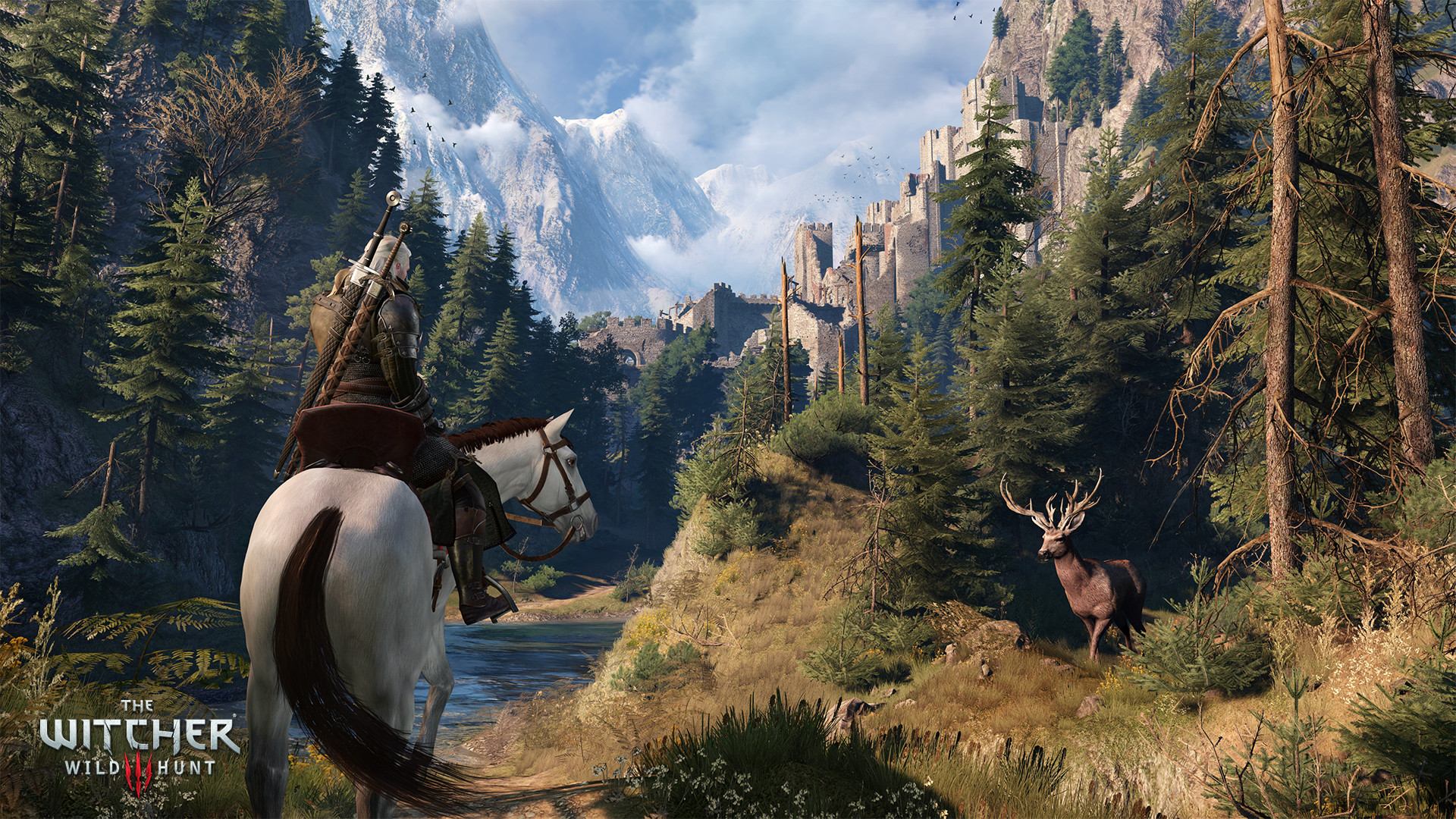
Ten years is a long time in games. Studios collapse, engines age into awkwardness, and narrative ambitions that once seemed audacious get absorbed into the industry's default settings. The Witcher 3: Wild Hunt shipped in May 2015, and it has spent the decade since doing something most games never manage: it keeps getting re-evaluated upward. Not because nostalgia is distorting the memory of it, but because the things it does well — the density of its incidental writing, the way its quest design refuses clean moral geometry — are genuinely rare. Still rare. That is the more embarrassing fact for everyone who came after.
CD Projekt Red released the Complete Edition with both expansions on current hardware in late 2022, and that version is now the definitive way to play. The base game alone runs somewhere between 50 and 100 hours depending on how much contract work and side content you pursue; Hearts of Stone and Blood and Wine add another 20 to 30 hours each, and Blood and Wine in particular plays like a developer exhale — looser, stranger, and in some ways more confident than the main campaign. The whole package asks a lot of your time. Whether it deserves all of it is a more complicated answer than its reputation suggests.
What the writing actually does
The Witcher 3's reputation sits almost entirely on its quest design, and the reputation is earned. The quest called "Bloody Baron" — the extended arc that runs through Velen and involves a disgraced military officer named Phillip Strenger, his missing family, and a folk-horror creature called the Crones — is the clearest example of how CDPR thinks about player decision-making. You are never told the correct answer, because there is no architecture in the game that knows what correct means. Strenger is an abusive drunk. He is also a man who loves his daughter in the only way he knows how. The Crones are monstrous. They are also the reason the orphans in the surrounding village eat. Every resolution closes one wound and opens another.
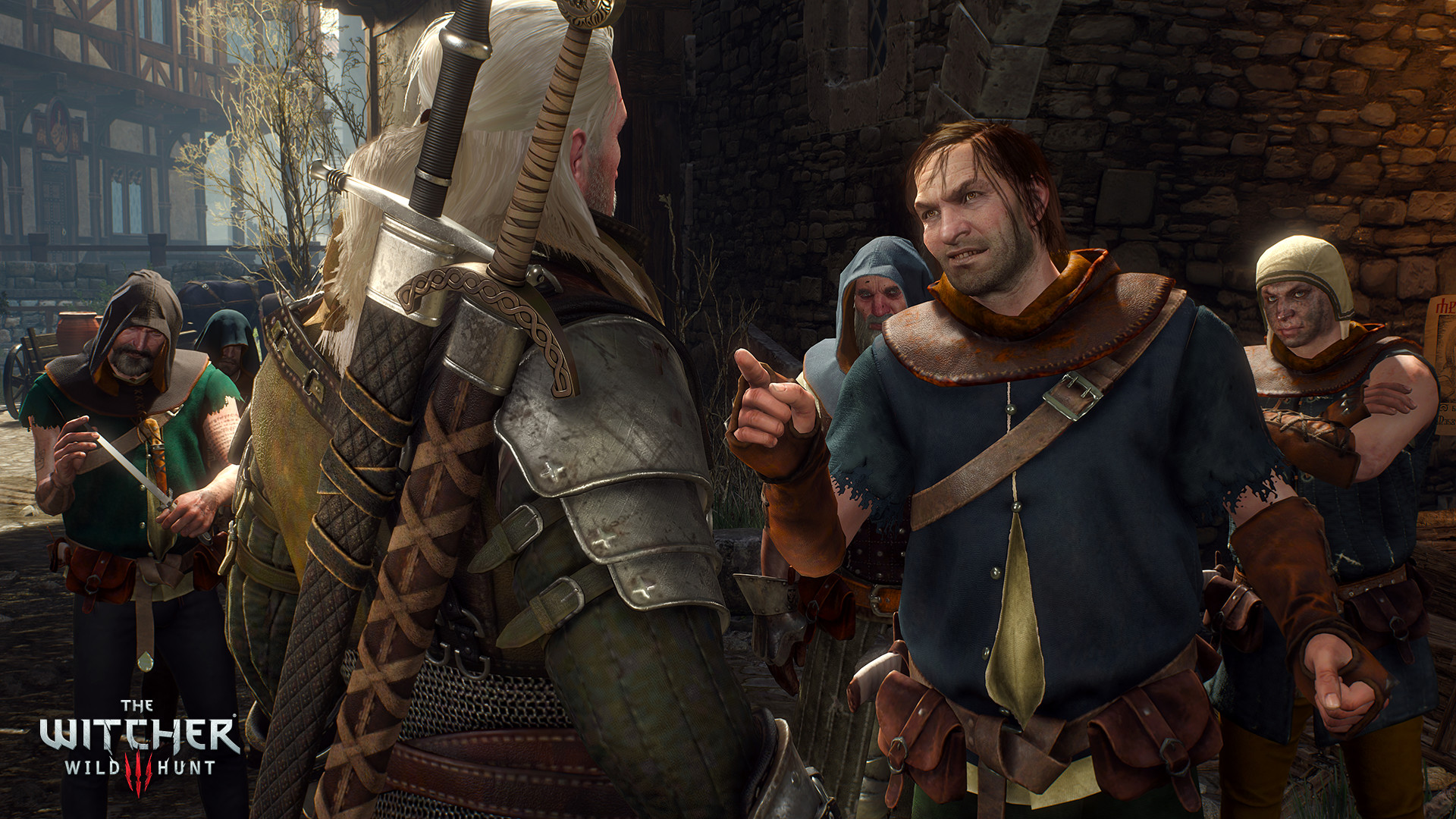 Atmospheric detail in The Witcher 3: Wild Hunt.
This structural approach — call it moral debt, where every significant choice simply redistributes suffering rather than eliminating it — runs through most of the main campaign's stronger quests. It is not nihilism, despite how it can read on a summary. It is just a refusal to underwrite the player's sense of heroic competence, which is rarer than it should be. Geralt himself helps here; as a protagonist shaped by two decades of source material, he arrives with a fixed personality and a dry, weary relationship to the world that most games would never risk. He does not need to be your avatar. He needs to be interesting. He is.
Where the combat earns and loses its credit
Combat in The Witcher 3 is serviceable until it isn't, and the gap between those two states is mostly a function of enemy type. The sword work — the rolling, the light-and-heavy attack sequencing, the sign casting — handles human enemies and mid-tier monsters with reasonable fluency on Normal difficulty; there's a rhythm to clearing a bandit camp that feels earned rather than automated. But the system begins to fray against larger enemies, particularly in the early and mid game before Geralt's build has enough investment in oils and decoctions to feel purposeful. The camera is the recurring villain, losing the player inside large enemy hitboxes in ways that feel less like a skill challenge and more like an engine limitation.
The card minigame Gwent deserves its own parenthesis, because it is genuinely well-designed and the game knows it — so much so that CDPR eventually built a standalone product around it. As embedded minigames go, it avoids the common trap of being a thin distraction; the unit-placement and weather-card mechanics have enough texture that a player who engages with it fully will find a small separate game running alongside the main one. Some players find it an intrusion. The option to ignore it almost entirely is there. But the merchants and innkeepers who serve as opponents are part of the world's texture, and skipping Gwent entirely means missing a quiet, unhurried way of being in Novigrad or Skellige that combat and exploration don't provide.
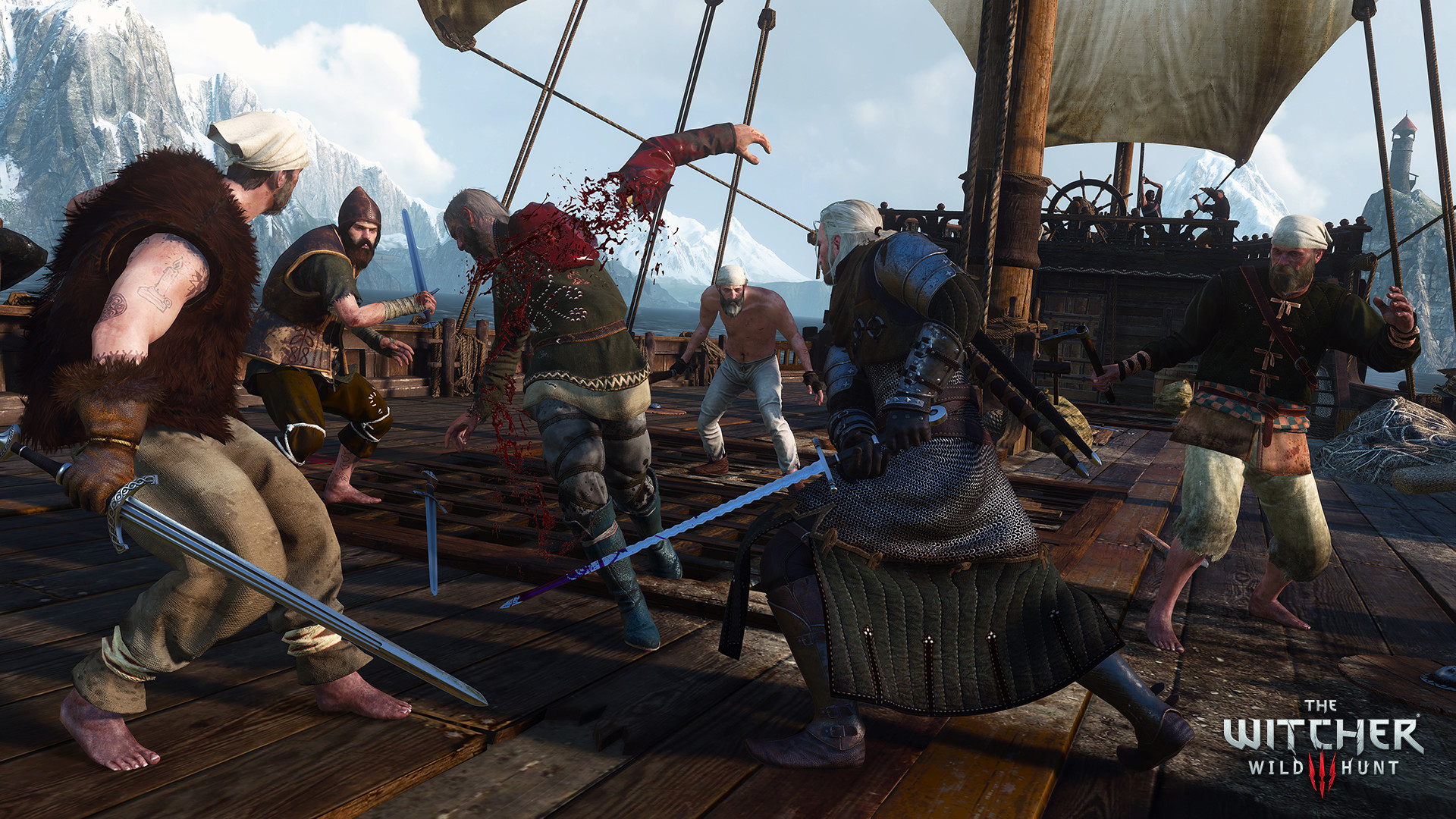 Combat encounter in The Witcher 3: Wild Hunt.
The open world: genuine and genuinely cluttered
The map question. CDPR made a conscious decision to build Velen, Novigrad, and Skellige at a scale that would register as "massive" against the standards of 2015, and the decision has a cost that has only become clearer with time. The world is full, in the sense that there is almost always something close to your position on the minimap — a question mark, an abandoned site, a monster nest. But fullness and density are not the same thing, and a significant portion of those markers resolve into looting a chest and moving on. The design philosophy that produced the Bloody Baron also produced twenty hours of mildly interesting filler, and the game does not always make it easy to tell which is which from the outside.
Skellige is the exception worth noting. The archipelago strips away some of the continental world's visual busyness and replaces it with a harder, cleaner geography — fog, grey water, longhouses, and a clan politics subplot that gives the region a distinct register from Novigrad's urban intrigue. The Skellige quests are not uniformly excellent, but the environment does real atmospheric work that feeds back into the writing, in the way that FromSoftware's level design informs its combat feel. The place and the story reinforce each other. That coherence is harder to find in Velen, which reads as a war-ravaged marshland well enough but sometimes feels like a biome serving story rather than a world with its own logic.
Blood and Wine is the version of the game it was building toward
Hearts of Stone has a tighter plot and an antagonist — the sorcerer Gaunter O'Dimm — who functions as the best single character in the entire package; his scenes have a theatrical menace that the main campaign's villain, the Wild Hunt's Eredin, never approaches. Blood and Wine goes somewhere else. Toussaint, the expansion's setting, is a deliberate tonal rupture: wine country, pastels, a surface pleasantness that the game eventually reveals as denial about a genuinely dark history underneath. The writing is doing something more ambitious than the main campaign in that sense — using the setting's apparent lightness as a slow-building counterpoint rather than just a change of scenery.
The Duchess Anna Henrietta is a better foil for Geralt than most characters in the base game, because she is right about things he would rather not examine and wrong about things she refuses to see. Their dynamic has the friction that good secondary characters provide — not obstacle friction, but the kind that makes a protagonist's position less comfortable and more legible. If you are going to spend 100-plus hours in this world, Blood and Wine is where the developers' confidence in their own material feels most secure.
Who this is actually for
Players who came to narrative RPGs through Baldur's Gate 3 or who found Elden Ring's environmental storytelling compelling will likely find The Witcher 3 rewarding on different axes than expected. It is not a systems-forward game; the build depth is real but not the point, and players looking for the kind of character optimization loop that Divinity: Original Sin 2 provides will hit a ceiling fairly quickly. What it is, structurally, is a delivery system for specific types of difficult writing — political, interpersonal, folkloric — wrapped in a world big enough that it takes time to understand what it is actually prioritizing.
There is also a patience requirement. The early hours in White Orchard are slow, and the first ten hours of Velen are doing a lot of contextual setup that only pays off later. Players who need strong mechanical hooks immediately will bounce off it. That is not a criticism so much as an accurate description of the ask; knowing it going in is genuinely useful.
The bar, and why it still stands
The Witcher 3 has real problems — a combat system that never quite matches the sophistication of the writing around it, a world large enough to dilute its own best work, a main villain who arrives with mythological weight and delivers very little of it. These are not minor complaints, and a game released today carrying them would be measured against a sharper field. But the thing that makes it a persistent reference point is not its scale or its production value, both of which have been equaled and exceeded. It is the writing's consistent willingness to make the player feel morally uncertain without making them feel punished, which remains one of the harder things to do in the medium.
No RPG since has threaded that needle with the same consistency — not Dragon Age: Inquisition, not Cyberpunk 2077, not even Baldur's Gate 3, which is a more technically accomplished game in almost every measurable respect but handles moral stakes differently, with more visible scaffolding. The Witcher 3 remains the cleaner argument that quest design, at its ceiling, is a form of fiction that games do not need to borrow from anywhere else.
Editorial scoring
Reader Q&A
How long does it take to finish The Witcher 3 still sets the bar nobody else can clear?
Main story runs around 47 hours depending on how thoroughly you explore. Completionists can spend 2-3× that.
Is The Witcher 3 still sets the bar nobody else can clear good for newcomers to Open-World RPG?
For total newcomers, expect a 5-8 hour ramp-up. Once you internalize the loop, it clicks.
Which platform should I play The Witcher 3 still sets the bar nobody else can clear on?
PC version offers the highest fidelity if your rig can handle it. Console versions are polished out of the box.
Was The Witcher 3 still sets the bar nobody else can clear worth the launch-day price?
Depends on backlog. The replay value justifies the price for genre fans; casual players should wait for a 40%+ discount.
Are there DLCs or expansions worth picking up?
Wait for the Game of the Year edition — it bundles everything at a fair discount.
What did CD Projekt Red get right (and what could be better)?
Strongest: art direction, audio design, set-piece variety. Weakest: late-game balance and a few persistent quest-log bugs.
Reader comments