
Yakuza 0 made me care about real estate through sheer dramatic force
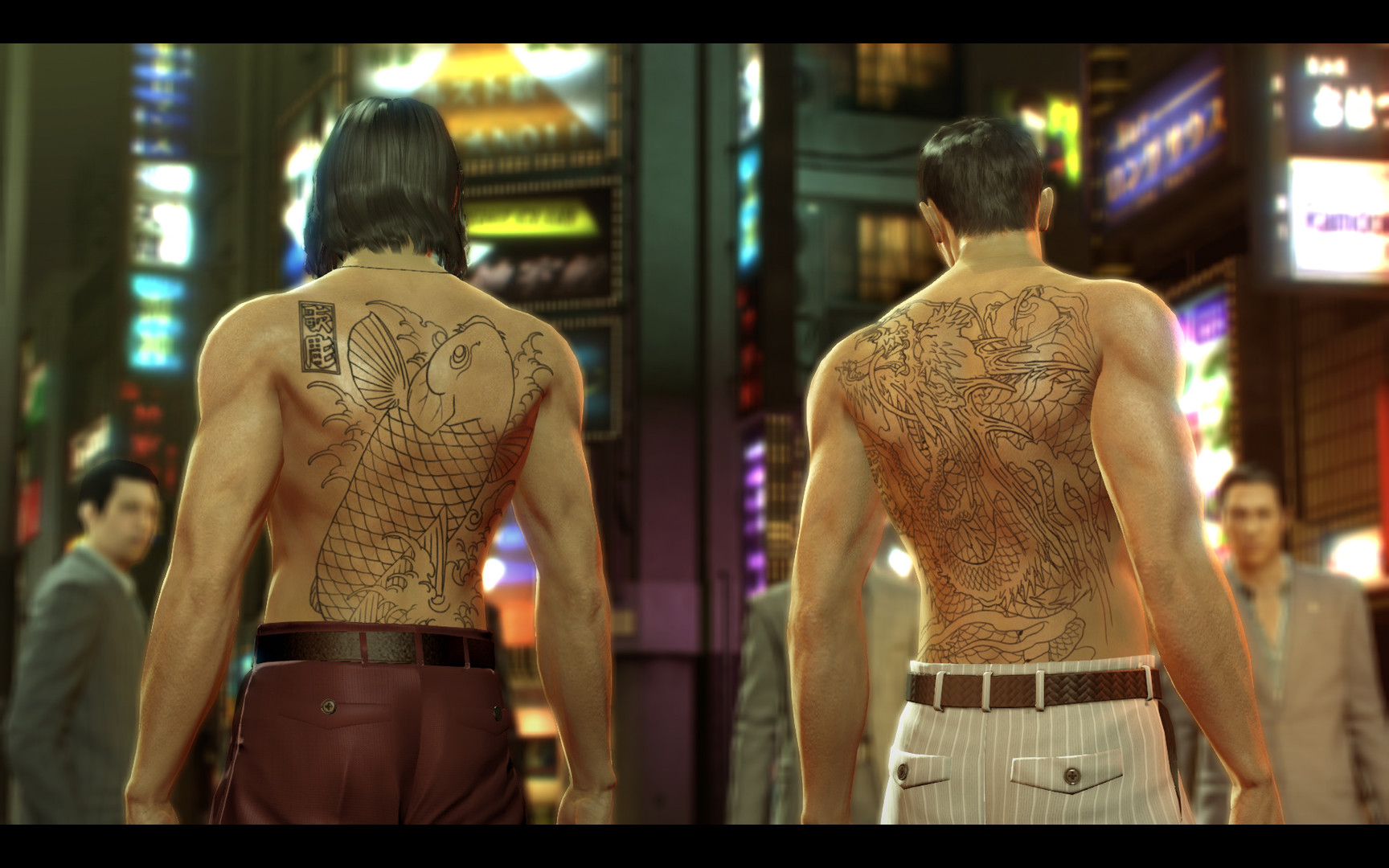
There is a moment in Yakuza 0 where Kazuma Kiryu, then a young, relatively uncomplicated enforcer in Kamurocho's criminal hierarchy, is handed a property management business and told to turn it into an empire. It is presented with the same deadpan seriousness as everything else in the game — cutscene, dramatic music sting, slightly overwrought monologue about pride and territory. And yet, against all reasonable expectation, the real estate minigame that follows is one of the more genuinely engaging progression systems in the entire Yakuza series. Not because it is mechanically sophisticated. It is not. But because Ryu Ga Gotoku Studio understood that investment in a system is almost always emotional before it is structural.
Released in Japan in 2015 and internationally in 2017, Yakuza 0 functions as a prequel covering the events that shaped both Kiryu and Goro Majima before the first numbered entry. The international release gave Western players a sensible entry point into a franchise that had already produced six mainline games, and the decision paid off. But the game's staying power is not purely a matter of franchise positioning. It earns sustained attention the old-fashioned way — by being genuinely weird, committed to its own logic, and occasionally brilliant at blending tonal registers that should not coexist.
Two protagonists, two cities, one structural problem
Yakuza 0 splits its campaign between Kiryu in Kamurocho and Majima in Sotenbori, alternating chapters as the two storylines slowly converge. Structurally, this is ambitious. In practice, the split creates an uneven pacing problem that the game never quite resolves. Kiryu's chapters have the tighter dramatic spine — his storyline involving the mysterious "Empty Lot" and the corrupt Dojima family is the cleaner thriller, with a clearer escalation of stakes. Majima's opening chapters, by contrast, ask players to invest in a cabaret club management game before the character's emotional arc has had time to land.
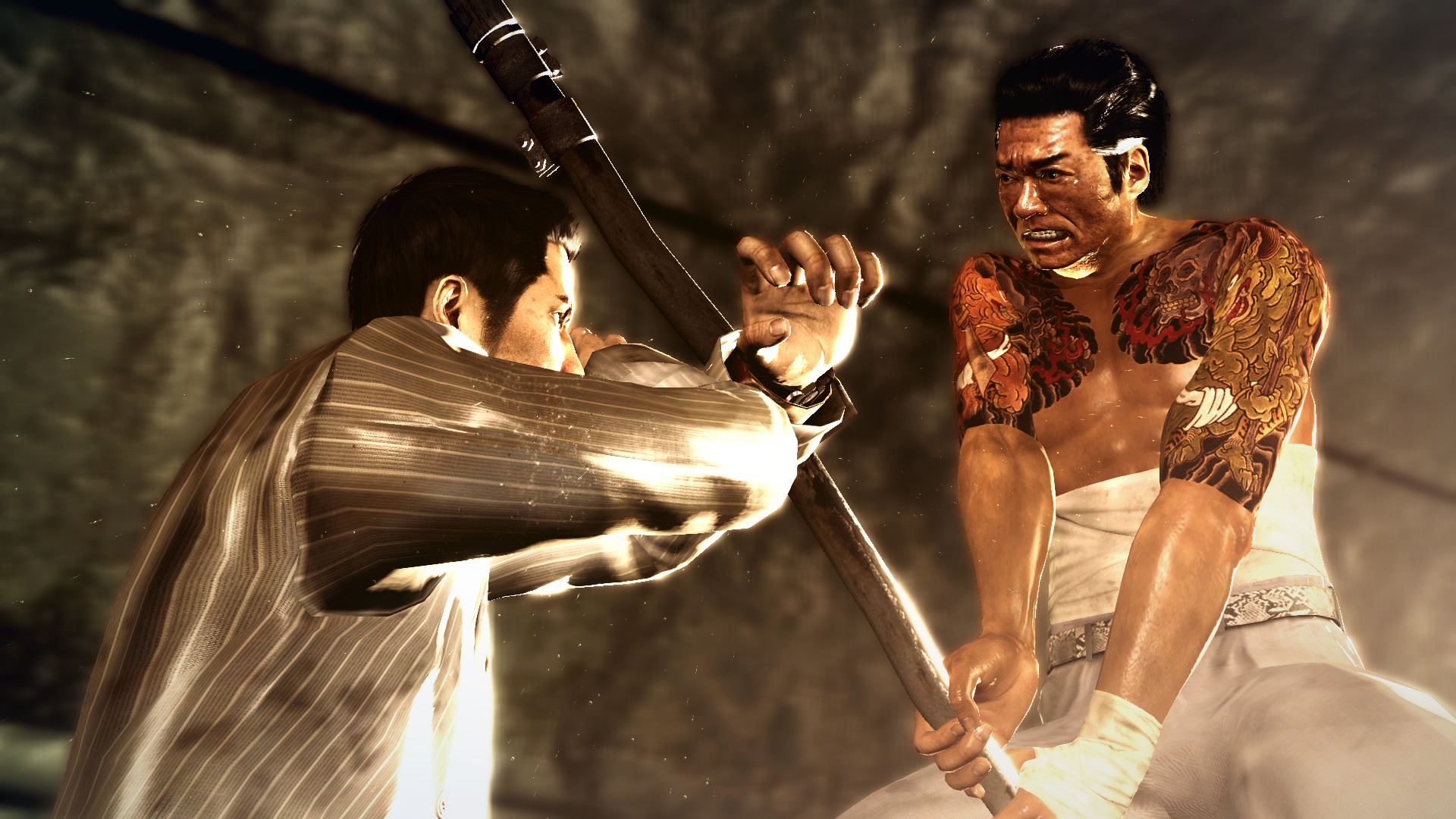 Scene from Yakuza 0.
Once Majima's storyline finds its footing around chapter five or six, it becomes the more interesting of the two — his relationship with Makoto Makimura, the blind woman at the centre of his arc, is handled with unusual restraint for a series not generally known for restraint. But the front-loading of business management content in his sections before players have reason to care about him as a person is a real friction point. It is not fatal, but it does ask for patience that players encountering Yakuza for the first time may not have been warned to bring.
The structural choice to keep the two storylines separate for so long is also what makes the eventual convergence satisfying; the game earns its reunion. So the pacing unevenness is less a flaw than a trade-off, and it is worth naming it clearly rather than glossing over it.
The fighting system is doing a lot of work
Combat in Yakuza 0 uses a style-switching system that gives both Kiryu and Majima three distinct fighting modes each, with a fourth unlockable through story progression. Kiryu's styles range from the balanced Brawler through the quick Rush style and the slower but devastating Beast mode, which lets him weaponise the environment with impractical, deeply satisfying efficiency. Majima's options include the wild, breakdance-inflected Breaker style and the precise, knife-focused Slugger mode. On paper, six styles across two characters is potentially overwhelming. In execution, most players will settle into one or two favourites and only reach for the others when the game forces a reason.
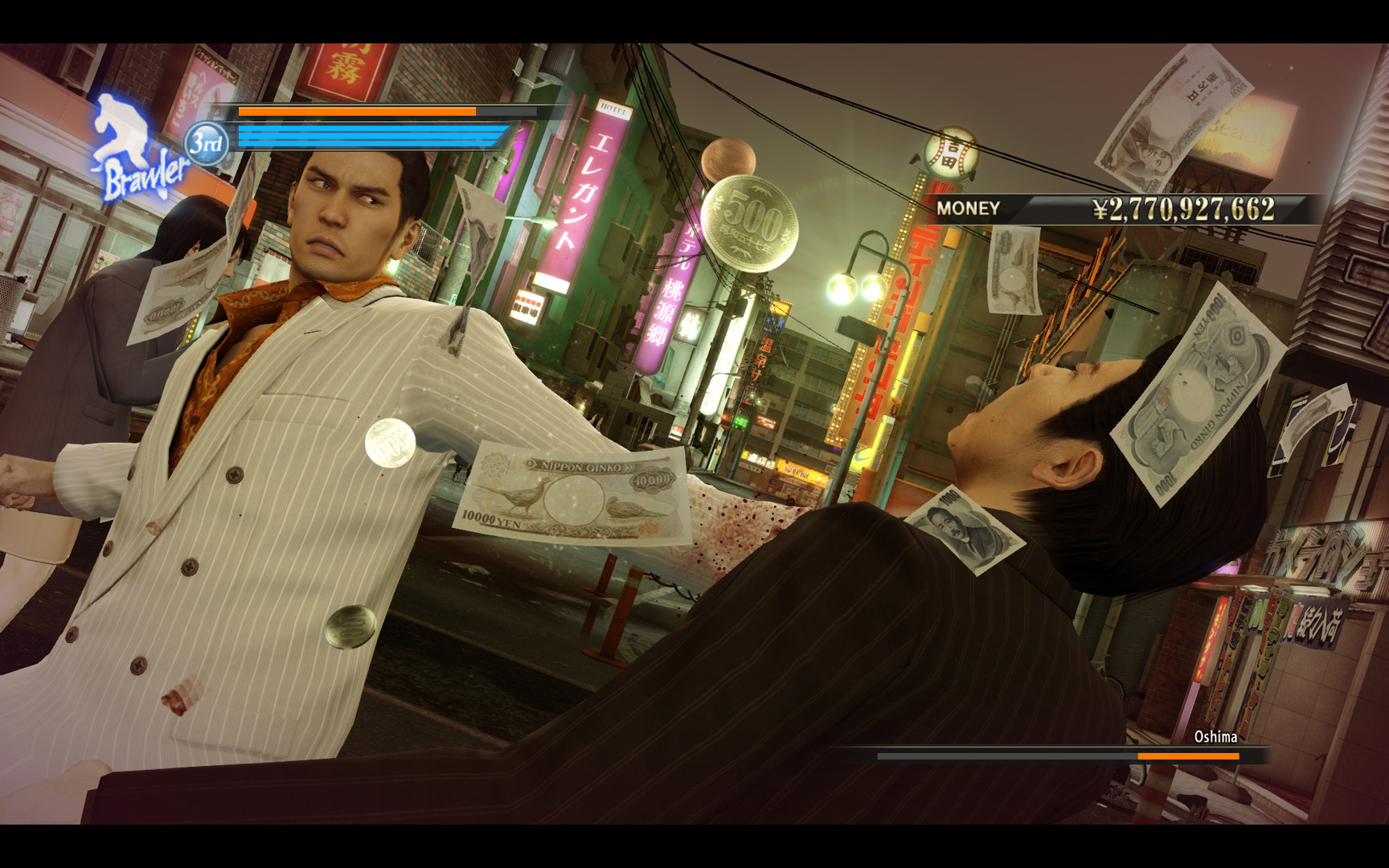 Scene from Yakuza 0.
That is not necessarily a problem. The combat system's real function in Yakuza 0 is expressive rather than strategic — it is a delivery mechanism for spectacle, for the game's specific flavour of exaggerated violence that manages to feel weightier than most brawlers because of the contextual environmental interaction and the heat actions (finishers triggered when a heat meter fills). Comparing it to, say, the more systemically intricate combat design in something like Sifu reveals its limits quickly; depth is not what this game is selling. What it is selling is feel, and feel it absolutely delivers.
On the subject of that real estate empire
Kiryu's business minigame involves acquiring properties across four districts in Kamurocho, hiring managers, and fending off rival managers who attempt to poach your territory through street confrontations. It is not complex. The district management loop is shallow by any sober metric — you assign a manager, the money accumulates, you occasionally fight someone. What makes it work is context. The game frames every property acquisition as a small act of territorial defiance against the Dojima family that is trying to destroy Kiryu, which means the accumulation of a property portfolio carries dramatic weight it has no business carrying.
Majima's equivalent, the cabaret club, is somewhat more hands-on — it involves recruiting hostesses, managing their attributes, and running shifts in real time while directing staff to match customers by personality type. It is the kind of minigame that would feel patronising in isolation but benefits enormously from the broader Yakuza tradition of treating every ancillary activity with complete tonal seriousness. The game gives Majima's club its own narrative beats, its own cast of supporting characters, its own arc. RGG Studio has always understood that side content only sticks if the game treats it as if it matters, which is a lesson that plenty of open-world developers have not yet absorbed.
The substories walk a deliberate tonal tightrope
Yakuza 0's substories — the series' term for side quests — run the full tonal spectrum from melancholy to deeply, deliberately absurd. Within a single evening's play, you might help a man reconnect with a childhood friend, coach a dominatrix on how to be more dominant, or be recruited into a clandestine network of people with unusual telephone-based relationships. The tonal whiplash is intentional; it is part of what defines the series' identity. But Yakuza 0 deploys it with more control than most entries.
The substory that briefly turns Kiryu into an underground disco dance battle champion is a fair encapsulation of the game's philosophy: play it completely straight, give it a proper stakes structure, make the opponent a genuine obstacle, and let the comedy emerge from the deadpan commitment rather than from winking at the camera. When the game does wink — there are a handful of substories that feel like they were written faster than the others — you notice the difference immediately. The average quality is high enough that the misses register as misses.
What it asks from first-time players
Yakuza 0 runs long. Completing the main story takes somewhere around 30 to 35 hours if you are not stopping for much; going deep into the side content adds another 20 to 40 hours depending on tolerance for activities like mahjong, shogi, karaoke, and the Pocket Circuit toy car racing circuit, which has its own upgrade economy and competitive AI bracket. None of these activities are mandatory. All of them are treated as if they are. The game does not distinguish between main content and side content in terms of production investment, which is either its greatest strength or a source of genuine difficulty for players who want to feel like they are spending time proportionately.
There is also the question of the cutscene-to-gameplay ratio, which is high even by series standards. The first hour barely lets you touch the controller. For players who arrived via games like Persona 5 or a long-form narrative RPG, this will feel normal. For players expecting something closer to an action game with story trimmings, the opening chapters will require recalibration.
The 1980s setting is not just aesthetic
Setting the game in 1988 Japan during the height of the economic bubble was the right call, and not just because it gives both protagonists a clean narrative excuse to be swimming in cash. The period inflects everything — the music, which leans heavily on city pop and synth-driven original compositions that are far better than they need to be; the fashion; the specific flavour of yakuza ideology that treats loyalty and hierarchy as near-religious obligations. The bubble economy setting also makes the money-accumulation gameplay loop feel thematically coherent in a way that a contemporary setting would not; everyone in 1988 Kamurocho is trying to get rich, so Kiryu building a property empire is period-accurate behaviour.
RGG Studio has always been attentive to period design — later entries like Yakuza: Like a Dragon handle contemporary Yokohama with similar care — but Yakuza 0's 1980s Kamurocho and Sotenbori feel particularly alive, dense with detail that rewards slow exploration. The neon sign density alone communicates more about the era than most history textbooks.
Yakuza 0 is not a perfect game; its pacing is uneven, its combat is more spectacle than system, and it asks a lot from players in its first few hours without giving much back immediately. What it offers instead is something harder to design for: genuine personality, the kind that comes from a studio that knows exactly what it wants to be and has built every system, every substory, and every thirty-second karaoke minigame to reinforce that identity. Games that know what they are tend to age better than games that are technically accomplished but unsure of their own point. Seven years on from the Western release, Yakuza 0 still knows exactly what it is.
Editorial scoring
Reader Q&A
How long does it take to finish Yakuza 0 made me care about real estate through sheer dramatic force?
Main story runs around 120 hours depending on how thoroughly you explore. Completionists can spend 2-3× that.
Is Yakuza 0 made me care about real estate through sheer dramatic force good for newcomers to Action-Drama RPG?
For total newcomers, expect a 5-8 hour ramp-up. Once you internalize the loop, it clicks.
Which platform should I play Yakuza 0 made me care about real estate through sheer dramatic force on?
Steam Deck handles this title well — verified compatibility on most recent patches.
Was Yakuza 0 made me care about real estate through sheer dramatic force worth the launch-day price?
Released in 2017, and as of writing it holds up. Wait for a sale if you're price-sensitive — major discounts arrive within 6 months.
Are there DLCs or expansions worth picking up?
The base game is complete; expansion DLC adds 10-15 hours of additional content if you want more.
What did Ryu Ga Gotoku Studio get right (and what could be better)?
Strongest: art direction, audio design, set-piece variety. Weakest: late-game balance and a few persistent quest-log bugs.
Reader comments