
Dirt roads before granaries — Manor Lords punishes impatience
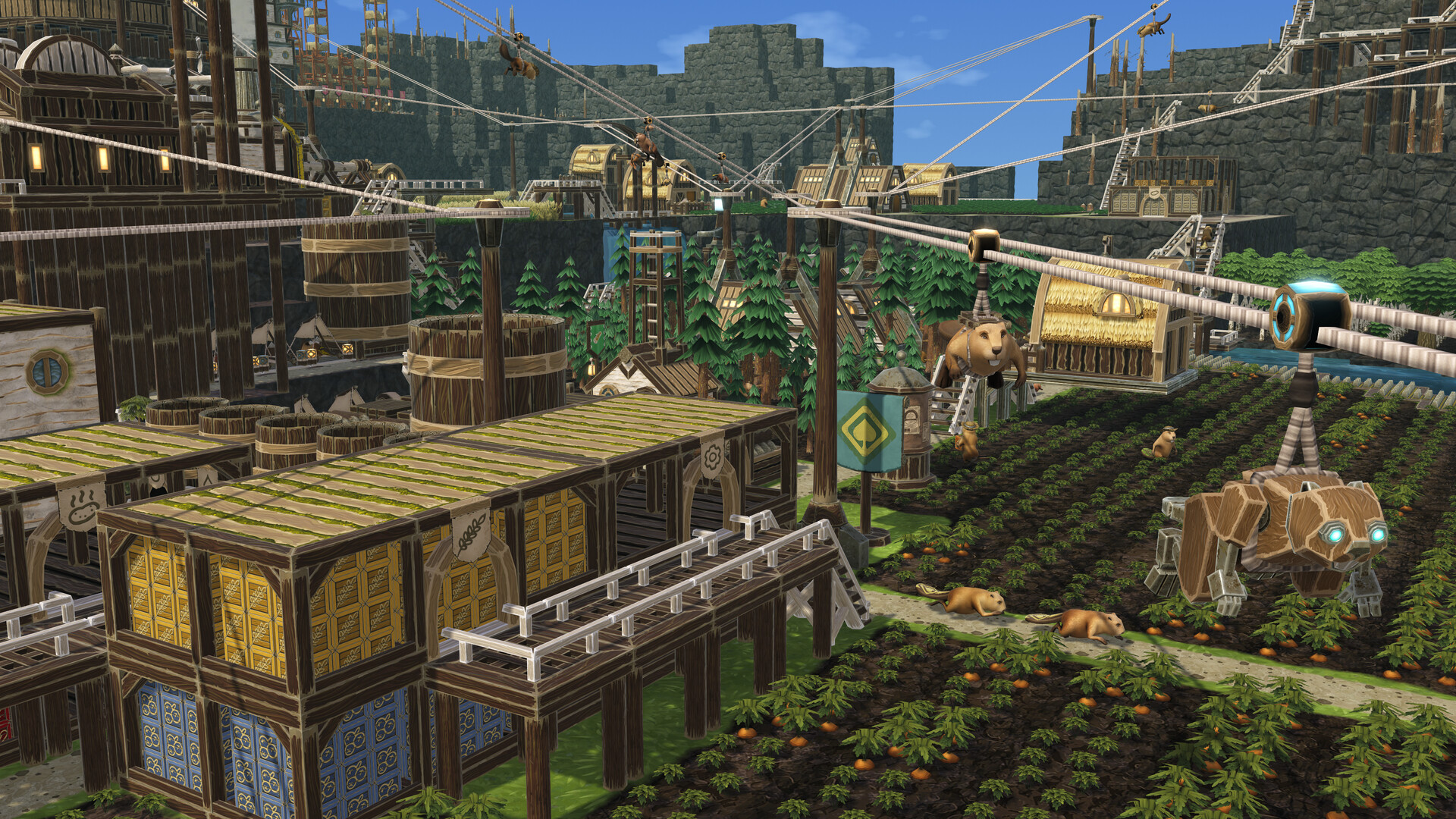
Picture this: your first manor lord has a granary, a church foundation, a well, and about forty burghers who are one bad harvest from eating the furniture. You built the granary first because it seemed important. It was not. What your people actually needed was a road connecting the logging camp to the woodcutter's lodge so that firewood could physically move between the two, and now it is October, timber is piling up at the wrong end of a muddy field, and winter is arriving with no particular concern for your planning errors. Manor Lords, the medieval city-builder from solo developer Greg Styczeń published by Hooded Horse, has a talent for teaching you exactly the wrong lesson first.
The game entered Steam Early Access in April 2024 and sold over a million copies inside the first week, which created an immediate problem: new players arriving with city-builder intuitions built on Anno 1800 or Cities: Skylines were blindsided by how literal its simulation runs. Roofing materials do not teleport. Oxen need path nodes to function. Fields need to be assigned before the sowing window closes, or you wait another year. None of this is explained with particular urgency, and the tutorials are polite to a fault. So here is the blunter version.
Roads are not decoration
Every building generates a service area shown as a soft-edged circle, but that circle only matters if people can reach it. Burghers walk to gather resources and return them to storage. If you place a granary, a marketplace, and a forager's hut but connect them with nothing, movement slows to a stumble. Villagers will eventually find their way, but 'eventually' in Manor Lords costs you production turns you cannot recover. Dirt roads are free. Lay them early, before you place the building, not after.
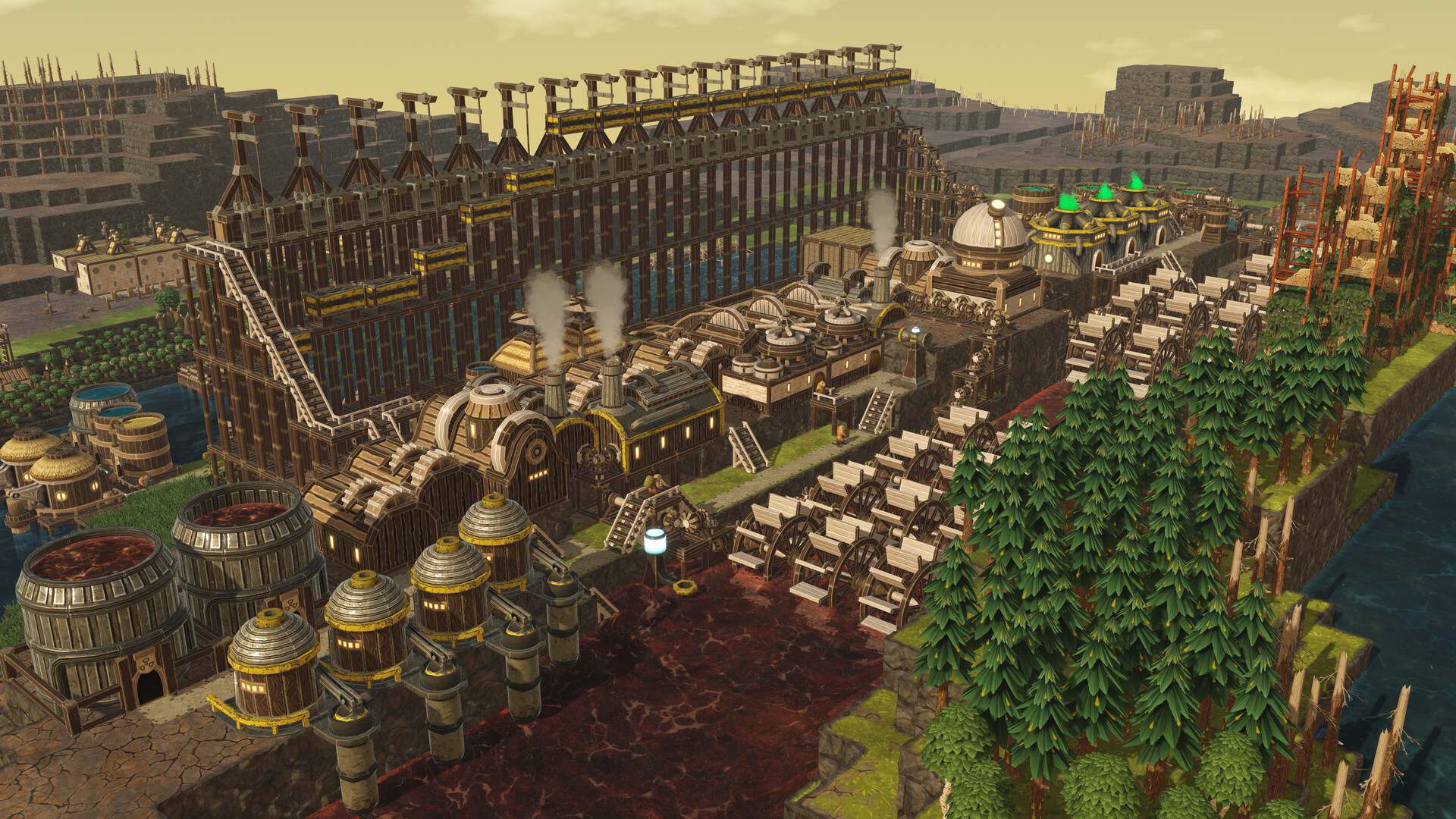 Atmospheric detail in Manor Lords.
The ox is worth its own paragraph. You get one ox initially, and it handles large hauling jobs — timber, stone, anything needed for construction. The ox uses road connections to navigate, and it will stand idle if the path between a resource deposit and a storage point is not properly drawn. Before placing any extraction building — a logging camp, a clay pit, a quarry — draw a road stub connecting it to your central storage. Takes ten seconds. Saves you ten minutes of staring at a construction queue that will not move.
The sowing window is not a suggestion
Agriculture in Manor Lords runs on a calendar. Spring is when fields get ploughed and sown; summer is growth; autumn is harvest. Miss the sowing window and the field sits empty for the full year. The game will not yell at you about this. You will simply open your food overview in December and notice the number trending the wrong direction. Fields need to be assigned to a farmhouse, the farmhouse needs enough families assigned to it, and the crop type needs to be selected before the season turns. Check all three.
On the crop rotation question: Manor Lords uses a three-field system where land loses fertility over repeated planting and needs fallow periods or emmer/rye swaps to recover. The temptation is to plant the same field every year because you need the food now. Resist this for at least one field. Keep one plot rotating through fallow, one in rye or emmer, and expand with a third field as soon as your family count allows. Longer term, fertility collapse will hurt you more than one lean spring. The game's fertility overlay (toggle it from the bottom bar) shows degradation clearly, and it is worth glancing at every March.
Approval is a slow burn, not a metric to chase
Burgher approval determines whether new families settle in your region. High approval, people arrive. Low approval, they leave or stop coming. The number is influenced by food variety, shelter quality, fuel availability, and church access. The mistake new players make is treating approval like a score to maximize immediately, which leads to overbuilding churches and markets before basic fuel and food chains are stable. Approval above 50 or so is sufficient for steady growth. You do not need 80.
Fuel is the one that bites hardest in the first winter. Every household needs firewood, and firewood comes from a woodcutter's lodge processing logs from the logging camp. If you have not established that chain before November, families will burn through any stockpile fast. The logging camp and woodcutter's lodge are two separate buildings requiring two separate worker assignments — that catches people out. Build both. Assign workers to both. Confirm the road between them exists. Then stop worrying about the church until spring.
Development points and the regional map
As your settlement grows, you accumulate development points spent on upgrades in the town hall. These range from extra storage capacity to trade unlocks to combat bonuses. There is a persistent temptation to go straight for military or trade upgrades, and that temptation is mostly wrong for the first in-game year. Prioritise the upgrades that reduce friction in your production chains first — extensions to resource harvesting or additional ox capacity matter more than a crossbow militia when your granary is already stressed.
The regional map is where Manor Lords diverges most sharply from flat city-builders. You start controlling one region, and neighbouring regions can be claimed through influence or military pressure. Resist expanding until your starting region has stable food, fuel, and basic goods production — roughly speaking, you want to feel slightly bored before you expand, not just comfortable. Claiming a second region before your first is self-sustaining splits your labour pool, halves your ox hauling efficiency across both territories, and generally produces a very educational collapse.
Trade: use it, do not rely on it
The trading post unlocks the ability to import and export goods. Import prices are high; export prices are modest. Trade exists to smooth shortfalls, not to build an economy around. You will see guides suggesting an early economy centred on exporting surplus leather or linen, and while that can work later in a run, leaning on trade before local production is established means you are permanently one bad merchant visit away from a shortage. The trading post is best used in three situations: filling a gap while a new production chain comes online, offloading genuine surplus, and acquiring iron for smithing before you have located a deposit.
One practical note on iron: it is non-renewable in most map configurations. You will find deposits marked on the regional map, but they run out. Plan your smithing output accordingly. Early game, buy iron spearheads from traders rather than burning your local ore on weapons you might not need yet. Save the smelted iron for tools and construction hardware, which provide consistent production bonuses across your entire workforce. The arithmetic on tool quality versus early military spending is not close.
The point where it clicks
Manor Lords has a reputation for punishing players, but that framing gives the game too much menace. It is not adversarial. It is just literal. Supply chains work if the roads exist, workers are assigned, and the calendar is respected. The punishment is not arbitrary — it is always traceable back to a specific decision at a specific moment. That is actually a generous design once you trust it. Most games obscure causality. This one hands you a ledger.
The moment the simulation stops feeling hostile and starts feeling comprehensible usually lands sometime in your second or third run, around the point where you instinctively draw the road before placing the building, check the sowing date in February, and hear the phrase 'fuel shortage' without panic. It is less a game about mastering complex systems and more a game about learning to slow down and look at what is actually happening before deciding what to build next. The dirt road before the granary is not a penalty. It is the lesson.
Quick facts
Is this guide spoiler-free?
We avoid story spoilers. Mechanics and systems are explained directly, but plot beats are not covered.
How current is this guide?
Updated for the most recent patch as of June 2026. Major balance changes are noted inline.
Do I need DLC for these strategies to work?
No. Everything covered here applies to the base game. Where DLC content is referenced, we mark it clearly.
Will following this guide work on hardest difficulty?
Mostly — yes. A few strategies become tight on hardest difficulty; we flag those where relevant.
Reader comments