
Los Santos rewards the patient criminal, not the reckless one
Picture this: you've just pulled off a three-star Merryweather heist approach, made it out of the Maze Bank Arena with a full bag, and then a cop car clips your bumper on the way to the drop. You panic, cut through an alley, and thirty seconds later you're looking at a six-star wanted level, a destroyed getaway vehicle, and zero payout. Grand Theft Auto Online will do that to you repeatedly until you understand what it actually rewards, which is not aggression. It's restraint.
This guide is written for people who either just arrived in Los Santos or have been grinding Simeon's export requests for weeks and wondering why their bank balance never moves. GTA Online's economy and structure are deliberately opaque in ways that benefit Rockstar's Shark Card sales. Strip that away and the underlying game is a fairly coherent criminal sandbox with a clear progression ladder — if you know where to put your feet.
Ignore the open world for the first few hours
The temptation when you drop into a populated Los Santos server is to steal a car, shoot at strangers, and see what happens. What happens is you die, lose whatever small cash you're carrying, and respawn with a slightly worse attitude. The open session is essentially a PvP zone full of players with armored Oppressor Mk IIs who have been grinding since 2015. You are not ready for them yet, and trying to compete is a waste of time.
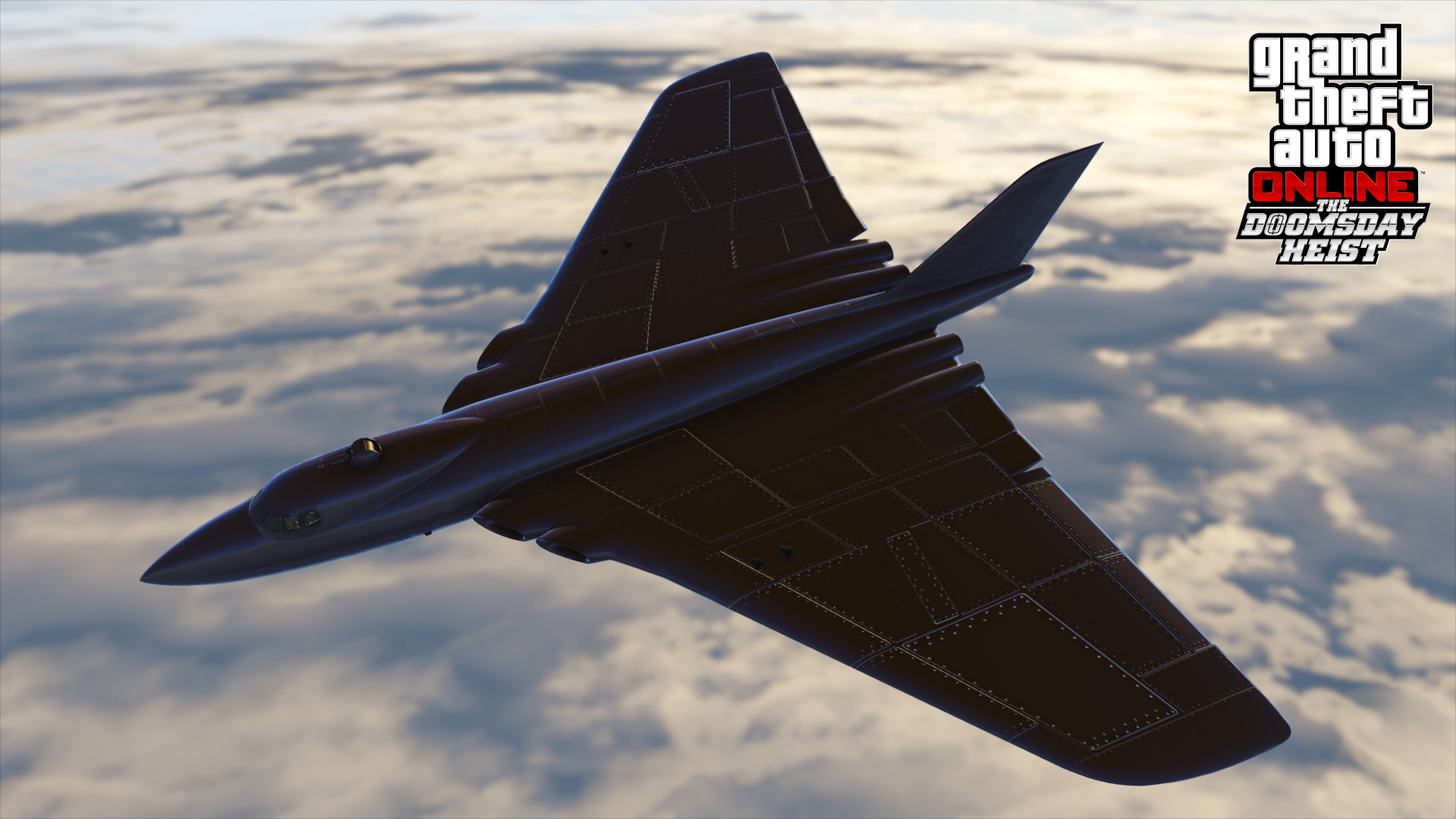 Scene from Grand Theft Auto V.
Instead, spend your first two or three hours exclusively in contact missions — the jobs offered by characters like Ron, Lester, and Martin Madrazo from your in-game phone. These missions are instanced, pay a flat rate, and teach you the map. Ron's 'Blow Up' series in particular is a reasonable earner at low rank and forces you to learn the industrial district west of the airport, which is where a lot of later business infrastructure sits. The payout per hour isn't impressive, but you're not grinding for money here. You're learning geometry.
Once you hit around rank 12 to 15, Lester starts unlocking heists. Do not skip this. The Fleeca Job can be done with one other player and pays around 57,500 in your cut on normal difficulty. More importantly, it introduces the heist structure that underpins everything expensive in the game.
The business model that actually works
GTA Online has roughly three eras of added content, each with a preferred money-making loop. The oldest approach — robbing stores, selling stolen cars to Los Santos Customs — barely registers on the current economy. The mid-era content, specifically the CEO and MC business structures introduced around 2016 and 2017, remains the most accessible entry point for players without a large existing bankroll.
The CEO office costs around 1,000,000 in-game currency, which sounds steep until you realize it unlocks cargo sourcing. You source crates (in small, medium, or large shipments), store them in a warehouse, and sell when full. A full large warehouse sells for roughly 2,200,000 — but that number only matters if you sell it efficiently. Solo selling a full large warehouse is almost guaranteed to end in a failed mission because Rockstar spawns aggressive NPC interceptors and other players can see your sale mission on their map. Sell in a group, sell medium warehouses if playing alone, and sell when the server population is low.
The newer Cayo Perico heist, added in December 2020, changed this calculus significantly. It's the only heist in the game completable solo, it has no setup fee beyond the Kosatka submarine (which costs just under 2,200,000 but pays for itself in two or three runs), and on hard mode with the Panther Statue as the primary target the payout sits comfortably above 1,400,000 per run. Most experienced players can complete it in under 45 minutes. If you have one goal in GTA Online, it's saving for the Kosatka.
Spending money before you have it
New players almost universally make the same purchasing mistake: they see something flashy — usually an Oppressor Mk II or an armored Insurgent — and they drain their account to buy it before they can support the cost of losing it repeatedly. The Oppressor Mk II costs around 8,000,000 fully upgraded, and without a Terrorbyte and a Nightclub to fund the passive income that sustains that kind of spend, you'll be back to contact missions within a week.
Prioritize in this order: a modest apartment (the Alta Street apartment at around 200,000 unlocks heists), an office, a medium warehouse, the Kosatka. After the Kosatka is paid off, everything else becomes negotiable because Cayo Perico will cover your costs. Weapons follow the same logic. The Heavy Sniper Mk II with explosive rounds and the Minigun cover ninety percent of combat situations. Don't buy the entire Ammu-Nation catalog on your first payday.
The Nightclub, added in the After Hours update, is worth mentioning separately. It's passive income — up to 50,000 per in-game day if populated and stocked — but it only generates product from businesses you already own. It's not a starter purchase; it's a capstone that multiplies infrastructure you've already built. Don't rush it.
How to handle other players
Griefers — players whose stated purpose is to destroy other players' cargo and vehicles for sport — are a structural feature of GTA Online, not a bug. Rockstar built the tension in. What they also built in are workable countermeasures that most newcomers don't know about.
Passive Mode costs around 100 in-game currency to activate and makes you untargetable by other players. Use it when you're traveling between missions without cargo. You cannot use weapons in Passive Mode, but you can drive and you cannot be shot. The bigger tool is the solo public session, achieved by manipulating your console's network settings or using a VPN on PC to create a session where you're technically in a public lobby — which allows businesses to operate — but alone. This is not a glitch; it's an open secret that Rockstar has tolerated for years because removing it would drive away the casual player base that funds the ecosystem.
When you do engage in PvP, respect the minimap. A red dot appearing and then disappearing usually means someone is in a vehicle with stealth upgrades or has gone off radar using a collected power-up. Don't chase a dot that went silent. You won't win that engagement.
The missions worth your time, and the ones that aren't
GTA Online has accumulated an enormous amount of content since 2013, not all of it worth engaging with at every stage. Adversarial modes like Motor Wars and Overtime Rumble have variable payouts and depend on matchmaking that often takes longer than the mission itself. Unless there's a double-money event week — Rockstar cycles these regularly and announces them on the Newswire — skip them.
The weekly Rockstar-highlighted event bonuses are genuinely important to track. During a double-money week on Cayo Perico, a single run can cross 2,800,000. During a double-money week on contact missions, grinding Ron's work for two hours becomes a reasonable catch-up strategy for players still building capital. Check the Newswire on Tuesday when the rotation resets and plan your session around whatever's boosted.
The Diamond The venue heist, introduced in 2019, deserves its own mention because it's the best co-op content in the game outside of Cayo Perico. The Aggressive approach is the fastest but punishing if your crew can't shoot. The Silent & Sneaky approach requires more coordination but forgives individual mistakes. If you have two reliable players and a few hours, the Big Con approach — where you enter the the heist sequence in disguise and walk out before anyone raises an alarm — is both the most cinematic and the most consistently profitable.
What the game won't tell you
GTA Online obscures its best systems because transparent accessibility would reduce Shark Card purchases. The game is designed to feel overwhelming so that spending in-game-currency on in-game currency feels like a reasonable shortcut. It isn't, mostly because the shortcut skips the part where you learn how not to lose everything in one bad minute.
Insurance on vehicles is not optional — it's around 9,500 per expensive car and the game buries the payment in the interaction menu. If your car gets destroyed and you don't claim it, it's gone. MOC (Mobile Operations Center) storage protects weaponized vehicles during sell missions. The Terrorbyte's client jobs pay a flat fee per run with no setup cost and scale reasonably well for solo players who want a break from heist prep. None of this is explained in a tutorial.
Los Santos is a city that punishes haste and rewards players who treat it like a long-running project rather than an afternoon. The players who've built the most impressive operations in the game aren't the ones who fought the hardest — they're the ones who picked their fights carefully, protected their assets obsessively, and let the passive systems quietly accumulate while they slept. That's the actual game, and once you see it, the chaos on the surface stops being frustrating and starts being background noise.
Quick facts
Is this guide spoiler-free?
We avoid story spoilers. Mechanics and systems are explained directly, but plot beats are not covered.
How current is this guide?
Updated for the most recent patch as of June 2026. Major balance changes are noted inline.
Do I need DLC for these strategies to work?
No. Everything covered here applies to the base game. Where DLC content is referenced, we mark it clearly.
Will following this guide work on hardest difficulty?
Mostly — yes. A few strategies become tight on hardest difficulty; we flag those where relevant.
Reader comments