
From CS:GO skins to NFT cosmetics — what changed, what didn't

Tradable in-game cosmetics are older than most people remember. The Steam Community Market launched in 2012, and CS:GO's weapon skins followed in 2013 — a system so well-designed that a decade later, StatTrak AK-47s were changing hands for figures that would embarrass a mid-tier secondhand car. The blockchain moment arrived around 2021 promising to do the same thing, but on the open web, without Valve's permission and without Valve's cut. What it mostly delivered was a lesson in why infrastructure matters more than ideology.
That lesson maps interestingly onto how heist-themed games have approached their own economies of objects and access. The Diamond Casino Heist mission in Grand Theft Auto V wraps its score — the cash, the gold, the artwork — in layers of planning, disguise, and contingency; the reward feels earned because the systems around it are coherent. NFT cosmetics, by contrast, were frequently the reward sitting in a void, disconnected from any system worth caring about. The comparison is a little unfair, but it is also instructive.
What Valve actually built
The CS:GO skin economy worked because Valve controlled every layer: the drop logic, the authentication, the marketplace, the float value system that made two nominally identical rifles actually distinct collectibles. A Factory New M4A4 | Howl and a Battle-Scarred one share a name but not a soul. That granularity gave collectors something real to care about. The fiction of scarcity was enforced by code running on servers Valve owned, which meant the fiction held.
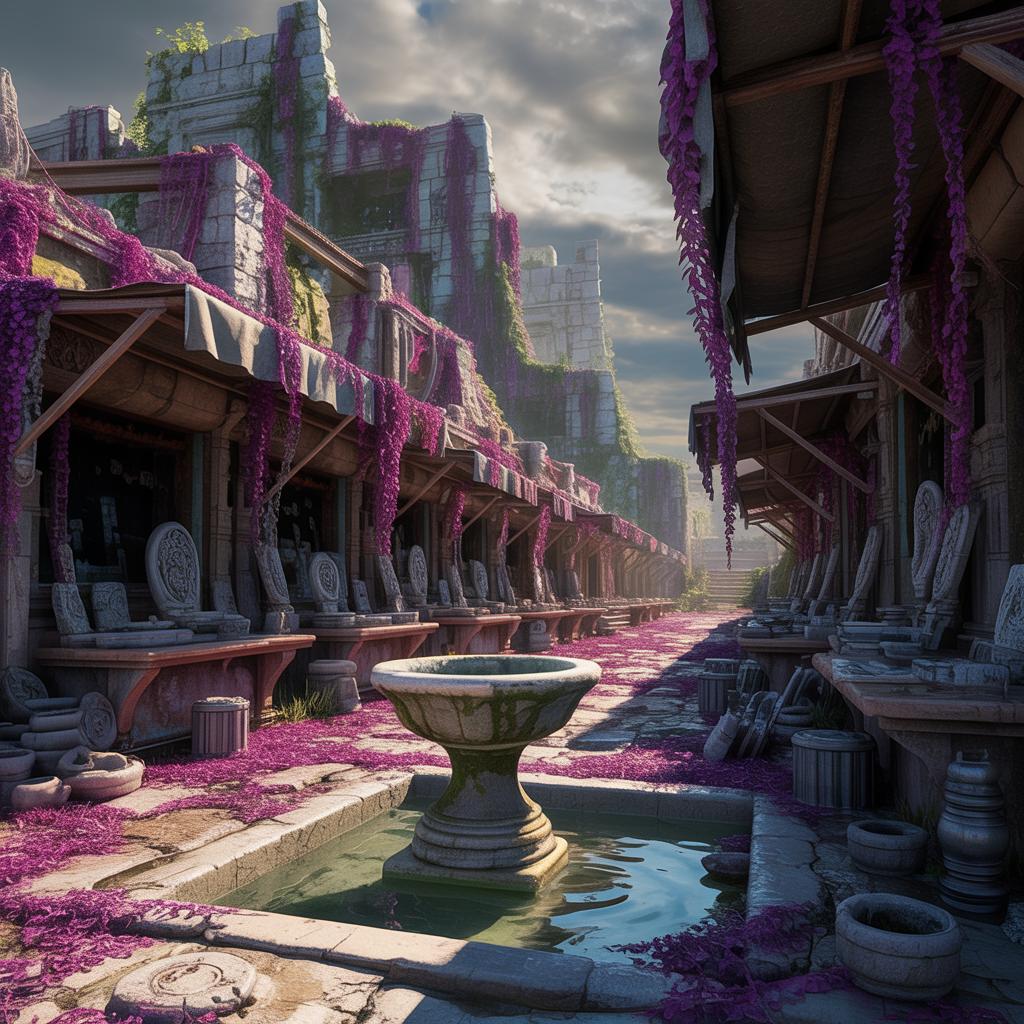 Editorial illustration of the scene.
Dota 2 extended this further with Arcana-tier cosmetics that changed animations, sound effects, and ambient voice lines — items so integrated into play that you felt their presence in every session. Supergiant does something structurally similar with Hades, where cosmetic keepsakes carry relationship context; they are never purely decorative. The point is that meaningful cosmetics have always required meaningful design work behind them, not just a provenance ledger.
What the blockchain pitch actually was
The NFT cosmetics argument, stripped to its core, was about portability and ownership independence. If your sword skin lived on a public chain rather than inside Activision's servers, the theory ran, no publisher could revoke it, no shutdown could erase it, and you could theoretically carry it across games. This was not an absurd idea. It addressed a real anxiety: Paragon, Epic's MOBA, was shut down in 2018 and every item players had acquired went with it. That stings.
The execution, however, almost universally ignored the part where the cosmetic needed to actually be in a game worth playing. Axie Infinity's creatures were the most prominent example — tradable, chain-verified, and embedded in a game whose design loop was thin enough that the creatures' external value was the primary draw. When that value collapsed in 2022, the ecosystem had nothing underneath it. A Payday 3 vault scenario takes its inspiration from cinematic heist films precisely because the tension has to come from somewhere; the loot cannot carry the whole weight.
The heist genre's approach to object value
Games like Hitman's Mendoza mission and the Yakuza series' venue management mini-games understand that objects derive meaning from context. In Hitman: World of Assassination, the wine bottle that functions as an assassination tool is memorable because the mission's systemic logic makes it so; the same object in a less coherent game would be inert. Yakuza's arcade and cabaret club subgames demonstrate Sega's commitment to side-content depth — the substories give the venues weight that pure mechanical novelty cannot manufacture alone.
The New Vegas Strip operates as a hub-zone with branching faction quests, and its slot machines as setting decoration serve the world-building rather than existing as freestanding activities. Obsidian knew that the venue design needed to support the narrative stakes, not the other way around. That discipline — context before collectible — is exactly what most NFT projects reversed.
What actually changed, technically
A few things did shift. The NFT moment accelerated serious industry conversation about item portability and player-owned data, even among studios that wanted nothing to do with public blockchains. Ubisoft's Quartz experiment with Ghost Recon Breakpoint was widely mocked, but it prompted Ubisoft itself to publish post-mortems acknowledging that players did not feel the ownership benefit compensated for the friction. That kind of institutional honesty is genuinely useful, even when it arrives via embarrassment.
On the infrastructure side, the gap between a Valve-authenticated skin and a chain-verified asset narrowed slightly. Steam's item authentication is still more practically robust for active games, but the tooling around NFT provenance improved enough that the portability argument became at least technically coherent by 2023 — just stranded without games willing to honor cross-platform item contracts, which requires competitor studios to cooperate on standards they have no incentive to share.
What didn't change at all
The fundamental problem was never technological. It was that players were being asked to care about ownership of cosmetics in games built to make those cosmetics the point, rather than games where cosmetics enhanced something already worth caring about. Red Dead Redemption 2's poker sequences work because Arthur Morgan's face across a table carries dramatic weight accumulated over forty hours of play; the card game subgame is a pressure valve for the narrative. Strip that context out and you have a card game subgame. Nobody is writing essays about it.
CS:GO skins attached themselves to millions of hours of competitive play that players were already invested in. The StatTrak counter ticking up on a rifle is meaningful because the rifle has been through genuine competition. NFT cosmetics, almost without exception, were trying to generate that sense of investment from the token itself rather than from play. The technology was the content, and technology alone has never been enough.
The 15-year retrospective is not kind to the blockchain cosmetics pitch, but it does clarify what Valve and a handful of studios were doing right all along: building systems dense enough that objects inside them become legible as personal artifacts. Until someone builds a game that compelling and integrates chain-verified ownership into it without making that ownership the reason to play, the CS:GO model remains the ceiling, not the floor.
Quick facts
What's the standout set-piece in this game like?
Mission-driven and well-paced. Multiple approach angles — stealth or loud — and consequences depend on enemy AI and scripted triggers. Most players settle into a rhythm by the second attempt.
How long is the major mission arc in this game?
Around 4-8 hours depending on how thoroughly you scout. The full campaign is significantly longer; this arc is one set-piece among many.
Do I need prior series knowledge before playing this game?
Most entries in this lineage stand alone. Helpful context if you've played the predecessors, but not required. Each title resets the player's frame of reference.
What makes a heist-style sequence land?
Sightline clarity, NPC density, audio cues, set-piece pacing. When all four align, the sequence is memorable. When even one's off — say, flat NPC behaviour — it falls flat.
Is this game accessible to newcomers to the genre?
Generally yes. Systems are introduced gradually and difficulty is forgiving on default. Veterans will get more from the deeper systems, but the surface layer welcomes new players.
Which films influenced this design lineage?
Soderbergh's Ocean's Eleven, Mann's Heat, and Scorsese-era crime films are the obvious roots. Designers from this subgenre have cited those films in interviews going back twenty years.
Reader comments