
Crusader Kings III turns family trees into crime scenes
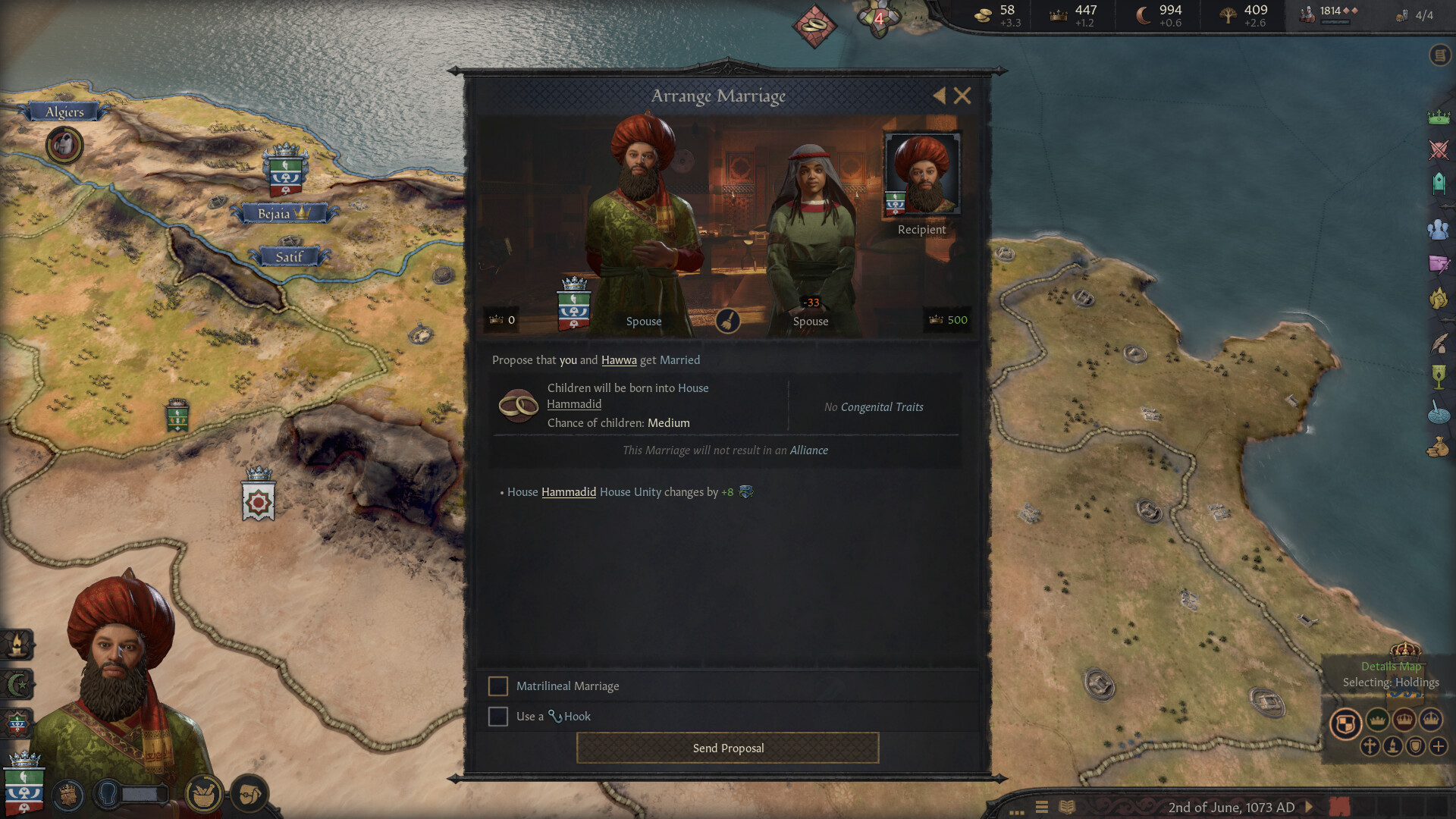
My first ruler died choking on a fishbone. Not metaphorically — the game generated an event card, I clicked the wrong option, and Duke Rikard of Brittany was gone at fifty-three, leaving a twelve-year-old heir with a club foot, a resentful uncle, and a treasury that barely covered the next war. That was hour two. By hour thirty-two, I had stopped thinking of this as a strategy game and started thinking of it as a forensic exercise: who killed whom, who stands to gain, and which cousin is probably lying about their piety rating.
Crusader Kings III launched in September 2020, and Paradox Development Studio has spent the years since piling on expansions — Royal Court, Fate of Iberia, Tours and Tournaments, among others — each tugging the simulation in slightly different directions. The base game reviewed here is the post-1.12 build, patched to its current state, which means some rough edges from launch are smoothed and a few new ones have been introduced. After 32 hours, largely across a single continuous campaign as a Breton duke clawing toward a kingdom title, here is where it sits on the grand strategy ladder.
The dynasty is the game
Most strategy games treat your leader as a unit — a stat block with a portrait. CKIII treats your leader as a person with baggage. Your ruler has personality traits that are not decorative: a Paranoid ruler will refuse certain council actions, a Gregarious one gets bonuses from throwing feasts that cost actual gold. When your character dies and you inherit through their child, you carry forward the dynasty's reputation and its grudges, but you play a different person with different weaknesses. This is the mechanical heart of the whole thing.
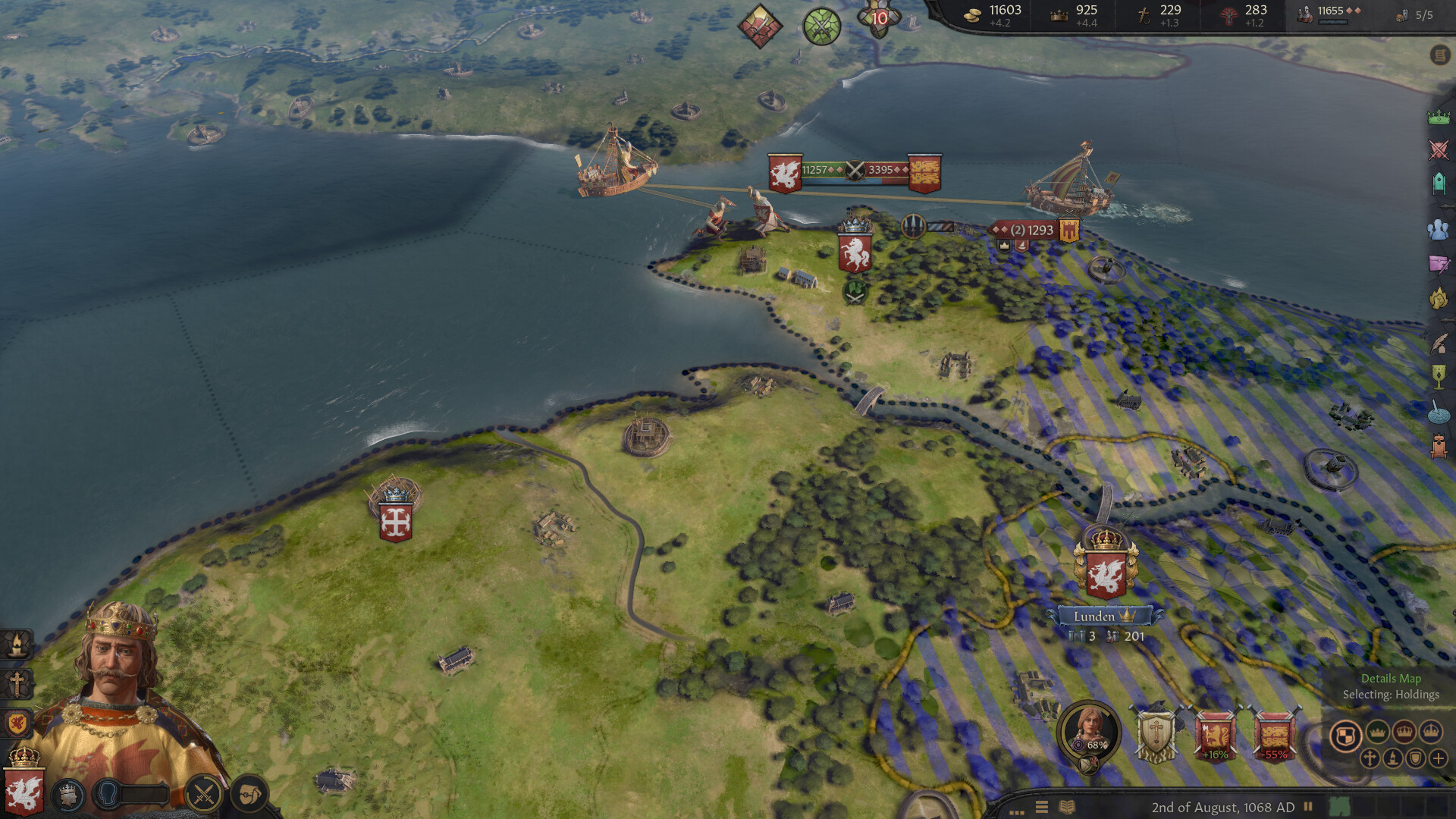 Atmospheric detail in Crusader Kings III.
The stress system sharpens this further. Characters accumulate stress when they act against their own traits — a Compassionate ruler who executes prisoners, a Greedy one who donates to the church. Enough stress triggers a mental break, which can permanently alter the character's personality, sometimes for the worse, sometimes in ways that are genuinely interesting. I had a ruler go from Diplomatic to Cynical after a betrayal event chain, which made her harder to deal with diplomatically but gave her a scheming bonus that turned her into a more effective assassin. The game rewards you for paying attention to who your character actually is.
None of this is surface texture. It feeds directly into your political options. A ruler with low Intrigue cannot run effective spy networks. A ruler with high Diplomacy can push through unfavorable marriages that a low-Diplomacy character would have to sweeten with territory. The role-playing layer and the strategy layer are not bolted together — they grow from the same root.
Where the map screen earns its keep
Grand strategy games live and die on their map interfaces, and CKIII's is mostly excellent. The map modes — feudal contracts, de jure territory, cultural spread, religion — are clearly labeled and genuinely informative rather than decorative. Switching between them while planning a war or a conversion campaign takes two clicks. The county-level detail, showing development, control, and faith, is available without drilling through menus. Compared to the original Crusader Kings II's interface, which required years of community-built mods to become navigable, this is a significant improvement.
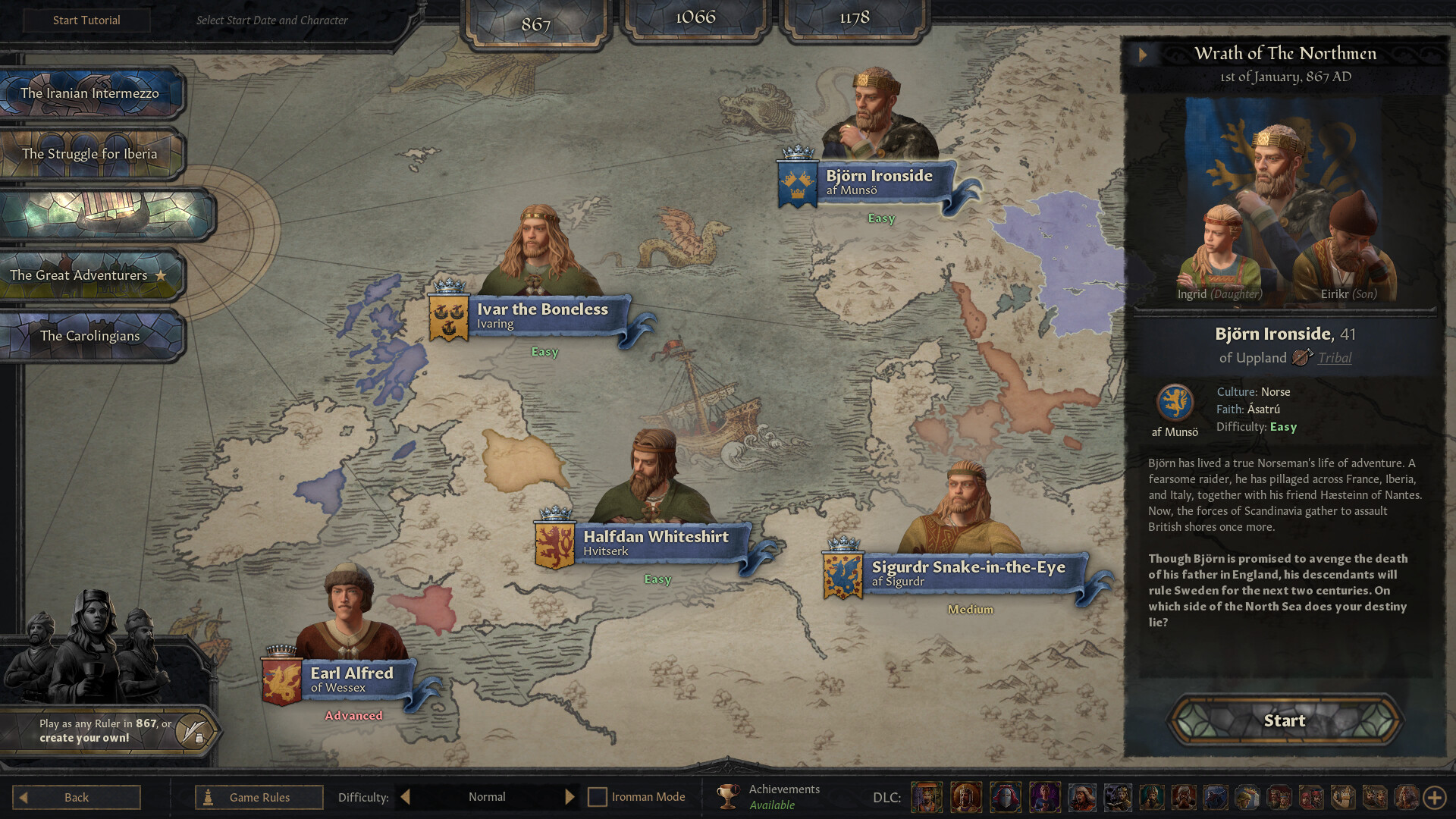 Combat encounter in Crusader Kings III.
The military system is the one area where the map becomes frustrating. Armies move on a node network, and the pathfinding will occasionally route your forces through a hostile county when a sensible detour exists. Siege mechanics are slow by design — holding out or pressing a siege is a deliberate choice — but the UI for tracking multiple simultaneous sieges across a larger realm is cluttered. By hour twenty I was ruling three duchies across Brittany and Normandy, and keeping track of which garrison was undermanned required more tab-switching than it should.
The event system at its best and worst
CKIII's event cards are where most of the storytelling happens, and the writing quality varies considerably. The best events read like compressed short fiction — a knight arrives at your court claiming to be your husband's illegitimate son, and you have four options that each carry meaningful trade-offs. Legitimizing him strengthens your military but destabilizes succession. Sending him away creates an enemy. The text describes his expression, the angle of morning light through the great hall window, your council's uncomfortable silence. It earns the moment.
The weakest events read like database entries. "Your chancellor has completed an assignment. Relations improved by 15." There are also events that feel artificially inserted to create drama without context — a random murder accusation targeting a courtier I had never interacted with, in a realm I had governed peacefully for a decade. The simulation's internal logic occasionally breaks its own immersion by escalating without groundwork. For every fishbone death that feels earned, there is a plague outbreak that feels like the game rolling a number and handing you the consequence.
The expansion content complicates this further. Tours and Tournaments adds itinerant court events and a journey system that produces some of the richest event writing in the game. Royal Court adds the physical throne room as an interface, which looks impressive for about three sessions before it becomes a menu you click through on autopilot. The base game events are good enough to carry the experience; the expansions are inconsistent value depending on which playstyle you favor.
The late-game plateau
Somewhere around the twenty-hour mark — when Duchess Aurelie had consolidated Brittany, pressed a successful claim on Normandy, and was assembling the territory for a Kingdom title — the tension softened. Early CKIII is driven by scarcity: you do not have enough gold, enough levies, enough relationships. Every decision carries weight because the margin for error is thin. Once your realm reaches a certain stability, the same mechanics persist but the pressure drops. Plots are easier to execute. Wars are more predictable. The family tree looks less like a crime scene and more like an organizational chart.
This is not unique to CKIII — it is a structural challenge that Paradox's other games share, and that Victoria 3 has tried to address with different economic pressures in the late game. The game's response is to introduce higher-level ambitions: press for a Kingdom title, then an Empire, convert your realm's religion, restore a defunct historical title. These work as targets, but they do not replicate the early-game feeling of fragility. If Paradox wants the mid-to-late game to feel as alive as the first thirty years of a campaign, they need mechanics that genuinely threaten established power, not just provide objectives for it.
Accessibility and the learning cliff
Paradox has made real efforts here. The tutorial is the most functional in the studio's history, walking players through succession law, council management, and casus belli without assuming prior knowledge. The tooltip system — hover over almost anything and get an explanation — is dense but readable. A player coming in from something like Total War: Three Kingdoms will find the combat abstraction jarring initially, but the political mechanics will click faster than they expect.
What the tutorial does not prepare you for is the emotional register shift. New players expect to be good at things; CKIII routinely rewards you for surviving things. Your first ruler will probably die early, badly, and leave a mess. This is the game working as intended, but the tutorial frames it as instruction rather than initiation. A brief acknowledgment that failure states are formative, not terminal, would reduce early player dropout considerably.
The verdict, plainly stated
CKIII is the most approachable grand strategy game Paradox has made, and also a genuinely deep simulation of medieval political life that does things no other game attempts. The trait and stress systems are smart design. The event writing, at its best, is excellent. The military interface needs work, the late-game needs sharper stakes, and the expansion model has produced uneven results that range from essential to decorative.
At 32 hours in, I am still playing. Duchess Aurelie's son inherited at twenty-six with a strong claim, a reputation for justice, and a half-brother somewhere in Anjou who knows his birth was not quite legitimate. The family tree has three unsolved deaths on it. The uncle who resented his nephew twenty years ago is now elderly and quiet, which is more suspicious than the resentment ever was. That kind of sustained narrative pull, generated entirely by interlocking systems rather than authored plot, is what separates CKIII from its competitors — and it is rare enough in any genre that it justifies the learning investment required to get there.
Editorial scoring
Quick facts
How long does it take to finish Crusader Kings III turns family trees into crime scenes?
Main story runs around 18-25 hours depending on how thoroughly you explore. Completionists can spend 2-3× that.
Is Crusader Kings III turns family trees into crime scenes good for newcomers to Grand Strategy?
Yes — Crusader Kings III turns family trees into crime scenes is a great entry point. The early hours teach the systems gradually and the difficulty curve is reasonable.
Which platform should I play Crusader Kings III turns family trees into crime scenes on?
PC version offers the highest fidelity if your rig can handle it. Console versions are polished out of the box.
Was Crusader Kings III turns family trees into crime scenes worth the launch-day price?
If you're a fan of Paradox Development Studio, yes. If you're new to the studio, a sale price is more comfortable.
Are there DLCs or expansions worth picking up?
The base game is complete; expansion DLC adds 10-15 hours of additional content if you want more.
What did Paradox Development Studio get right (and what could be better)?
Strongest: art direction, audio design, set-piece variety. Weakest: late-game balance and a few persistent quest-log bugs.
Reader comments