
Guilty Gear Strive is gorgeous, ruthless, and worth the bruises
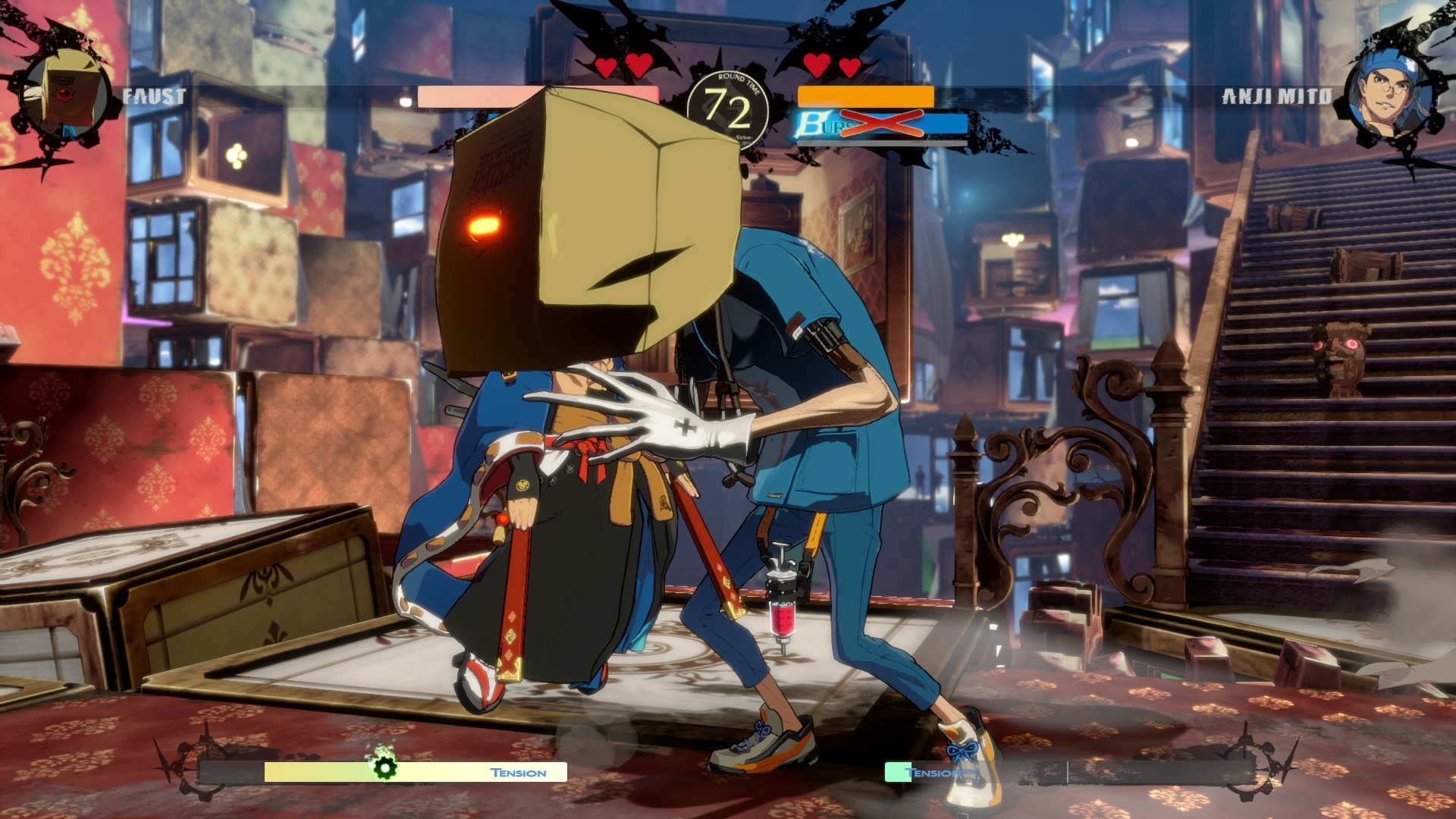
Forty-seven hours in, and Guilty Gear Strive is still finding new ways to embarrass me. Not the demoralizing, controller-throwing kind of embarrassment — though there is some of that — but the sharper, more instructive kind where you watch a replay of yourself getting dismantled by a Sol Badguy combo and realize, with uncomfortable clarity, exactly what you did wrong and when. Arc System Works has built a game that communicates through pain, and it does so with enough visual flair and mechanical precision that you keep coming back for more.
Released in June 2021 and now a few DLC seasons deep, Strive occupies an interesting position in the modern fighting game landscape: it is simultaneously the most accessible Guilty Gear ever made and, beneath that accessibility, still one of the most demanding fighters on the market. That tension is not a contradiction. It is, in fact, the whole design argument Arc System Works seems to be making with this entry — and it mostly holds up.
The case for simplification
Veterans of Guilty Gear Xrd or the older XX titles will notice immediately what is missing. The Roman Cancel system has been streamlined into four distinct variants — red, yellow, purple, and blue — each with a specific tactical function rather than the looser, more improvisational RC usage from previous games. Instant Kills are gone. Overdrive Attacks have been folded into the Burst system more cleanly. The gatling combo routes — those chains of normal attacks that older GG players could execute in their sleep — are narrower here, meaning the number of valid combo paths per character is smaller than it used to be.
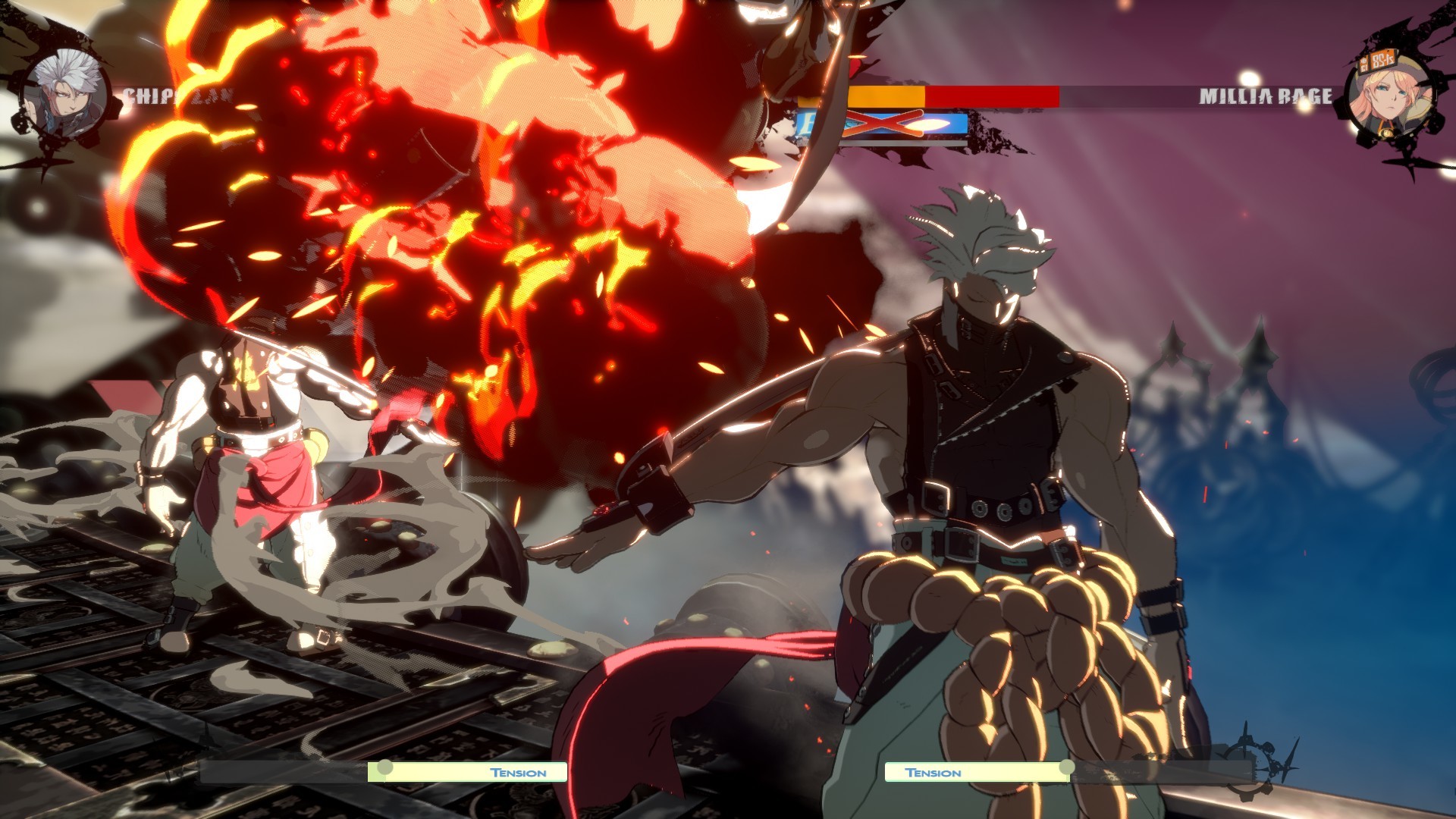 Scene from Guilty Gear Strive.
The initial reaction from longtime players was, predictably, skepticism. Simpler often reads as shallower, and in fighting games that concern is rarely unfounded — Street Fighter V launched with a similar philosophy and spent years fighting the perception that its systems lacked depth. Strive sidesteps that particular trap, though, because the simplification is targeted rather than wholesale. Each character still has an enormous amount of individual mechanical texture: Faust's item toss creates a distinct probabilistic chaos that no other character replicates; Zato-1's Eddie mechanic is effectively a second character to manage; Leo Whitefang's backturn stance requires a completely different spatial awareness. Arc System Works did not flatten the character roster into a set of interchangeable templates. They flattened the baseline barrier of entry while leaving the character-specific ceilings largely intact.
What the wall system actually does
The Wall Break mechanic is where Strive's stage design philosophy becomes most legible. Matches take place on stages with hard side boundaries, and sustained corner pressure eventually shatters the wall, shifting both players to a new part of the arena and rewarding the aggressor with a temporary offensive advantage. On paper it sounds like a gimmick. In practice it does something structurally interesting: it turns the corner — historically the most punishing position in any 2D fighter — into a more dynamic resource rather than a pure death sentence.
This changes the psychology of corner carry in a meaningful way. A player being cornered is not simply trying to escape; they are managing the wall break timer, deciding whether to absorb more pressure and accept the positional reset or spend resources to escape before the break triggers. It adds a layer of resource economics to what would otherwise be a straightforward pressure sequence, and it does so without explaining itself through a tutorial — you learn it by playing, by losing, by watching the geometry of a round shift beneath you. That is the kind of system design that rewards attention over time rather than front-loading all its meaning.
 Scene from Guilty Gear Strive.
A visual language that earns its volume
There is no polite way to ease into discussing how Guilty Gear Strive looks: it is, moment to moment, one of the most visually striking games ever made in the genre. Arc System Works refined the cel-shaded 3D-on-2D technique they developed through Dragon Ball FighterZ and Xrd, and the results here are genuinely arresting. The character models move with an animation quality that most hand-drawn 2D fighters can only approximate. Sol Badguy's jacket physics during his Volcanic Viper. May's anchor swings landing with an almost tactile weight. Baiken's one-armed counter animation, which reads as both brutal and elegant in the same frame.
The stage backgrounds deserve particular attention because they do real work. Illyria Castle is not just a pretty backdrop — the depth of field, the layered architecture, the way light moves through it during matches all contribute to a sense of a world that extends past the fight screen. The Celestial Altar stage introduced in a later season has a compositional logic that makes even standard exchanges feel cinematically framed. Whether you care about visual design or not, Strive's presentation has a practical effect on play: it keeps you watching, keeps you invested in the spectacle of what is happening, which matters in a genre where long sets can become grinding.
Online infrastructure: much better, not yet solved
Strive launched with rollback netcode — real rollback, not the delay-based approximation that plagued the genre for years — and it showed. Playing against opponents across continents was genuinely feasible in a way that Tekken 7 and even Street Fighter V's later netcode patches never quite achieved. The lobby system, a sort of anime chibi avatar social space, attracted reasonable mockery at launch for its awkwardness, but Arc System Works has continued to iterate on it, and the matchmaking flow is considerably less obtuse than it was in 2021.
That said, the ranked experience still has friction points. Floor-based matchmaking means new players encounter a wide skill distribution that can feel disorientating, and the path from Floor 5 to the Celestial bracket where serious play happens is long enough that some players disengage before reaching the point where competition becomes most interesting. None of this is unusual for the genre — Mortal Kombat 11 had analogous issues — but it bears naming because a game this mechanically rich deserves an infrastructure that makes finding appropriate competition feel less like a project.
The roster at this point in the game's life
Across the Season 1, 2, and 3 passes, the roster has expanded steadily. Goldlewis Dickinson arrived as one of the more unusual fighting game characters in recent memory — a hulking US Secretary of Defense who fights with a coffin chained to his arm, demanding players manage both space and his Behemoth Typhoon charge levels simultaneously. Testament's rework from their older GG incarnations is thoughtful: the blood-based zoning tools create a genuinely different defensive geometry. Johnny, added in Season 3, brought back the Mist Finer stance system that longtime fans had been requesting since launch.
Not every DLC character lands equally well. Bridget's inclusion generated far more discourse than her moveset probably warranted, and while she plays cleanly, her yo-yo rekka style does not have the same mechanical surprise factor as Goldlewis or Baiken. Happy Chaos, with his gun-reloading mechanic and curse debuff system, is either the most interesting or the most annoying character in the game depending entirely on which side of the matchup you are on. The roster as a whole has personality and variety, though; there is no sense of characters being cynically produced to pad a season pass.
Who this game is actually for
Strive is often marketed toward new players, and the accessibility work Arc System Works put in is real — the mission mode, the revised tutorial, the slower initial pace of neutral compared to older GG games. But spending 47 hours with it clarifies something: the new-player-friendly surface is a ramp, not a destination. The game's actual pleasures — reading opponent tendencies, understanding counter-poke windows, learning when to spend Burst versus when to absorb damage — are pleasures that require investment to access. You cannot passively enjoy Strive the way you can watch a Hades run or explore the Lands Between without prior knowledge.
That is not a criticism. It is a description of what type of game this is, stated plainly so expectations can be calibrated. If you are willing to sit in training mode, watch your replays without self-pity, and lose a few dozen matches before the systems start to feel intuitive, Strive repays that investment with a clarity and precision that very few fighting games — perhaps only Street Fighter 6 at the moment — can match. The bruises are the point. The bruises are how you learn the shape of the thing.
Editorial scoring
Quick facts
How long does it take to finish Guilty Gear Strive is gorgeous, ruthless, and worth the bruises?
Main story runs around 50-60 hours depending on how thoroughly you explore. Completionists can spend 2-3× that.
Is Guilty Gear Strive is gorgeous, ruthless, and worth the bruises good for newcomers to Fighting?
Yes — Guilty Gear Strive is gorgeous, ruthless, and worth the bruises is a great entry point. The early hours teach the systems gradually and the difficulty curve is reasonable.
Which platform should I play Guilty Gear Strive is gorgeous, ruthless, and worth the bruises on?
PC version offers the highest fidelity if your rig can handle it. Console versions are polished out of the box.
Was Guilty Gear Strive is gorgeous, ruthless, and worth the bruises worth the launch-day price?
If you're a fan of Arc System Works, yes. If you're new to the studio, a sale price is more comfortable.
Are there DLCs or expansions worth picking up?
Skip the cosmetic DLC. The story expansion is the only one we'd recommend at full price.
What did Arc System Works get right (and what could be better)?
Arc System Works nailed the moment-to-moment loop and the world-building. Pacing in the mid-game and inventory UX have room for improvement.
Reader comments