
Inscryption keeps rewriting its own rules — and somehow gets away with it
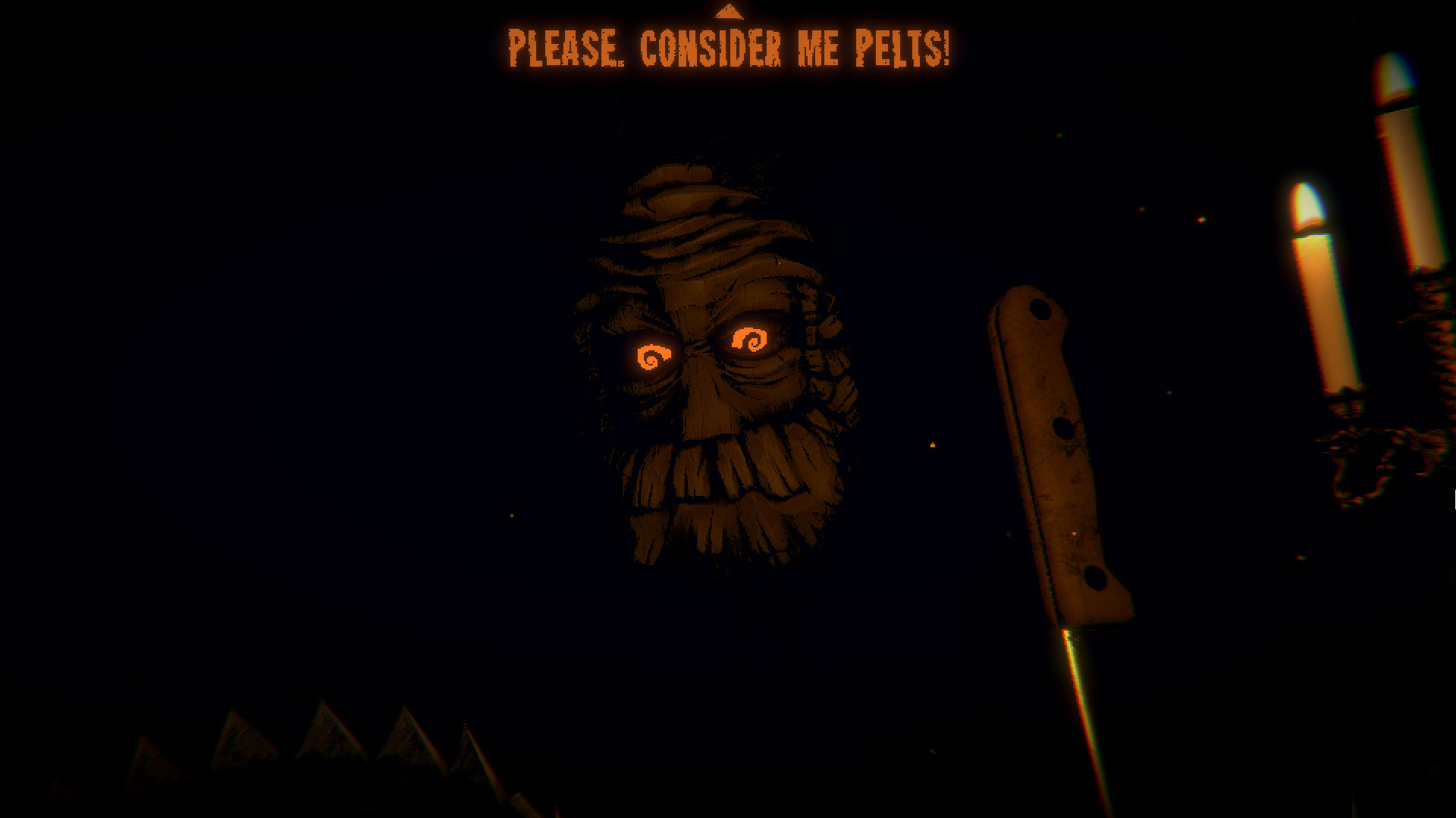
Inscryption opens with you trapped in a cabin, playing cards against a shadowy figure who will kill your character if you lose. That sentence is accurate and also tells you almost nothing useful about what Inscryption actually is. Daniel Mullins Games released it in October 2021, and people are still arguing about how to categorize it. Roguelike deck-builder is the label that stuck, but the game spends a significant portion of its runtime dismantling that label and handing you the pieces.
Forty-seven hours in, the game had restructured itself three times, broken its own fiction twice, and still managed to surprise me with a single card interaction I had not anticipated. That is the core competence on display here: Mullins builds systems that feel exhausted, then reveals a trapdoor underneath. Whether that trick sustains across an entire playthrough is a fair question, and the answer is complicated enough to deserve some unpacking.
The Cabin and Its Rules
The first act runs like a conventional roguelike deck-builder — conventional being relative here. You draft cards depicting creatures, pay for them with bones or blood sacrifices, and push damage past your opponent's scales. The resource system alone separates Inscryption from something like Slay the Spire. In Spire, energy regenerates cleanly each turn. Here, playing a card often costs the life of another card, which means your board is constantly eating itself. Aggression and attrition become the same thing.
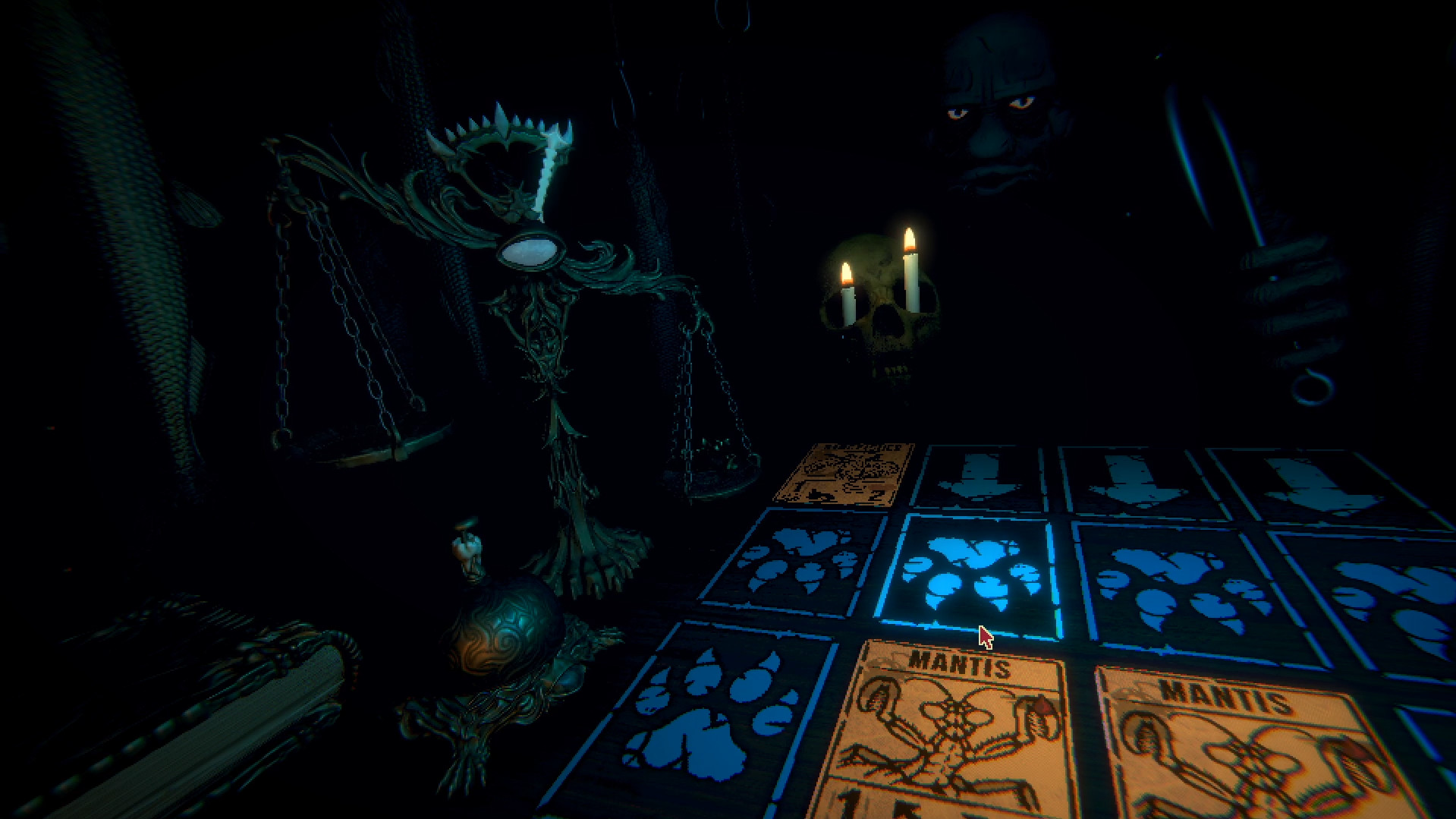 Scene from Inscryption.
The map between fights works as a grid of encounters — campfires for upgrades, traders for card swaps, question marks for events that can gut your run or hand you something broken. None of this is original, but Mullins uses it as scaffolding, not as the point. The cabin surrounding the game table holds physical puzzles: combination locks, a safe, a clock on the wall. You are not just playing a card game. You are investigating the room you are trapped in. That layer of environmental mystery pushes the first act well past the mechanical novelty of its combat.
Leshy, the figure across the table, narrates your defeats without cruelty and your victories without warmth. He functions less as a villain and more as a dungeon master who wrote the adventure for himself. That distinction matters when the second act arrives.
When the Game Pulls the Tablecloth
Discussing what happens after the first act without spoiling it requires some discipline. What I can say is that Inscryption does something Pony Island — Mullins's earlier meta-horror game — did in rougher form: it treats genre conventions as diegetic objects that can be moved, damaged, and replaced. The shift is abrupt enough that some players have bounced off it entirely. That reaction is understandable. You spend several hours learning one game's grammar, and then the game swaps the alphabet.
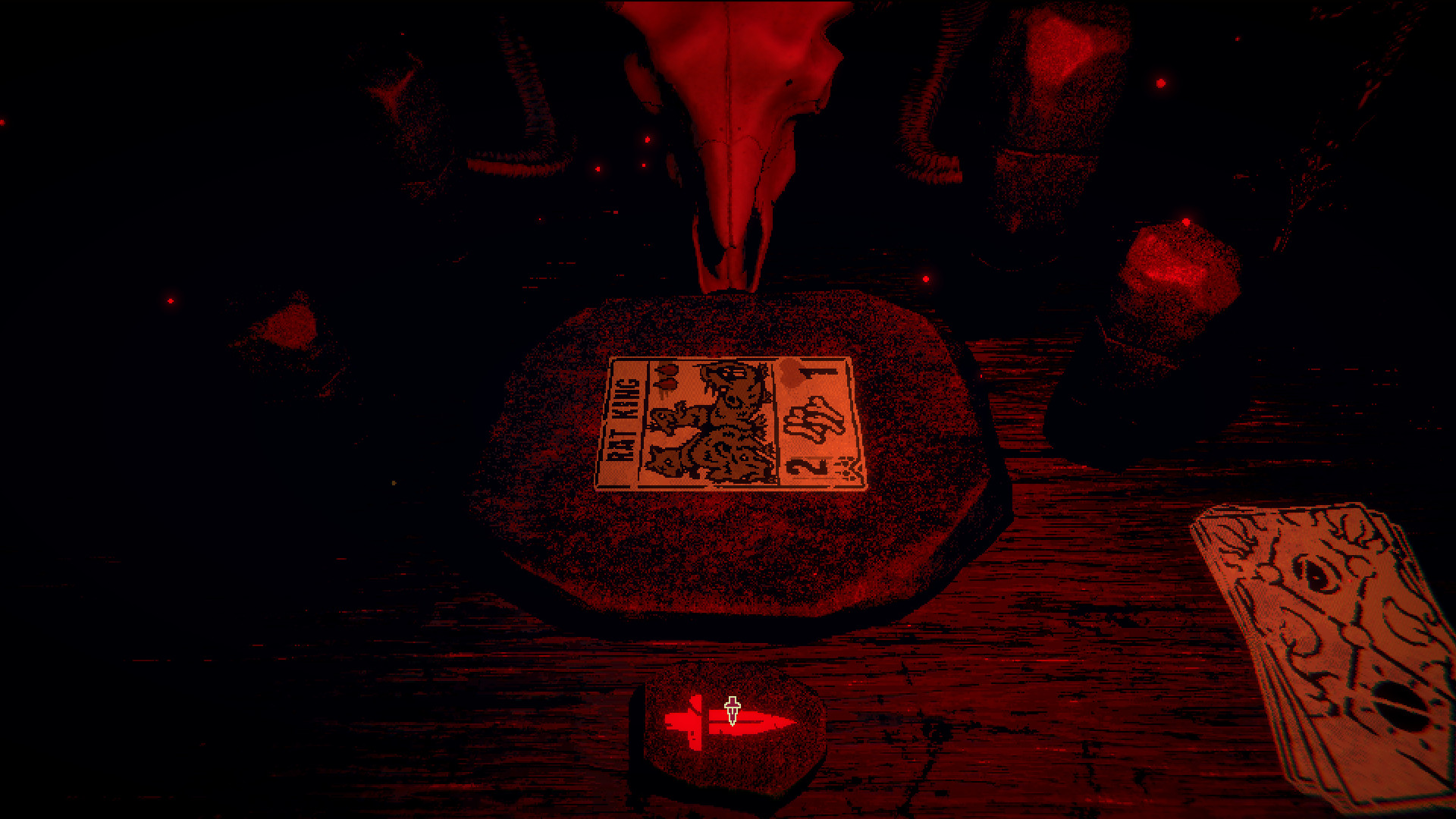 Scene from Inscryption.
The second act shifts to a top-down RPG format with a distinct card system built around three separate Scrybe decks — nature, technology, and magic — each with different cost structures and different mechanical identities. The technology cards run on batteries and have no sacrifice cost. The nature cards eat each other the same way Leshy's game did. The magic cards cost bones. Managing all three in a single constructed deck sounds chaotic, and it is, but the chaos has geometry. Finding lines that bridge all three systems is the act's genuine pleasure.
The third act returns to a roguelike structure with different cards and a different opponent. By this point Mullins has established enough trust — or enough disorientation — that the structural shift lands differently than it would have cold. You are not confused by the new rules. You are reading them with the suspicion that they will not last.
Card Design as Argument
Across all three acts, the individual cards carry more personality than most deck-builders manage. The Stoat talks. The Ouroboros grows every time it dies and returns to your hand, across multiple runs, which means it accretes history. The Mantis God splits damage to all opposing lanes simultaneously and changes how you think about board positioning entirely. These are not just stat lines with art. They behave like characters with agendas.
The sigil system — keywords printed on cards that define their special behaviors — scales in complexity without demanding a glossary. Bifurcated Strike, Fledgling, Worthy Sacrifice: each sigil reads as a concrete rule, not an abstraction. Compare this to some of the denser keyword ecosystems in Magic: The Gathering sets from the last few years, where a single card can require four cross-references to parse. Inscryption's card text is terse and physical. You understand Stinky by what it does to the opposing card across from it.
The deckbuilding itself is aggressive about forcing choices that feel bad. You will sacrifice a card you want to keep because the thing it enables is worth more than the thing it is. That exchange — trading immediate board presence for long-term engine construction — is where the runs develop their individual texture.
Where the Seams Show
The second act is the weakest section and the one that most clearly shows the cost of Mullins's ambition. The RPG map movement is sluggish. The encounters repeat before you have finished the act's mandatory content. The puzzle design, strong in the cabin, gets thinner in the overworld. There are moments where the structural innovation reads less as subversion and more as padding — new cardboard to walk across while the next revelation assembles itself offscreen.
The game also has a difficulty curve that operates on vibes more than design intent. The first act's roguelike runs can be brutal early and then suddenly trivial once you understand that the Mantis God plus anything with high power ends most encounters fast. Some of that inconsistency is genre-standard for deck-builders — Slay the Spire has its own busted single-card interactions — but Inscryption's smaller card pool means individual broken combos loom larger.
There is also the question of replayability after the credits. The Kaycee's Mod addition, released free post-launch, extends the first act into a full roguelike mode with escalating challenge conditions called Challenges and a separate unlockable ladder. It is more content than most studios would charge for. But it also implicitly acknowledges that the main game's later acts are not built for repetition the way the first act is.
The Meta-Horror Lineage
Mullins has been building toward Inscryption since Pony Island in 2016 and The Hex in 2018. Each game treats its own interface as hostile territory. Pony Island put corrupted game files in your path and made you debug a demon's arcade machine. The Hex assembled its story from six different genre fragments and dared you to find the connective tissue. Inscryption is the most mechanically complete of the three — it has the most hours of content, the most developed combat system, the best puzzles.
It also benefits from landing at a moment when roguelike deck-builders had enough genre mass to push against. Inscryption is partially a deconstruction of Slay the Spire's design language, which only works because Spire's design language became a template that dozens of successors adopted. Monster Train, Roguebook, Cobalt Core — there is a canon now, and Mullins knows it well enough to use it as a set piece.
Who This Is For
If you need a deck-builder that perfects its systems and delivers clean mechanical escalation, Slay the Spire and Monster Train are still the cleaner experiences. Inscryption is not interested in perfecting anything. It keeps replacing its own components before you can fully master them. That is either a design flaw or a design statement, depending on what you want games to do.
Players who bounced off The Hex because the tonal whiplash felt arbitrary will likely have the same problem here. Players who found Pony Island's meta-horror concept compelling but its mechanics thin will find Inscryption a substantial upgrade. The card game in the first act alone has more depth than many finished, unambitious deck-builders.
Inscryption runs around five to eight hours for a first playthrough and expands from there depending on how deep you go into Kaycee's Mod. At its current PC price of around fifteen US dollars, the value question is not interesting — the design question is. Mullins is working out a theory about what games are allowed to do to players, and Inscryption is the most developed argument he has published so far. You do not have to agree with the argument to find it worth having. The cabin is unsettling, the cards are strange, and the figure across the table has been waiting longer than you know.
Editorial scoring
Quick facts
How long does it take to finish Inscryption keeps rewriting its own rules — and somehow gets away with it?
Main story runs around 18-25 hours depending on how thoroughly you explore. Completionists can spend 2-3× that.
Is Inscryption keeps rewriting its own rules — and somehow gets away with it good for newcomers to Roguelike Deck-builder?
It depends. The systems are deep but the tutorial does a fair job. Veterans of Roguelike Deck-builder will feel at home faster.
Which platform should I play Inscryption keeps rewriting its own rules — and somehow gets away with it on?
PC version offers the highest fidelity if your rig can handle it. Console versions are polished out of the box.
Was Inscryption keeps rewriting its own rules — and somehow gets away with it worth the launch-day price?
Released in 2021, and as of writing it holds up. Wait for a sale if you're price-sensitive — major discounts arrive within 6 months.
Are there DLCs or expansions worth picking up?
The base game is complete; expansion DLC adds 10-15 hours of additional content if you want more.
What did Daniel Mullins Games get right (and what could be better)?
The systems are confident and the combat is satisfying. The story handoffs and load times are the rough spots.
Reader comments