
Street Fighter 6 finally makes the genre feel like an invitation
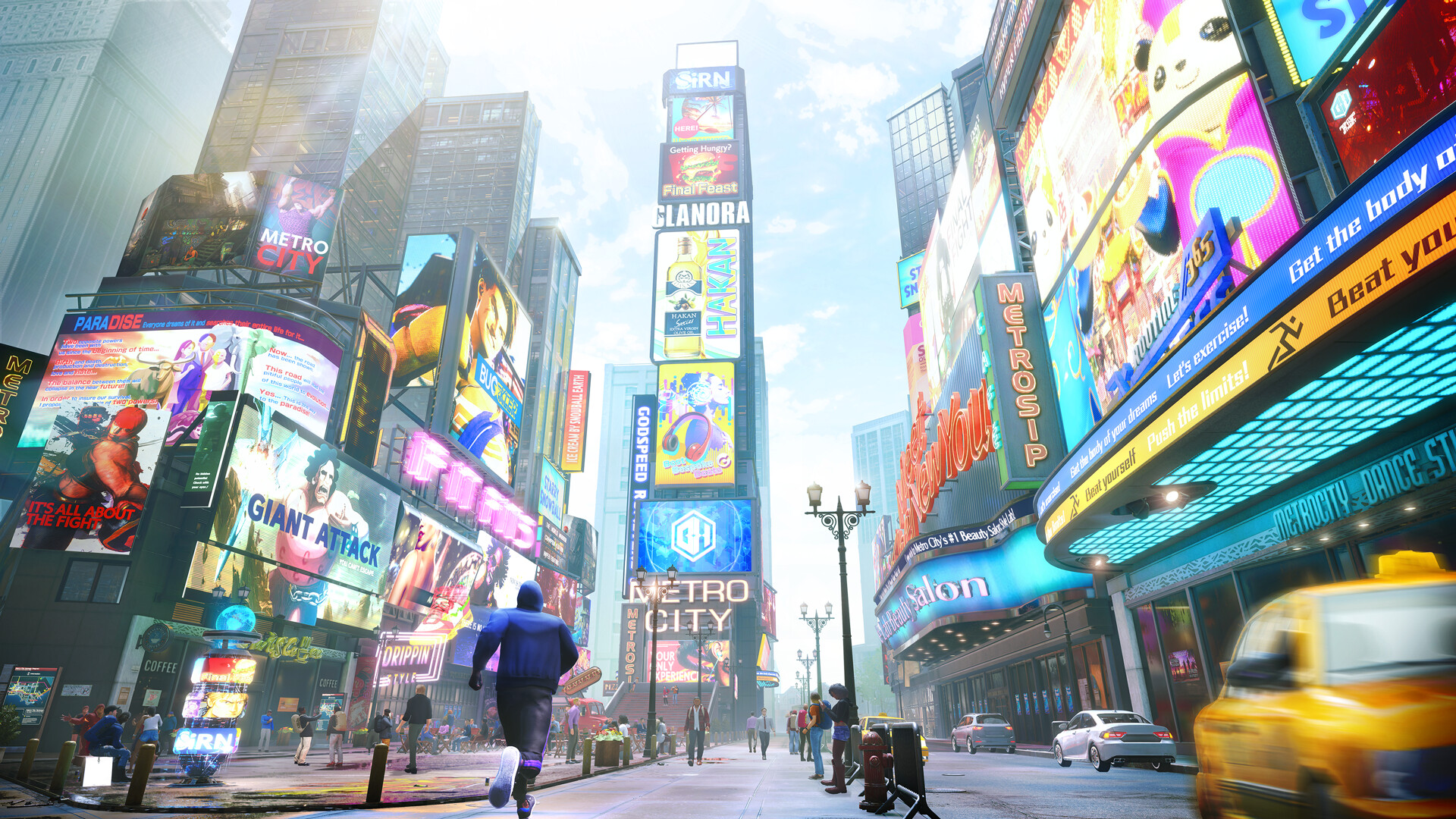
There is a specific moment that keeps coming back. You are playing Kimberly, a young graffiti artist who fights like Guy from Final Fight if Guy had a Walkman and a spray-can fetish. You are losing a World Tour fight against some mid-tier NPC outside the Metro City subway. You miss a punish, burn your drive gauge trying to look stylish, then eat a full combo into the corner. The game does not punish you with a loading screen or a patronizing tutorial pop-up. It just shows you the replay, marks the gap you missed, and sends you back in. Twenty minutes later, you are landing the punish clean. That loop — fail, understand, fix — is what Street Fighter 6 is built around, and it is the first time a mainline entry has made that loop feel genuinely accessible without sanding off the parts that make the genre worth caring about.
Sixty hours in, across World Tour mode, Battle Hub ranked play, and enough training room sessions to develop genuine opinions about frame data, the picture is clear enough to write down. Street Fighter 6 is not perfect — there are balance irritants, a World Tour that outstays its welcome, and a modern control scheme that sparks legitimate debate. But as a package designed to pull new players into a forty-year-old genre without alienating the people who already live there, it is the most thoughtful fighting game Capcom has shipped. Maybe the most thoughtful anyone has shipped.
The Drive System Does the Heavy Lifting
Every Street Fighter generation redefines itself around a resource mechanic. Super moves in Super Turbo, V-Gauge in Street Fighter 5, and now the Drive System in SF6. The Drive Gauge is six bars that feed five different actions: Drive Impact (an armored forward-moving strike), Drive Parry (a timed block that regenerates gauge on hold), Overdrive (enhanced special moves), Drive Rush (a dash that enables plus-frame pressure), and Drive Reversal (a defensive escape option). Reading that list makes it sound overwhelming. In practice it reads as a single ongoing decision: spend aggressively, or manage and outlast?
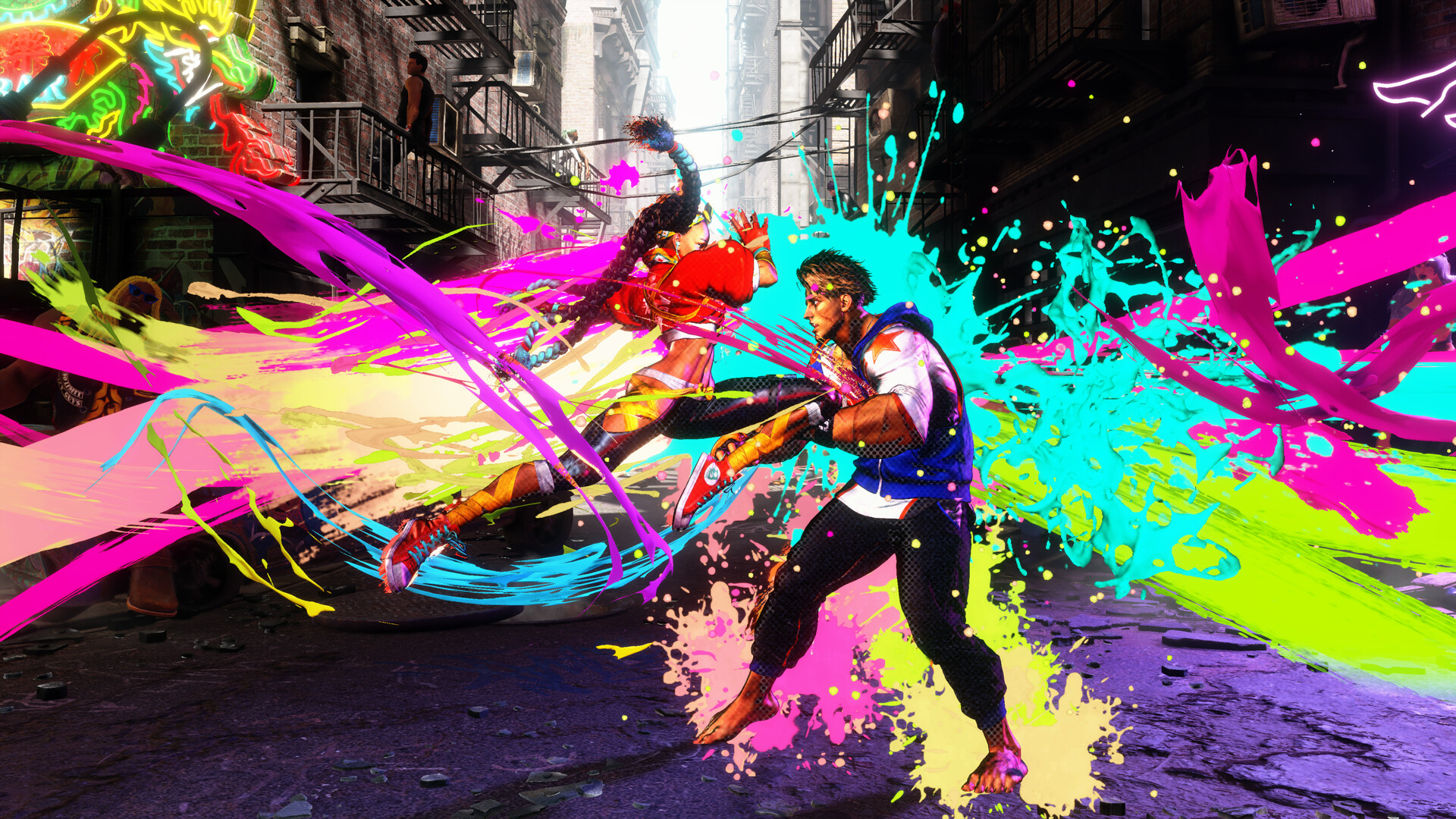 Atmospheric detail in Street Fighter 6.
The reason this works where Street Fighter 5's V-System often did not is symmetry. Every character has access to the same gauge and the same tools; the differences live in how those tools interact with each character's specific moveset rather than in bespoke mechanics that felt impossible to balance across a roster of forty-plus fighters. Burn out your Drive Gauge entirely and you enter Burnout state — grey health starts draining on block, Drive Parry and Impact vanish, and opponents can punish reckless play mercilessly. That consequence gives the system actual teeth. Playing against Marisa or Jamie when they are in Burnout and you are not is as close to free as this game gets.
Modern Controls Are Not a Cheat Code
The loudest complaint circulating in competitive spaces is about Modern controls, the simplified input scheme that replaces motion inputs with single-button special moves. The concern is that it removes a barrier that was meant to mean something — that execution difficulty was part of what separated players. That concern is not crazy. But sixty hours of watching Modern control players in ranked and in the Battle Hub tells a clearer story: they lose the same ways Classic players lose at lower ranks. They overcommit on Drive Impact. They do not manage corner positioning. They miss anti-airs. Knowing that a fireball comes out when you press R1 does not teach you when to throw one.
What Modern controls actually do is remove one specific barrier for one specific group: people who want to understand the game's strategic layer but have never developed the muscle memory for quarter-circle inputs and who, without a simpler entry point, simply would not play at all. The tradeoff is real — Modern characters deal slightly reduced damage on special moves, and they cannot access the full normal move list. That is a meaningful ceiling. For the competitive scene, Classic is still the ceiling worth aiming at. For the person who owns a PS5, has forty minutes on a Tuesday, and wants to know whether Ryu or Luke fits their playstyle better, Modern is a reasonable door in.
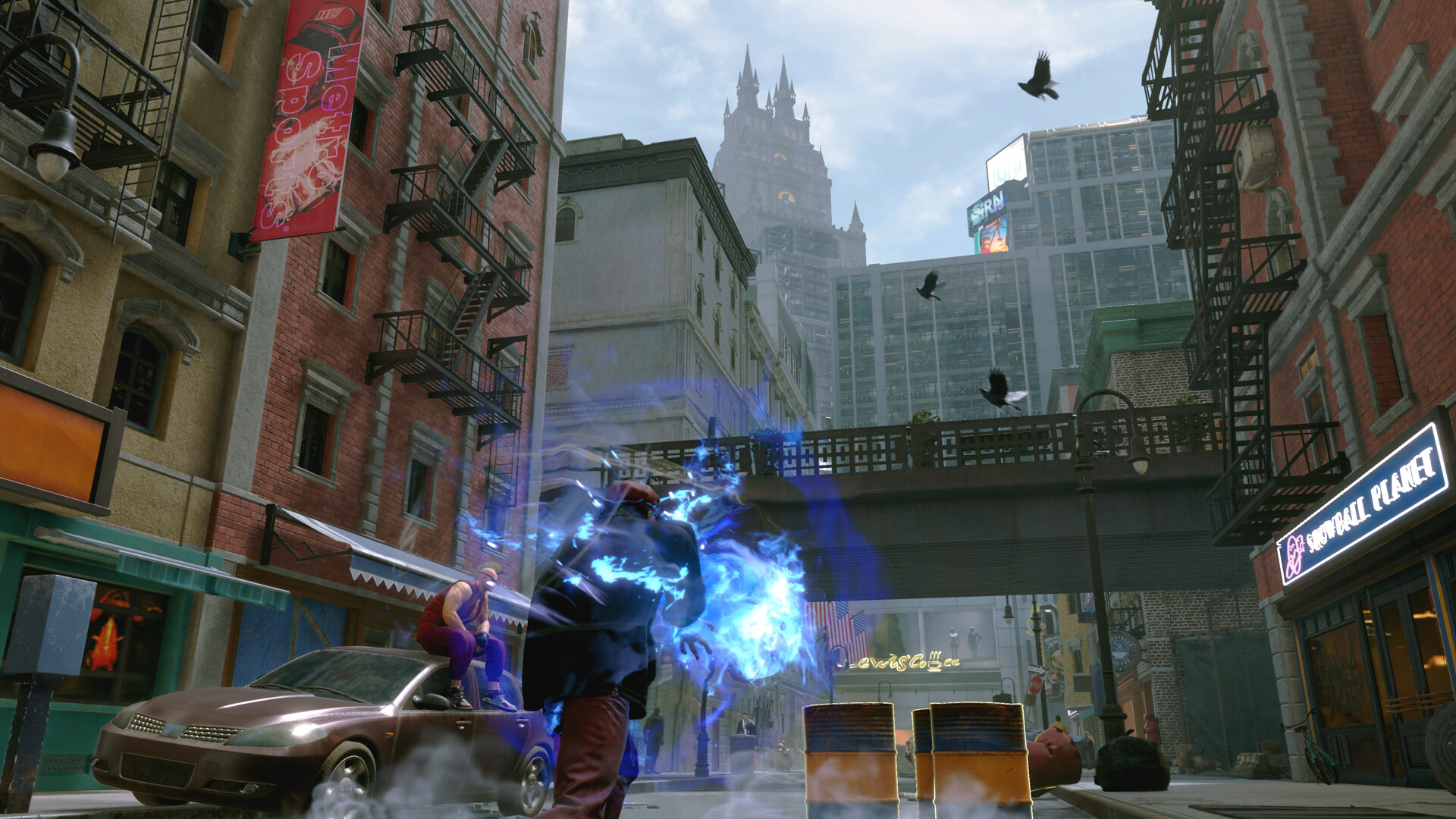 Combat encounter in Street Fighter 6.
World Tour Is Long, Messy, and Worth It Anyway
World Tour is the single-player story mode, structured as a loose open-world RPG set across a stylized Metro City and eventually Nayshall. You build a custom avatar, wander streets looking for fights and side quests, absorb special moves from Street Fighter masters who each have their own chapter, and level up stats through repetition. It runs somewhere between fifteen and twenty-five hours depending on how completionist you feel, and it has genuine pacing problems in its second half. By the time the game sends you to Nayshall for the third time, the novelty of absorbing a new master's moveset has faded and the RPG systems feel thin compared to something like a dedicated action RPG.
And yet. The reasons to push through are specific. The master chapters — especially Guile's, which is built around a military-base infiltration sequence that genuinely surprises — are short, punchy, and funny in a way that Capcom story modes almost never manage. More practically: World Tour is the best tutorial system in the genre's history, disguised as an RPG. You learn Drive Parry timing through overworld fights without ever sitting in a menu. You learn move applications because you are using them constantly against varied enemy types. Players who complete World Tour and then move to ranked play are measurably more prepared than players who skipped it. That is not accidental design.
The Roster Has a Point of View
Twenty-two characters at launch, with a season pass roadmap running through at least year two. The launch roster is balanced in the sense that tier lists are still being argued about six months in — which is the right kind of balanced. There are clear outliers: Jamie at high level, once his drink stocks are maxed, has a pressure game that some top players consider oppressive. Dhalsim remains the kind of character that new players hate and experienced players respect as a design exercise in range control and zoning. The new characters — Kimberly, Marisa, Manon, Lily, JP, and Juri as a reclassification — each have a clear mechanical identity.
Marisa in particular is worth flagging. She is a slow, enormous charge character whose entire design communicates a single message: do not get hit by this woman. Her Gladius command grab, her armored Scutum parry-counter, and her ability to convert almost any stray hit into corner carry make her the clearest example of SF6's design philosophy: every character should have a readable answer to the question of what they are trying to do to you. Once you understand that, you can start working on how to stop it. That readability — the sense that the game wants you to understand what is happening rather than feel like a victim of random outcomes — is what separates SF6 from its predecessor.
The Battle Hub and Competitive Infrastructure
The Battle Hub replaces the traditional ranked lobby with a social arcade space. You walk your avatar up to a cabinet, challenge whoever is sitting on the other side, and watch other matches playing out around you on nearby screens. It sounds like a gimmick and for the first hour it kind of is. Then you realize Capcom has built in a functionally decent spectator culture — you can watch top-ranked matches in real time, note what the Akuma player does in the corner, and go try it in training mode. The data infrastructure is there too: replays are tagged, searchable by character and rank, and the post-match data breakdown is specific enough to tell you that you dropped three punishes in round two without you having to count yourself.
Ranked play uses a Master Point system above a certain rating threshold that is more transparent than most fighting game ranking structures. You can see exactly what you need to reach the next tier. This matters because one of the most common reasons players disengage from fighting games is the sense that progression is opaque — that losses feel random and meaningless. SF6 does not fix that feeling entirely, because no ranking system can fix a tilt spiral, but it at least gives you the data to understand what is happening.
Where It Falls Short
The cosmetics economy deserves a mention, and not a kind one. Fighter Coins, the premium currency, are priced in a way that makes individual outfit purchases feel disproportionate to what you get — some alternative costumes run to around five US dollars or higher, and the in-game currency earned through play accumulates slowly enough that free-to-earn cosmetics feel like a consolation. This is not a dealbreaker in a game that does not gate competitive content behind purchases, but it is a choice Capcom made that prioritizes short-term monetization over long-term goodwill. Arc System Works has had the same problem with Guilty Gear Strive's season pass pacing.
The online rollback netcode, built on a bespoke implementation, is good without being exceptional. Matches against players within reasonable geographic range are clean. Cross-region play deteriorates noticeably above one hundred and twenty milliseconds of latency in ways that make Drive Rush pressure nearly unreadable. That is a technical limitation more than a design failure, but it is worth knowing if you are planning to play seriously against international competition.
Street Fighter 6 does something that most genre entries never bother with: it treats the person who does not already know how to play as someone worth designing for, and it does so without making the person who has played since Street Fighter 2 feel like the game has been simplified underneath them. That is a harder balance to strike than it sounds. Capcom struck it. The genre has not felt this open in a long time, and if you have bounced off every fighting game you have ever tried, this one is the version worth giving a serious run.
Editorial scoring
Quick facts
How long does it take to finish Street Fighter 6 finally makes the genre feel like an invitation?
Main story runs around 18-25 hours depending on how thoroughly you explore. Completionists can spend 2-3× that.
Is Street Fighter 6 finally makes the genre feel like an invitation good for newcomers to Fighting?
Yes — Street Fighter 6 finally makes the genre feel like an invitation is a great entry point. The early hours teach the systems gradually and the difficulty curve is reasonable.
Which platform should I play Street Fighter 6 finally makes the genre feel like an invitation on?
PC version offers the highest fidelity if your rig can handle it. Console versions are polished out of the box.
Was Street Fighter 6 finally makes the genre feel like an invitation worth the launch-day price?
Depends on backlog. The replay value justifies the price for genre fans; casual players should wait for a 40%+ discount.
Are there DLCs or expansions worth picking up?
Wait for the Game of the Year edition — it bundles everything at a fair discount.
What did Capcom get right (and what could be better)?
Capcom nailed the moment-to-moment loop and the world-building. Pacing in the mid-game and inventory UX have room for improvement.
Reader comments